Cats often hide sickness. Here’s how to spot early behavioral and physical changes, what is urgent, and what details help your veterinarian act faster.
I still remember a client sliding a carrier across the exam room floor and whispering, embarrassed, “I swear my cat only throws up on the new rug.” If you are reading this with a paper towel in one hand and worry in the other, you are in very good company. Cat vomiting is common, but it is not something you have to shrug off, especially when it keeps happening.
This guide will walk you through the most typical reasons cats vomit, how to tell a one-off hairball from a pattern, and the specific signs that mean it is time to call your veterinarian the same day.
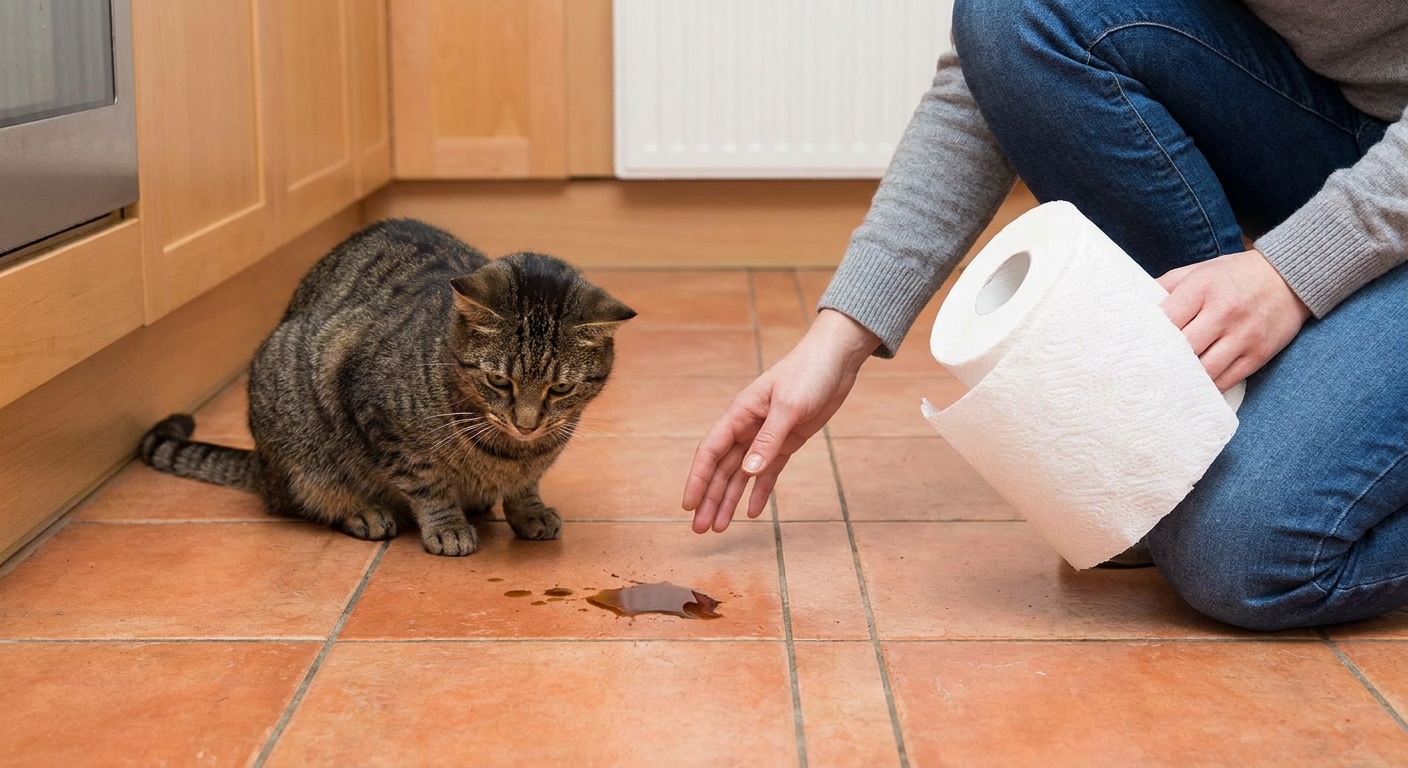
First: is it vomiting?
Pet parents often use “throwing up” as a catch-all, but a couple look-alikes matter because they point to different problems and different next steps.
Vomiting
Vomiting usually involves heaving or abdominal contractions, then food, foam, liquid, or hair comes up, typically from the stomach (and sometimes the upper small intestine). Many cats will lick their lips, drool, or hide right before it happens.
Regurgitation
Regurgitation is more passive. Food comes back up quickly after eating, often in a tube shape, with little to no retching. True regurgitation raises concern for an esophagus problem (such as inflammation, a stricture, or megaesophagus) and it deserves prompt veterinary attention.
One complicating detail: cats that eat too fast can also bring food back up right after a meal, and it may look like regurgitation to owners. If you are not sure which it is, your vet can help you sort it out based on a description or video.
Coughing or retching from airway disease
Cats with asthma or airway irritation can crouch low and “hack,” which can look like they are trying to vomit. If nothing comes up or you notice wheezing, frequent coughing, or open-mouth breathing, that needs a different evaluation than stomach upset.
If you are not sure which it was, a quick phone video (if you can safely grab one) can help your vet a lot.
Common reasons cats vomit
There is no single cause that fits every cat. In clinic, we looked at the whole picture: age, frequency, what the vomit looks like, appetite, weight, and what has changed at home.
Hairballs
Hairballs happen when swallowed fur accumulates and your cat needs to bring it back up. You will often see a log-shaped wad of hair, sometimes with foamy liquid or partially digested food.
- More likely if: Your cat is a heavy groomer, long-haired, shedding, or has mild constipation.
- What helps: Regular brushing, addressing skin itchiness with your vet, and discussing hairball diets or fiber options if this is frequent.
Tip from my own house: My senior tabby, Luna, vomits hairballs more when her arthritis flares and grooming gets less “efficient.” If hairballs are new in a senior cat, it is worth checking in with your vet rather than assuming it is just age.
Eating too fast
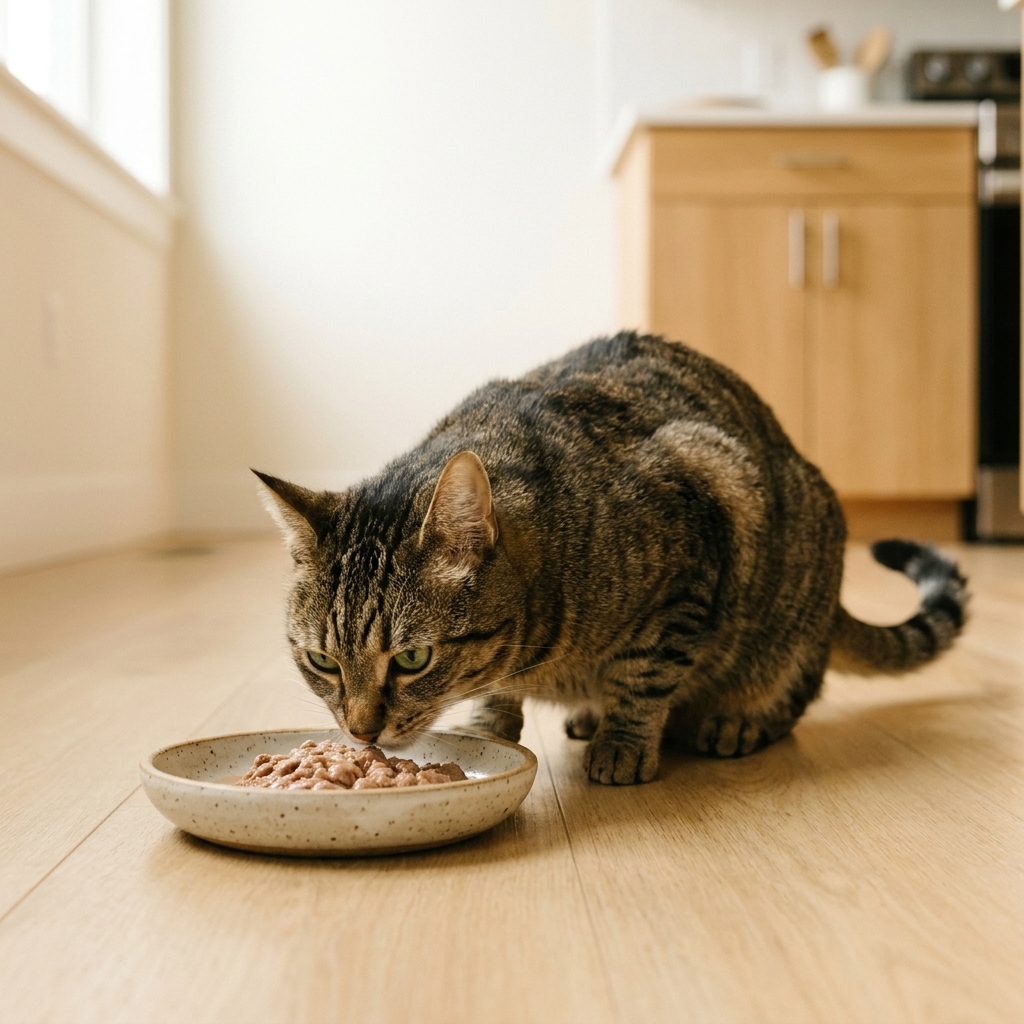
Some cats vacuum their food, especially in multi-cat homes or if meals are infrequent. A too-fast meal can trigger vomiting soon after eating, often with pieces of kibble that look barely chewed.
- What helps: Smaller, more frequent meals; puzzle feeders; spreading kibble on a flat tray; feeding cats separately if competition is a factor.
A sudden food change
Even a high-quality new food can cause vomiting if the switch is abrupt. Cats have sensitive GI tracts, and a fast transition can lead to stomach irritation.
- What helps: Gradually transition over about 7 to 10 days (longer for sensitive cats), mixing increasing amounts of the new diet into the old.
- Watch for: Vomiting plus diarrhea, gas, or refusal to eat, which can mean the new food is not agreeing with them.
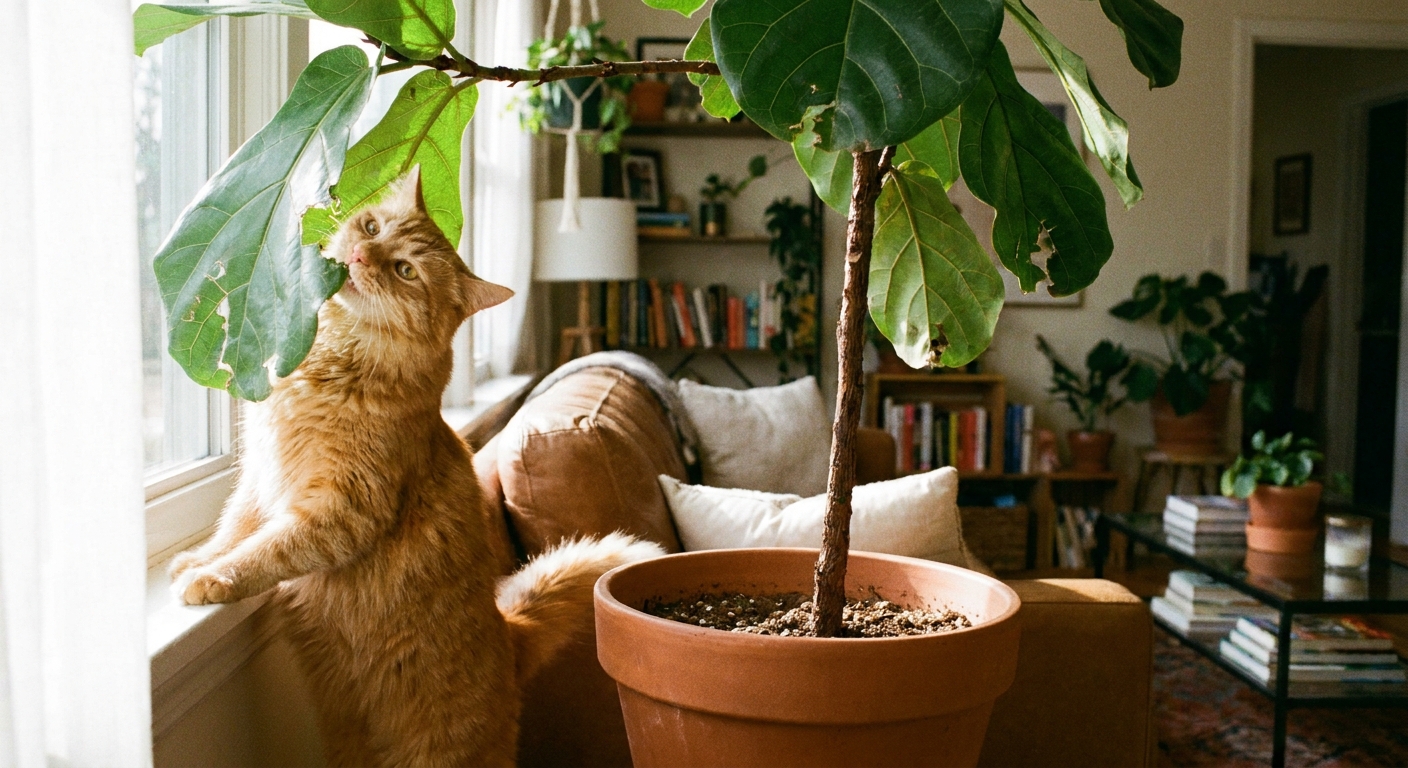
Chewing or eating plants
Many cats nibble greenery out of curiosity or boredom. Some plants are mildly irritating and trigger a one-time vomit. Others are truly dangerous.
- Common scenario: A cat chews a houseplant, then vomits foamy liquid or partially digested leaves.
- Important: Some plants (like lilies) are medical emergencies for cats, even if vomiting seems mild. If you suspect a toxic plant exposure, call your vet or a pet poison hotline immediately.
Dietary indiscretion
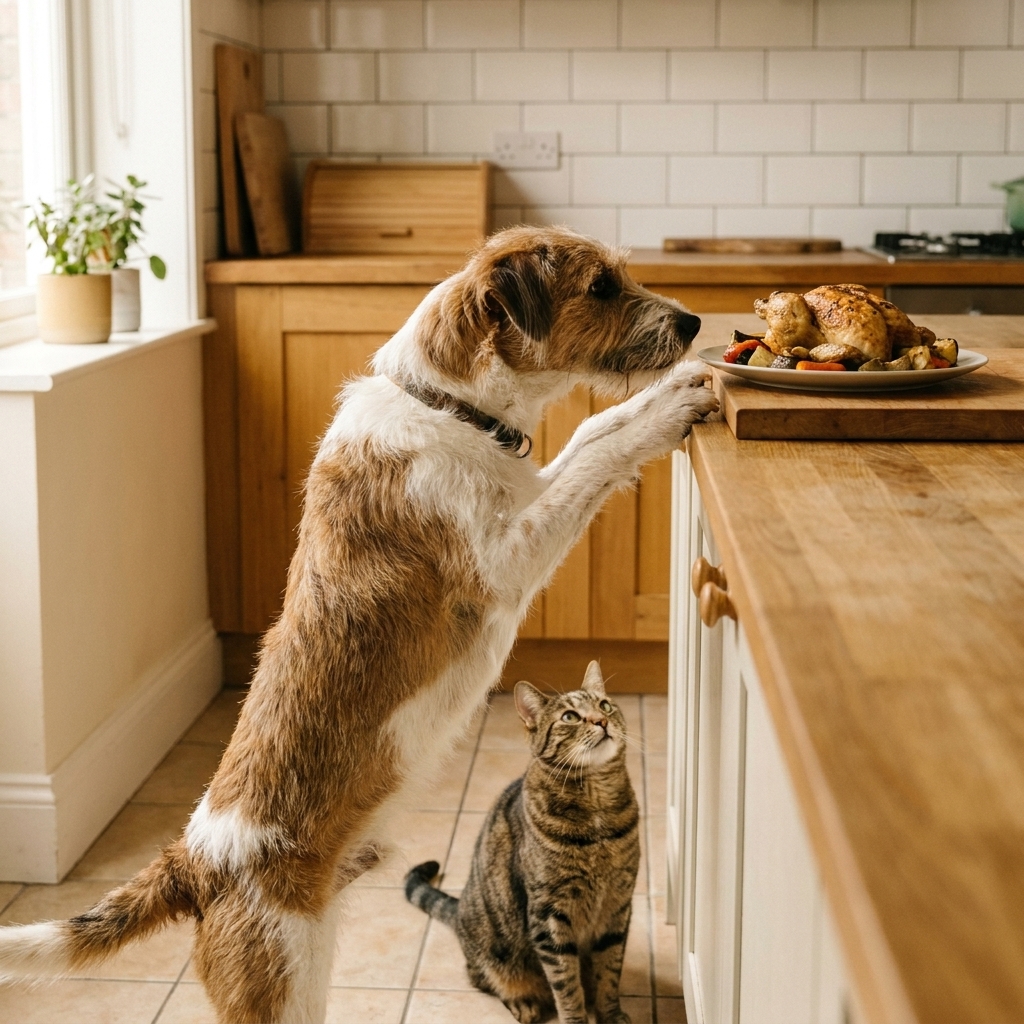
High-fat foods, dairy, or a big treat haul can upset a cat’s stomach. This is especially common after holidays or when well-meaning family members share “just a little bite.”
Stress or routine changes
Cats are sensitive to change. Moving, guests, new pets, schedule shifts, or even construction noise can trigger GI upset in some cats. Stress can absolutely contribute to vomiting in certain cats, but persistent vomiting should not be written off as “just stress” without a veterinary check.
Parasites
Intestinal parasites are more common in kittens, outdoor cats, and newly adopted cats. Vomiting can happen, sometimes with diarrhea or a pot-bellied look in kittens. Adult indoor cats can get parasites too (for example, via fleas or other exposures), so it is still on the list when vomiting becomes a pattern.
Underlying illness
This is the category we never want to miss. Vomiting can be a symptom of conditions that need diagnosis and treatment, such as:
- Kidney disease: Often seen in older cats, sometimes paired with increased thirst and urination, weight loss, and decreased appetite.
- Hyperthyroidism: Common in seniors, can cause weight loss despite a strong appetite, restlessness, and occasional vomiting.
- Pancreatitis or inflammatory bowel disease: Can cause recurring vomiting and nausea, sometimes with reduced appetite and lethargy.
- Food intolerance or allergy: Vomiting may be intermittent and may come with skin itchiness or chronic soft stool.
- Infections or systemic illness: Less common, but possible depending on exposure and overall health.
Foreign body or intestinal blockage
Cats can swallow string, ribbon, hair ties, rubber bands, toy parts, or bits of fabric. A blockage can start as “just vomiting” and quickly become life-threatening.
- Higher risk if: Your cat plays with stringy toys, chews plastic, raids the trash, or you are missing part of a wand toy.
- Red flag: Repeated vomiting or unproductive heaving, especially if your cat cannot keep water down.
What the vomit can tell you
The look of what came up is not a diagnosis, but it can help you communicate clearly with your vet.
- Undigested food right after eating: Often points toward eating too fast, but could also be regurgitation. Timing and whether there was active heaving matters.
- Partially digested food hours after eating: More consistent with nausea or stomach upset.
- Clear or white foam: Often shows up when the stomach is empty or irritated, or when a cat is nauseated and retching without much to bring up.
- Yellow liquid: Often bile. It can happen on an empty stomach, but repeated bile vomiting should be discussed with your vet.
- Hair plug: Supports hairball, especially if your cat bounces back quickly afterward.
- Blood: Bright red, clots, or dark coffee-ground material is always a same-day call.
- Foreign material: String, ribbon, plastic, or plant pieces change the urgency.
Hairball or something more?
In real life, it is not always obvious. Here are patterns I use to help pet parents sort the “probably okay to monitor” moments from the “call the vet” moments.
More like an occasional hairball
- It happens infrequently and does not seem to be increasing over time.
- You see a clear hair plug, not just liquid.
- Your cat returns to normal quickly: good appetite, normal energy, normal litter box habits.
- No blood, no repeated attempts to vomit, no signs of pain.
More concerning
- Vomiting is happening more often or becoming a pattern (even if it is “only” every couple of weeks, month after month).
- Your cat is vomiting food or liquid repeatedly, not producing a hairball.
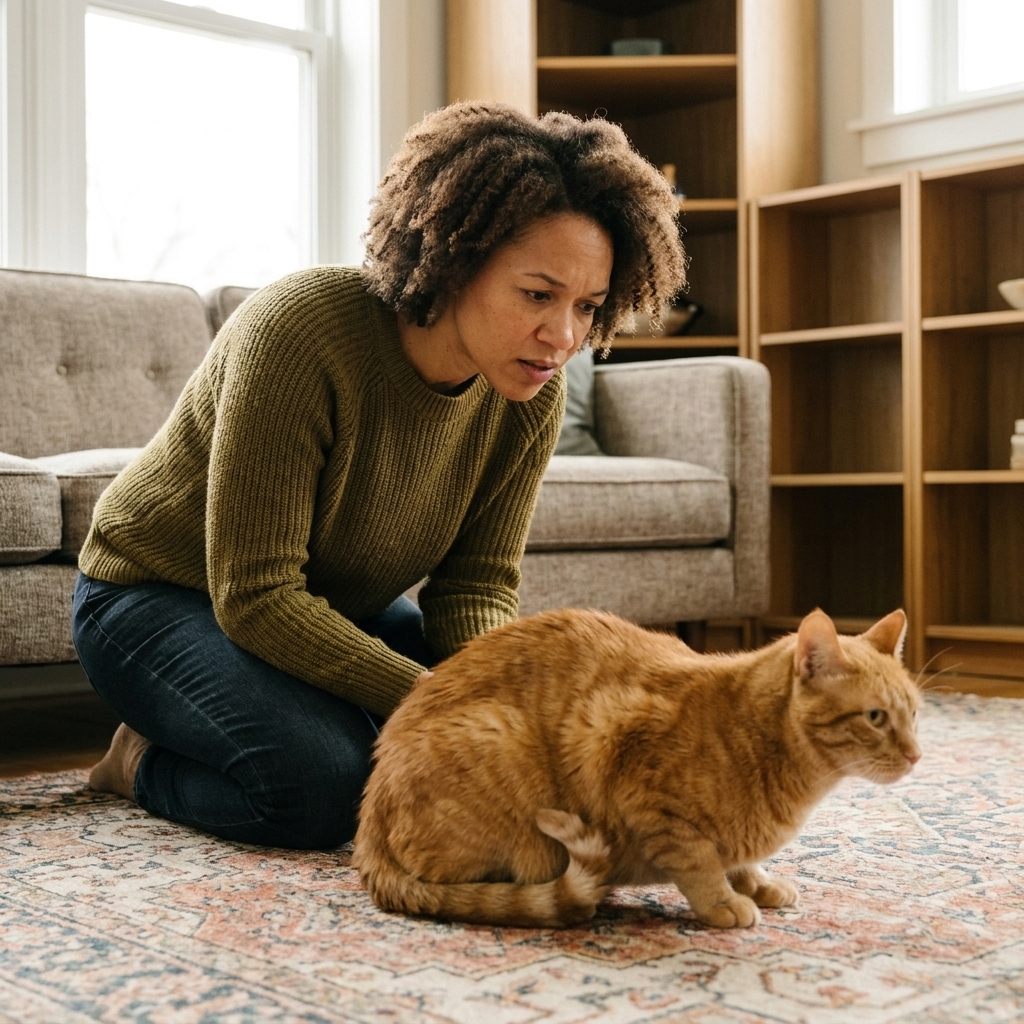
- There is weight loss, appetite change, or hiding behavior. Cats are experts at looking fine until they are not.
- Your cat seems nauseated (lip licking, drooling, sniffing food then walking away).
- Your cat is a kitten or senior and vomiting even once can hit harder.
When in doubt, call your vet and describe the frequency and what came up. You are not overreacting. You are collecting useful data.
Same-day vet signs
These signs are “call today” situations. If it is after hours, they are often “call the emergency clinic” situations, especially for kittens, seniors, and cats with chronic conditions.
- Blood in the vomit (bright red, clots, or dark coffee-ground material)
- Repeated vomiting or repeated heaving with little or nothing coming up
- Cannot keep water down, especially in kittens and seniors
- Lethargy, weakness, or collapse
- Signs of dehydration (tacky gums, sunken eyes, very low energy)
- Suspected foreign body (string, ribbon, missing toy pieces, known trash-eating)
- Painful abdomen (hunched posture, crying when picked up, guarding the belly)
- Vomiting plus diarrhea that is severe or ongoing
- Refusal to eat for more than a day, or any prolonged lack of appetite in a cat that is already thin or medically fragile
- Any breathing trouble (open-mouth breathing, pronounced effort, blue or gray gums) is an emergency, even if it started with “gagging” that looked like vomiting
Extra caution for kittens and seniors: They can dehydrate quickly. A kitten who is vomiting and not drinking is a same-day call, even if the vomit looks “mild.”
What to do at home
For a single vomiting episode in an otherwise bright, normal-acting adult cat, your vet may recommend monitoring at home. Here is what I consider safe, helpful, and realistically doable.
Do
- Offer water and monitor whether your cat can keep it down.
- Take notes: time, what came up (food, foam, hair, bile), how many times, and any plant or string exposure.
- Check the environment for chewed plants, missing thread, torn packaging, or toy pieces.
- Ask before fasting: some vets recommend a short break from food in select cases, but do not withhold food for long periods without guidance. Cats who go without calories for too long, especially overweight cats, can be at risk for serious complications.
Do not
- Do not give human medications like Pepto-Bismol, ibuprofen, acetaminophen, or anti-nausea meds unless your vet specifically instructs you. Some are toxic to cats.
- Do not pull string if you see it hanging from your cat’s mouth or rectum. That can cause serious internal injury. Keep your cat calm and go to the vet.
- Do not assume hairballs if vomiting becomes frequent, even if your cat is fluffy.

What your vet may ask
If you call or come in, your veterinary team will likely ask a few specific questions. Having answers ready can speed up care.
- How often is your cat vomiting? One episode is different from three times in a day or daily vomiting for weeks.
- What does it look like? Food, foam, bile (yellow), hairball, blood, or a foreign material clue.
- When does it happen? Right after eating can suggest speed-eating or regurgitation. Random timing may suggest nausea or illness.
- Any diet changes, treats, or table food? GI upset is often diet-related.
- Any access to string, plants, or toxins? This changes urgency.
- Any changes in thirst, urination, appetite, or weight? These point toward systemic causes like kidney disease or hyperthyroidism.
Depending on your cat’s exam, your vet might recommend bloodwork, a fecal test, X-rays, or an ultrasound to check for dehydration, organ function changes, pancreatitis, parasites, or a blockage.
Frequently asked questions
Is it normal for cats to throw up?
An occasional vomit can happen, but “normal” should not mean frequent or ignored. If vomiting is recurring, increasing, or paired with appetite or weight changes, it deserves a veterinary conversation.
My cat vomited clear or white foam. What does that mean?
Foam often shows up when the stomach is empty or irritated, or when a cat is nauseated and retching without much to bring up. If it is a one-time foam vomit and your cat is otherwise normal, monitoring may be reasonable. If it repeats, call your vet.
My cat vomits yellow liquid. Should I worry?
Yellow fluid is often bile. It can happen when a cat vomits on an empty stomach, but repeated bile vomiting can also occur with GI disease, pancreatitis, or other illnesses. If it happens more than once or your cat seems unwell, call your vet.
How often are hairballs too often?
There is not one perfect number for every cat. As a practical rule of thumb, if hairballs seem to be happening weekly, increasing, or showing up out of the blue in a cat who did not used to have them, talk with your veterinarian. Sometimes the real issue is excessive grooming, skin disease, constipation, or underlying nausea that looks like hairball behavior.
When is vomiting an emergency?
Go in urgently for blood, repeated vomiting or repeated heaving, suspected string or foreign body, severe lethargy, pain, inability to keep water down, or any breathing difficulty. Kittens and seniors move into the urgent category faster because dehydration and complications can develop quickly.
The bottom line
If your cat throws up once and bounces back like nothing happened, you may be able to monitor. If vomiting is frequent, forceful, paired with lethargy, your cat cannot keep water down, or you are seeing a slow pattern over time, it is time to call your vet. Trust your gut. You know your cat’s “normal,” and you do not need to wait for things to look dramatic to ask for help.