
If your cat is carrying extra weight, you are not alone. I met so many loving pet parents at the clinic who felt stuck between a cat who acted starving and the nagging worry that “a little chunky” might turn into a real health problem. The good news is that safe weight loss is absolutely doable, and it does not require crash diets or constant hunger. It requires a plan, consistency, and a few cat-friendly tweaks that work with their biology, not against it.
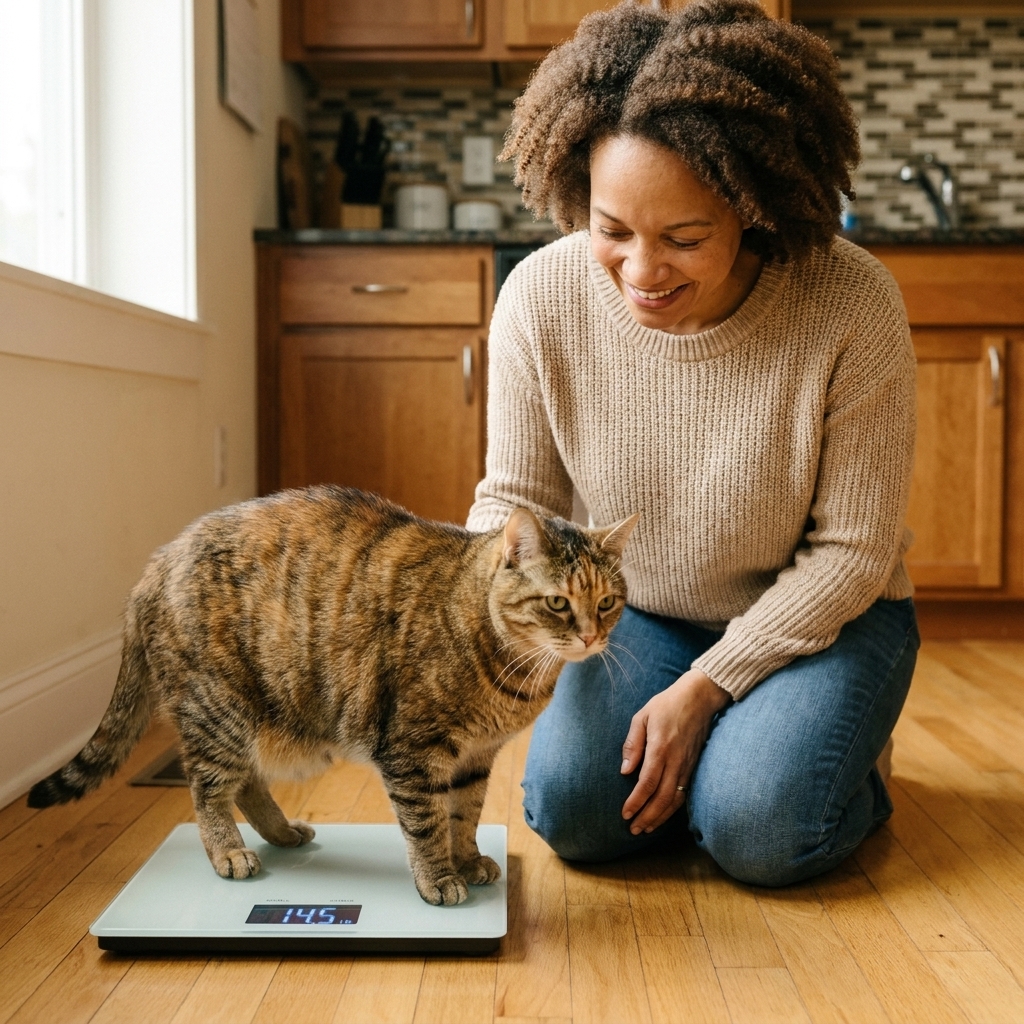
Below is a practical, vet-tech-informed way to help your cat lose weight safely, protect their muscles and liver, and build healthier habits that actually stick.
Start with a vet check, not a diet
Before you cut calories, schedule a checkup. Weight gain can be driven by simple overfeeding, but it can also be influenced by medical conditions, pain, or medications. A quick exam and basic lab work can catch issues early and help your veterinarian set a safe target.
Common factors that can contribute to weight gain
- Indoor-only lifestyle with low activity
- Free-feeding (food always available)
- Too many treats or high-calorie “toppers”
- Post-spay/neuter metabolism shift
- Arthritis, dental disease, or other pain that reduces movement
- Medical conditions such as diabetes mellitus (and, more rarely, hormonal disorders like hyperadrenocorticism). Hypothyroidism is rare in cats and is most often seen after treatment for hyperthyroidism.
Important: Cats should not lose weight quickly. Rapid weight loss can trigger hepatic lipidosis (fatty liver disease), a serious and potentially life-threatening condition. This risk is especially high if an overweight cat stops eating. This is why a guided, gradual plan matters.
Know what “healthy” looks like
The number on the scale is useful, but body shape tells the real story. Many cats have a “normal” weight range depending on frame size, muscle, and age.
Quick at-home body condition clues
- You should be able to feel ribs with gentle pressure, like feeling knuckles through a thin glove.
- There should be a waist when viewed from above (a little tuck behind the ribs).
- The belly should not swing heavily side-to-side when they walk. A small primordial pouch is normal. A large, heavy apron of fat is not.
If you are unsure, ask your vet to show you your cat’s Body Condition Score (BCS) and what a realistic goal looks like. That one conversation can turn weight loss from vague stress into a specific plan.
Make the food plan measurable
In my experience, the biggest reason cat diets fail is not willpower. It is guesswork. “A little less” can still be too much, especially with calorie-dense kibble and generous treats.
Step 1: Stop free-feeding
If food is always down, it is incredibly hard to control intake. Transition to measured meals, typically 2 to 4 small meals per day. Timed meals can also help reduce habit eating.
Step 2: Use a kitchen scale
Cups are convenient but imprecise. A small kitchen gram scale is one of the best tools you can buy for feline weight loss. Weigh the daily food allowance in grams, then divide it into meals.
Step 3: Get a real calorie target
Ask your veterinarian for a daily calorie goal and an ideal (or target) weight. Do not rely only on the feeding chart on the bag or can. Those charts are a starting point, and many indoor cats gain weight when fed the “average” recommendation.
Step 4: Pick a weight-loss-friendly diet
Talk with your vet about whether your cat should be on:
- A veterinary therapeutic weight-loss diet (often higher protein and fiber, designed for safe calorie restriction)
- A higher-protein wet food plan to increase water intake and support satiety
- A mixed wet and dry approach if that is more realistic for your home
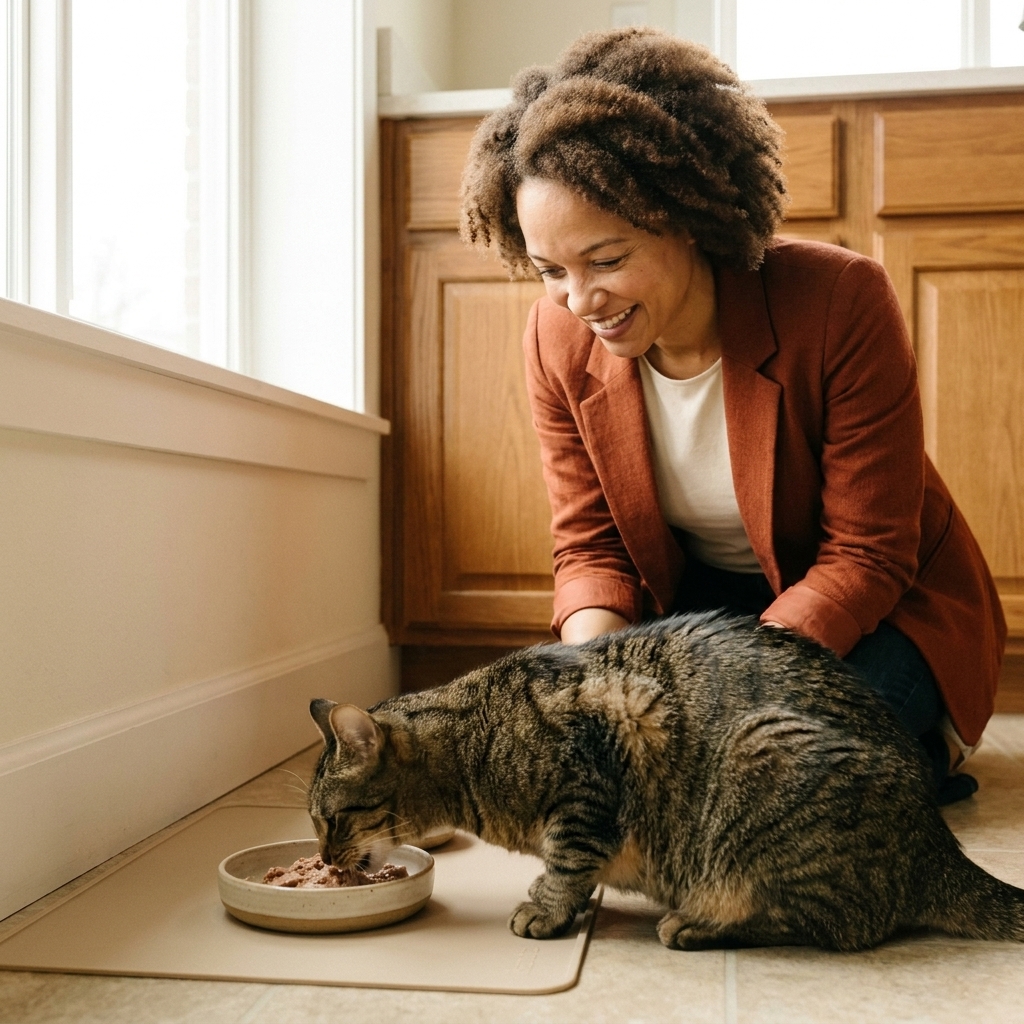
Wet food is not automatically “diet food,” but many cats feel fuller on wet meals because of the water content. Increased moisture intake may also be helpful for some cats prone to urinary issues. The best diet is the one that meets nutrition needs and that you can feed consistently.
Transition slowly
A sudden switch can cause vomiting, diarrhea, or a hunger strike. Go slow, especially with cats who are picky or stress-sensitive.
A gentle 7 to 10 day transition
- Days 1 to 3: 75% current food, 25% new food
- Days 4 to 6: 50% current food, 50% new food
- Days 7 to 9: 25% current food, 75% new food
- Day 10: 100% new food
If your cat has a sensitive stomach, stretch this to 2 weeks. If they stop eating entirely or eat dramatically less for more than 24 hours, call your veterinarian right away. Overweight cats are at higher risk for hepatic lipidosis when appetite drops.
Cut calories, keep them satisfied
“My cat acts like they are starving” is something I heard almost daily as a vet tech. Hunger can be real, but it can also be habit and attention-seeking. You can reduce calorie intake while still helping your cat feel satisfied.
One realistic heads-up: begging often gets louder during the first 1 to 2 weeks after you switch from free-feeding to scheduled meals. In many homes, it settles down as the routine becomes predictable.
Use smart feeding tools
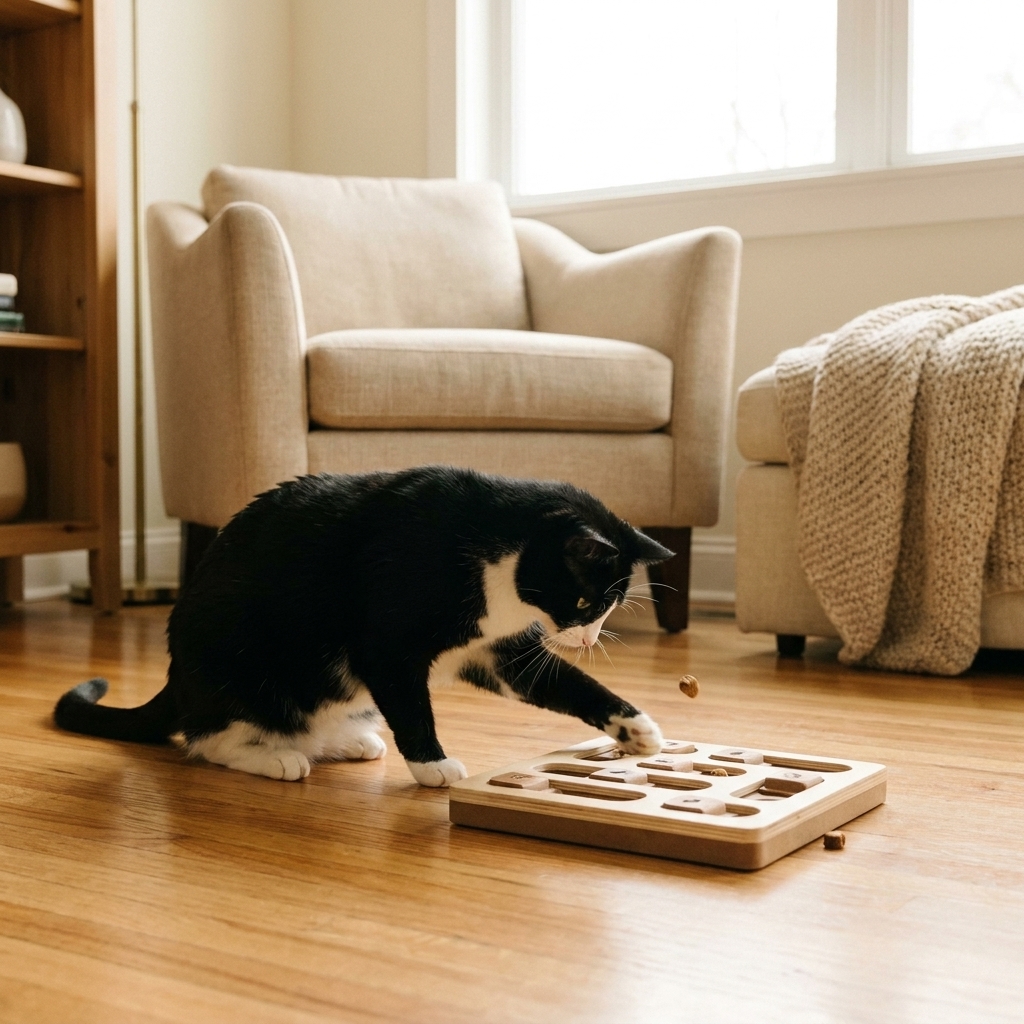
- Puzzle feeders for kibble, so meals last longer
- Slow-feed bowls for wet food (or spread wet food thinly on a lick mat designed for cats)
- Food-dispensing toys that encourage movement
Rethink treats
Treats can quietly wreck a weight-loss plan. Decide on a daily treat budget and stick to it.
- Keep treats to 10% or less of daily calories when possible.
- If you do not know treat calories, the easiest approach is to use part of your cat’s measured daily food as treats (set a little aside before you serve meals).
- Use tiny pieces. Cats do not need big treats to feel rewarded.
- Try single-ingredient treats (like freeze-dried meat) and break them up.
- Use affection, brushing, or play as rewards too.
Also keep human foods out of feeding toys and lick mats unless your veterinarian specifically okays it. Some common household items can be unsafe for cats, and it is easy to accidentally add a lot of calories.
Increase activity at home
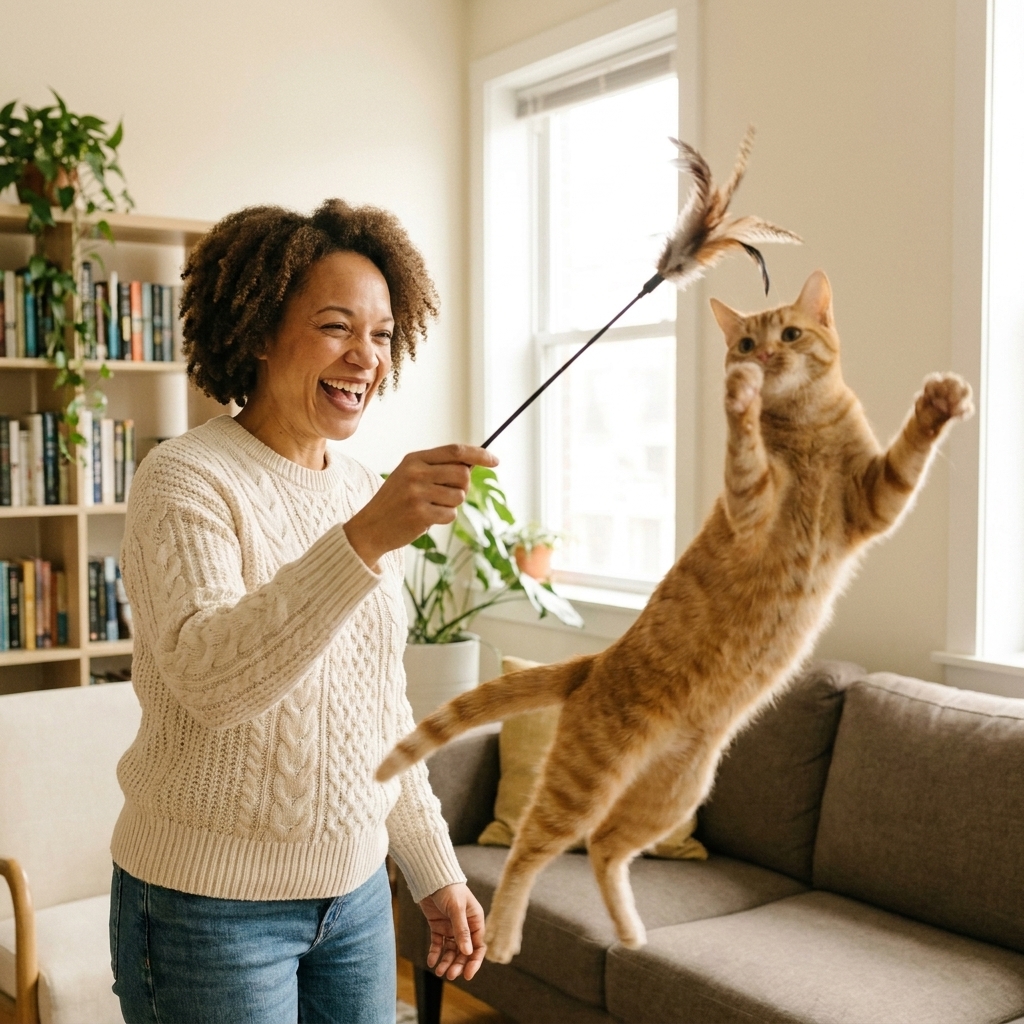
Exercise does not have to look like a marathon. For cats, consistent short bursts of hunting-style play are perfect. Your goal is to build daily movement and preserve muscle while the scale slowly trends down.
Easy exercise ideas that work
- Two to three play sessions per day, 5 to 10 minutes each, using wand toys or a laser pointer (always end with a tangible toy or a small meal).
- “Hunt the kibble”: hide small portions of measured kibble in multiple spots around the home.
- Vertical space: add a cat tree or window perch to encourage climbing.
- Hallway sprints: toss a soft toy down a hallway for chasing.
- Rotate toys weekly to keep them “new” and interesting.
If your cat seems reluctant to move, consider pain as a possibility. Overweight cats are more prone to arthritis than many people realize, and pain can look like laziness. Your vet can help with joint support options.
Track progress over time
Safe feline weight loss is usually slow, and that is a good thing. Focus on trends over time, not day-to-day fluctuations.
How fast should a cat lose weight?
Weight loss rates should be set by your veterinarian, but a commonly recommended range is about 0.5% to 2% of body weight per week. For many cats, especially seniors or cats with other health concerns, the lower end is often safer.
Simple monitoring routine
- Weigh your cat every 2 to 4 weeks, ideally on the same scale.
- Use a baby scale if you have one, or weigh yourself holding your cat and subtract your weight.
- Take a monthly photo from above and from the side in similar lighting.
- Watch behavior: energy, grooming, jumping, and litter box habits often improve as weight comes down.
If weight is not budging after 4 to 6 weeks of consistent measuring, check in with your veterinarian. The plan may need a small calorie adjustment, a diet change, or a deeper look at underlying issues.
Avoid common mistakes
- Crash dieting or fasting: this increases the risk of hepatic lipidosis.
- Switching foods constantly: frequent changes can cause GI upset and make results hard to interpret.
- Eyeballing portions: small “extras” add up fast.
- Feeding dog food: it is not nutritionally appropriate for cats.
- Relying on exercise alone: movement helps, but calorie control is what drives weight loss.
Multi-cat homes
If you have more than one cat, dieting can feel impossible when one cat steals the other’s meals. You have options.
- Microchip feeders to keep each cat to their own bowl
- Separate feeding areas, even if it is just different rooms for 15 minutes
- Pick-up-the-bowls routine after meals rather than leaving food down
- Scheduled meals for everyone, even the naturally slim cat
This is also a great time to re-check that everyone is eating the right amount for their life stage and activity level.
When to call your vet
Please reach out promptly if you notice any of the following during a weight-loss plan:
- Your cat refuses food or eats dramatically less for more than 24 hours (especially if they are overweight)
- Vomiting, diarrhea, or constipation that lasts more than a day
- Lethargy, hiding more than usual, or behavior changes
- Rapid weight loss or sudden appetite changes
- Signs of pain like reluctance to jump, stiff gait, or irritability when touched
FAQ
Can I just feed my cat less of their current food?
Sometimes, yes, but it depends on the food and how much you would need to restrict. If you cut too far, your cat may miss key nutrients. Weight-management diets are formulated to provide nutrition while lowering calories. Your veterinarian can help you choose the safest approach and set a calorie goal.
Is wet food better than dry food for weight loss?
Wet food can help some cats feel fuller due to higher moisture and often lower calorie density, but the “best” option is the one that fits your cat’s needs and your routine. Plenty of cats lose weight on measured dry food using puzzle feeders.
My cat begs constantly. Does that mean I’m underfeeding?
Not always. Cats are smart, and begging is an effective strategy. Make sure you are feeding the correct measured amount, then add satiety tools like puzzle feeding, spreading meals out, and increasing play. If begging ramps up suddenly or your cat seems unwell, talk with your vet to rule out medical causes.
How long will it take?
Most safe weight-loss plans take months, not weeks. That is normal. Even a modest loss can improve mobility, energy, coat quality, and long-term health.
A gentle mindset
Helping an overweight cat slim down is not about perfection. It is about steady routines and small wins: measured meals, fewer high-calorie extras, and daily movement that feels like play, not punishment. If you stay consistent and partner with your veterinarian, you will be amazed by how much better many cats feel as they move toward a healthier weight.
If you want, take today as your starting point: weigh the current food, pick meal times, and add one 5-minute play session. Those three steps alone can change the whole direction of your cat’s health.