A vet-tech-informed breakdown of wet vs. dry cat food, including hydration benefits, dental myths, budgeting tips, and how to choose the best fit.
If you have ever watched a cat ignore a fresh bowl of water, then sprint to the sink the second you turn it on, you are not alone. Cats can be picky drinkers, and that pickiness can matter. Low water intake and concentrated urine can be part of the picture behind common feline issues like constipation, lower urinary tract flare-ups, urinary crystals in some cats, and in some cases added strain for cats with kidney disease.
So, do you need a cat water fountain to prevent kidney issues? Usually, no. But a fountain can be a genuinely helpful tool for some cats, especially if it reliably increases their daily water intake. Let’s walk through what fountains can and cannot do, when they are worth it, and how to choose between stainless steel, ceramic, and plastic.
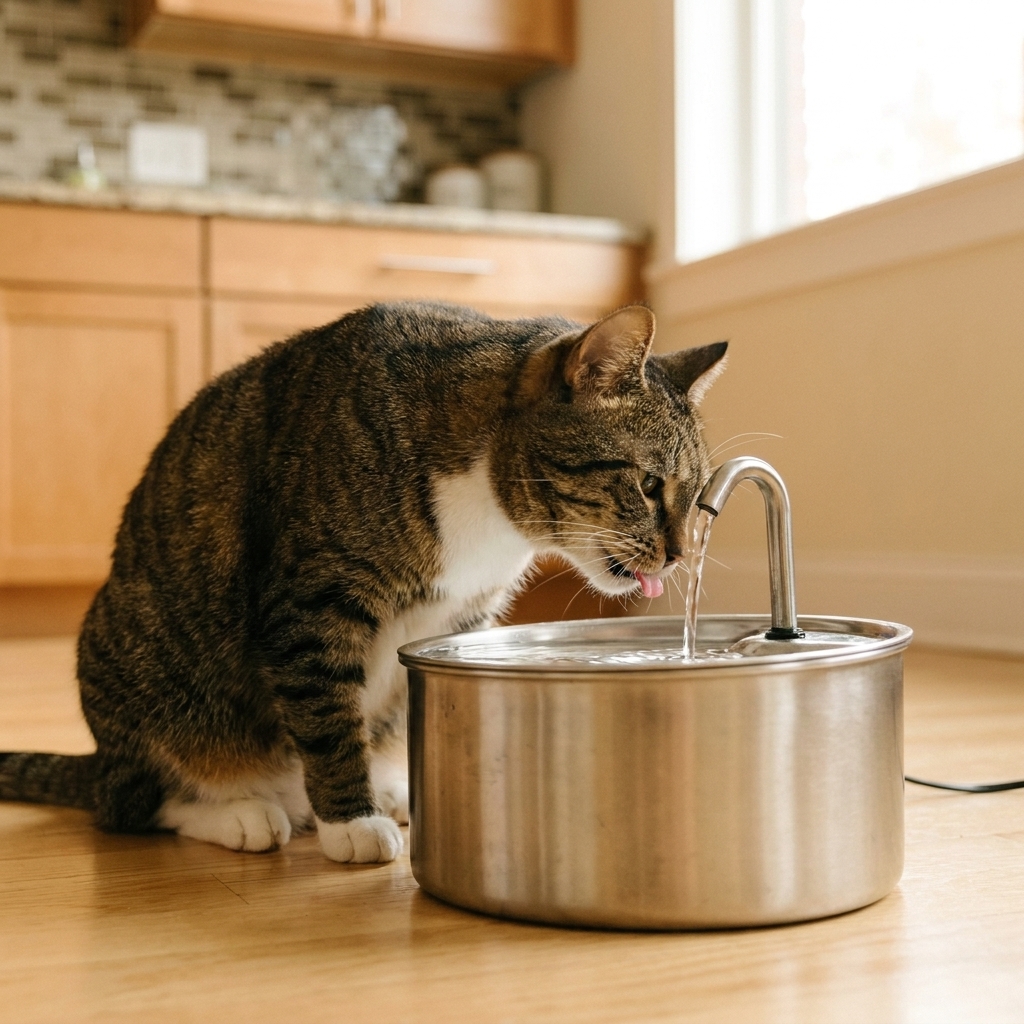
Kidney issues: why water matters
Domestic cats retain many traits from their ancestors, including an ability to produce fairly concentrated urine. In the wild, a good portion of their moisture comes from prey. In our homes, many cats eat mostly dry food, which contains far less water than canned or fresh diets.
When urine stays consistently concentrated, it can contribute to:
- Lower urinary tract problems (like crystals in some cats, or idiopathic cystitis flare-ups where stress and other factors also matter)
- Constipation (stool gets drier and harder to pass)
- Dehydration during illness (cats often stop eating and drinking when they do not feel well)
For chronic kidney disease (CKD), hydration is especially important for day-to-day comfort. CKD is common in older cats, and the kidneys lose efficiency over time. Cats with CKD often urinate more and can become dehydrated more easily, which can make them feel worse. Dehydration can also make lab values look higher than they would when a cat is well-hydrated.
Important nuance: Hydration supports kidney function and helps reduce dehydration episodes, but it does not “kidney-proof” a cat and it is not a guarantee against CKD progression. CKD has multiple contributing factors, including age, genetics, prior kidney injury, dental disease, blood pressure issues, and more. Think of water intake as one protective habit, not a cure.
Do fountains prevent kidney disease?
Here is the honest answer I used to give clients at the clinic: a fountain is not a medical device, but it can be a practical way to make water more enticing.
What a fountain can do
- Encourage some cats to drink more because the water is moving, aerated, and often tastes fresher
- Keep water appealing between refills, especially in multi-pet homes
- Make it easier to add a water station in a spot your cat actually likes
What a fountain cannot do
- It cannot prevent all kidney disease or replace regular vet care and senior screening labs
- It cannot fix dehydration if your cat is nauseated, painful, stressed, or sick and simply not drinking
- It cannot make up for poor maintenance. A dirty fountain can be less appealing than a bowl and may harbor biofilm and bacteria
The real goal: if a fountain increases your cat’s total daily water intake, that is a win for urinary health and hydration support. If your cat ignores it, it is just an expensive kitchen ornament.
Signs a fountain may help
Not every cat needs one, but fountains are often worth trying if you recognize one or more of these:
- Your cat begs for the faucet or drinks from the bathtub
- Your cat drinks only occasionally from a bowl (and you rarely see them drink)
- You have a history of urinary issues (crystals, inappropriate urination tied to bladder discomfort, cystitis flare-ups)
- Your cat eats mostly dry food and refuses canned food
- You have multiple pets and water bowls get dirty fast
- Your cat seems sensitive to “stale” water and stops drinking unless you constantly refresh it
If your cat is already diagnosed with CKD, a fountain can be part of your hydration plan, but it should sit alongside vet guidance, diet changes, and sometimes added water to meals depending on your cat’s stage and appetite.
When a fountain is not the priority
Sometimes the best move is not buying new gear, but adjusting the basics:
- Your cat will not drink because they feel unwell. If your cat is lethargic, vomiting, hiding, or not eating, call your vet. A fountain will not solve nausea or pain.
- You already feed mostly wet food. Many cats on canned diets get a significant portion of their water intake from food. A fountain can still help, but the impact may be smaller.
- You are not able to clean it often. Most fountains need frequent rinsing and regular deep cleaning. If that is not realistic right now, start with multiple bowls and build the habit first.
- Your cat hates noise or movement. Some cats are skittish around humming motors or bubbling water. A wide, shallow bowl in a quiet area might be more successful.
Hydration tips without a fountain
In my house, the “best” hydration plan is whatever your cat will actually do consistently. A few options that often help:
- Add more wet food (even one canned meal a day can make a difference)
- Mix extra water into canned food gradually, especially for cats prone to constipation or urinary issues
- Offer multiple water stations in different rooms
- Use wide, shallow bowls to avoid whisker stress for some cats
- Keep water away from food and litter since some cats prefer separation
- Try different water temperatures (many cats like cool water)
- Wash bowls daily to remove biofilm, which can make water taste off
If your cat is on a prescription urinary or kidney diet, follow your veterinarian’s plan. Those diets are formulated very intentionally, and swapping foods without guidance can backfire.
How much water is “enough”?
There is no perfect one-size-fits-all number, but a commonly cited rough range for total daily water intake (from food plus drinking) is about 40 to 60 mL per kilogram of body weight per day. Needs vary with diet (wet versus dry), environment, activity level, and health conditions.
This is why wet food can be such a big deal: a cat eating mostly canned food may drink less at the bowl because they are already getting water through meals.
If you are worried your cat is not drinking enough, your veterinarian can also help with objective checks like body weight trends, urine concentration (urine specific gravity), and bloodwork when appropriate.
Buyer’s guide: materials
Material matters more than most people realize. It affects cleanliness, durability, taste, and how likely your cat is to keep using the fountain.
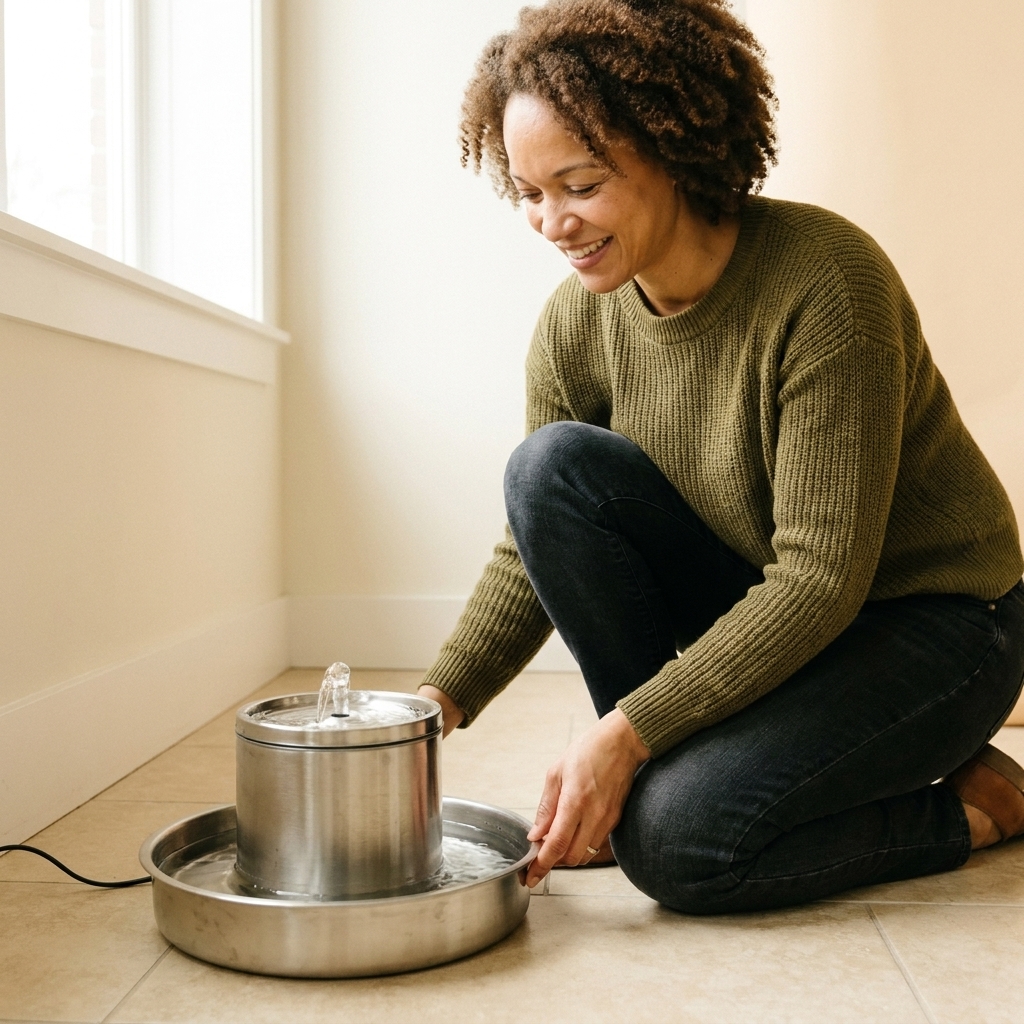
Stainless steel
Best for: Most households, especially if you want the easiest material to keep fresh and odor-free.
- Pros: Non-porous, resists scratches, less likely to hold odors or bacteria, dishwasher-friendly parts in many models
- Cons: Can show water spots, may be louder if water splashes against metal, some cats dislike a stronger stream sound
My clinic take: Stainless steel was often our go-to recommendation for cats with acne or cats who seemed sensitive to dirty bowls, because it is easier to sanitize thoroughly.
Ceramic
Best for: Cats who dislike plastic odors or owners who want a heavier, stable fountain that is less likely to scoot across the floor.

- Pros: Non-porous if the glaze is intact, heavier and stable, often very quiet, tends to keep water cooler
- Cons: Can chip or crack if dropped, chips can create rough areas that are harder to sanitize, typically more expensive
What to check: Inspect for hairline cracks and chips during cleaning. If the glaze is compromised, replace it.
Plastic
Best for: Tight budgets or short-term trial runs, as long as you commit to diligent cleaning.
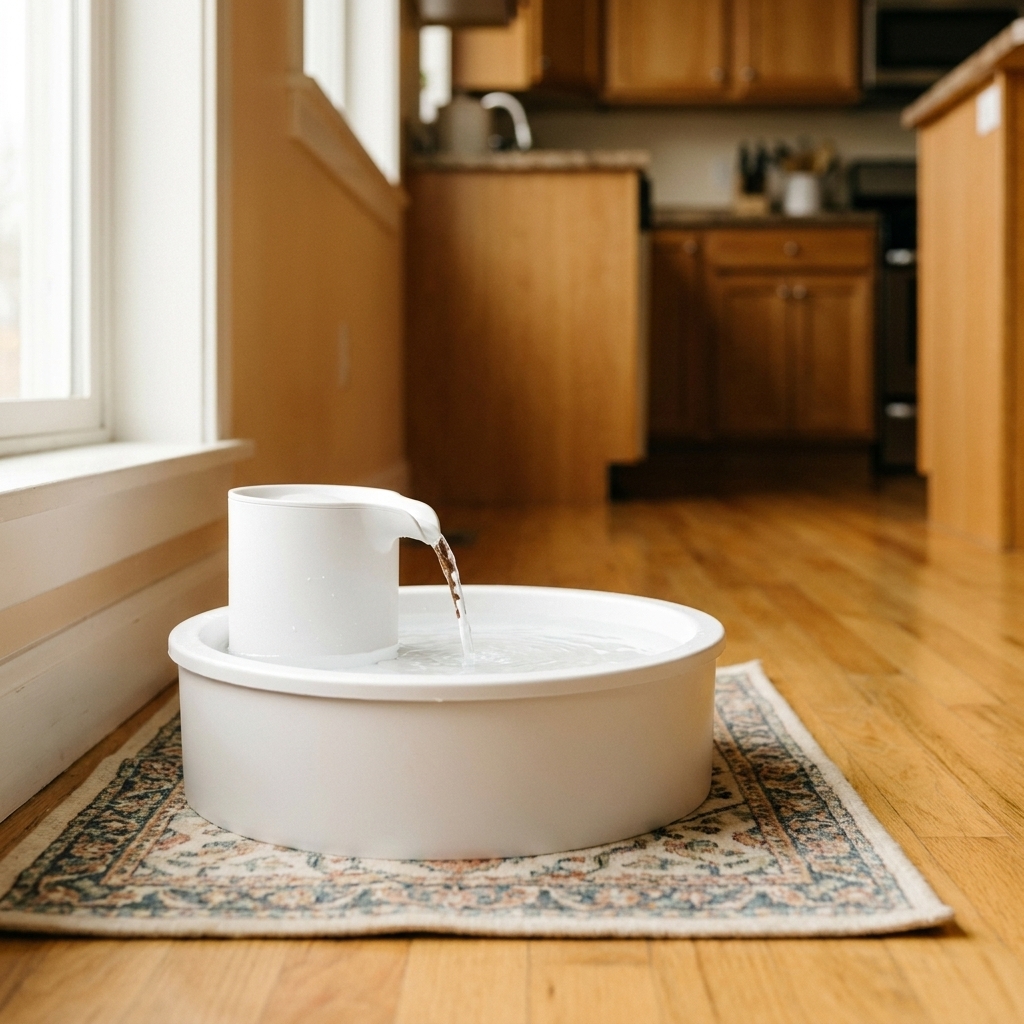
- Pros: Usually the most affordable, lightweight, widely available
- Cons: More likely to scratch, can hold odors, scratches can harbor biofilm, and some cats may be more prone to chin irritation or acne with plastic, especially if the surface is scratched or not kept very clean
If you choose plastic: Replace it if you notice scratches, cloudiness that will not wash off, or lingering odor. And be extra strict about deep cleaning.
Features to look for
Prioritize
- Easy disassembly with minimal tiny crevices
- Replaceable filters that are easy to buy reliably
- A wide drinking surface since some cats dislike narrow bowls
- Low water level shutoff or an indicator window to prevent pump burnout
- Quiet pump if your cat is sound-sensitive
- A stable surface and smart placement away from litter, and often away from food, in a low-traffic spot with good sightlines
Think twice
- Very tall, narrow designs that force a cat to crowd their whiskers
- Complex spouts with lots of small parts that are annoying to clean
- Any fountain you cannot clean easily, because convenience is what keeps water safe and appealing
Filter reality check: A filter can help reduce debris and improve taste, but it does not sterilize the water. Cleaning still matters.
Cleaning: the part that matters most
If you remember only one thing, let it be this: moving water does not automatically mean clean water. Biofilm can build up quickly in pumps, tubing, and bowls.
- Daily or every couple of days (minimum): Top off with fresh water. Quick rinse if you see food crumbs or hair.
- Weekly (minimum): Disassemble, wash all parts with hot soapy water, scrub crevices with a small brush, rinse thoroughly.
- Every 2 to 4 weeks (or sooner if needed): Deep clean the pump and impeller area (follow the manufacturer instructions). This is where slime loves to hide.
- Filter changes: Follow the schedule for your model. If you have multiple cats, you may need to replace filters more often.
Tip from my vet tech days: If the fountain starts smelling “earthy,” feels slick anywhere, or the flow slows down, that is your cue to deep clean immediately. Cats notice those changes fast, and some will boycott the fountain without warning.
How to tell if it’s working
If you want to know whether the fountain is actually increasing intake, try one of these practical checks:
- Track the water level over 24 hours (account for other pets and a little evaporation). If your fountain has markings or a window, this is easy.
- Watch the litter box: larger urine clumps can be a sign of higher urine volume, although litter type and number of cats matter.
- Ask your vet about objective measures if there is a medical reason to monitor closely, like urine specific gravity checks or periodic lab work for seniors.
Getting your cat to use it
Some cats take to fountains instantly. Others act like you brought home a suspicious bubbling alien. Try this gentle approach:
- Set it up next to their current water bowl for a few days, and keep the bowl available.
- Run the fountain on the lowest flow setting at first if possible.
- Reward curiosity with praise or a treat when they approach or sniff it.
- Try different locations. Many cats prefer water away from food and well away from litter, in a quiet area with good sightlines.
- Keep it impeccably clean in the early days so the water tastes as fresh as possible.
Do not remove the old water source until you have seen consistent drinking from the fountain. Hydration is not the place for tough love.
Red flags: call your vet
A fountain is a support tool, not a substitute for medical care. Contact your veterinarian promptly if you notice:
- Increased thirst paired with weight loss, vomiting, or appetite changes
- Urinating outside the box, straining, or frequent small urinations
- Bad breath that smells like ammonia, drooling, or oral pain
- Sudden decrease in drinking, especially with lethargy
- Signs of dehydration (tacky gums, sunken eyes, weakness)
If your cat is male and straining to urinate or producing little to no urine, treat it as an emergency. Urinary blockage can become life-threatening quickly.
Bottom line
You do not need a cat water fountain to prevent kidney disease. Plenty of cats stay well-hydrated through wet food, multiple clean bowls, and smart water placement.
But if your cat prefers running water or tends to under-drink, a fountain can be a worthwhile upgrade. Choose a material that stays clean easily, commit to maintenance, and pay attention to whether your cat’s drinking habits actually change.
If you are unsure whether your cat is drinking enough, ask your vet about tracking water intake for a week and whether routine lab work is appropriate for your cat’s age and risk factors. Peace of mind is a beautiful thing, and so is a cat who actually drinks the water you put out.
Quick FAQ
Do vets recommend fountains?
Many do, especially for cats that prefer moving water, cats with urinary history, or homes where bowls get dirty quickly. It is usually framed as a hydration helper, not a treatment.
Can a fountain help a cat with CKD?
It can support hydration if your cat drinks more from it, which may help comfort and reduce dehydration ups and downs for many CKD cats. Your veterinarian may also recommend a kidney-support diet, appetite support, nausea control, blood pressure monitoring, and sometimes fluids depending on stage and symptoms.
Is stainless steel better than plastic?
In most cases, yes. Stainless steel is less porous and less likely to scratch, which makes it easier to sanitize and less likely to hold odors. Plastic can work if it is cleaned thoroughly and replaced when worn.
Why does my cat stop using the fountain?
The most common reasons are flow changes from a clogged pump, dirty parts or biofilm, an overdue filter, a new noise, or a location change. Deep clean the fountain, replace the filter if needed, and try moving it to a quieter spot.