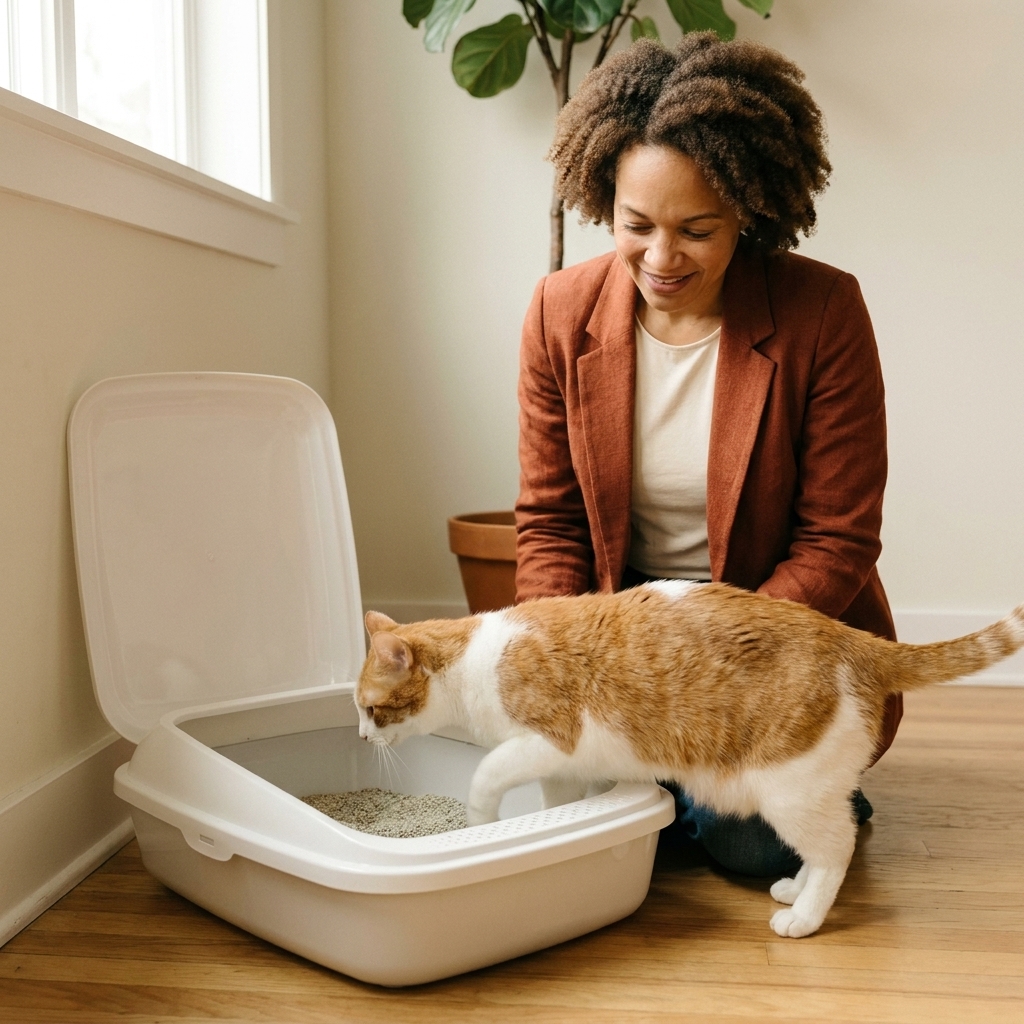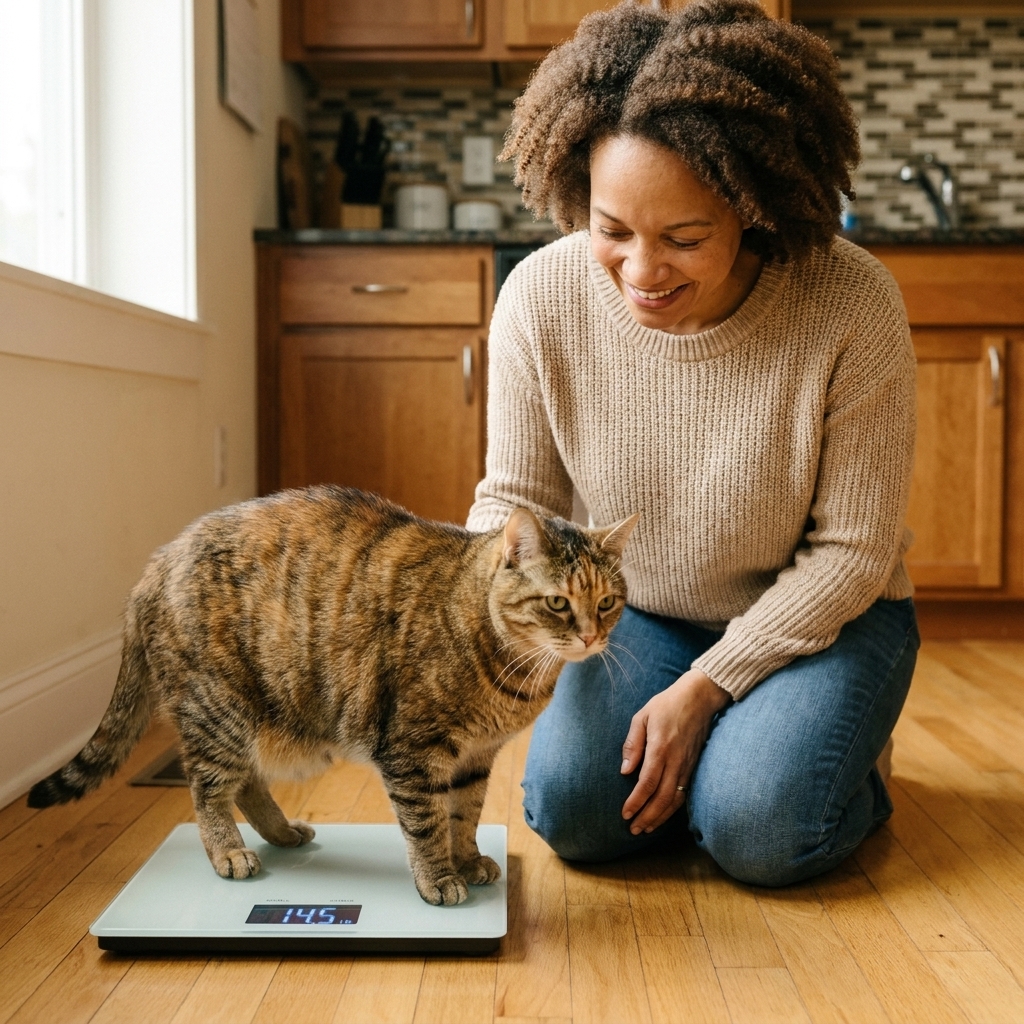
Cats often hide sickness. Here’s how to spot early behavioral and physical changes, what is urgent, and what details help your veterinarian act faster.
Scratching is not your cat being “bad.” It is normal, necessary behavior that helps them stretch their back and shoulders, shed old nail layers, and leave both visible marks and, in many cases, subtle scent cues that say, “I live here.” The goal is not to stop scratching. It is to move that scratching to something you actually want them to use.
As a former vet tech, I can tell you the quickest wins usually come from two things: making the right scratching option feel irresistible and making the furniture feel unrewarding. Here are five cat-friendly strategies that work best when you combine them.
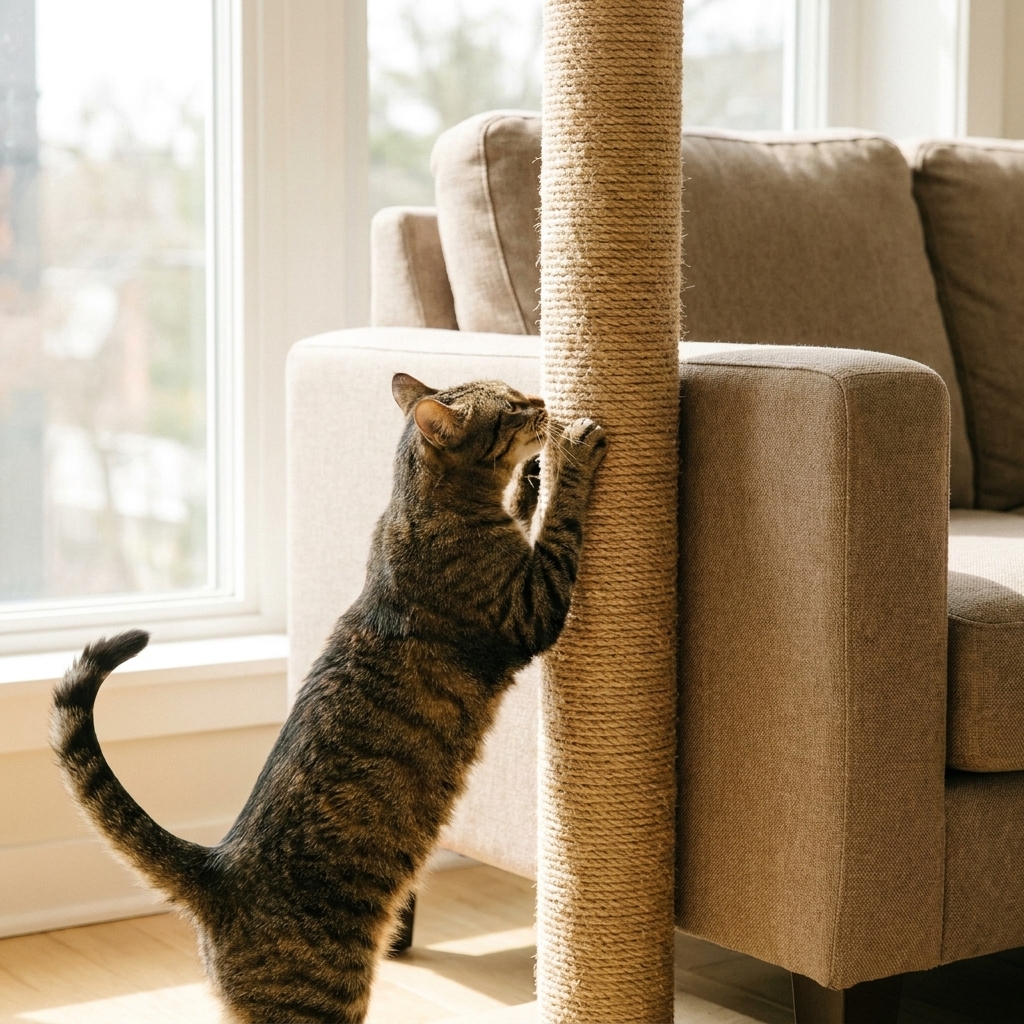
1) Offer the right scratcher
If your cat is choosing the couch over the scratching post you bought, it usually means the post is the wrong material, shape, height, or stability. Cats repeat what feels good.
What to try
- Go tall and sturdy: Many cats want a full-body stretch. Look for a post that is tall enough for that (often around 28 to 32 inches for many cats) and does not wobble.
- Offer both vertical and horizontal options: Some cats prefer a vertical sisal post. Others love a cardboard scratcher they can rake with their whole body. Many households do best with one of each.
- Prioritize texture: Sisal (rope or fabric) and dense corrugated cardboard are common favorites. Carpeted posts can be hit-or-miss, and if your home has carpet, they can blur the “what is okay to scratch” message.
- Make it “new and exciting”: Sprinkle catnip on or near the scratcher, or use a catnip spray. If your cat does not respond to catnip, try silvervine instead.
Quick test: Put one hand on the scratcher and try to wiggle it. If it moves easily, many cats will refuse it. Add a wider base, brace it in a corner, or switch to a heavier model.
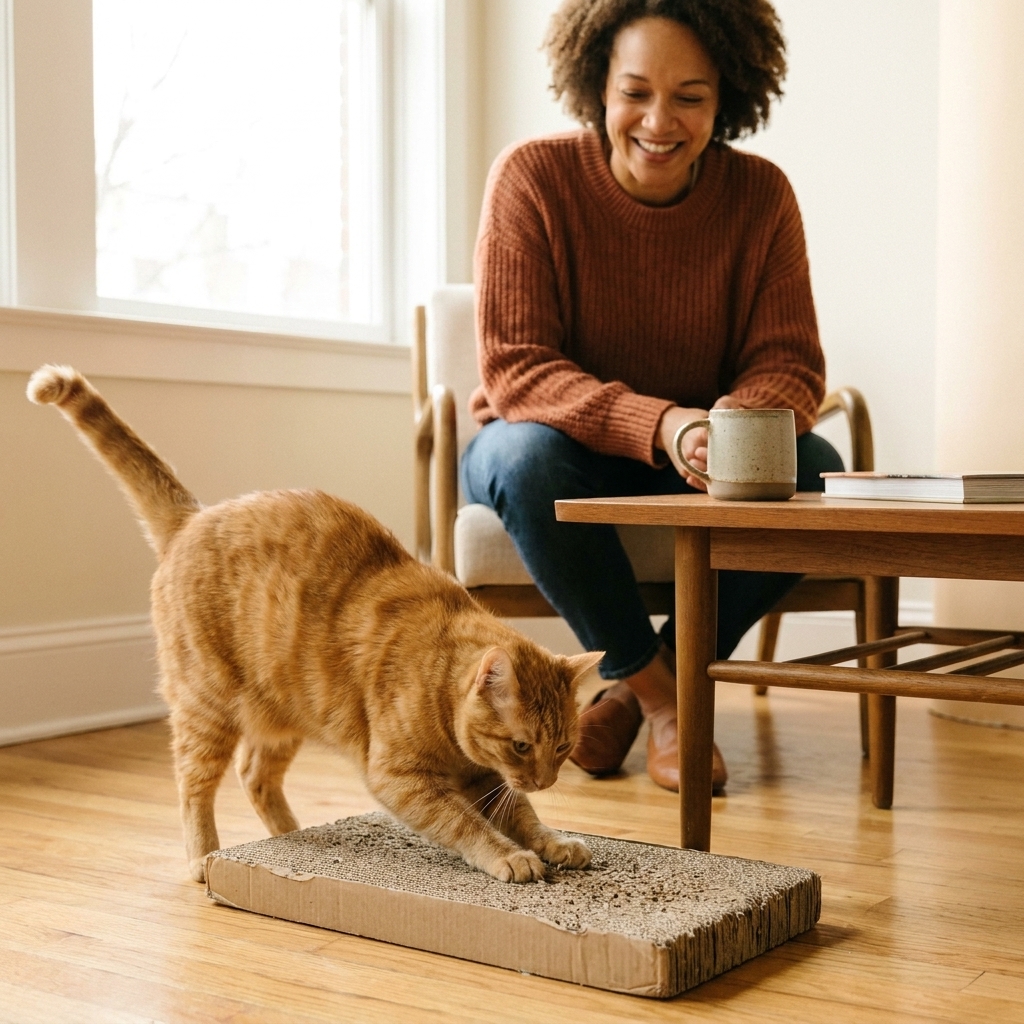
2) Put scratchers where your cat scratches
This sounds almost too simple, but placement is everything. Cats often scratch in “social” areas to mark territory, and they also scratch where they wake up to stretch. If the scratcher is tucked in a laundry room, your cat may never choose it over the couch that sits in the center of family life.
Placement that works
- Right next to the problem spot: Place a tall post within a few inches of the couch arm your cat targets. Once your cat uses it consistently, you can gradually move it an inch or two per day to a preferred location.
- Near sleep zones: Add a scratcher close to where your cat naps. Many cats scratch within minutes of waking.
- In high-traffic rooms: Living room, hallway corners, and near windows are common scratching hot zones.
If your cat scratches a specific corner, try a corner-shaped scratcher or place a vertical post at that angle so it feels like the same target, just acceptable.
Senior cat note: Older cats and cats with arthritis may prefer a lower, angled scratcher or a very stable horizontal pad so they can scratch without fully standing tall or leaning hard into a post.
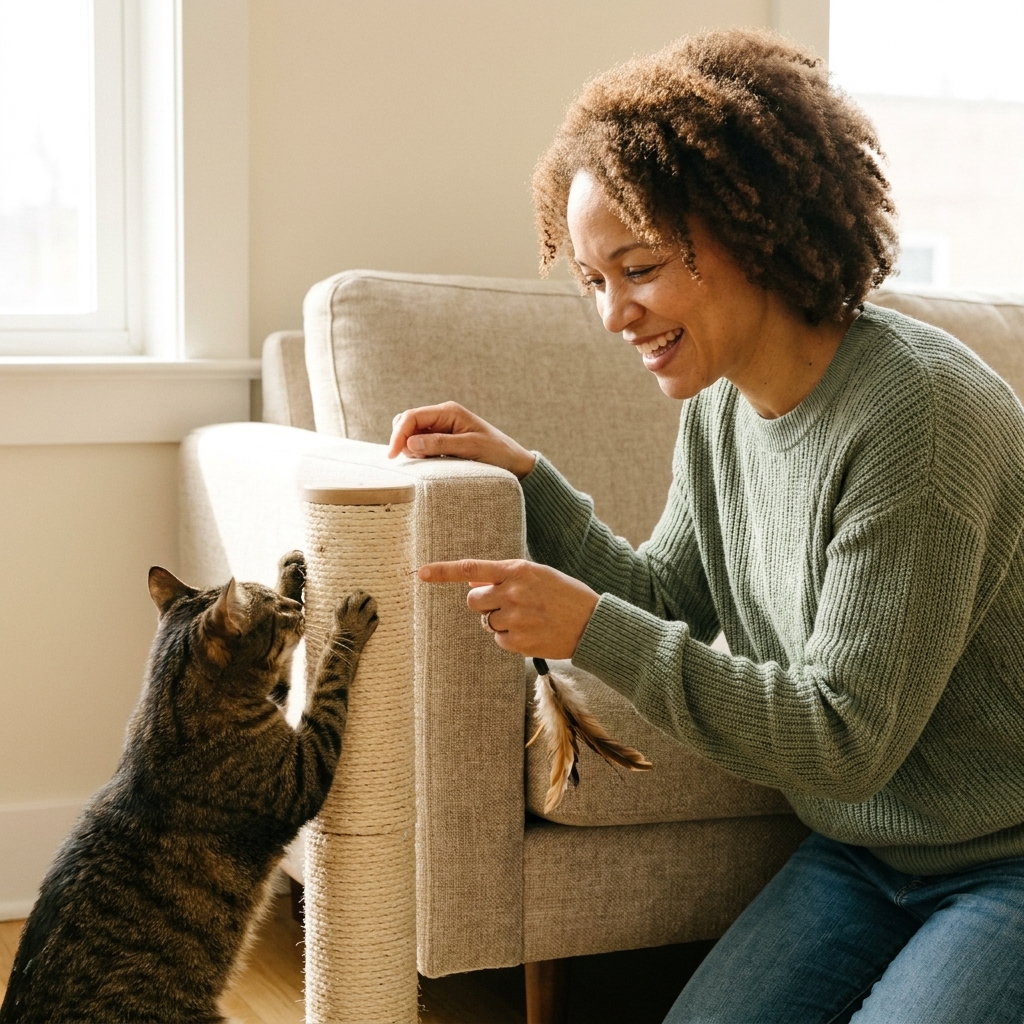
3) Make the furniture unappealing
Declawing and punishment are off the table here, for both welfare and behavior reasons. Punishment can increase stress and often makes scratching worse. Spray bottles and loud scolding may stop the behavior in the moment, but they can also teach your cat to scratch when you are not around, or to avoid you. Instead, aim for gentle deterrents that remove the payoff.
Furniture-protection options
- Double-sided tape: Cats generally dislike sticky textures on paws. Apply to the couch arms or corners for a few weeks while the scratcher habit forms.
- Clear furniture guards: Transparent plastic corner protectors can block damage and are great for determined scratchers.
- Slipcovers or tightly tucked blankets: A short-term barrier can save your upholstery during training.
- Texture swap: Some cats hate crinkly surfaces. A strategically placed crinkle mat near the scratch zone can help, as long as your cat is not frightened by it.
Go easy on strongly scented deterrent sprays. Many wear off quickly, some can irritate sensitive cats, and some can stain fabric. If you try a commercial deterrent, choose a pet-safe product and test it on a hidden area first.
Optional furniture-saver: Soft nail caps (often sold as Soft Paws-style caps) can be a helpful temporary layer of protection for some cats while training takes hold. They are not for every cat, but they can reduce damage without taking away the ability to scratch.

4) Lower stress scratching
Sometimes scratching ramps up during changes like a move, new pet, new baby, schedule shifts, or outdoor cats showing up at a window. In those cases, the scratching is still normal, but the intensity can be driven by stress.
What helps
- Cat pheromone diffusers: Products that mimic feline facial pheromones can help some cats feel more secure. Results vary by cat, but it can be worth trying, especially during transitions. Place a diffuser in the room where scratching happens most.
- Predictable daily rhythm: Regular meal times, play sessions, and quiet rest periods can lower overall anxiety.
- More ways to feel secure in the space: Add a cat tree, window perch, and at least one cozy hiding spot (like a covered bed or a box) in social areas.
Pheromones are not magic, but when stress is a factor, they can make your training and redirection work faster because your cat is less amped up in the first place.
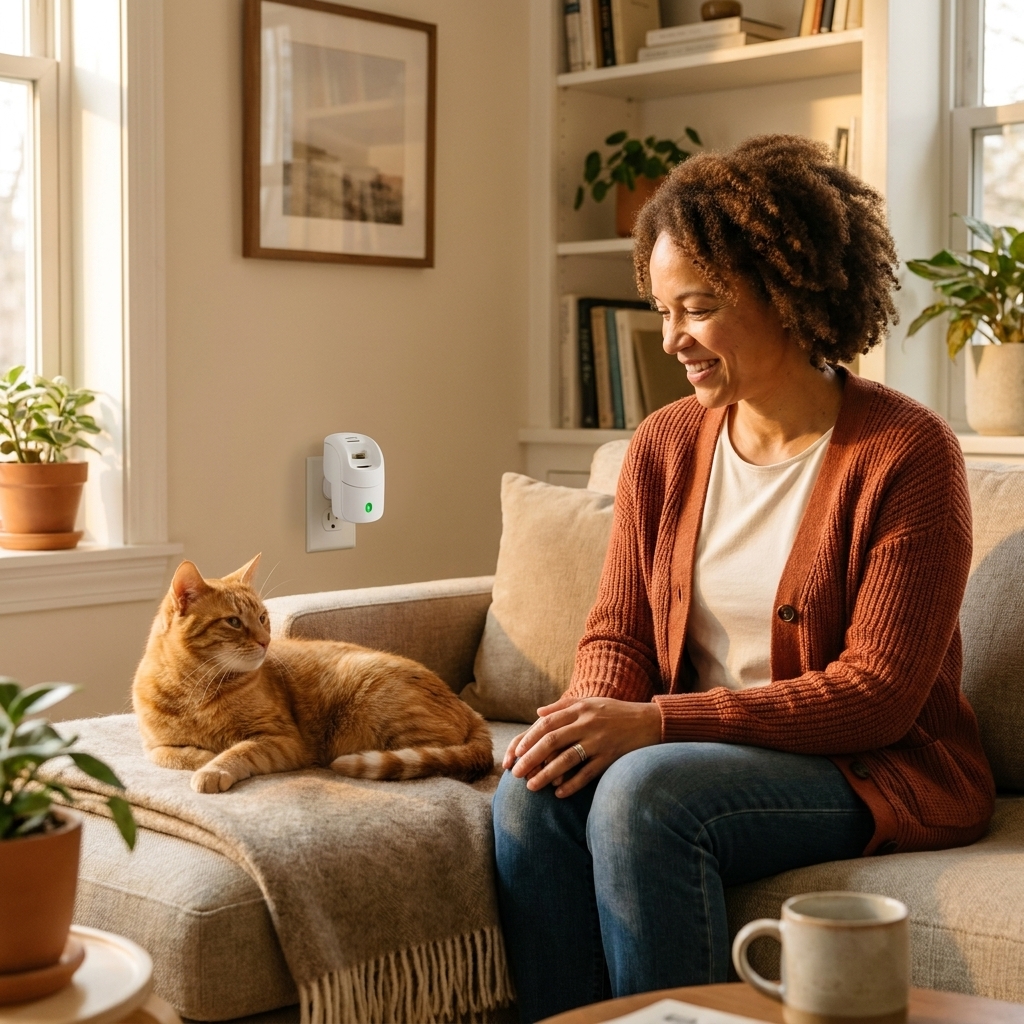
5) Reward the right scratching
Cats learn through outcomes. If scratching the couch feels amazing and gets your attention every time, the behavior is strongly reinforced. We want the scratcher to become the best option, and we want your response to be consistent and boring when the couch is targeted.
How to train the habit
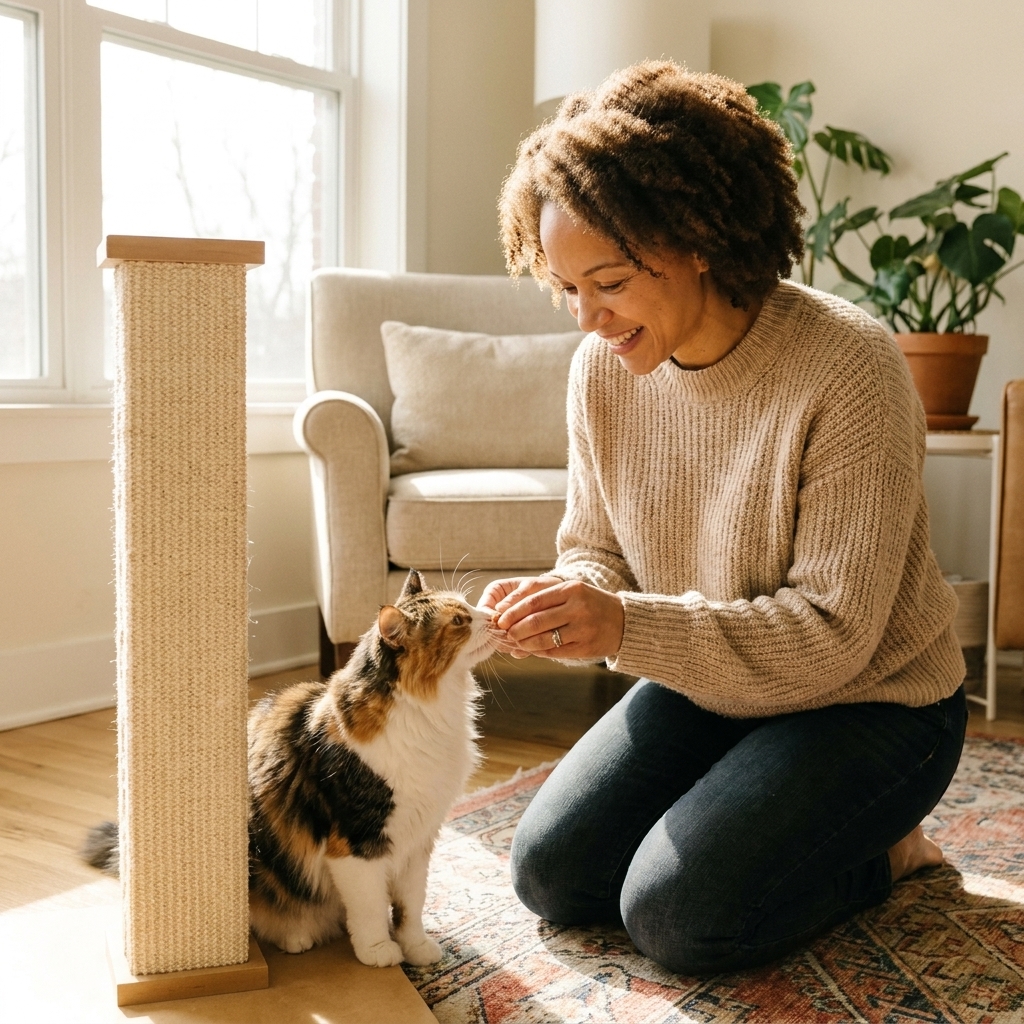
- Catch them doing it right: When your cat scratches the post or pad, calmly praise and toss a treat near the base of the scratcher. Do this for a couple of weeks to build a strong association.
- Use play to finish the behavior chain: A quick wand-toy session near the scratcher works beautifully. Many cats like: wake up, scratch, play, eat, groom, sleep.
- Redirect without drama: If your cat starts scratching the couch, avoid yelling or chasing. Instead, gently interrupt with a soft sound (for example, a quiet kissy noise or calling their name) and lure them to the scratcher with a treat or toy. Keep it mild. If your cat startles, it is too much.
- Never carry them to the scratcher as punishment: You want the scratcher to stay a positive place.
Pro tip: Trim nail tips regularly to reduce damage while you retrain. You are not solving the cause, but you are buying your furniture some mercy while the new habit sticks.
Troubleshooting
The scratcher is too small or wobbly
In my experience, this is one of the most common issues. Upgrade height and stability first.
You only have one scratcher
Most homes do better with multiple stations. As a rule of thumb, aim for several scratching options in the rooms your cat actually uses, especially if you have more than one cat.
Your cat is bored
Scratching can become a default activity when a cat has excess energy. Add two short play sessions daily, even 5 to 10 minutes, and rotate toys weekly so things feel new.
There is conflict in the home
Multi-cat tension often shows up as increased marking behaviors, including scratching. If you notice staring, blocking, swatting, or one cat hiding more, add resources: more litter boxes, more resting spots, more scratching options, more vertical space.
Kittens vs. adults
Kittens can be extra enthusiastic scratchers because everything is practice. Give them plenty of acceptable scratchers early, reward heavily, and expect some trial-and-error while they learn their preferences.
When to call your vet
Scratching itself is normal, but contact your veterinarian if you notice any of the following:
- Sudden, extreme increase in scratching or other marking behaviors
- Signs of pain when stretching or jumping
- Overgrooming, hair loss, or skin irritation that could signal allergies or parasites
- Behavior changes like hiding, aggression, or inappropriate urination along with the scratching
Sometimes what looks like a behavior problem has a medical or stress component that needs support.
A simple 7-day reset plan
- Day 1: Add one tall, stable sisal post and one horizontal cardboard scratcher.
- Day 2: Move the post right next to the scratched couch arm. Add double-sided tape to the couch corner.
- Day 3: Reward every scratch on the right surface. Keep treats near the scratchers.
- Day 4: Add a second scratcher near your cat’s favorite nap spot.
- Day 5: Start two daily play sessions near scratchers.
- Day 6: Consider a pheromone diffuser in the main scratching room if stress seems likely.
- Day 7: If your cat is consistently using scratchers, begin shifting the post 1 to 2 inches per day toward your preferred placement.
Most cats improve quickly when the environment makes sense to them. You are not letting them win. You are speaking cat, and that is how you protect your furniture long-term.