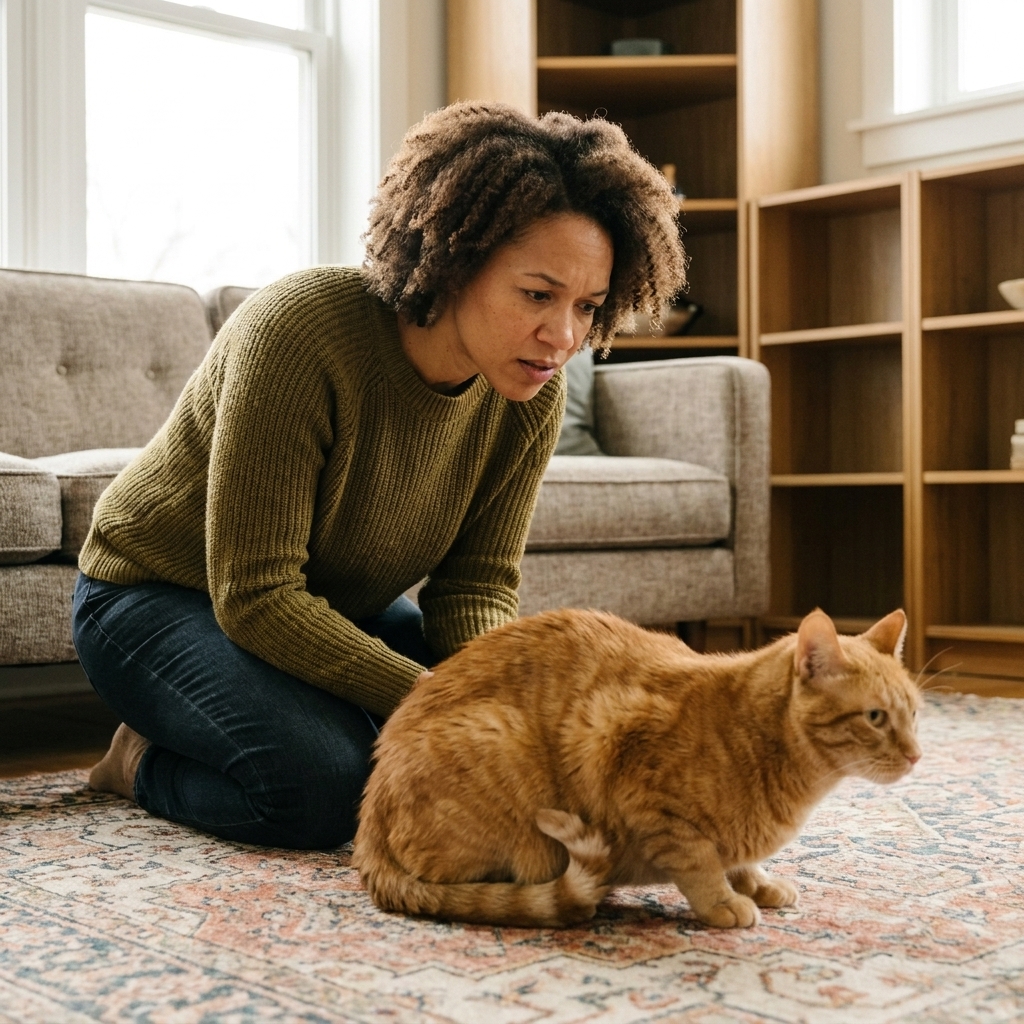
Cats often hide sickness. Here’s how to spot early behavioral and physical changes, what is urgent, and what details help your veterinarian act faster.
Litter box accidents can feel personal, but they almost never are. In my years as a veterinary technician, I saw the same pattern again and again: a cat stops using the box because something about their body, their setup, or their stress level changed. Your job is not to “teach them a lesson.” Your job is to play detective, remove barriers, and make the litter box the easiest, safest option in the house.
This guide will walk you through the most common causes of litter box avoidance and exactly what to do next, in the order that tends to solve it fastest.
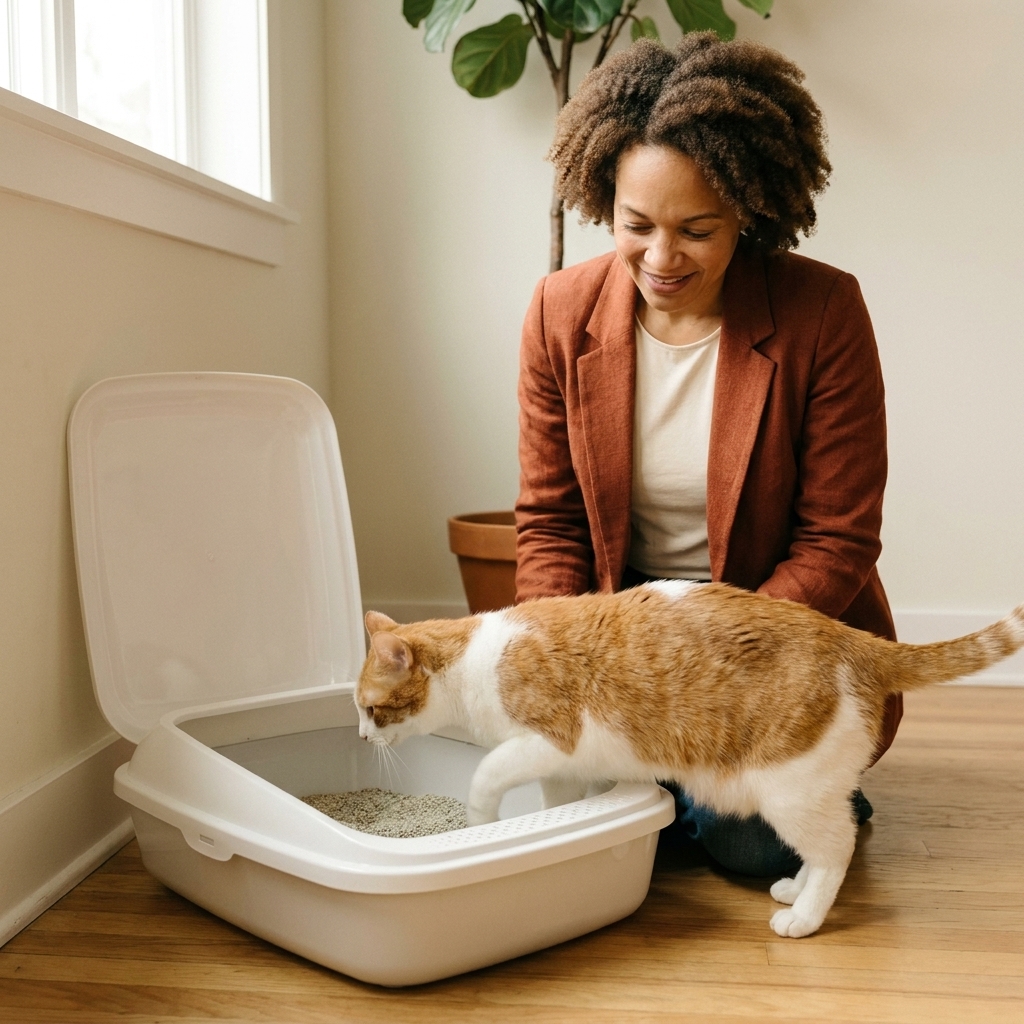
Start here: when to call the vet
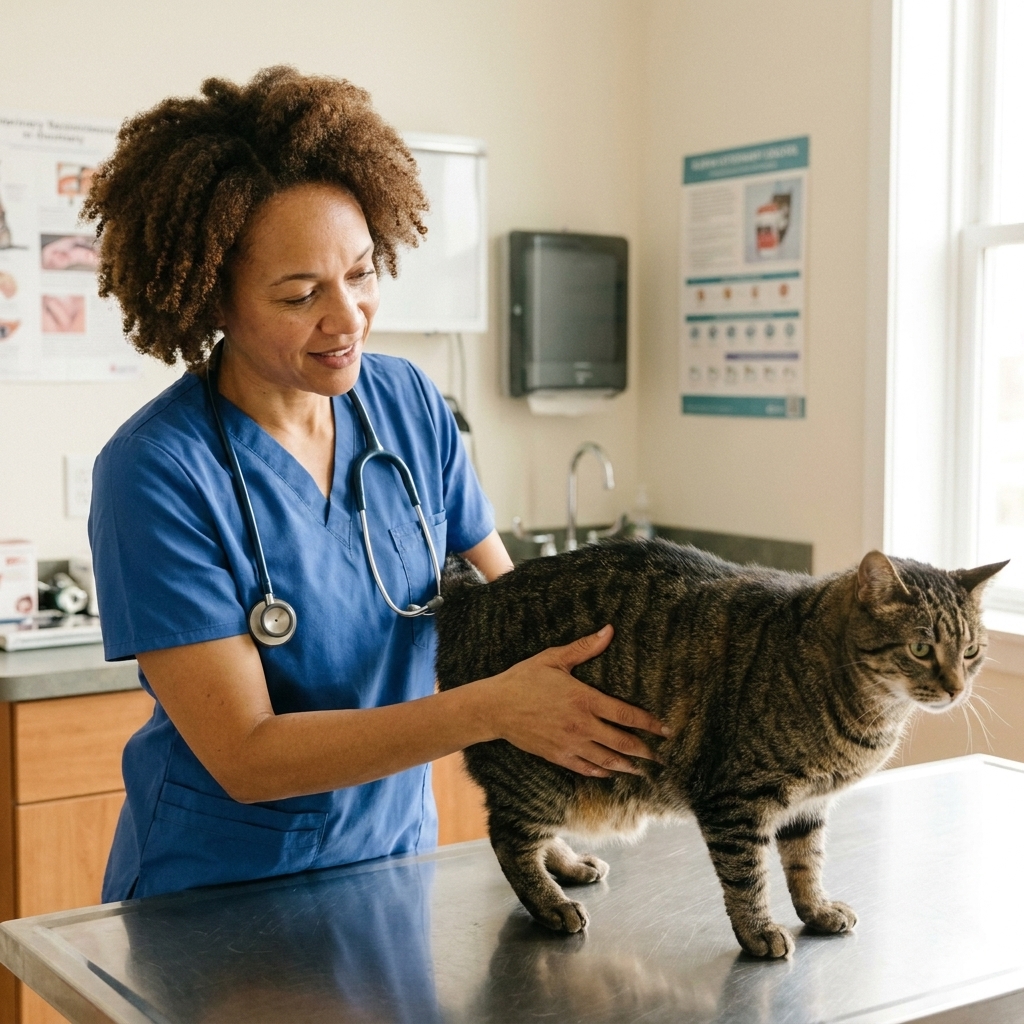
Any sudden change in litter box habits should be treated as a potential health issue until you know otherwise. Even if your cat seems “fine,” urinary discomfort can look like behavior, and cats are experts at hiding pain.
Seek same-day veterinary care if you notice:
- Frequent trips to the box with little or no urine produced
- Crying, straining, or posturing to pee outside the box
- Blood in urine, very strong odor, or unusually dark urine
- Lethargy, vomiting, hiding, or not eating
- A male cat who seems unable to urinate, or produces only drops (this can be life-threatening)
Common medical causes that mimic “bad behavior”
- Bladder inflammation (including FIC): Many “UTI-like” signs in adult cats are actually sterile inflammation, often stress-linked. Your vet can tell the difference and guide treatment.
- Bacterial UTIs: They do happen, but they are less common in otherwise healthy adult cats than many people assume. Diagnosis matters because treatment is different.
- Urinary crystals or stones: Painful and sometimes obstructive. Some cats need imaging to confirm.
- Arthritis or orthopedic pain: Older cats may struggle to step into high-sided boxes or may avoid digging.
- Diabetes, kidney disease, hyperthyroidism: Increased urine volume can lead to accidents if access is inconvenient, boxes are too few, or scooping is inconsistent.
- GI upset, constipation, or anal gland discomfort: Painful pooping can cause box avoidance, or stool may pass before they reach the box.
- Neurologic changes: Less common, but injuries or neurologic disease can affect posture, control, or the ability to reach a box in time.
If you are heading to the vet, ask what testing is appropriate for your cat’s signs. In many cases that means a urinalysis, sometimes a urine culture, and sometimes imaging if stones or other structural issues are suspected.
If your vet rules out medical issues, you have great news: you can fix most behavioral and environmental litter box problems with practical changes.
What pattern are you seeing?
The pattern of the accident is a clue, but it is not a diagnosis.
Urine on vertical surfaces (walls, doors, laundry baskets)
This is often spraying, which is frequently tied to stress, territory changes, conflict with other pets, or outdoor cats nearby. It can also happen in cats who are not neutered, but neutered cats can spray too. (Cats can also leave urine on vertical surfaces for other reasons, so treat this as “often,” not “always.”)
Puddles on horizontal surfaces (rugs, beds, bath mats)
This is usually toileting, meaning regular urination in a squatting posture outside the box. It points more strongly to box setup, cleanliness, location, pain, or litter preference.
Poop outside the box (with or without pee problems)
This can be litter dislike, box aversion, constipation, pain, or a “too hard to get there in time” situation. It can also happen when a cat feels unsafe in the box due to conflict in the home.
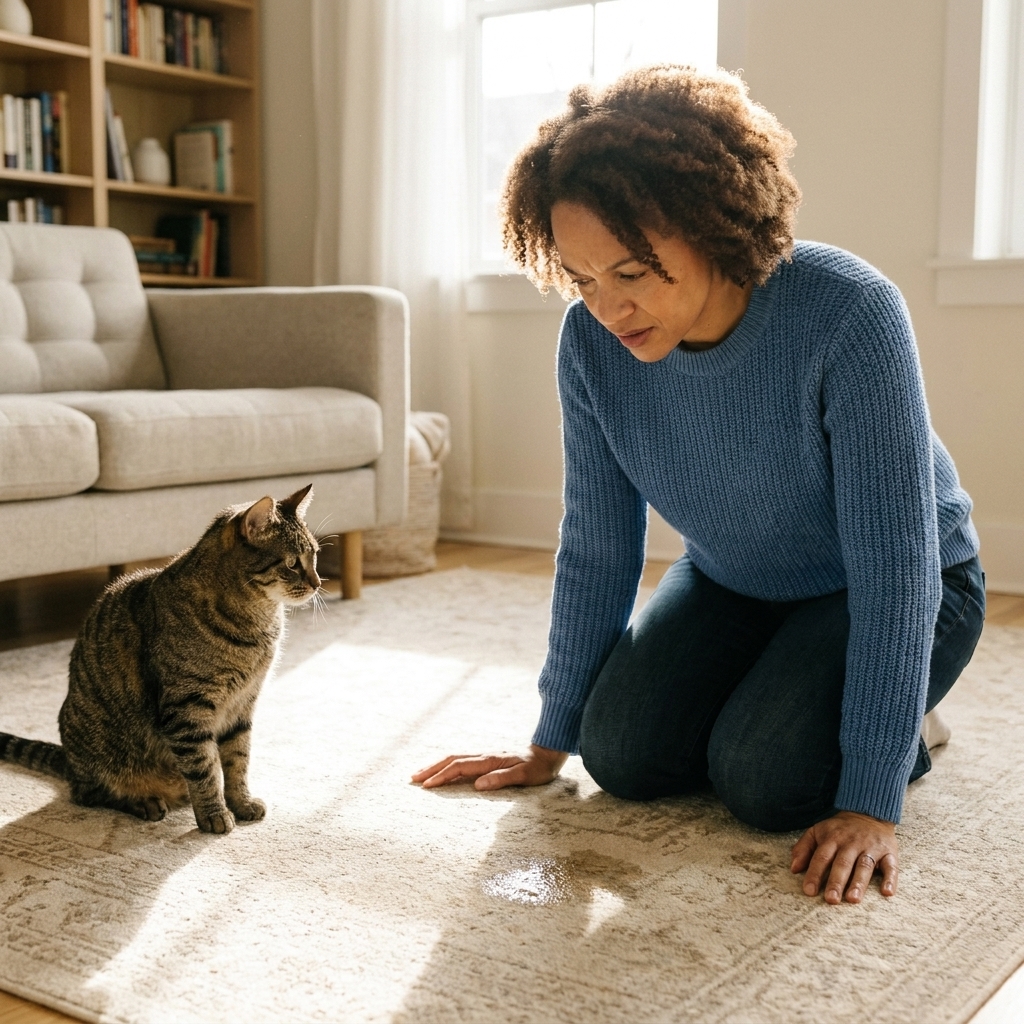
Best litter box setup
If you only change one thing, aim for a setup that feels effortless to your cat. Most cats prefer simple, predictable, and private, but not trapped.
How many boxes?
A good baseline is one box per cat, plus one extra. That means:
- 1 cat: 2 boxes
- 2 cats: 3 boxes
- 3 cats: 4 boxes
This reduces competition, prevents ambushes, and gives your cat options if one box is not “acceptable” that day.
Box style: big, open, and easy to enter
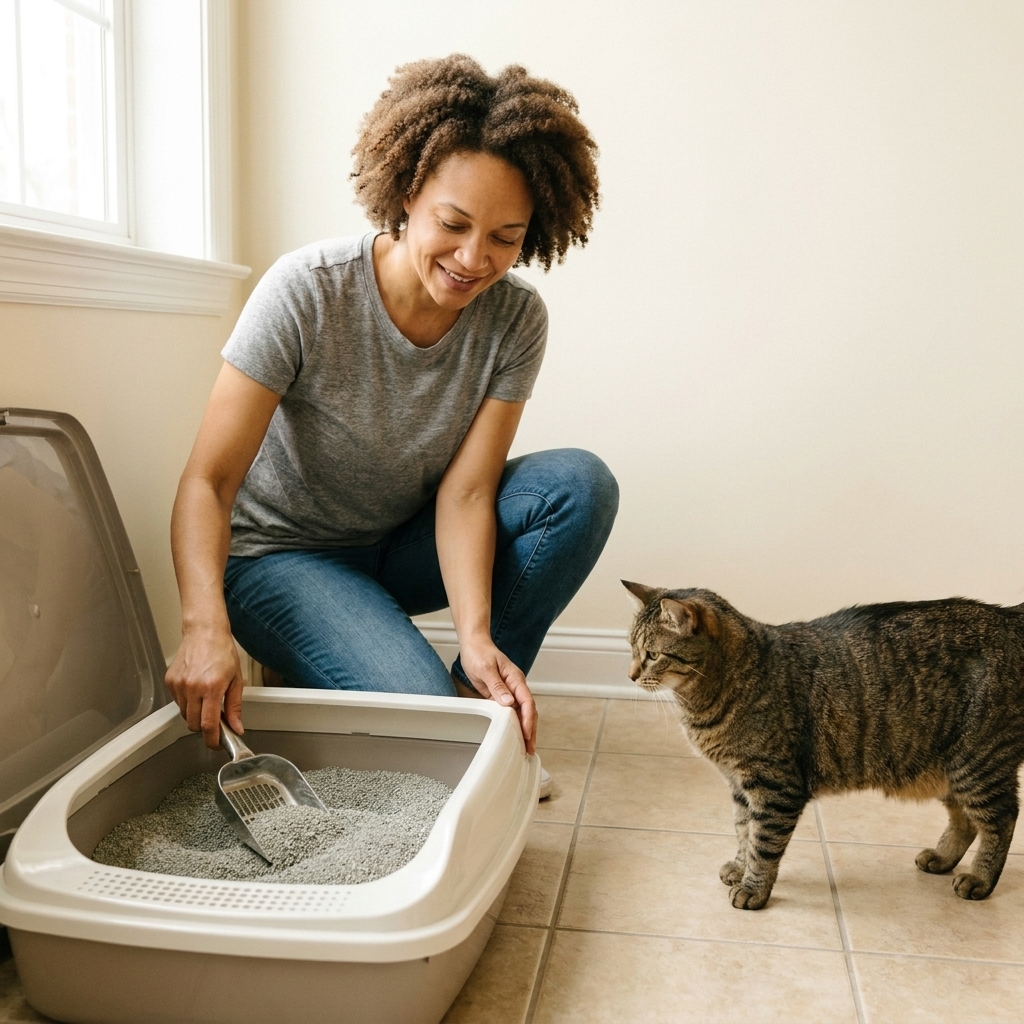
- Size: Aim for at least 1.5 times your cat’s body length (nose to base of tail).
- Open-top: Many cats prefer open boxes because they can see around them and feel less trapped.
- Low entry for seniors: If your cat is older or stiff, try a low-entry box or cut a doorway into one side of a storage tote.
Covered boxes can work for some cats, but they often trap odor and can make a nervous cat feel cornered.
Litter depth
Start around 2 inches of litter. If your cat likes to dig, you can try a bit more. If your cat seems uncomfortable or messy in the box, try a bit less. Let your cat’s preference lead here.
Cleaning routine that keeps cats using the box
- Scoop: 1 to 2 times daily
- Top off litter: as needed to maintain depth
- Full dump and wash: about every 2 to 4 weeks, or sooner if odor persists or your litter brand recommends more frequent changes
Wash with mild unscented soap and warm water. Avoid strong fragrances or harsh cleaners that linger. Also consider skipping scented deodorizers and heavily fragranced sprays around the box. Some cats truly hate them.
Litter box liners are a mixed bag. Some cats tolerate them, but others dislike the crinkle or catch a claw and start avoiding the box. If problems started after adding liners, remove them and see if habits improve.
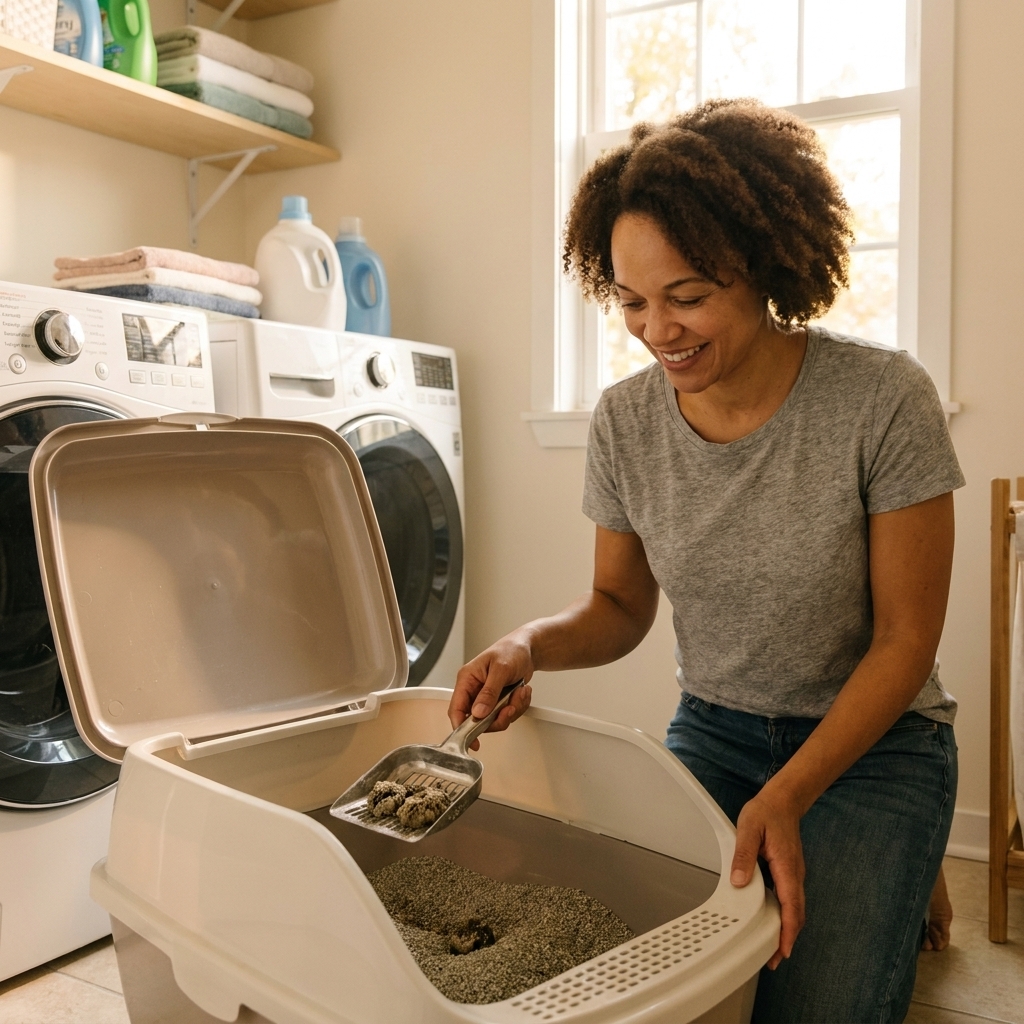
Location matters
From a cat’s perspective, the litter box is a vulnerable place. If it is hard to reach, scary, or noisy, they may choose a safer spot like a bedroom rug or your bathtub.
Pick the right locations
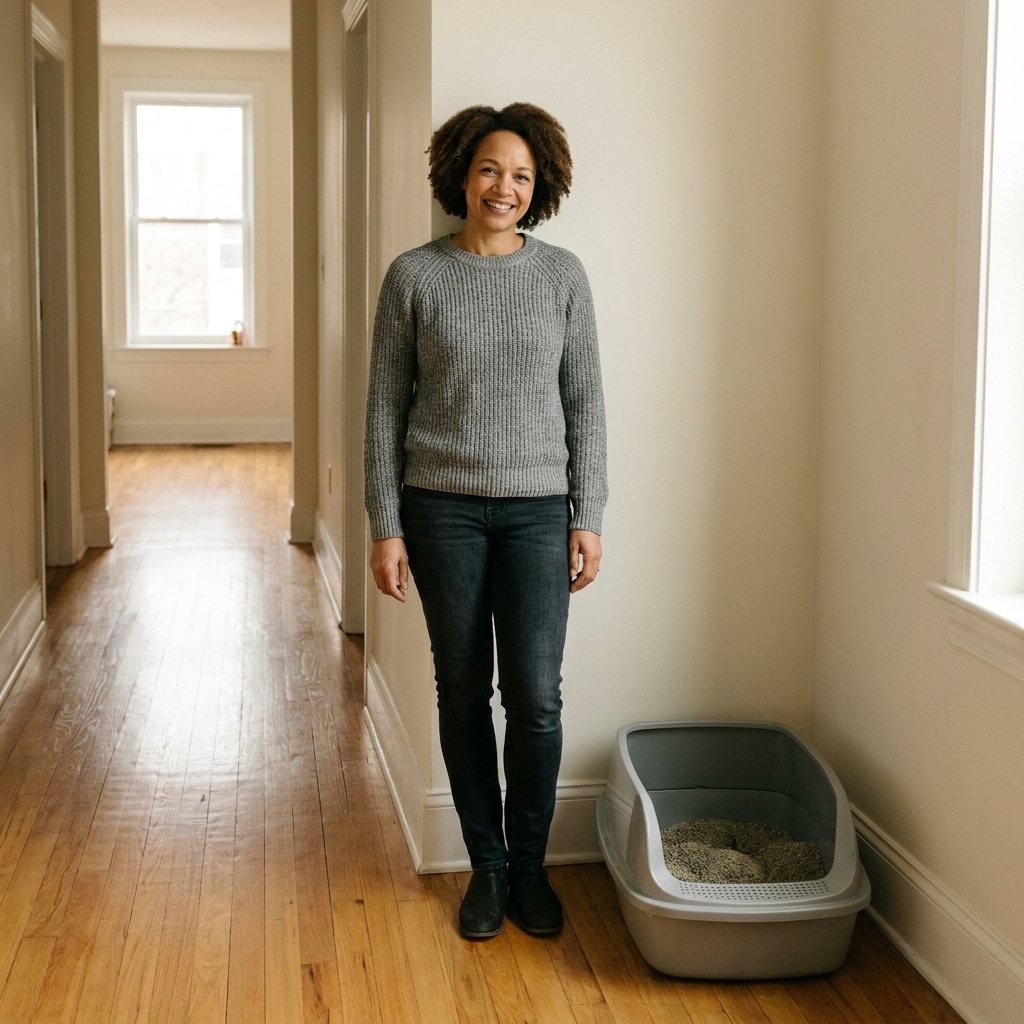
- Quiet but not isolated: A low-traffic corner is great, but avoid dark, dead-end areas where a cat could feel trapped.
- Avoid loud machines: Washing machines, dryers, and furnaces can startle cats mid-use.
- Separate food and water: Most cats do not want to potty near where they eat.
- Multiple floors: In multi-level homes, place at least one box on each level.
Prevent “ambush” zones in multi-cat homes
If another cat blocks the path or stares your cat down, the box becomes a stress trigger. Place boxes in more than one room, with multiple escape routes. Think “distributed resources,” not one litter box station.
Litter preferences
Many cats are surprisingly specific about litter texture and scent. A change that seems minor to us can be a deal-breaker to them.
Common litter deal-breakers
- Strong scents: Some cats avoid perfumed litter entirely.
- Large, sharp pellets: Can feel uncomfortable on sensitive paws.
- Dusty litter: May bother cats with asthma or allergies.
- Sudden switches: Even a “better” litter can cause avoidance if changed too quickly.
How to do a litter preference test
Set up two identical boxes with different litters. Scoop both equally. Let your cat vote with their feet for 7 to 10 days.
If you have multiple cats, side-by-side tests can get confusing. You may need to test one cat at a time in a separate space, or use a pet camera to confirm who is choosing what.
How to switch litter without triggering accidents
Mix gradually over 1 to 2 weeks:
- Days 1 to 3: 75% old, 25% new
- Days 4 to 6: 50% old, 50% new
- Days 7 to 10: 25% old, 75% new
- Then: 100% new
If your cat starts avoiding the box during the transition, slow down and go back a step.
Stress and conflict
Stress is one of the biggest drivers of litter box problems, especially in indoor cats. Cats thrive on predictability, and they often express anxiety through elimination changes.
Common stressors that lead to accidents
- New pet, new baby, or new roommate
- Moving homes or rearranging furniture
- Construction noise or visitors
- Outdoor cats visible through windows
- Tension between cats in the home
- Changes to your schedule
What to do if you suspect stress
- Stabilize routine: Feed, play, and clean boxes on a predictable schedule.
- Increase enrichment: Daily interactive play, food puzzles, cat trees, and window perches.
- Create safe zones: Vertical spaces and quiet rooms where your cat can decompress.
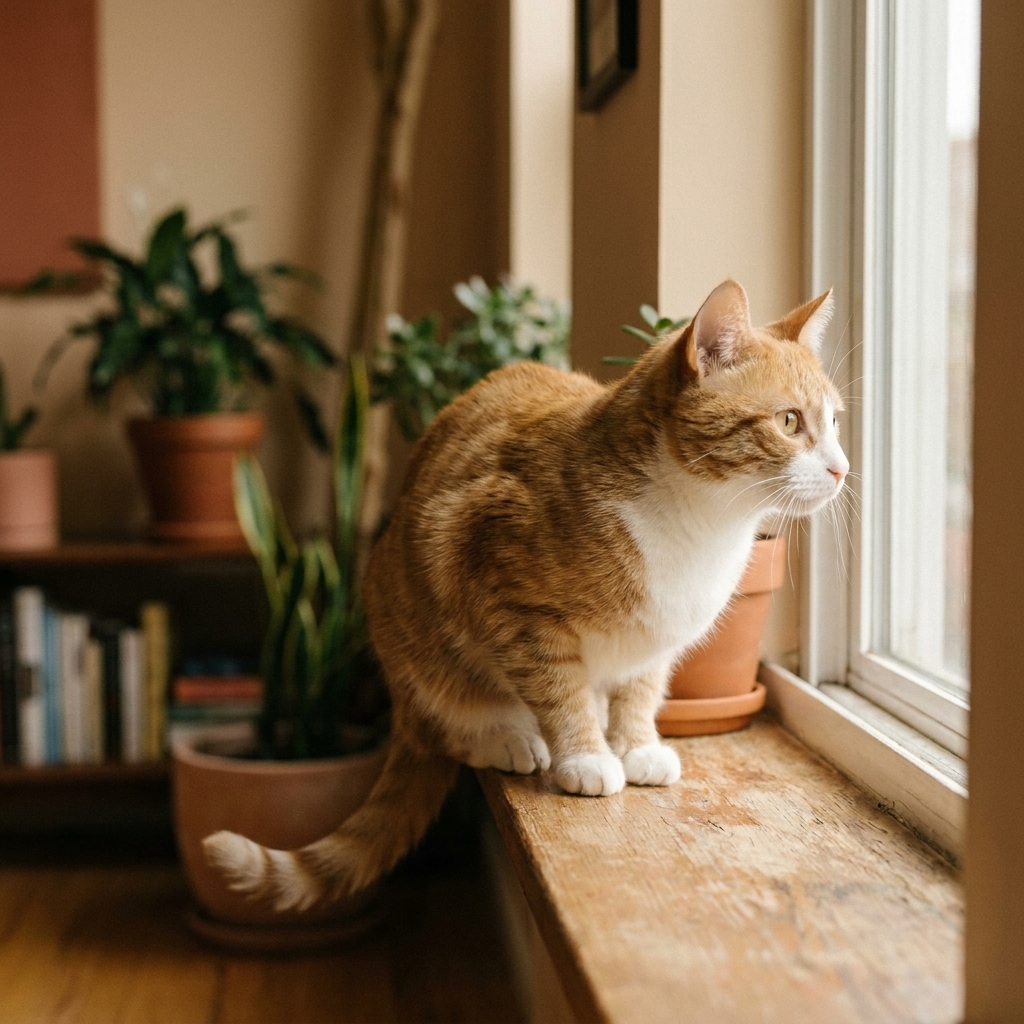
- Reduce visual triggers: Block window access if outdoor cats are stressing your cat, or use privacy film.
- Consider pheromone support: Plug-in pheromone diffusers can help some cats during transitions.
If conflict between cats is involved, focus on resource separation. Multiple feeding stations, multiple water sources, and multiple resting areas can make a bigger difference than people expect.
Cleaning accidents
If a location smells like a bathroom to your cat, it will keep getting chosen. Regular household cleaners often leave behind odor molecules that cats can still detect.
Cleaning steps
- Blot fresh urine: Press paper towels or a clean cloth down firmly. Do not rub.
- Use an enzymatic cleaner: Follow label directions and allow proper dwell time.
- Rinse if directed and let dry fully: Fans help.
- Block access temporarily: Close the door, flip the rug, or place a litter box over the spot short-term.
Avoid ammonia-based cleaners. To a cat, ammonia can smell urine-like and may encourage repeat marking.
Re-training
Once you have addressed the likely cause, you can gently guide your cat back to good habits.
Set your cat up for easy success
- Add boxes: More boxes in better locations is often the fastest win.
- Make the box more appealing: Fresh scoop, unscented clumping litter, and a roomy open box.
- Use temporary “starter boxes”: Put a box near the accident area, then slowly move it a few feet per day toward your preferred location.
- Reward calmly: If you catch your cat using the box, offer a soft “good” and a treat afterward. No fanfare needed.
What not to do
- No punishment: Yelling, rubbing a cat’s nose in it, or spraying with water increases fear and can worsen avoidance.
- No “litter box boot camp” unless advised: Confinement can help in specific situations, but it can backfire if stress is the primary issue. If you try it, do it thoughtfully with a large safe room, enrichment, and a vet’s guidance.
Special situations
Senior cats
- Use a low-entry box
- Place non-slip mats leading to the box
- Keep boxes on the same floor where your cat spends time
- Talk to your vet about arthritis pain management
- If your senior seems disoriented, restless at night, or forgetful, ask your vet about cognitive dysfunction and other age-related causes
Long-haired cats and litter stuck to fur
- Try a softer, low-tracking litter
- Keep fur trimmed around the rear (a sanitary trim from a groomer is a game-changer)
- Use a larger box so they can posture comfortably
New kitten accidents
- Add more boxes, especially near sleeping and play areas
- Use unscented clumping litter and avoid strong deodorizers
- Keep boxes easy to enter and easy to find
After moving
- Start with one safe room containing a box, food, water, and bedding
- Once habits are consistent, add additional boxes and expand access gradually
Marking vs. toileting
If it is spraying (marking)
- Confirm spay or neuter status
- Clean with enzymatic cleaner and block access
- Reduce triggers like outdoor cats at windows
- Add resources and reduce conflict in multi-cat homes
- Talk to your vet about anxiety support if needed
If it is toileting (squatting to pee or pooping outside the box)
- Re-check medical causes if it started suddenly
- Improve box number, size, cleanliness, and location
- Test litter preference
- Make access easier for seniors or timid cats
Troubleshooting checklist
If you want the fastest path to improvement, work down this list in order.
- 1) Rule out medical issues with your veterinarian.
- 2) Add at least one extra box, placed in a quiet, accessible location.
- 3) Switch to a large open box with a low entry if needed.
- 4) Use unscented clumping litter and scoop daily.
- 5) Spread boxes out across rooms and floors, not all together.
- 6) Clean accident areas with enzymatic cleaner and block access temporarily.
- 7) Address stress and conflict with enrichment, routine, and resource separation.
FAQ
Why did my cat start peeing outside the litter box all of a sudden?
Sudden accidents often point to a medical problem, a stressful change in the home, or a disruption in litter box access or cleanliness. Start with a vet check, then evaluate box number, location, and litter type.
Should I change my cat’s litter if they are having accidents?
Possibly, but do it strategically. If you suspect litter aversion, offer a second box with a different litter and see which one your cat chooses. Avoid a sudden full switch unless the current litter clearly causes avoidance.
How do I stop my cat from peeing on the bed?
First, rule out urinary discomfort with your vet. Then make the litter box setup easier than the bed: add a box closer to the bedroom, scoop more often, and use an enzymatic cleaner on bedding and mattress. Temporarily block bedroom access if you can do so without increasing stress.
Do cats avoid the litter box out of spite?
No. Cats repeat what works and avoid what feels unsafe, painful, or unpleasant. When they go outside the box, they are communicating a problem, not making a moral choice.
When should I work with a behavior professional?
If you have ruled out medical issues and improved the litter box setup but accidents persist beyond a few weeks, or if there is tension between cats, a qualified cat behavior consultant can be incredibly helpful. Your veterinarian can often refer you to a reputable professional.
Bottom line
Litter box avoidance is one of the most fixable behavior concerns once you identify the root cause. Start with health, then make the litter box easy, comfortable, and conflict-free. With a little patience and a few smart adjustments, most cats return to consistent litter box use and everyone in the home can relax again.