
A complete puppy nutrition guide: protein, fat, calcium guidance, label decoding tips, feeding schedule, and smart ways to pick a high-quality puppy food for...
If you have ever stood in the pet food aisle thinking, “This bag sounds amazing, but is it actually a full diet?”, you are not alone. One of the most useful (and most ignored) lines on a dog or cat food label is the nutritional adequacy statement. It tells you whether the food is meant to be fed as a pet’s primary diet, or if it is intended only for supplemental or intermittent feeding.
This is one of my favorite “confidence builders” for pet parents because it is not about hype words on the front of the bag. It is about a standard statement that manufacturers use to communicate how the food is intended to be fed.
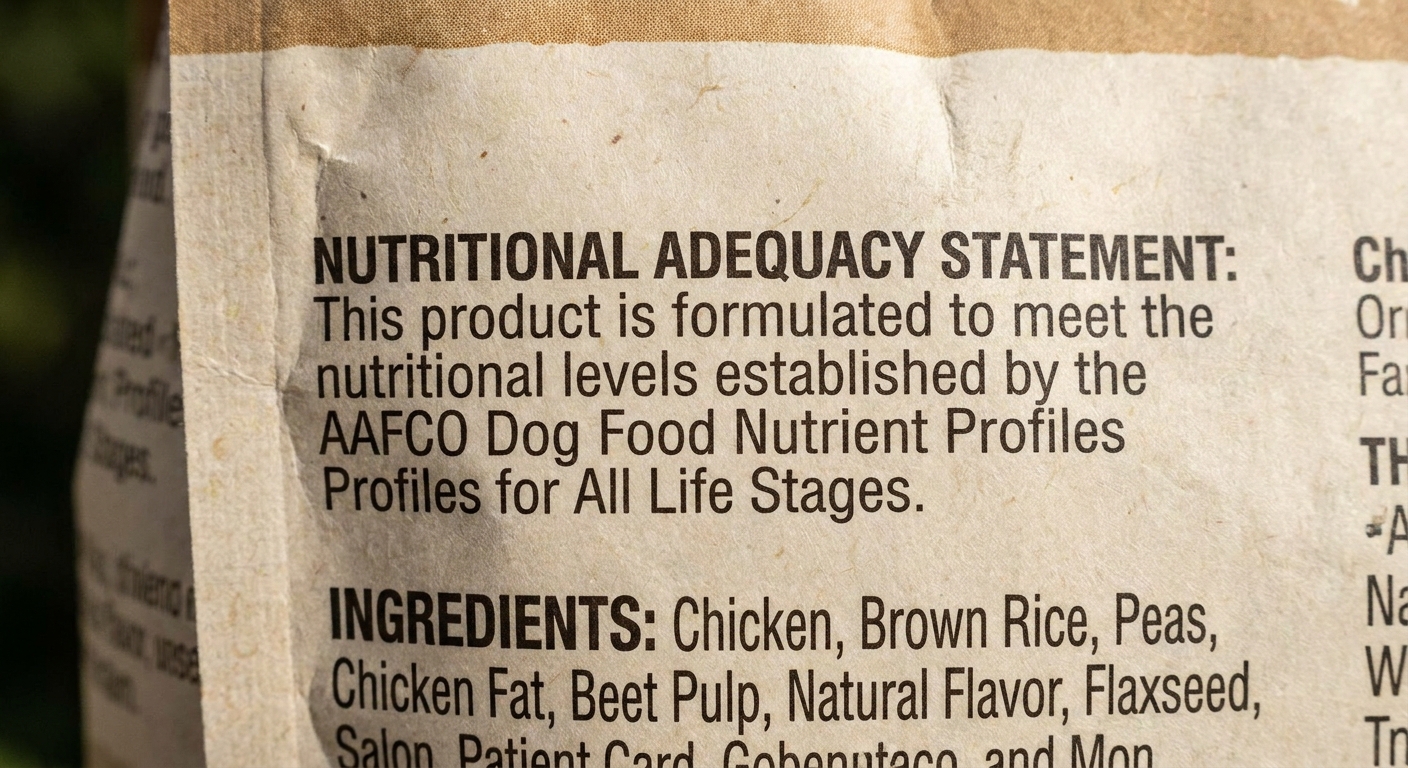
Where to find the adequacy statement
On dog and cat food packaging, the nutritional adequacy statement is usually on the back or side panel near other regulatory information. You might see it close to:
- Guaranteed Analysis
- Ingredient list
- Feeding directions
- Calorie content
It is often a small block of text. If you are scanning quickly, look for phrases like “AAFCO”, “complete and balanced”, or “intended for intermittent or supplemental feeding only.”
Helpful tip: A food can have beautiful marketing on the front and still be a “supplemental” product. The adequacy statement is where you confirm what it really is.
Complete and balanced vs. supplemental
What “complete and balanced” means
A diet labeled complete and balanced is intended to provide all required nutrients, in appropriate amounts and proportions, for a specific species (dog or cat) and specific life stage (more on that in a moment).
You will often see wording similar to:
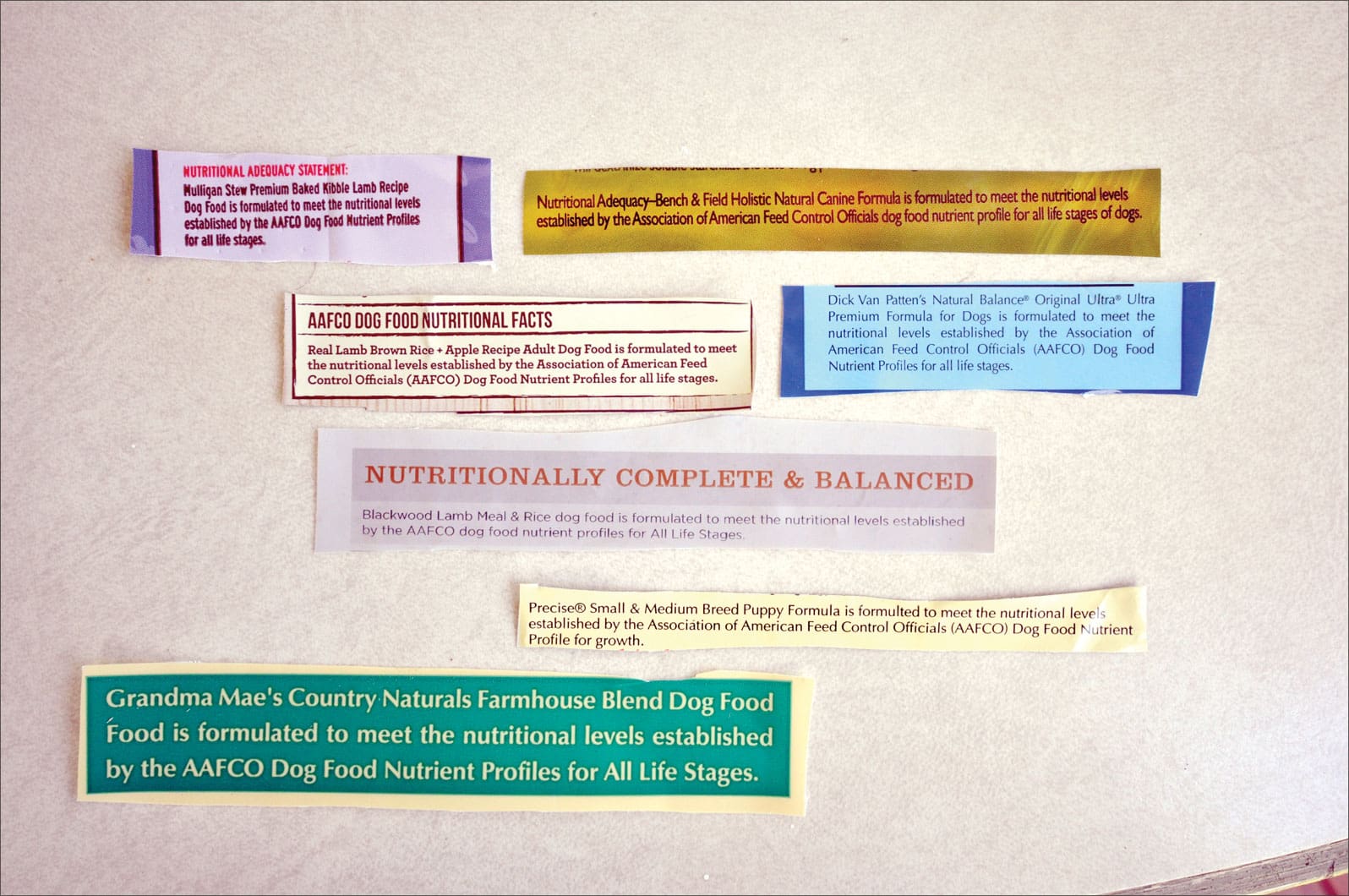
“[Brand/Product] is formulated to meet the nutritional levels established by the AAFCO Dog Food Nutrient Profiles for [life stage].”
Or:
“Animal feeding tests using AAFCO procedures substantiate that [Brand/Product] provides complete and balanced nutrition for [life stage].”
What “supplemental” or “intermittent” means
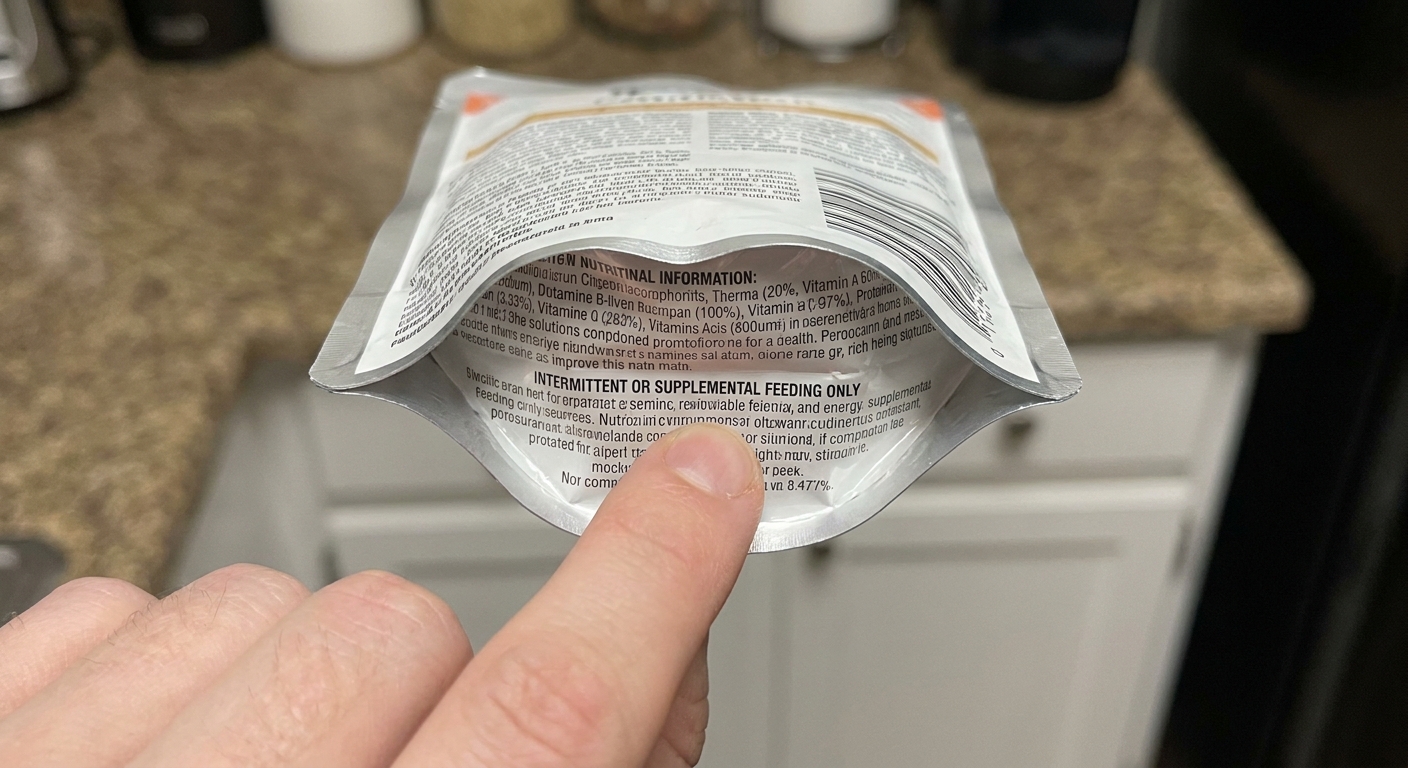
Foods labeled for supplemental or intermittent feeding are not meant to be the sole diet. These can be perfectly legitimate products, but they are not nutritionally positioned as “daily driver” meals.
Common examples include:
- Some toppers and broths
- Some gravies, sauces, and mix-ins
- Many treats, chews, and supplements
- Certain limited-purpose veterinary products or specialty items that are designed to complement a diet
The label language you are looking for is typically:
“This product is intended for intermittent or supplemental feeding only.”
If that sentence is present, do not treat the product like a complete diet unless your veterinarian has given you a specific plan that includes it.
Step 1: Confirm the species
It sounds obvious, but the adequacy statement should clearly name the species. Look for “AAFCO Dog Food Nutrient Profiles” versus “AAFCO Cat Food Nutrient Profiles.”
This matters because cats have unique nutritional requirements (for example, they require dietary taurine). A product intended for dogs is not automatically appropriate for cats, and the label language is one of the clearest ways to verify intent.
- Dog: “AAFCO Dog Food Nutrient Profiles”
- Cat: “AAFCO Cat Food Nutrient Profiles”
Step 2: Check the life stage
A “complete and balanced” statement is only meaningful when it is tied to a life stage. On labels, you will commonly see one of these AAFCO life stage categories:
- Growth (often includes puppies and kittens)
- Reproduction (pregnant or nursing)
- Maintenance (adult maintenance)
- All life stages
Here is how that plays out in real label language:
- Adult dog food example: “...for maintenance of adult dogs.”
- Puppy or kitten example: “...for growth.”
- Pregnant or nursing example: “...for growth and reproduction.”
- Broad claim example: “...for all life stages.”
Two quick clarity notes:
- “All life stages” generally aligns with meeting the nutrient requirements for the most demanding stages (growth and reproduction). In the real world, that can mean a food is more calorie-dense or has higher mineral levels than some sedentary adults need.
- If you have a pet with a specific medical condition, life stage language does not replace veterinary guidance. Medical needs can change what “best fit” looks like.
Step 3: “Formulated” vs. “feeding tests”
This is the part that often confuses pet parents, so let’s make it plain. In the adequacy statement, you will usually see one of two pathways for the “complete and balanced” claim.
Option A: Formulated to meet AAFCO profiles
When you see language like:
“...is formulated to meet the nutritional levels established by the AAFCO [Dog/Cat] Food Nutrient Profiles for [life stage]...”
It means the recipe was designed to hit established nutrient targets. In practice, this is often supported by nutrient calculations and, in many cases, lab analysis of the finished product. The key point for label reading is simple: the claim is based on meeting a nutrient profile standard.
Option B: AAFCO feeding trials
When you see language like:
“Animal feeding tests using AAFCO procedures substantiate that [Product] provides complete and balanced nutrition for [life stage].”
It means the company completed feeding trials following AAFCO protocols and is using that trial pathway for the adequacy claim.
Important: This article is not ranking the two approaches or telling you which to buy. The goal is to help you recognize which statement you are reading so you can interpret the label accurately.
Common edge cases
“All life stages” for adult pets
Many pets do well on all life stages foods, but it is worth knowing what the label is really saying. Because the claim is tied to growth and reproduction, some all life stages formulas may be richer than a laid-back adult needs. If your adult pet is gaining weight, this is one factor to discuss with your vet team.
Large-breed growth language
On some dog foods, you may see a phrase like:
“...including growth of large size dogs (70 lb or more as an adult).”
This matters for puppies expected to be large adults. Large-breed growth has extra nutritional considerations, and that specific language is one way the label flags the formula’s intent.
Therapeutic and veterinary diets
Many therapeutic (veterinary) diets are still labeled complete and balanced for a life stage, but they are meant to be used under veterinary supervision because the “right” diet depends on the diagnosis and the full plan. In other words: the adequacy statement matters, and so does the medical context.
Labeled examples
Below are common statement patterns you can match to what is on your label. The exact wording can vary by product, but these phrases are the ones to key in on.
Example 1: Complete and balanced by formulation
“[Product] is formulated to meet the nutritional levels established by the AAFCO Cat Food Nutrient Profiles for maintenance.”
How to interpret it: This product is intended as a complete diet for adult cats (maintenance), and the adequacy claim is based on formulation to the AAFCO nutrient profile.
Example 2: Complete and balanced by feeding trial
“Animal feeding tests using AAFCO procedures substantiate that [Product] provides complete and balanced nutrition for growth.”
How to interpret it: This product is intended as a complete diet for growing animals (for example, puppies or kittens, depending on species named), and the adequacy claim is supported by an AAFCO feeding trial.
Example 3: Intermittent or supplemental feeding only
“This product is intended for intermittent or supplemental feeding only.”
How to interpret it: Treat this as a topper or add-on, not the sole diet, unless your veterinarian has instructed otherwise.
If the statement is missing
For dog and cat foods that are marketed as a full diet, a missing nutritional adequacy statement is a reason to slow down and investigate. Sometimes it is genuinely hard to spot because it is tucked into a dense block of text, but you should be able to locate it on the packaging or the manufacturer’s product page.
That said, some products may not have an AAFCO adequacy statement by design because they are not represented as a complete diet. Treats, chews, supplements, and some mix-ins may instead be labeled as a snack or include language indicating supplemental use.
If you cannot find the statement:
- Check all panels, including near feeding directions.
- Look for “AAFCO” as your keyword.
- Search the product listing for “nutritional adequacy” or “AAFCO statement.”
- Contact the company and ask for the full nutritional adequacy statement exactly as it appears on the label.
Why AAFCO shows up
In the United States, AAFCO (the Association of American Feed Control Officials) provides model regulations, including nutrient profiles and feeding trial protocols used for dog and cat food nutritional adequacy claims. You will see AAFCO referenced because many states use AAFCO models as part of their pet food labeling rules.
If you want to read the source material directly, AAFCO publishes consumer information about pet food labeling and nutritional adequacy statements on its website.
Quick checklist
- Find the adequacy statement (usually near ingredients or feeding directions).
- Confirm species: dog or cat.
- Confirm life stage: growth, reproduction, maintenance, or all life stages.
- Identify pathway: “formulated to meet” versus “feeding tests substantiate.”
- Watch for the red flag phrase: “intermittent or supplemental feeding only.”
FAQ
If a food says “all life stages,” is it always okay for every pet?
It is a life stage claim, not a guarantee of perfect fit for every individual. “All life stages” generally means the food is positioned to meet requirements that include growth and reproduction, which can make it a poor match for some sedentary adults. Your individual pet’s needs can still vary based on size, activity level, health conditions, and veterinary recommendations.
Are treats required to be complete and balanced?
Most treats are not intended to be complete and balanced. Many will not carry a complete-and-balanced adequacy statement, and some may include language indicating they are for supplemental feeding only. That is normal for treats. The key is recognizing that they should not replace the main diet unless specifically designed and labeled to do so.
What about toppers that look like real food?
Toppers can look very meal-like, especially stew-style pouches and fresh refrigerated add-ons. The deciding detail is the label language. If it says “intermittent or supplemental feeding only,” use it as an add-on, not a standalone diet.
My pet food says “for supplemental feeding” but my pet loves it. What should I do?
Loving it is great. You can still use it as part of a balanced plan, but it should not become the whole plan unless your veterinarian helps you build a complete diet around it. When in doubt, bring the package (or a screenshot of the adequacy statement) to your next appointment. It is one of the fastest ways for your vet team to advise you.