A vet tech–approved, step-by-step guide to changing dog food gradually, with a clear transition schedule and troubleshooting tips for sensitive stomachs.
Choosing puppy food can feel surprisingly high-stakes. Puppies grow fast, their brains and bodies are developing daily, and the internet has a different opinion in every tab you open. Take a breath. You do not need a boutique bag with a wolf on the front to raise a healthy dog. You need the right nutrients, the right life-stage claim, and a label you can confidently decode.
This guide will walk you through the nutrition basics most puppies need, what “complete and balanced” really means, and how to spot quality (and avoid common marketing traps) when you are standing in the pet food aisle.

Start here: what is different about puppy food?
Puppies are not just small adult dogs. Compared to adults, they need:
- More calories per pound to fuel growth
- More protein to build muscle and support immune function
- More fat for energy and healthy skin, plus DHA for brain and vision development
- Carefully controlled calcium and phosphorus for safe skeletal growth, especially in large-breed puppies
That is why foods labeled for “growth” or “all life stages” exist. Adult maintenance diets usually do not meet these needs.
Puppy food must-haves (label checklist)
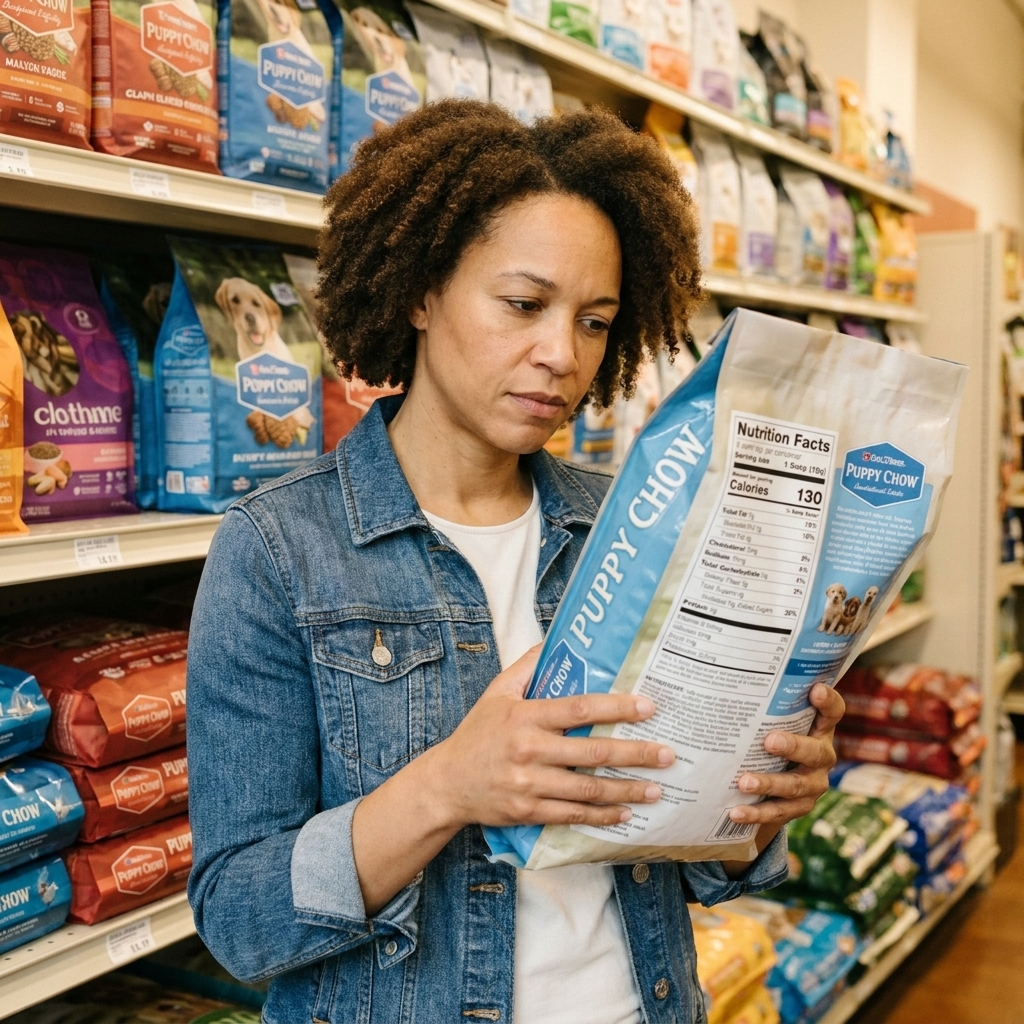
1) Find an AAFCO nutritional adequacy statement
On every bag or can, find the AAFCO statement (often in small print). For puppies, you want one of these:
- “Complete and balanced for growth”
- “Complete and balanced for gestation/lactation” (also appropriate for growth)
- “Complete and balanced for all life stages” (can work for puppies, but you still need to check calcium for large breeds)
If it says “for intermittent or supplemental feeding only”, that is not a primary diet for a growing puppy.
2) Prefer foods proven by feeding trials (when available)
The AAFCO statement will also say how the diet was validated:
- “Animal feeding tests using AAFCO procedures substantiate…” (feeding trial)
- “Formulated to meet AAFCO nutrient profiles…” (nutrient formulation)
Both can be acceptable, but feeding trials add a real-world layer of confidence that the diet performs as intended.
3) Match the “growth” category to adult size
If your puppy is expected to be 70 pounds or more as an adult, choose a food labeled:
- “Growth including growth of large size dogs” or
- “Large breed puppy”
This is about bone safety, not just kibble size. Also note that “large” versus “giant” on the front of the bag is marketing, not a standardized definition. The AAFCO category is the one that matters.
Key nutrition targets: protein, fat, calcium
When pet parents ask me what matters most in puppy nutrition, I always say: start with the guaranteed analysis, then confirm calcium and phosphorus, especially if you have a large-breed puppy. Here are practical targets you can use.
Protein: how much do puppies need?
Minimums (AAFCO): Under the AAFCO Dog Food Nutrient Profiles for Growth and Reproduction, puppy foods must meet at least:
- 22.5% crude protein on a dry matter basis (DMB)
Helpful target range: Many high-quality puppy foods land around 26% to 32% protein (DMB). Higher is not automatically better, but most healthy puppies do great in this range.
What to look for: A named animal protein source in the first ingredients (for example, chicken, turkey, beef, salmon) or a named meal (like chicken meal). “Meal” is not a bad word. It is a concentrated protein source.
Fat: energy, skin, and DHA
Minimums (AAFCO): Under the AAFCO Dog Food Nutrient Profiles for Growth and Reproduction, puppy foods must meet at least:
- 8.5% crude fat (DMB)
Helpful target range: For many puppies, 12% to 18% fat (DMB) is a comfortable zone. Very active puppies may do well on the higher end, while puppies prone to soft stools may do better slightly lower.
DHA note: DHA is an omega-3 fatty acid important for brain and vision development. Many puppy foods add DHA via fish oil or algae oil. You may see it listed as “DHA” on the bag, but it can also show up via ingredients like salmon oil, fish oil, or menhaden fish oil.
Calcium: the big one for large breeds
This is where a lot of “nice looking” puppy foods quietly miss the mark, particularly for large-breed growth. Too much calcium, especially paired with excess calories, can increase the risk of developmental orthopedic issues in large-breed puppies.
A practical calcium range (large-breed puppies): Many veterinary nutrition resources commonly recommend keeping calcium roughly around 0.8% to 1.2% on a dry matter basis for large-breed puppy diets, with a controlled calcium-phosphorus balance. Think of this as a widely used target range, not a guarantee for every formula or every puppy.
Calcium-to-phosphorus ratio: A common goal is around 1:1 to 1.5:1 (calcium to phosphorus). It matters, but it is not the only safety check. Absolute calcium level, overall calorie density, and total intake still matter.
Important: The guaranteed analysis does not always list calcium and phosphorus. If your puppy is a large breed (or likely to be), strongly consider choosing brands that publish a typical nutrient analysis (including calcium and phosphorus) or will provide it if you email or call.

How to decode the label
Ingredient list: what it tells you (and what it cannot)
Ingredients are listed by weight before cooking. That means fresh meats (which contain a lot of water) can appear higher on the list than their protein contribution would suggest after processing.
Green flags:
- Named proteins (chicken, turkey, beef, salmon) and named meals (chicken meal)
- Clearly named fats (chicken fat, salmon oil)
- A clear life-stage claim for growth and an AAFCO statement
Not automatically bad:
- By-products (they can be nutrient-dense, depending on sourcing and quality control)
- Grains (many dogs thrive on grains; grain-free is not inherently superior)
Red flags:
- Vague terms like “meat meal” or “animal fat” without naming the species
- Heavy reliance on marketing buzzwords with little nutrition transparency
Guaranteed analysis: compare on dry matter basis
The guaranteed analysis (GA) is listed “as-fed,” meaning including moisture. To compare a dry kibble to a canned food fairly, convert to dry matter basis.
Dry matter conversion:
- Dry matter % = 100 − moisture %
- Nutrient (DMB) = (nutrient as-fed ÷ dry matter) × 100
Example: If kibble has 10% moisture, dry matter is 90%. If protein is 28% as-fed: (28 ÷ 90) × 100 = 31.1% protein (DMB).
Calorie content: how to avoid overfeeding
Look for kcal per cup or kcal per kilogram on the label. Puppies need enough calories, but rapid weight gain is not the goal, especially for large breeds. A lean puppy is a healthier puppy.
Picking the right type of puppy food
Kibble
Kibble is convenient, cost-effective, and can work beautifully for puppies. Just do not rely on kibble “crunch” as dental care. Teeth still need brushing and chew habits still matter.
Canned (wet) food
Wet food is more aromatic and can help picky puppies or pups that need more hydration. It is also great for stuffing enrichment toys. It tends to be higher in cost per calorie, so many families use it as a topper or part of a mixed diet.
Fresh, refrigerated, or frozen diets
These can be balanced and appropriate if they are truly complete for growth and formulated by qualified nutrition experts. The biggest issue I saw in clinic was not “fresh food,” it was fresh food that was not actually formulated for growth or had unclear calcium data.
Raw diets (extra caution for puppies)
Raw feeding adds additional risks for puppies and households, including bacterial contamination and nutritional imbalance during a critical growth window. If you are considering raw, talk with your veterinarian first and look for a plan formulated by a board-certified veterinary nutritionist.
Large-breed puppies: why more is not better
If you have a pup who will be a big adult (think Labs, Goldens, German Shepherds, Great Danes, many doodle mixes), slow and steady growth protects developing joints.
- Choose a large-breed puppy formula with controlled calcium and appropriate calories.
- Do not add calcium supplements unless your veterinarian instructs you to. You can accidentally push calcium too high even with good intentions.
- Keep your puppy lean. You should be able to feel ribs easily with a light layer of tissue, and see a waist from above.

Common label claims
Grain-free
Grain-free is not a quality marker. Unless your dog has a medically confirmed reason to avoid certain grains, you can choose either grain-inclusive or grain-free. If you do choose grain-free, make sure the company provides strong nutrition transparency and robust quality control.
Human-grade
This term has specific regulatory meaning in some contexts, but it is also used loosely in marketing. What matters more is whether the food is complete and balanced for growth and whether the manufacturer can answer detailed questions about formulation, testing, and nutrient analysis.
Limited ingredient
Useful for diagnosing food sensitivities under veterinary guidance, but not necessary for most puppies. Some limited-ingredient diets can be higher in certain nutrients or rely heavily on legumes, so always confirm that it is appropriate for growth and, for large breeds, confirm calcium.
Natural
Often misunderstood. “Natural” does not automatically mean balanced, safer, or more nutritious.
Smart questions to ask brands
High-quality brands welcome nutrition questions. If you email or call, here are a few that actually matter:
- What is the calcium and phosphorus (as-fed and DMB) for this puppy formula?
- What is the calorie content (kcal per cup and kcal per kg)?
- Who formulated the diet, and what are their nutrition credentials?
- What quality control testing is done on ingredients and finished product?
- Is this diet validated by AAFCO feeding trials or formulation?
If you want an extra layer of confidence, look for WSAVA-style manufacturer standards in practice: a qualified nutrition professional on staff, clear quality control, nutrient analysis you can obtain, and a track record of research, formulation expertise, and responsiveness.
Feeding schedule and treats
How often should puppies eat?
Most puppies do best with smaller, more frequent meals:
- 8 to 12 weeks: 3 to 4 meals per day
- 3 to 6 months: 3 meals per day
- 6 to 12 months: 2 meals per day (some small breeds may stay on 3 longer)
Very small puppies can be more prone to low blood sugar, so frequent meals can be especially important. Your veterinarian can help you tailor a schedule based on size, appetite, and growth.
How many treats are too many?
Treats are useful for training, but they add up fast. A good rule of thumb is to keep treats and toppers to 10% or less of daily calories. If you are doing a lot of training, consider using part of your puppy’s kibble as treats, or choose lower-calorie training treats.
Switching foods safely
Puppy tummies are sensitive. A slow transition prevents a lot of drama.
How to transition
- Days 1 to 2: 75% old food, 25% new
- Days 3 to 4: 50% old, 50% new
- Days 5 to 6: 25% old, 75% new
- Day 7: 100% new
If your puppy gets soft stool, gas, or reduced appetite, slow down. If there is vomiting, watery diarrhea, blood in stool, lethargy, or refusal to eat for more than a meal or two, call your vet.
Do you need probiotics?
Not always, but some puppies benefit from a veterinarian-recommended probiotic during diet changes, after deworming, or during stressful transitions (like coming home for the first time).
Quick shopping guide
- Step 1: Confirm AAFCO “complete and balanced” for growth (or “all life stages”).
- Step 2: If your pup is expected to be 70 pounds or more as an adult, confirm it is appropriate for growth including growth of large size dogs.
- Step 3: Check protein and fat. Aim for about 26% to 32% protein (DMB) and 12% to 18% fat (DMB) as a common sweet spot for many puppies.
- Step 4: Confirm calcium and phosphorus, especially for large breeds. Many veterinary sources commonly target roughly 0.8% to 1.2% calcium (DMB), plus an appropriate calcium-to-phosphorus balance.
- Step 5: Pick a format your household can stick with consistently, then commit for a few weeks while you monitor body condition and stool quality.
FAQ
How long should my dog eat puppy food?
Most small and medium dogs transition to adult food around 10 to 12 months. Many large and giant breeds benefit from staying on a large-breed puppy or growth diet longer, often 12 to 18 months. Your veterinarian can tailor this to your puppy’s growth rate and body condition.
Is “all life stages” food okay for puppies?
It can be, because it must meet growth requirements. The catch is that “all life stages” formulas are sometimes more calorie-dense. For large-breed puppies, you still need to confirm the diet is appropriate for large size dog growth and that the calcium level is controlled.
Should I add supplements to puppy food?
Usually no. Balanced puppy diets already include vitamins and minerals in the right proportions. Adding calcium, multivitamins, or “growth boosters” can throw off the balance. The most common exception is a veterinarian-directed supplement for a specific medical reason.
What about homemade puppy food?
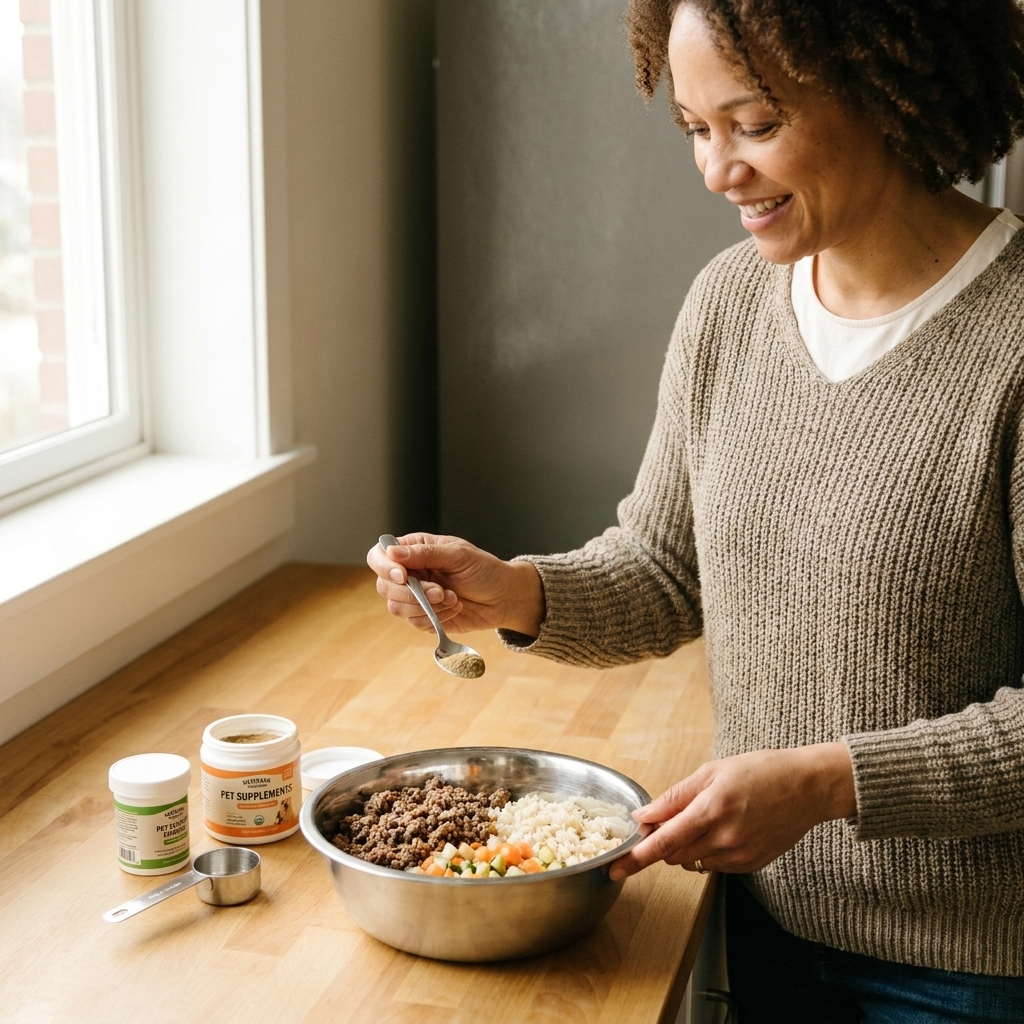
Homemade diets for puppies are very easy to get wrong, particularly for calcium, phosphorus, and essential fatty acids. If you want to cook for your puppy, do it with a recipe formulated specifically for growth by a board-certified veterinary nutritionist.
The bottom line
The best puppy food is the one that is complete and balanced for growth, fits your puppy’s expected adult size, and provides appropriate protein, fat, and carefully controlled calcium. If you focus on those fundamentals, you will cut through most of the noise and make a choice you can feel good about.
For breed-specific guidance, feeding amounts, and growth timelines, a quick check-in with your veterinarian can help tailor the label math to the puppy in front of you.