Confused about grain-free diets and canine DCM? Here’s what veterinary guidance and FDA updates suggest, plus practical steps to choose a heart-smart diet ...
If you love cooking for your pets, I get it. Homemade meals can be comforting, practical, and a great option for some medical needs. But here is the not-so-cute truth I learned again and again as a veterinary technician: a large proportion of homemade dog and cat diets end up unintentionally deficient without a properly designed supplement plan.
And those deficiencies can be serious. These can include bone demineralization and pathologic fractures from calcium imbalance, anemia from missing trace minerals, thyroid dysfunction when iodine is too low or too high, and in cats, life-threatening heart and eye disease if taurine is overlooked.
This guide walks you through the essential nutrient supplements you typically need when cooking at home, plus how to use them safely and when to bring a veterinary nutritionist into the mix.
First, a reality check
Dogs and cats do not need “variety” the same way we do. They need specific nutrient targets every day over time. When we swap a complete and balanced commercial diet for home cooking, we take on the job of being the manufacturer.
That means your recipe has to cover:
- Macronutrients: protein, fat, carbohydrates (cats need far fewer carbs, and higher animal protein)
- Micronutrients: vitamins and minerals in the right ratios
- Species-specific essentials: taurine for cats, and careful calcium and vitamin D management for both
If you are following a random recipe you found online, even one that looks wholesome, it may not meet nutrient profiles used for “complete and balanced” pet foods (such as AAFCO nutrient profiles). Homemade diets are not “AAFCO approved,” but they can be formulated to meet those same nutrient targets. “Looks healthy” and “is nutritionally complete” are very different things.
Key supplements for homemade diets
There is no single supplement list that fits every pet and every recipe. But the nutrients below are the ones I most often see missing or mis-dosed in home-prepared diets.
1) Calcium (and the calcium-to-phosphorus balance)
This is the big one. Meat is high in phosphorus and low in calcium. If you cook meat and carbs without a calcium source, you can create a dangerous imbalance over time.
Why it matters: Calcium supports bones, teeth, muscle contraction, and nerve function. Too little, or the wrong calcium-to-phosphorus ratio, can contribute to nutritional secondary hyperparathyroidism, bone demineralization, fractures, and developmental orthopedic issues in growing puppies and kittens.
What people get wrong:
- Assuming “bone broth” counts as calcium (it usually does not provide reliable calcium)
- Using random amounts of eggshell powder without calculating elemental calcium
- Feeding a “meat-only” or “meat and rice” plan long-term
Common calcium options:
- Calcium carbonate (widely used, consistent potency)
- Food-grade eggshell powder (can work well if measured precisely)
- Bone meal (more variable, and quality control matters)
Quick clarity on eggshell: eggshell can be a solid calcium source, but it is only helpful if you know how much elemental calcium you are actually adding. Different grinds, different measuring spoons, and different packing can turn “a teaspoon” into very different doses, which is why weighing and calculating matters.
Extra caution: Puppies, kittens, pregnant pets, and large-breed growth stages are not the time to wing it. Please work with your veterinarian or a board-certified veterinary nutritionist for these life stages.
2) A complete vitamin and mineral mix (made for homemade diets)
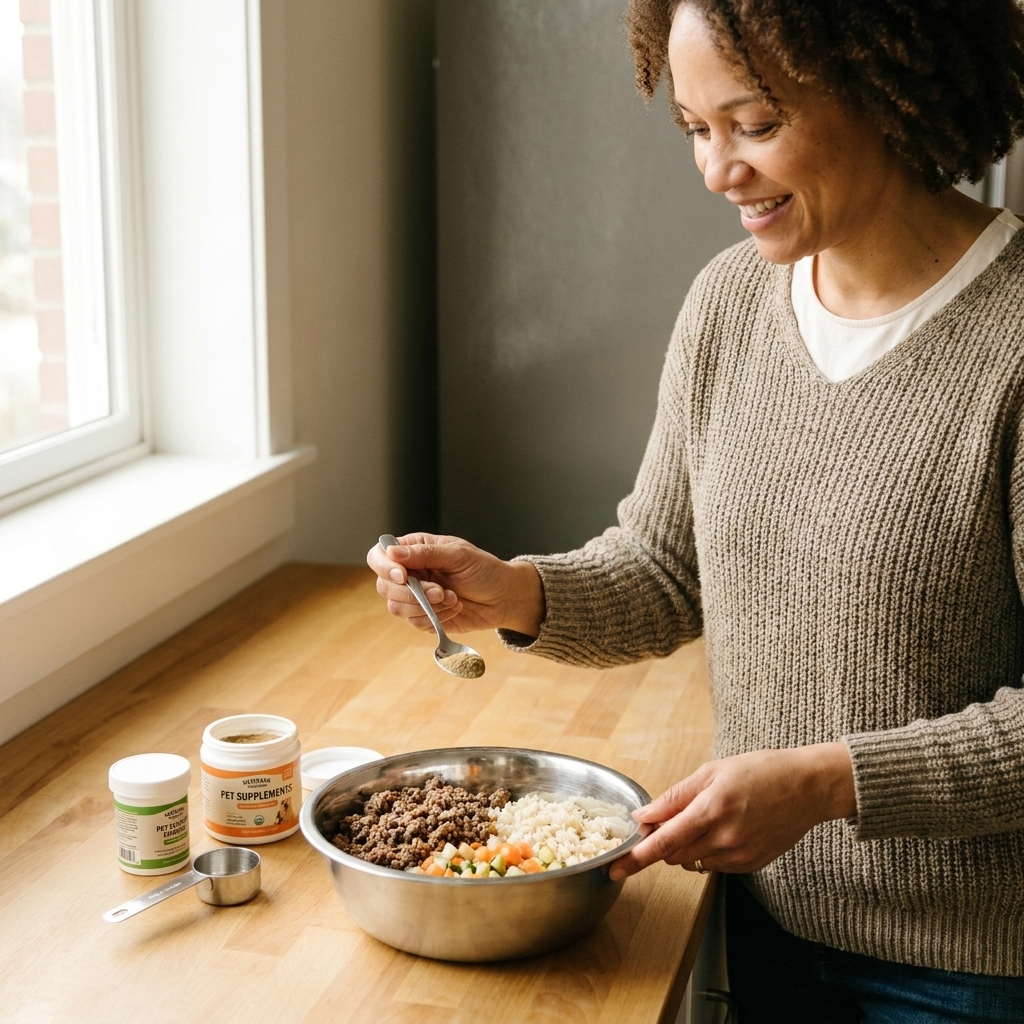
If you only add calcium and call it good, you will still miss key nutrients. Most home recipes need a purpose-built canine or feline vitamin-mineral premix to cover trace nutrients that are hard to supply consistently with whole foods.
Why it matters: Micronutrient deficiencies can be slow and sneaky, showing up as poor coat quality, lethargy, immune issues, anemia, neurologic changes, and more.
Look for a premix that covers (at minimum):
- Vitamin A, D, E, and B-complex
- Zinc, copper, manganese, selenium
- Iodine
- Often also sodium, chloride, magnesium, and potassium, depending on the formula
Important: Use a premix intended for the species you are feeding. Cats are not small dogs nutritionally.
3) Taurine (especially for cats)
If you cook for cats, read this twice: taurine is not optional.
Why it matters: Cats cannot make enough taurine on their own. Deficiency can lead to:
- Dilated cardiomyopathy (a serious heart disease)
- Retinal degeneration and vision loss
- Reproductive failure and poor growth
Processing risk: Taurine is found in animal tissues, but amounts vary by cut and handling. Some preparation methods can reduce taurine retention, especially when meat juices are lost or discarded during cooking. Relying on “it has meat in it” is not safe planning for a cat’s taurine needs.
What to do instead: Use a feline-formulated recipe from a veterinary nutritionist or a trusted formulation tool that includes taurine dosing, or supplement taurine precisely as directed by your vet.
What about dogs? Most dogs can synthesize taurine, but some dogs are at higher risk for taurine deficiency depending on breed, health conditions, and diet composition. If your dog is on a homemade diet and has heart disease risk factors, ask your vet whether taurine testing or supplementation makes sense.
4) Omega-3 fatty acids (EPA and DHA)
Most homemade diets provide plenty of omega-6 fats, but come up short on marine-based omega-3s.
Why it matters: EPA and DHA support skin and coat health, joint comfort, brain health, and help moderate inflammation.
Best sources:
- Fish oil (commonly used)
- Algae oil (a good alternative source of DHA, helpful for fish-sensitive pets)
Quality matters: Choose products intended for pets or high-quality human-grade products with clear EPA and DHA amounts per serving. Dose is based on the amount of EPA and DHA, not “one capsule.”
Safety notes: Too much can cause digestive upset, and at high doses it may affect blood clotting. Confirm dosing with your veterinarian, especially before surgery or if your pet takes medications that affect bleeding risk.
5) Iodine (small amount, big impact)
Iodine is a classic “missing micronutrient” in homemade diets.
Why it matters: Iodine supports normal thyroid hormone production. Both too little and too much can disrupt thyroid function, and iodine needs are small and precise.
Where it comes from: In commercial foods, iodine is carefully added. At home, people often try kelp or seaweed powders, which can be wildly inconsistent in iodine content.
My advice: Let a reputable vitamin-mineral premix provide iodine, or follow a veterinary nutritionist recipe that specifies a consistent source and dose. Avoid eyeballing seaweed products.
6) Vitamin D (high-risk to overdose)
Vitamin D is essential, but it is also one of the higher-risk vitamins to overdose because it is fat-soluble and has a narrower safety margin than many other nutrients.
Why it matters: Vitamin D helps regulate calcium and phosphorus balance and supports bone health.
The risk: Too much vitamin D can cause dangerous calcium elevations and organ damage. This is why using a balanced premix or professionally formulated recipe is safer than DIY supplementation.
7) Iron, copper, and B vitamins (blood health and energy)
Anemia and low energy can stem from missing building blocks in homemade diets, especially if the recipe avoids organ meats and relies heavily on muscle meat and grains.
Why it matters:
- Iron supports red blood cell production
- Copper is critical for iron metabolism and connective tissue health
- B vitamins support energy metabolism and neurologic function
How it is usually addressed: Through a complete vitamin-mineral premix and, when appropriate, carefully measured organ meats in a formulated recipe.
Why add-ins do not balance a diet
I love the idea of food as nourishment. But in practice, “superfoods” are not a substitute for formulation.
Here are common add-ins and what they can and cannot do:
- Eggshell: can provide calcium, but does not cover trace minerals, iodine, or vitamins
- Vegetables: helpful for fiber and phytonutrients, but not reliable for meeting essential minerals
- Liver: nutrient dense, but too much can overshoot vitamin A and copper targets
- Seaweed/kelp: may provide iodine, but amounts can be inconsistent and easy to overdo
- “A pinch of salt”: does not reliably address sodium and chloride needs in a measured way and can create other issues
Balancing a diet is about amounts and ratios, not just ingredients.
How to do it safely
Use a veterinary nutritionist recipe
This is the gold standard, especially for:
- Puppies and kittens
- Pregnant or nursing pets
- Pets with kidney disease, pancreatitis, food allergies, urinary issues, diabetes, or heart disease
- Pets on home-cooked diets long-term
A board-certified veterinary nutritionist (DACVN in the US, ECVCN in Europe) will formulate to your pet’s calories, body condition, medical needs, and your preferred ingredients.
Pick a premix that fits your recipe
Some premixes are designed for “meat + carb + oil” recipes, while others assume organ meats are included. Read the instructions closely. If a premix says you must use specific amounts of liver or specific fat sources, that is not a suggestion. It is part of the formula.
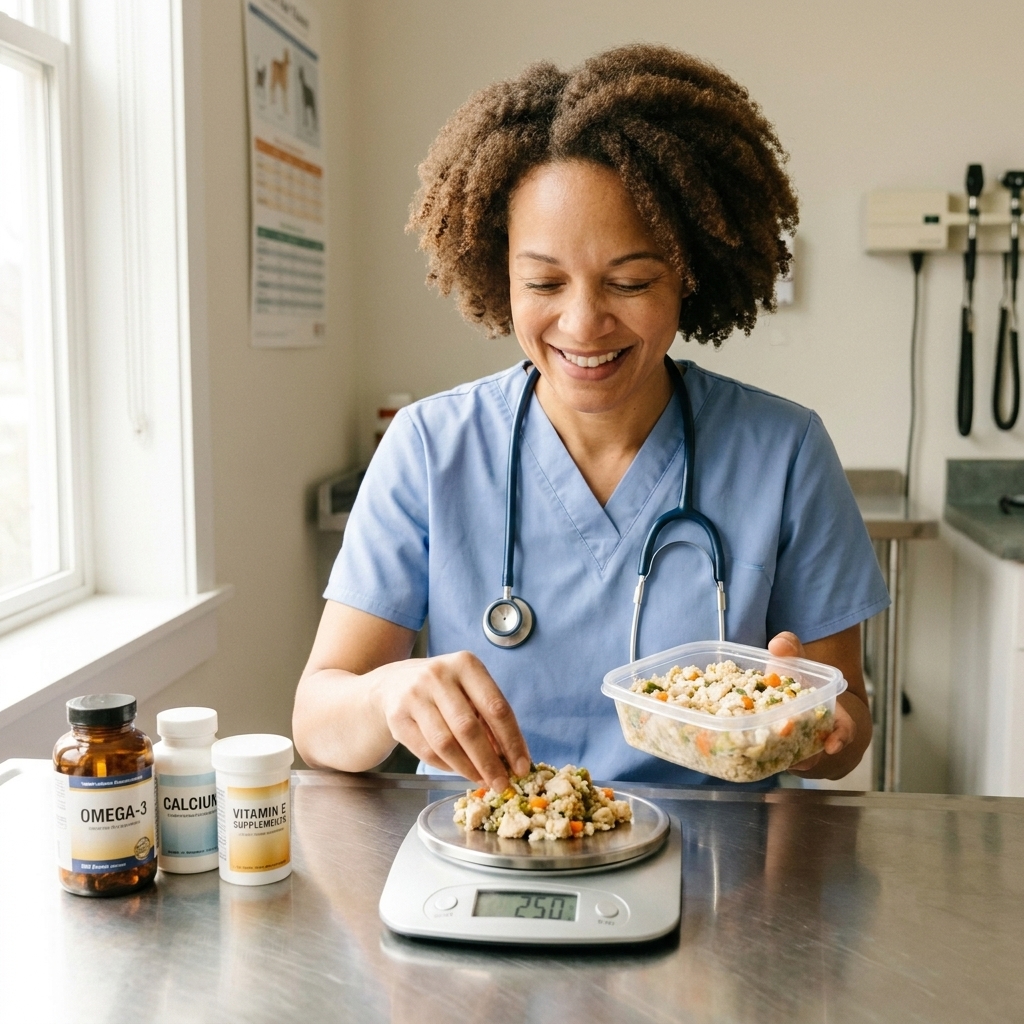
Weigh ingredients, not cups
Kitchen scales feel extra until you realize that “one cup of turkey” can vary a lot depending on grind, packing, and moisture. Weighing ingredients keeps nutrition consistent, especially for small pets where tiny changes matter.
Recheck the recipe after changes
If you swap chicken for beef, change the fat percentage, remove eggs, or switch from white rice to sweet potato, the nutrient profile shifts. Balanced homemade diets are not endlessly flexible unless they were designed to be.
Do not overlook calories and fiber
One of the sneaky problems with homemade diets is that the calorie density can drift. A “healthy” diet can still cause weight gain if portions creep up, or weight loss if the recipe is bulky and low calorie. Fiber also matters for stool quality and some GI conditions, but it has to be intentional. This is another reason premixes and professionally formulated recipes tend to work better than improv.
Signs the diet is off
Some deficiency signs are subtle at first, and many look like “normal aging” until they are not.
- Dry, flaky skin or dull coat that does not improve
- Low energy, weakness, or exercise intolerance
- Chronic soft stool or constipation
- Muscle loss despite eating enough calories
- Limping, bone pain, or fractures (especially concerning in growing pets)
- Poor growth in puppies or kittens
- In cats: new heart murmur, breathing changes, sudden weakness, or vision issues
If you see any of these, pause the experiment and talk with your veterinarian. Bring your full recipe with exact weights and any supplements you are using.
FAQ
Can I rotate homemade recipes to cover gaps?
Rotation helps variety, but it does not reliably fix nutrient deficiencies. If each recipe is unbalanced, rotating them often just rotates different deficiencies.
Is a children’s multivitamin safe for pets?
No. Human vitamins are not formulated for dog or cat requirements and can contain inappropriate doses or sweeteners. Use pet-specific supplements or a veterinary nutritionist plan.
Do I need supplements if I feed raw with bones and organs?
Not automatically, and not never. Raw diets can still be imbalanced, especially for iodine, vitamin D, omega-3s, and trace minerals. Bones also come with risks, including dental fractures, GI injury, constipation, and obstruction. If you are feeding raw, it is still worth getting the diet professionally evaluated.
What is the simplest safe path for most families?
Pick a complete premix designed for home-cooked diets and follow it exactly, or work with a veterinary nutritionist for a custom recipe. In my experience, those two routes prevent the most heartbreak.
Bottom line
Homemade pet food can be done well, but it is not “meat plus love.” It is nutrition math, and your pet’s body keeps the score.
If you remember just a few essentials: calcium balance is non-negotiable, cats need taurine, and most recipes require a complete vitamin-mineral plan, plus targeted nutrients like omega-3s and iodine. When in doubt, ask your veterinarian for a referral to a board-certified veterinary nutritionist. It is one of the best investments you can make in your pet’s long-term health.