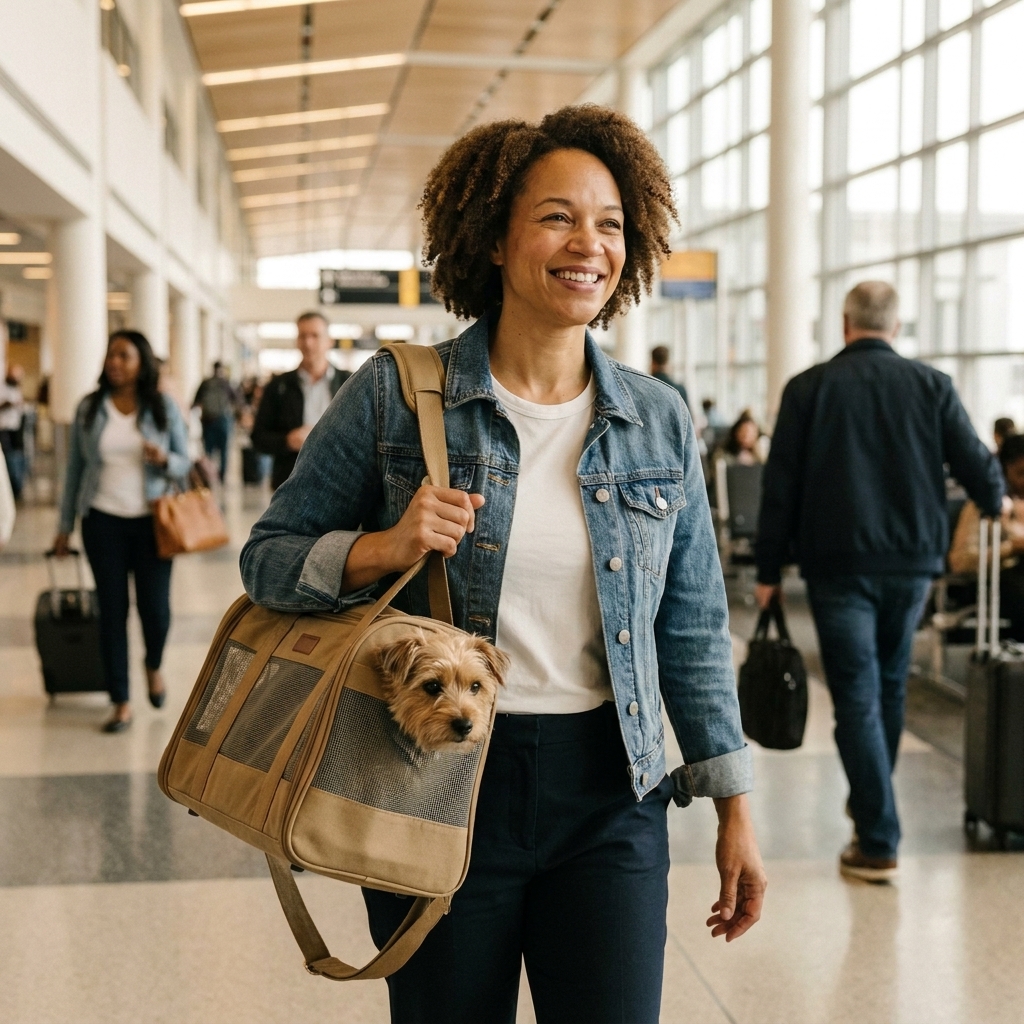
A step-by-step guide to assembling a DIY pet first aid kit, including what to pack for dogs, cats, and small animals, plus safety tips, common scenarios, and...
Flying with a pet can feel like a pop quiz you did not study for. One airline says “soft-sided only,” another lists dimensions that do not match your under-seat space, and suddenly you are measuring your cat like a tiny suitcase.
I have helped a lot of families prep for travel during my years as a veterinary technician, and here is the truth: the “best” airline-approved pet carrier is the one that (1) meets your airline’s in-cabin rules, (2) keeps your pet safe and well-ventilated, and (3) stays comfortable for a real travel day, usually 2 to 6 hours from check-in to arrival.
This guide walks you through cabin regulations, ventilation and safety requirements, comfort must-haves, and what I look for when recommending carriers for dogs and cats.
Start with the airline’s rules (then verify the plane)
When airlines say “airline-approved,” what they usually mean is “approved by our policy, for this part of the plane.” Policies vary, and even within one airline, under-seat space can change depending on aircraft type and seat location.
Common in-cabin carrier rules
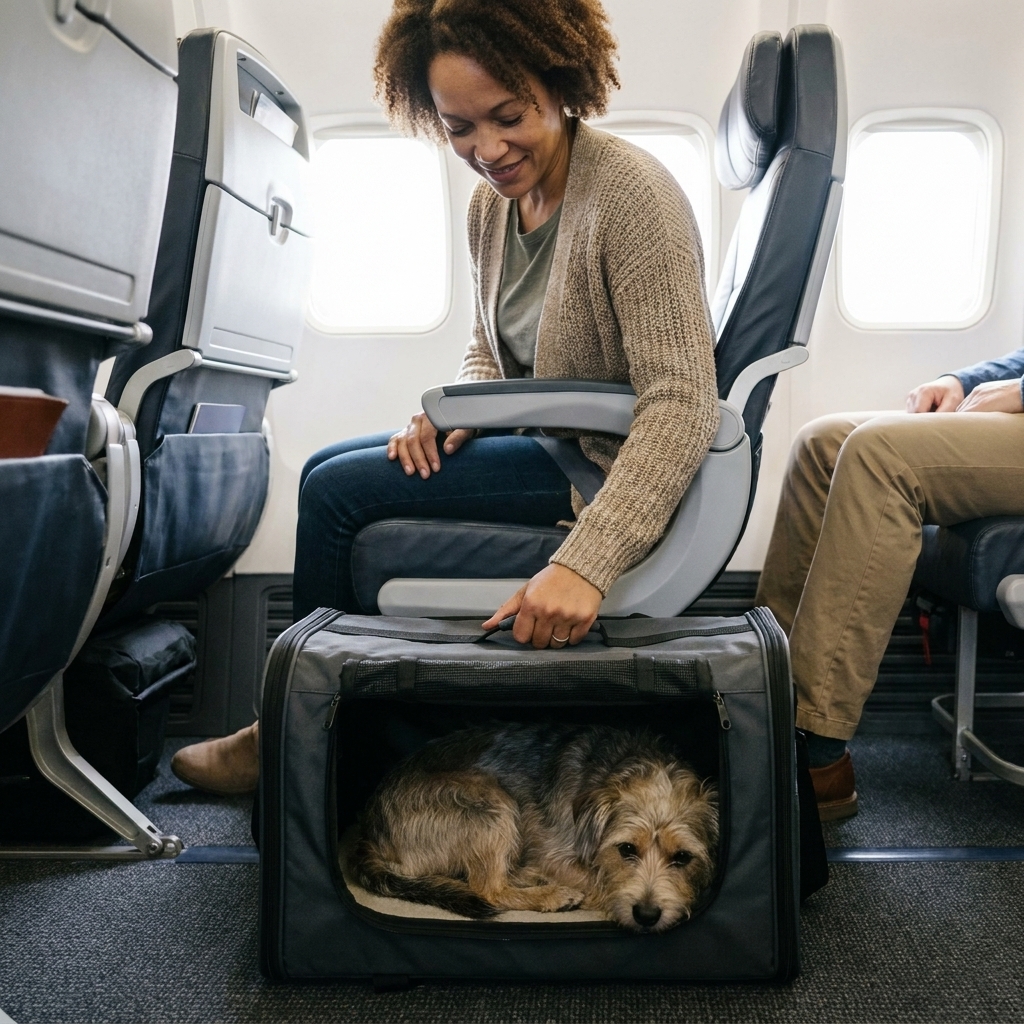
- Fits under the seat in front of you. Many airlines publish maximum dimensions. In practice, the under-seat opening can be smaller than the posted numbers.
- Soft-sided or flexible. Soft carriers are often preferred because they can compress slightly to fit.
- Ventilation on multiple sides. Mesh panels are typical. Some airlines specify how many sides must be ventilated.
- Leak-resistant bottom. A waterproof base or insert is a big plus, even if you use absorbent padding.
- Secure closures. Zippers should not gap, and doors should not pop open under pressure.
- Pet stays inside during travel. Policies vary, but many airlines and crew instructions require pets to remain fully enclosed in the closed carrier from boarding through deplaning.
What to confirm before you buy or fly
- In-cabin pet policy for your specific airline and route.
- Published carrier dimensions and whether wheels or rigid frames count toward size.
- Personal item rules. Many airlines count the pet carrier as your personal item, which affects what else you can bring onboard.
- Fees and reservations. In-cabin pets often require a paid fee each way, and many flights cap how many pets can travel in the cabin. Reserve early.
- Pet age and health rules. Some airlines restrict very young puppies and kittens, and international routes can add more requirements.
- Breed and destination restrictions. Breed limits are more common for cargo and checked pet transport. For in-cabin pets, the bigger issue is usually size and fit. Destination-country import rules can still restrict certain breeds or require documentation.
- Where you are seated. Bulkhead rows often have limited or no under-seat storage. Exit rows generally restrict under-seat stowage.
My practical tip: After booking, look up your aircraft type (often listed in your reservation details) and check what the airline says about under-seat storage for that aircraft. Seat maps rarely show under-seat clearance. If exact dimensions are not published, call or chat and ask, “What is the under-seat carrier space for this aircraft in standard economy seats?”
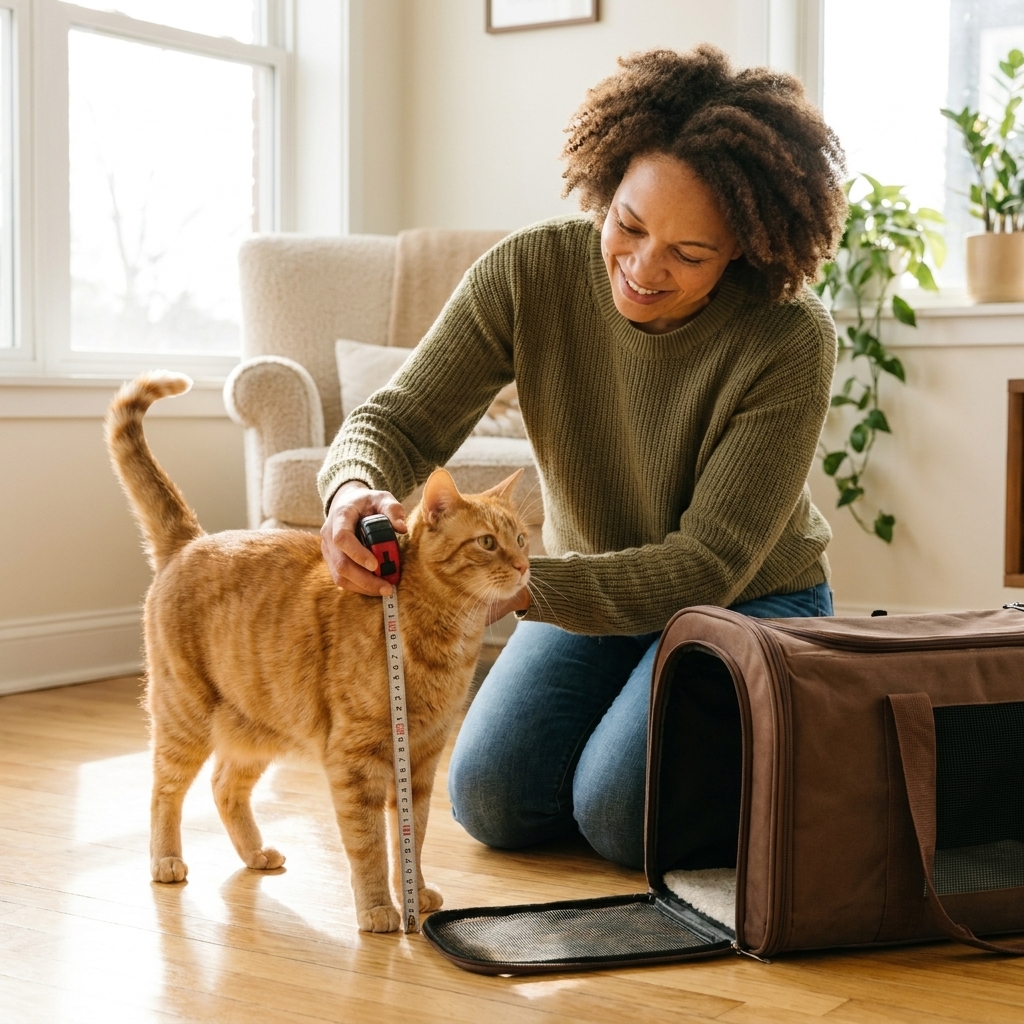
How to measure your pet
The goal is a carrier your pet can settle in comfortably, while still being compact enough to fit under the seat. Some airlines describe this as “stand up and turn around,” but under-seat height limits can make that unrealistic for all but very small pets. What I aim for is enough room to change position and lie down naturally without being folded or pressed into the top of the carrier.
Measurements you need
- Length: Nose to base of tail (not the tip).
- Height: Floor to top of head or ear tips, whichever is higher, while your pet is standing naturally.
- Weight: Your pet’s weight plus the carrier’s weight matters if the airline has a combined limit.
If your pet is between sizes, choose the carrier that matches airline limits and gives the best internal space. Some soft carriers advertise external dimensions that look fine, but the internal usable space is reduced by thick padding or rigid framing.
Ventilation basics
Ventilation is not just a comfort feature. It is a safety feature. A well-ventilated carrier helps prevent overheating and reduces stress by improving airflow and visibility.
What I like to see
- Mesh panels on at least two sides, ideally three or four.
- Mesh that holds its shape so it does not collapse against your pet’s face.
- Sturdy, claw-resistant mesh for cats and determined diggers.
- Multiple entry points (top-load and side-load) so you can place your pet gently without wrestling.
What to avoid
- One tiny “window” of mesh and lots of solid fabric panels.
- Flimsy zippers that can separate if your pet presses on them.
- Carriers that slump when lifted, reducing internal air space.
Comfort features that matter
Airports are loud, lines are long, and cabin air can be dry and stuffy. A travel carrier should help your pet feel contained and supported, not jostled and exposed.
Look for these comfort-first details
- Firm, supportive base. A removable bottom board keeps the carrier from sagging. This is especially important for long-bodied dogs and senior cats.
- Machine-washable liner. Accidents happen. A removable, washable pad is a sanity saver.
- Low-profile structure. The carrier should slide under the seat without forcing the top to crush down onto your pet’s back.
- Quiet hardware. Clips and straps that do not clang help noise-sensitive pets.
- Shoulder strap plus luggage sleeve. If you are rolling a suitcase, a pass-through sleeve helps keep the carrier stable.
- Privacy options. A roll-down flap can reduce overstimulation for some pets, as long as ventilation stays adequate.
Vet-tech reality check: More plush is not always better. Super thick padding can steal precious interior height and make your pet hunch. I prefer a thin, supportive pad plus an absorbent layer underneath.
Soft vs hard carriers
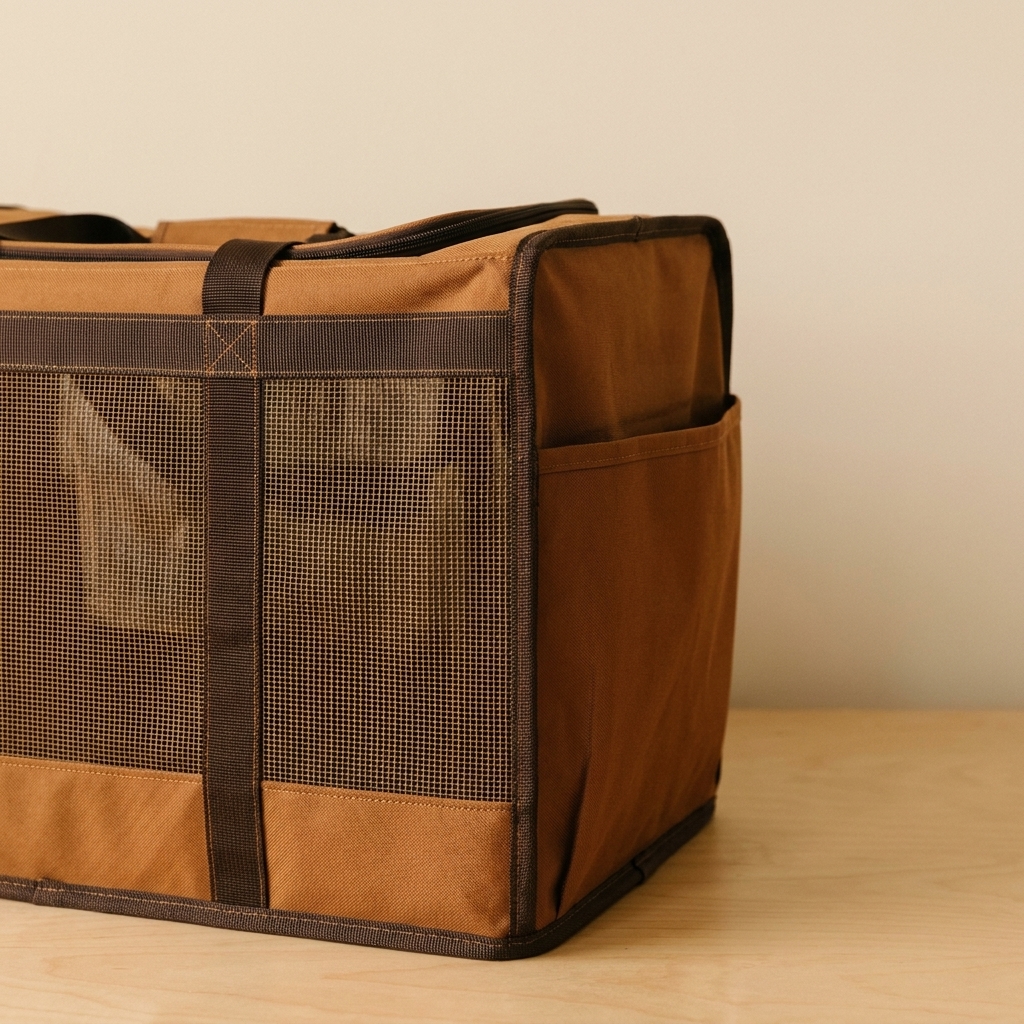
For most in-cabin situations, soft-sided carriers win because they flex under the seat and are easier to maneuver through tight aisles. Hard-sided carriers can still work on some airlines, but they are less forgiving about dimensions.
Soft-sided carriers
- Pros: Flexible fit, lighter weight, easier to carry, often more comfortable under-seat.
- Cons: Some pets can scratch or chew, and low-quality soft carriers can collapse or sag.
Hard-sided carriers
- Pros: Very durable, easier to disinfect, more structure for pets that lean heavily.
- Cons: Rigid dimensions, heavier, and may not fit under-seat even if numbers seem close.
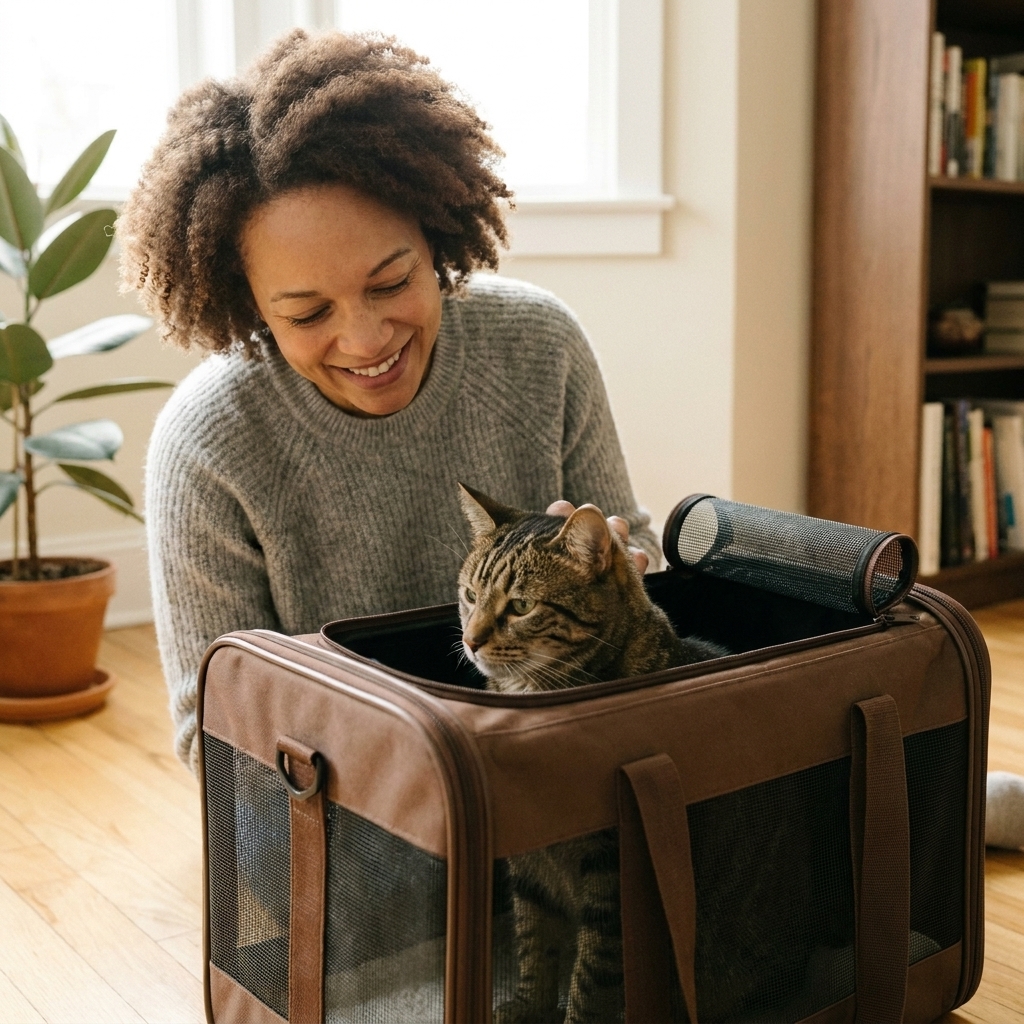
If you have a cat who turns into a furry tornado during loading, consider a soft-sided carrier with a top-loading option. It is one of the simplest ways to reduce stress for both of you.
Quick carrier checklist
- Dimensions: Matches your airline’s maximums, and realistically fits under your seat.
- Structure: Firm base insert, does not sag when lifted.
- Ventilation: Mesh on multiple sides, holds shape away from face.
- Closures: Strong zippers, ideally lockable zipper pulls or clips.
- Comfort: Washable pad, enough interior space to shift positions and rest comfortably.
- Carry options: Shoulder strap and a hand carry handle. Luggage pass-through if you travel solo.
- Safety: Interior leash clip can be helpful for dogs, but do not rely on it as the only barrier.
- Materials: Easy-clean interior and a water-resistant bottom.
Top picks by travel style
Rather than claiming one carrier is perfect for every dog and cat, I recommend choosing based on how you travel and how your pet copes with confinement.
Best overall: structured soft carrier
Look for a soft carrier with a sturdy base, mesh on at least three sides, and a top-load option. This style tends to be the easiest for airline compliance and pet comfort.
Best for anxious pets: privacy cover
A carrier with a breathable cover panel can help nervous pets feel less exposed during boarding. The key is that airflow still comes from multiple sides, not just the front.
Best for cats: top-entry soft carrier
Cats often do better with top-entry loading and a more den-like feel. Prioritize strong mesh, reinforced seams, and a stable base so the carrier does not wobble when you lift it.
Best for small dogs: expandable carrier
Expandable carriers can be wonderful after you are in the gate area or at your destination. In flight, the carrier generally needs to remain under-seat sized and zipped closed. If you choose expandable, make sure it is still roomy enough when fully closed.
Pre-flight training
If there is one thing I wish more pet parents did, it is carrier conditioning. You want your pet to see the carrier as a safe hangout spot, not a trap that appears right before chaos.
A simple 7 to 14 day plan
- Leave the carrier out in a normal room with the door open.
- Feed treats inside and let your pet exit freely.
- Add familiar bedding that smells like home.
- Practice short carries around the house, then to the car, then back inside.
- Rehearse travel sounds softly (rolling suitcase, a bit of crowd noise) while pairing with treats.
For cats, I also love using a towel or small blanket over part of the carrier to create a cozy, sheltered vibe while keeping ventilation open.
What to pack
In-carrier basics
- Absorbent potty layer: A puppy pad or incontinence pad under the liner.
- Thin, familiar blanket: Comfort without stealing headroom.
- Collar and ID (or harness and ID for cats who can slip collars).
Carry-on basics for you
- Wipes and a few plastic bags for quick cleanup.
- Spare pad or liner in case of an accident.
- Collapsible water bowl for use after security and during layovers.
- A small measured portion of food if you have a long travel day, plus any required meds.
Skip these common items
- Bulky beds that reduce airflow and usable space.
- Loose toys that can shift and bother your pet. If you bring one, choose a flat comfort item.
- Strong-scent calming sprays used heavily inside the carrier. Mild, vet-approved approaches are fine, but overpowering scent can backfire.
Food and water timing
For many healthy pets, I recommend keeping meals light before the airport and offering small sips of water during the travel day. Big meals right before boarding can increase nausea. If your pet has a medical condition, diabetes, or a history of vomiting, ask your veterinarian for a specific plan.
Security screening tips
In many airports, you may be required to remove your pet from the carrier at security while the carrier goes through the scanner. In the U.S., this is common during TSA screening. Procedures vary by country and airport, so give yourself extra time and assume you might need hands-on handling.
- Use a secure harness for cats and a snug collar or harness for small dogs.
- Ask about private screening if you are worried about escape risk. A private room is often available on request, but it depends on staffing and the airport.
- Keep a hand on your pet at all times. A leash looped around your wrist can prevent a startled bolt.
- Re-load gently using the top entry if you have it. Your goal is smooth and quiet, not fast and forceful.
Health and safety notes
Talk to your veterinarian first if needed
Heart disease, brachycephalic airway concerns (think Pugs, Bulldogs, Persian cats), severe anxiety, or recent illness should prompt a pre-travel check-in. Your vet can advise whether flying is appropriate and how to reduce risk.
Be cautious with sedatives
Medication decisions should be made with your veterinarian, not based on internet advice. Some sedatives can affect breathing and balance, which is not ideal at altitude and in a stressful environment. If anxiety support is needed, your vet can guide you toward the safest option for your pet’s health profile.
Plan potty breaks
For dogs, build in time for a potty break right before entering the terminal if possible, and again before boarding. For cats, a well-prepped carrier setup is usually the best approach for short to moderate flights.
Documents and planning
Do not let paperwork be the reason your pet gets turned away at the counter. Requirements can come from the airline, the destination, or both.
- Domestic flights: Some airlines want proof of vaccines or a health form, and some do not. Verify before travel day.
- International travel: Health certificates, rabies documentation, and sometimes microchips and waiting periods may be required.
- Connections: Build in extra time for pet relief areas, longer lines, and a calmer boarding process. Tight connections are stressful for you and your pet.
FAQ
What does “airline-approved pet carrier” mean?
It means the carrier meets the requirements of a particular airline’s pet policy, especially size, ventilation, and containment rules. There is no single universal certification for all airlines. Some products are marketed as “TSA compliant” or “airline compliant,” but TSA does not certify carriers for airline cabin use, and airlines still enforce their own policies.
Can my pet stick their head out on the plane?
Typically no. Many airlines require pets to remain fully inside a closed carrier for the time you are in the cabin, including boarding and deplaning. Rules and enforcement can vary by airline and crew, so assume closed is the standard unless your airline explicitly says otherwise.
Is an expandable carrier allowed?
Often yes, as long as it fits under the seat in its closed configuration and stays closed during the flight. Expansion is best saved for the gate area or once you are off the plane, depending on airline rules.
Should I choose a carrier with wheels?
Wheels can be convenient, but they can also add bulk and push you over dimension limits. If you choose a wheeled option, make sure the wheels are removable or that the airline counts dimensions without them, and confirm it still fits under-seat.
How do I know if my pet is too big for in-cabin travel?
If your dog or cat cannot settle comfortably in a carrier that fits under the seat, in-cabin travel may not be a safe or humane option. In that case, talk with your veterinarian and consider alternatives like ground travel or professional pet transport services.
My final advice
If you remember nothing else, remember this: choose the carrier for the flight you actually have. Match the airline’s size and personal item rules, prioritize ventilation and a firm base, and practice at home until your pet sees the carrier as a safe space.
With the right carrier and a little prep, most dogs and cats handle cabin travel better than you might expect. And you will feel calmer too, which your pet absolutely notices.