
Watching your dog grow gray around the muzzle is equal parts sweet and a little scary. Senior years can sneak up on you, and suddenly the routine that worked for years feels off. Maybe your pup is leaving food in the bowl, moving slower on walks, or waking up stiff and sore.
The good news is that small, thoughtful adjustments can make a big difference. With the right diet, the right kind of exercise, and a wellness plan that focuses on comfort and prevention, many senior dogs enjoy happy, playful years well into old age.

When is a dog considered “senior”?
It depends on size and genetics. In general:
- Small dogs often enter senior life around 10 to 12 years.
- Medium dogs often around 8 to 10 years.
- Large and giant breeds may be seniors as early as 6 to 8 years, and some giant breeds start showing senior changes closer to 5 to 6.
But age is only one piece. A dog who is slowing down, gaining or losing weight, developing dental issues, or acting “not quite themselves” may benefit from senior-style support even if they are not technically old yet.
Senior diet adjustments that actually help
Nutrition is one of the kindest levers you can pull for an aging dog. The goal is not “dieting” in the human sense. It is supporting muscle, joints, digestion, and a stable weight while keeping meals enjoyable.
1) Aim for lean muscle support, not just fewer calories
Many seniors lose muscle more easily, especially if arthritis or fatigue reduces activity. Ask your veterinarian whether your dog’s food provides appropriate high-quality protein for their health status. Some seniors do well with slightly higher protein, while dogs with certain medical conditions may need a different approach.
2) Keep weight in a healthy range (it matters for pain)
A few extra pounds can significantly increase joint strain. On the flip side, unexplained weight loss in a senior dog deserves prompt attention. If you are unsure, have your clinic show you how to use a body condition score and set a realistic target.
3) Consider a senior-formulated food, but let your dog guide the choice
Senior diets can be helpful, but not every older dog needs the same formula. Some senior foods are lower in calories and higher in fiber, which can be great for easy keepers. Others include joint or antioxidant support. The “right” choice is the one that matches your dog’s body condition, appetite, stool quality, and any diagnoses.
If you switch foods, do it gradually over several days (or longer for sensitive dogs) to reduce the odds of stomach upset.
4) Joint-support nutrients: know what’s realistic
You will often hear about glucosamine, chondroitin, omega-3 fatty acids (EPA and DHA), and green-lipped mussel. These can be helpful for some dogs, but results are mixed and product quality and dosing matter. If your dog is already showing stiffness or limping, talk with your vet about a full pain management plan rather than relying on supplements alone.
Important: Never give human pain meds to dogs unless your veterinarian specifically instructs you. Many are toxic.
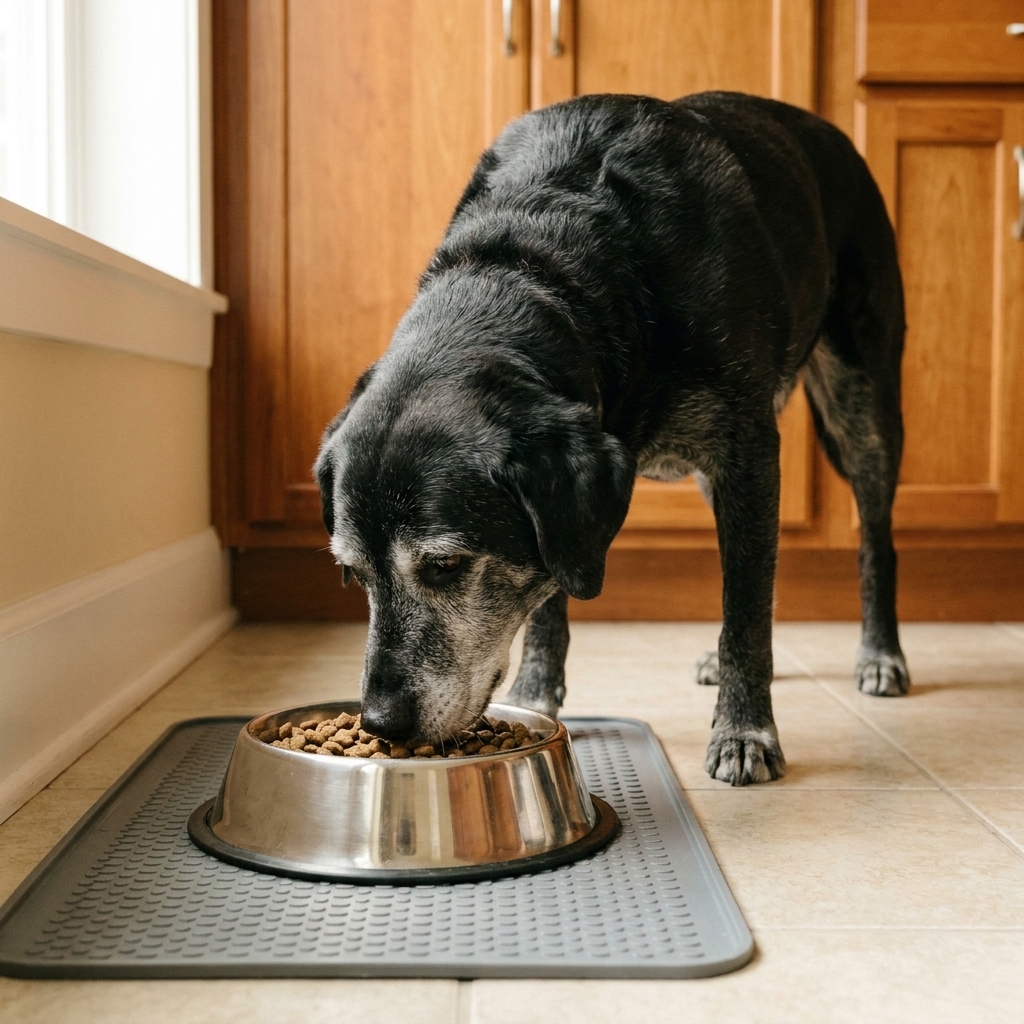
5) Make mealtimes easier for aging mouths and tummies
- Dental sensitivity: If crunching kibble seems uncomfortable, ask your vet about softening with warm water or switching textures safely.
- Smaller, more frequent meals: This can help picky seniors or dogs who get nauseated on an empty stomach.
- Hydration support: Add water to food, offer multiple water stations, and consider a pet fountain if your dog likes moving water.
Exercise for senior dogs: gentler, not nonexistent
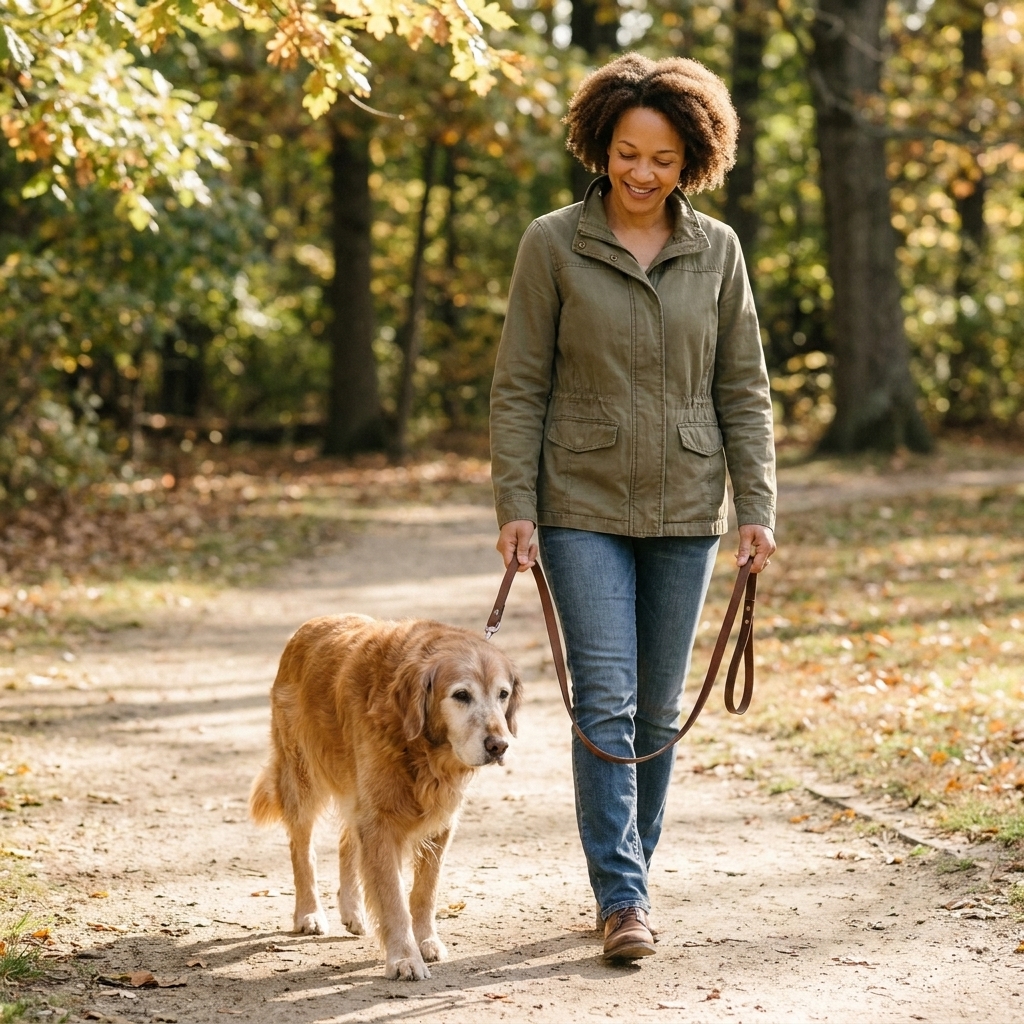
One of the most common misconceptions I saw in the clinic was that older dogs should stop exercising. Most seniors do better with consistent, low-impact movement. The trick is adjusting the type, duration, and recovery time, and making changes gradually.
What good senior exercise looks like
- Shorter walks, more often: Think two to four short outings rather than one long march.
- Warm-up and cool-down: Start slow for the first few minutes and end slow, too.
- Low-impact terrain: Grass, packed dirt, or smooth sidewalks can be easier than rocky trails.
- Let them sniff: Sniffing is real enrichment and can tire the brain without stressing joints.
Heat and cold matter more now
Many senior dogs tolerate temperature extremes less well. In warm weather, avoid hot pavement and midday heat, bring water, and watch closely for heavy panting that does not settle. In cold weather, shorten outings and consider a coat for thin-coated dogs.
Strength and stability matter (yes, even for seniors)
Gentle strength work can help maintain mobility. A rehab-focused veterinary team can show you safe exercises like controlled sit-to-stands, cookie stretches, or balance work. If you try anything new at home, keep sessions short and stop if your dog shows discomfort.
If your dog is painful, you have options beyond supplements. Vet-directed plans may include prescribed anti-inflammatory medications for dogs, other pain relievers, injectable arthritis therapies (where available), physical therapy, or acupuncture.
Signs you overdid it
- Limping during or after activity
- Stiffness that lasts into the next day
- Reluctance to get up, climb steps, or go out
- Heavy panting that takes a long time to settle
- Behavior changes like irritability when touched
If any of these show up, scale back and check in with your veterinarian. Pain should not be written off as “just getting old.”
Comfort upgrades at home
You do not need to remodel your house to support a senior dog. A few targeted tweaks can reduce slips, ease sore joints, and help your dog feel secure.
Make footing predictable
- Add runners or area rugs on slippery floors.
- Use non-slip mats under food and water bowls.
- Keep nails trimmed and consider paw pad fur trims if your dog slides.
Upgrade the bed situation
Look for a supportive orthopedic bed that is easy to step into. Many seniors love having more than one bed so they can rest near the family without having to navigate the whole house.
Ramps and steps for the “big climbs”
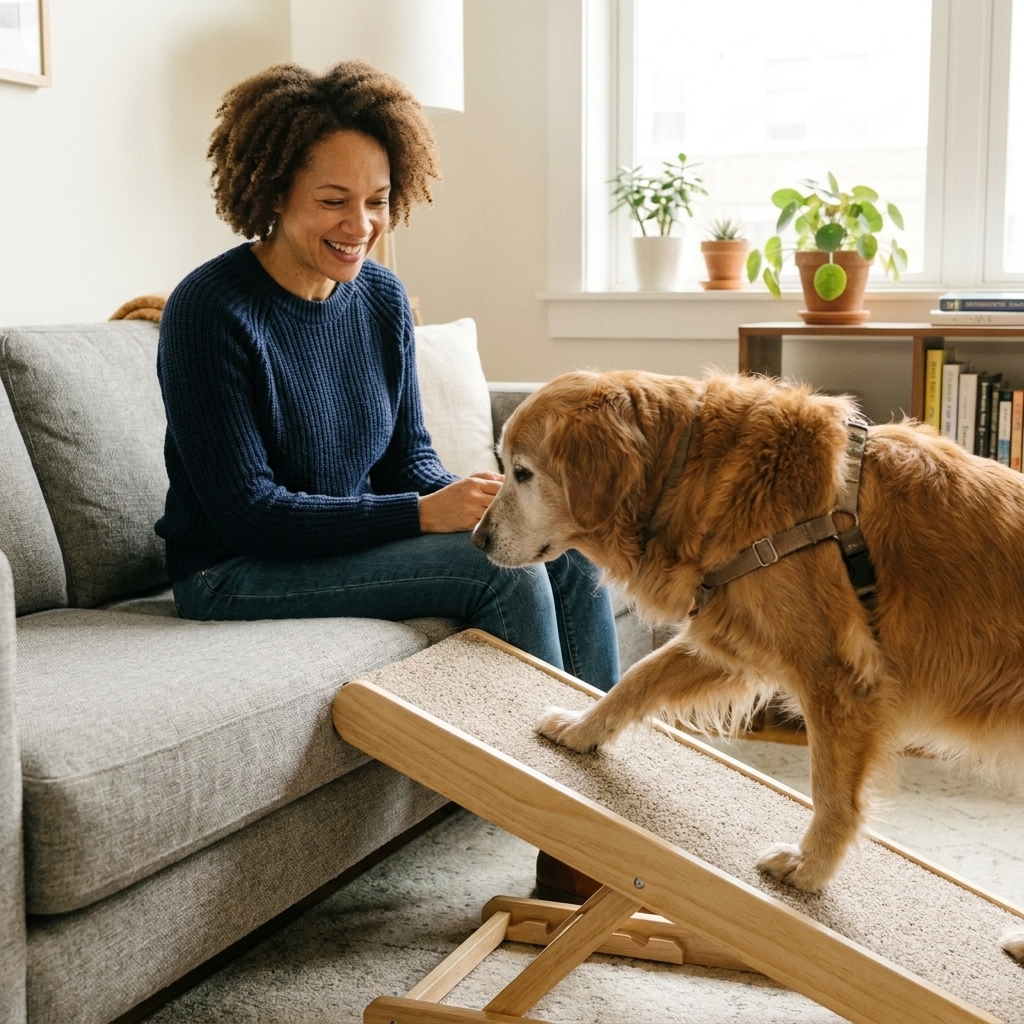
If your dog struggles with the car, couch, or bed, a ramp can prevent painful jumps. For dogs with significant arthritis or spinal concerns, ask your vet which option is safest.
Keep essentials accessible
- Water on each floor of the home
- A predictable path to the door for potty breaks
- Night lights for dogs whose vision is changing
Wellness care: what to monitor and when to call your vet
Senior dogs benefit from a proactive mindset. The earlier you catch changes, the more options you usually have.
How often should seniors see the veterinarian?
Many veterinarians recommend twice-yearly exams for seniors. It is not about being “extra.” Things can change quickly in older bodies, and catching a subtle heart murmur, early kidney changes, dental disease, or arthritis early can meaningfully improve quality of life.
Screening tests to discuss
- Bloodwork and urinalysis to monitor organ function and metabolic health
- Blood pressure checks, especially with kidney disease, endocrine disease, heart concerns, or eye changes
- Dental exams and cleanings as recommended
- X-rays if mobility changes suggest arthritis or other orthopedic issues
Common senior issues you can spot at home
- Arthritis: slower rising, hesitation on stairs, licking joints
- Dental disease: bad breath, drooling, chewing on one side, pawing at the mouth
- Cognitive changes: pacing, staring, getting “stuck,” sleep-wake changes
- Hearing or vision loss: startle responses, bumping into things, anxiety in dim light
- Kidney, urinary, or endocrine signs: increased thirst or urination, accidents, straining to urinate, ravenous appetite, sudden weight changes
If you are concerned about drinking or peeing changes, it can help to measure water intake for a couple of days (and note any new accidents) so your vet has clearer information.
Urgent red flags
Contact a veterinarian promptly if you notice:
- Collapse, severe weakness, or trouble breathing
- Repeated vomiting or diarrhea, or inability to keep water down
- Not eating for about 24 hours, or sooner if your dog is small, has chronic disease, or seems lethargic
- Straining to urinate, producing little urine, or blood in urine
- Sudden hind-end weakness, dragging legs, or intense pain
- New seizures or disorientation that appears suddenly
Daily routine tweaks that support longevity
Seniors thrive on predictability and gentle stimulation. A solid daily rhythm also makes it easier for you to spot subtle changes early.
Keep their brain busy
- Scatter-feed part of a meal in a snuffle mat
- Offer easy puzzle toys that do not require intense pawing
- Do two-minute training refreshers using positive reinforcement
Short sessions are perfect. The goal is engagement, not frustration.
Grooming is health care in disguise
Brush regularly and do quick “check-ins” while you do. Feel for new lumps, monitor skin and ears, and look at nails and paw pads. If your dog dislikes long grooming sessions now, break it into bite-sized moments with treats and lots of patience.
Support better sleep
Older dogs often nap more during the day and may wake at night. A comfortable bed, a consistent bedtime potty break, and a calm evening routine can help. If nighttime restlessness suddenly appears, talk with your vet to rule out pain or medical causes.
Feeding and medication safety for seniors
Many older dogs end up on supplements or medications. A few safety habits go a long way:
- Use one list: Keep a single up-to-date list of everything your dog takes, including doses and how often.
- Ask before mixing: “Natural” does not automatically mean safe with other meds.
- Watch the treat math: Treats and chews can quietly add a lot of calories. Consider using a portion of the daily kibble as treats.
- Store securely: Pain meds, flavored chewables, and supplements should be treated like any other medication and kept out of reach.
FAQs
Should I switch to senior dog food automatically?
Not automatically. Some dogs do great on senior formulas, while others need an adult maintenance food or a therapeutic diet for a specific condition. Choose based on body condition, muscle tone, stool quality, and your veterinarian’s input.
How can I help my senior dog with stiff joints in the morning?
Keep them warm, start with a slow potty break, and do a gentle warm-up walk before any bigger activity. Many dogs benefit from vet-approved pain management, weight support, and low-impact conditioning.
My senior dog is picky. What can I do?
Rule out medical causes first, especially dental pain, nausea, or organ disease. If your vet gives the all-clear, warming food slightly, adding water, and sticking to a consistent feeding schedule can help. Avoid frequent rapid diet changes, which can upset digestion.
Is slowing down always just age?
No. Aging changes the body, but pain and untreated disease are not “normal.” If your dog is slowing down noticeably, a checkup is worth it. Comfort is health.
A final note from one pet parent to another
Senior dog care is not about chasing perfection. It is about noticing, adjusting, and meeting your dog where they are today. Some days they will surprise you with a goofy burst of energy. Other days, they will need the slow lane and an extra-soft bed. Both can be part of a really good life.
If you are unsure what to change first, start simple: weigh your dog, schedule a senior wellness visit, and take a quick look around your home for slip hazards. Those three steps alone can set you up for a safer, more comfortable season together. As time goes on, it can also help to ask your vet about occasional quality-of-life check-ins, so you feel supported as your dog’s needs change.