Cats often hide sickness. Here’s how to spot early behavioral and physical changes, what is urgent, and what details help your veterinarian act faster.
It is 3 a.m., your house is quiet, and your cat suddenly decides it is time for a full-volume concert. As a former veterinary technician, I can tell you: you are not alone. Night meowing is one of those behaviors that can make even the most devoted cat parent feel frazzled, and it usually has a real reason behind it, even when it feels spiteful.
The good news: most nighttime vocalizing can improve a lot with a simple routine reset. The important part is figuring out whether your cat is asking for something normal (like more daytime enrichment) or signaling a health issue that needs a vet’s help.
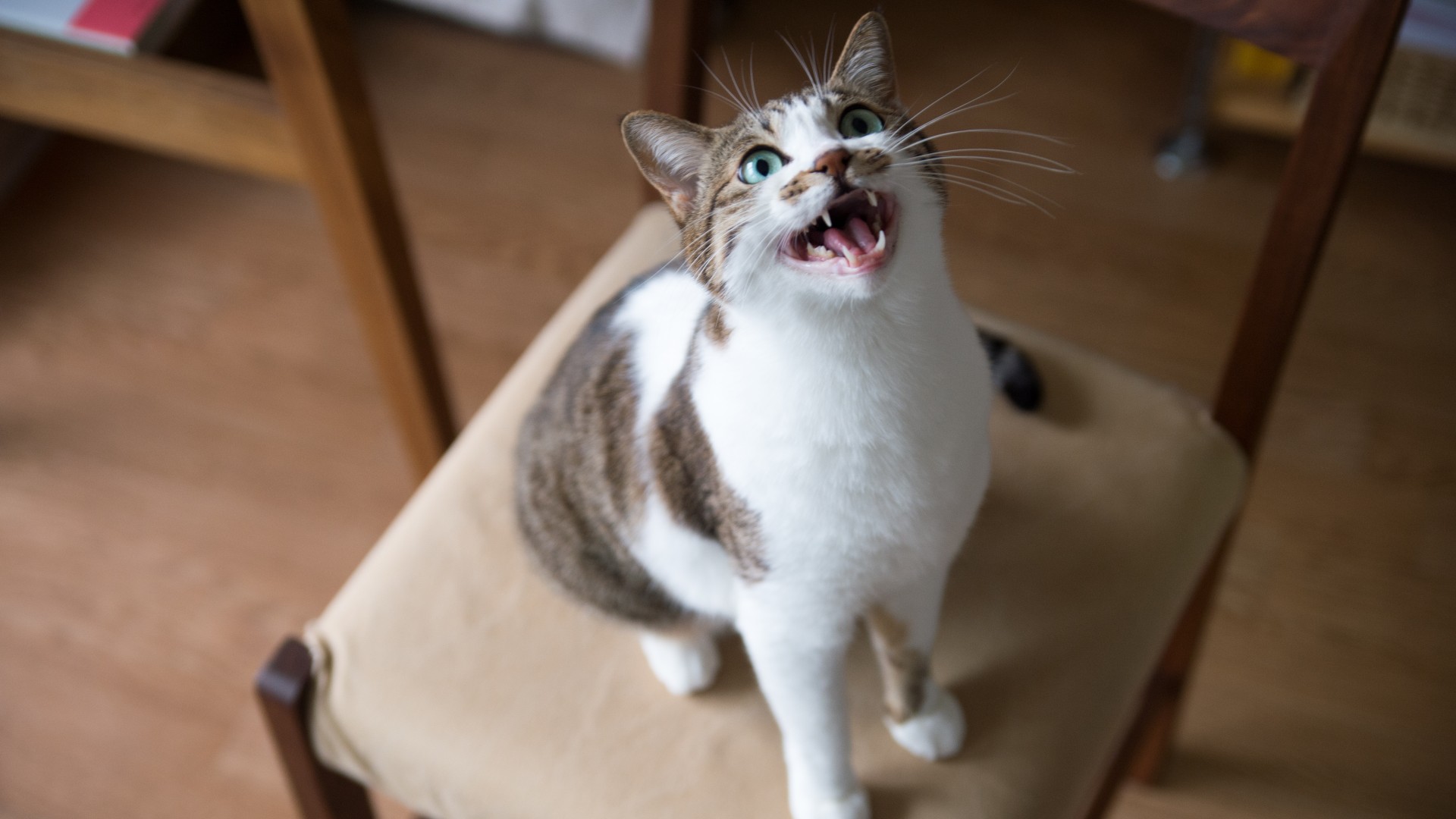
What nighttime meowing usually means
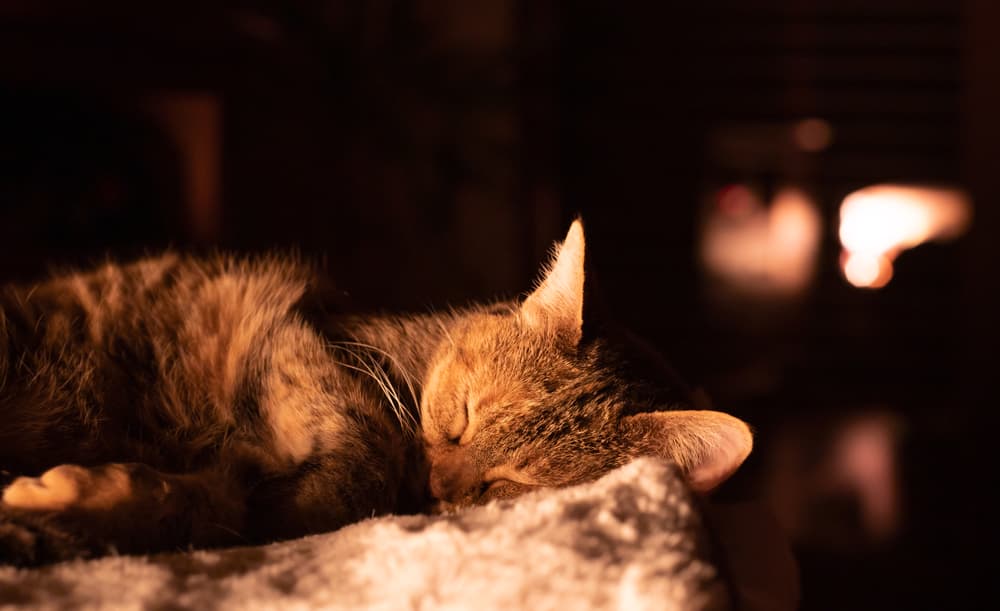
Cats are naturally crepuscular, meaning they tend to be most active at dawn and dusk. Indoor life can shift that energy later into the night, especially when daytime is a little too quiet, feeding times are early, or your routine unintentionally teaches them that yelling works.
Here are the most common causes I saw in clinic and still see in friends’ homes.
1) Your cat learned that meowing gets a reward
If you get up, talk back, pet them, offer food, or even toss them a toy just to make it stop, your cat can learn a powerful lesson: loud noises summon humans. Cats are excellent at repeating what works, and intermittent rewards (only giving in sometimes) can make the behavior even more persistent.
- Common pattern: the meowing starts occasionally, you respond a few times, and now it happens nightly.
- Why it escalates: your cat is training you, very efficiently.
2) Hunger, habit, or a too-early breakfast schedule
Many cats wake up hungry. Some also associate your morning alarm, your footsteps, or the fridge opening with food. If dinner is early and the overnight stretch is long, 3 a.m. can start to feel like a reasonable time to request room service.
- Kittens and very active young cats may need more total calories spread throughout the day.
- Cats on calorie-restricted diets can become more food-motivated and vocal.
3) Boredom and pent-up energy
If your cat sleeps most of the day with minimal play, they may hit their natural activity window with energy to burn. Nighttime zoomies and yowling often show up together.
For first-time cat owners, yowling is the long, loud, often mournful-sounding call that can seem more urgent than a typical meow.
This is especially common in:
- Young adult cats
- Single-cat households (not always, but often)
- Smart, social breeds and mixes who crave interaction
4) Stress, change, or conflict in the home
Cats can become more vocal when they feel unsettled. A new baby, a move, renovations, schedule changes, a new pet, or even outdoor cats visible through a window can trigger nighttime calling and pacing.
5) Heat cycles in intact cats
If your female cat is not spayed, loud yowling at night is a classic heat-cycle sign. You may also notice restlessness, rolling, a raised hind end, and increased affection.
Cats are seasonally polyestrous, meaning they can cycle repeatedly during breeding season. If a queen is not bred, heats can recur as often as every couple of weeks.
Intact male cats may yowl too, especially if they smell a female in heat nearby. If this is the cause, behavior strategies may help a little, but spaying or neutering is the real fix, and it brings major health and household benefits.
6) Pain or illness
Some cats vocalize because they do not feel well. Night can make discomfort more obvious because the house is quiet, they are less distracted, and you are finally still.
Medical issues that can show up as increased vocalizing include:
- Hyperthyroidism (common in older cats)
- High blood pressure
- Chronic kidney disease (common in seniors)
- Arthritis or other pain
- Dental disease
- Urinary discomfort
- Gastrointestinal upset
7) Senior confusion and sensory decline
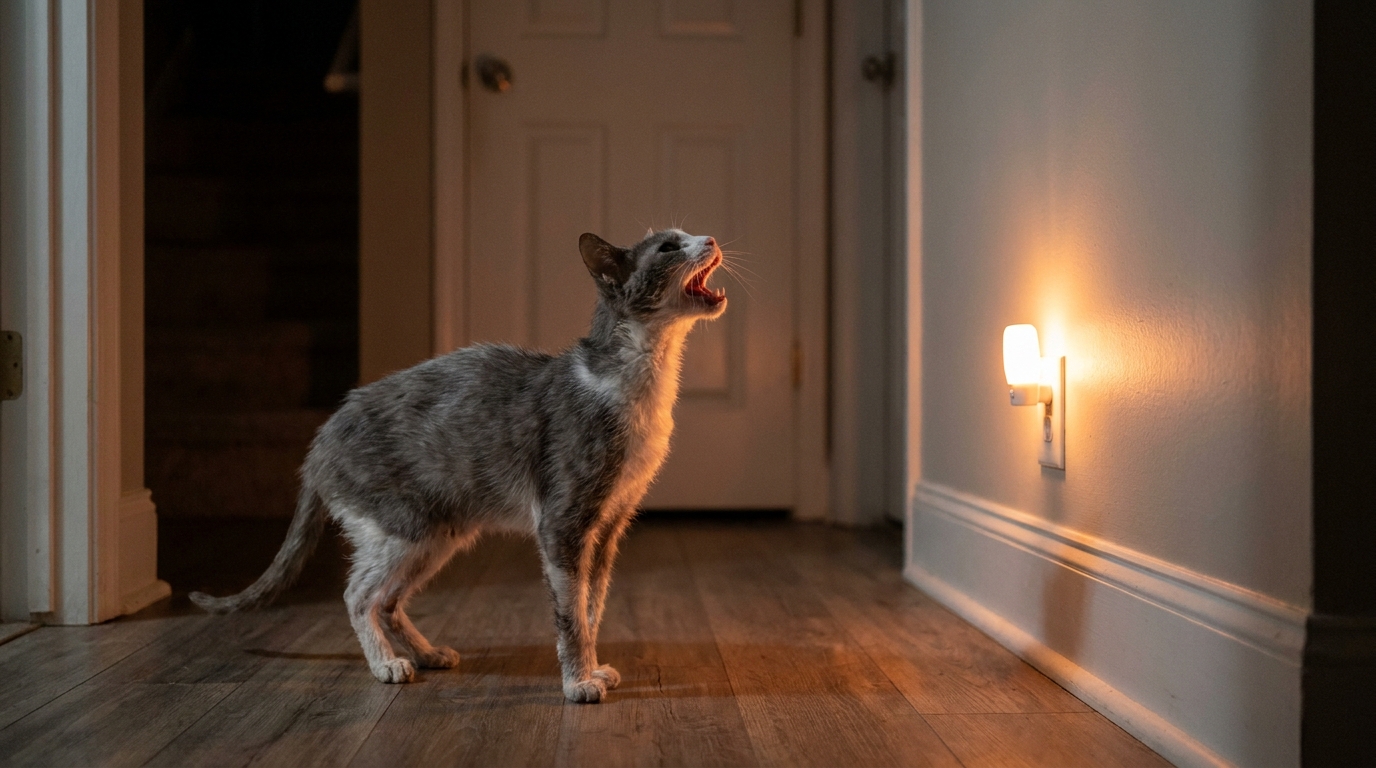
Older cats can develop cognitive changes similar to dementia in people. A common sign is nighttime yowling that sounds distressed or lost. These cats may pace, stare at walls, get “stuck” in corners, or seem disoriented.
Night crying can also increase with age-related hearing or vision loss. When the house is dark and quiet, some seniors become more anxious and more vocal, especially if they cannot easily find you.
Quick self-check: what does it sound like?
You know your cat’s normal voice. Changes matter. Use this as a starting point, not a diagnosis.
- Short, repetitive meows near the bedroom door: often attention-seeking or habit.
- Meowing near the kitchen: often hunger or routine.
- Long, loud yowls (howling-style calls): can be heat cycles, stress, sensory decline, or senior confusion.
- Crying that seems painful, with hiding or behavior change: consider illness or pain.
Basics people miss at night
Before you assume it is “just behavior,” check these simple, fixable friction points:
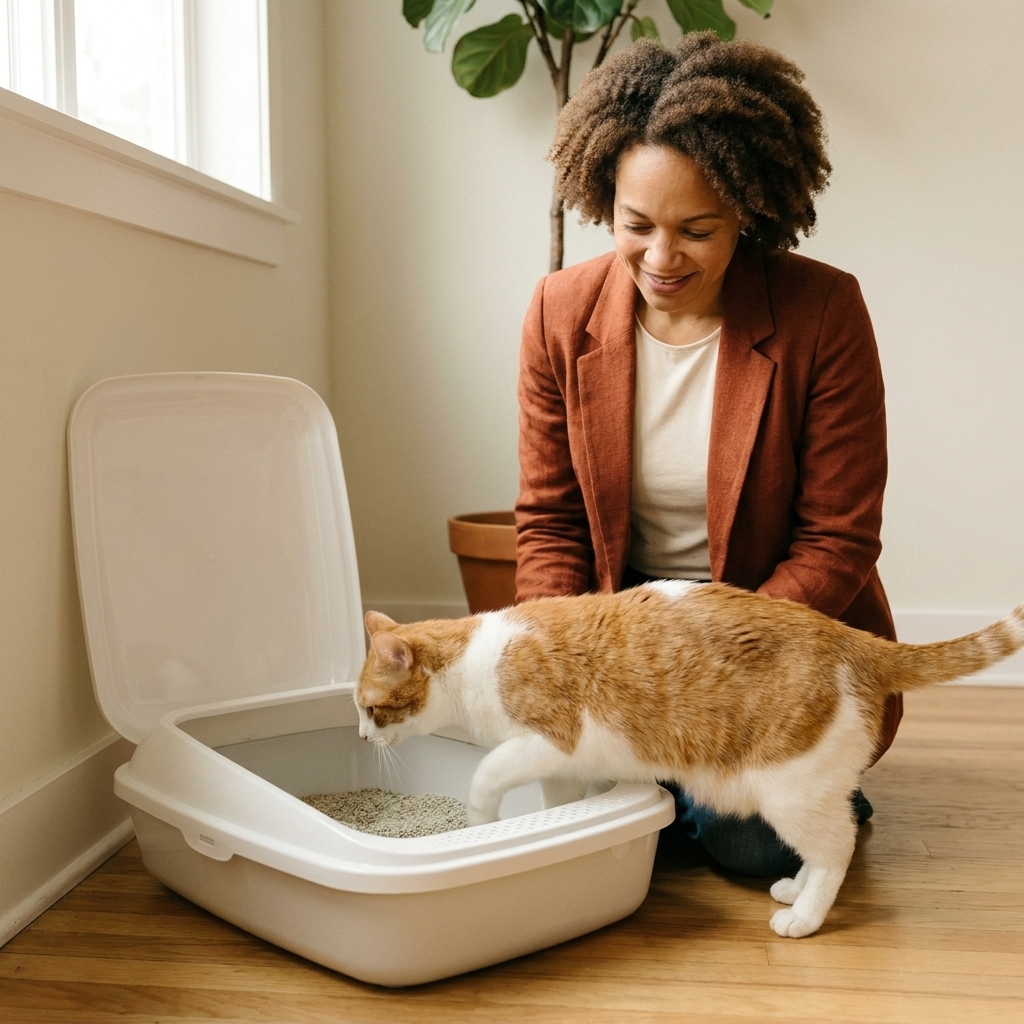
- Litter box access: Keep it clean, easy to reach, and easy to step into. For arthritic cats, a lower-sided box can make a big difference.
- Enough boxes: Many cats do best with more than one option, especially in multi-level homes.
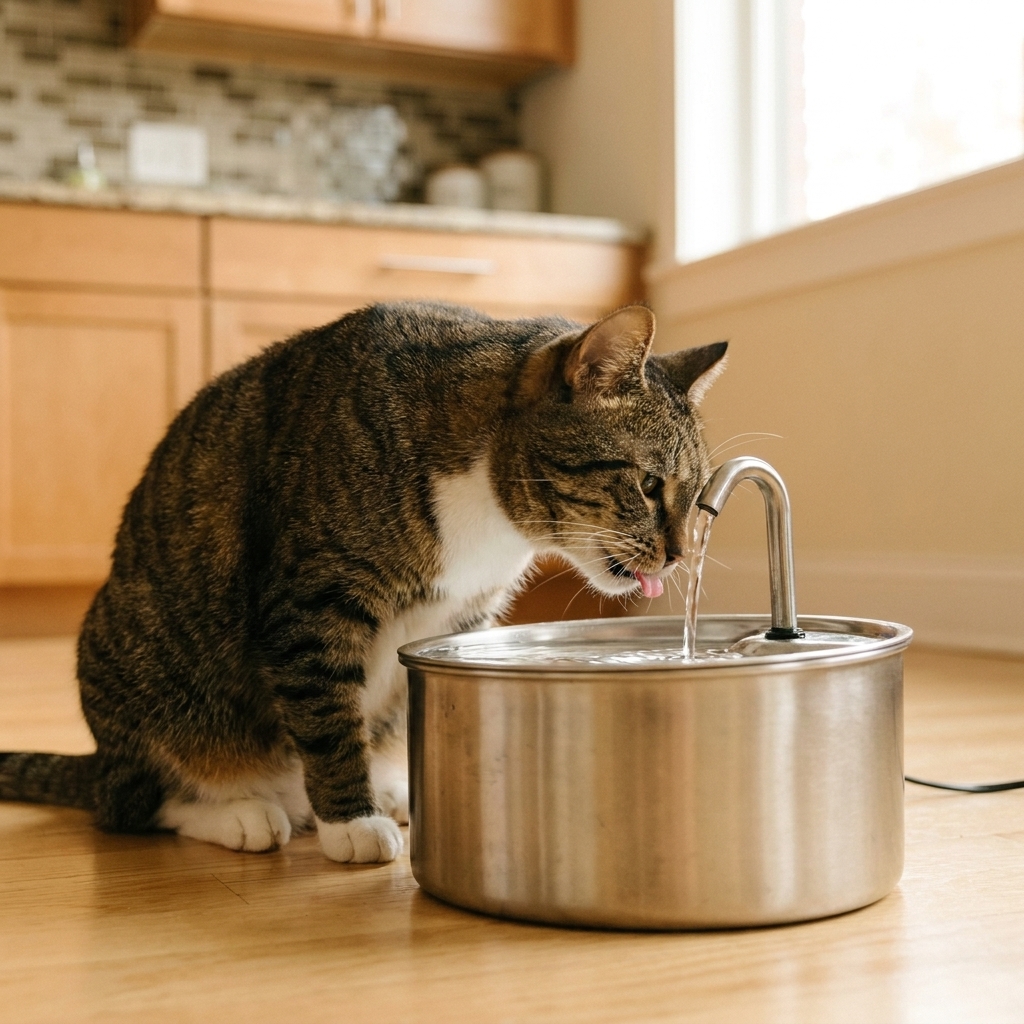
- Water availability: Make sure there is water near where your cat sleeps, not only in the kitchen.
- Night lights: A soft hallway or plug-in light can help seniors who pace or seem unsure at night.
A practical two-week reset plan
If your cat is otherwise healthy and acting normal during the day, a two-week behavior reset can make a big difference. The goal is to (1) meet real needs earlier in the day and (2) remove the payoff for nighttime noise.
Before you start: set yourself up for success
- Pick one plan and be consistent. Mixed messages slow everything down.
- Decide where your cat sleeps. If you want them out of the bedroom, start at the beginning of the reset, not halfway through.
- Stock your tools: wand toy, puzzle feeder, a kicker toy, and a white noise machine or fan for you.
Days 1 to 3: shift energy to daylight
Do two play sessions daily (10 to 15 minutes each). Aim for one in the afternoon and one about 60 to 90 minutes before your bedtime. Wand toys are great because they mimic prey movement. Let your cat “catch” the toy at the end to prevent frustration.
Add a small training or enrichment snack during the day. A few minutes of clicker training, treat tossing, or a food puzzle gives mental exercise, which is just as tiring as physical play.
Days 4 to 7: build the bedtime routine
Most cats do best with a predictable sequence:
- Play (hunt mode)
- Eat (catch and consume)
- Groom and settle (sleep mode)
Offer a larger portion of dinner later, or add a small “last call” meal right before you go to bed if your vet says your cat’s weight and diet allow it.
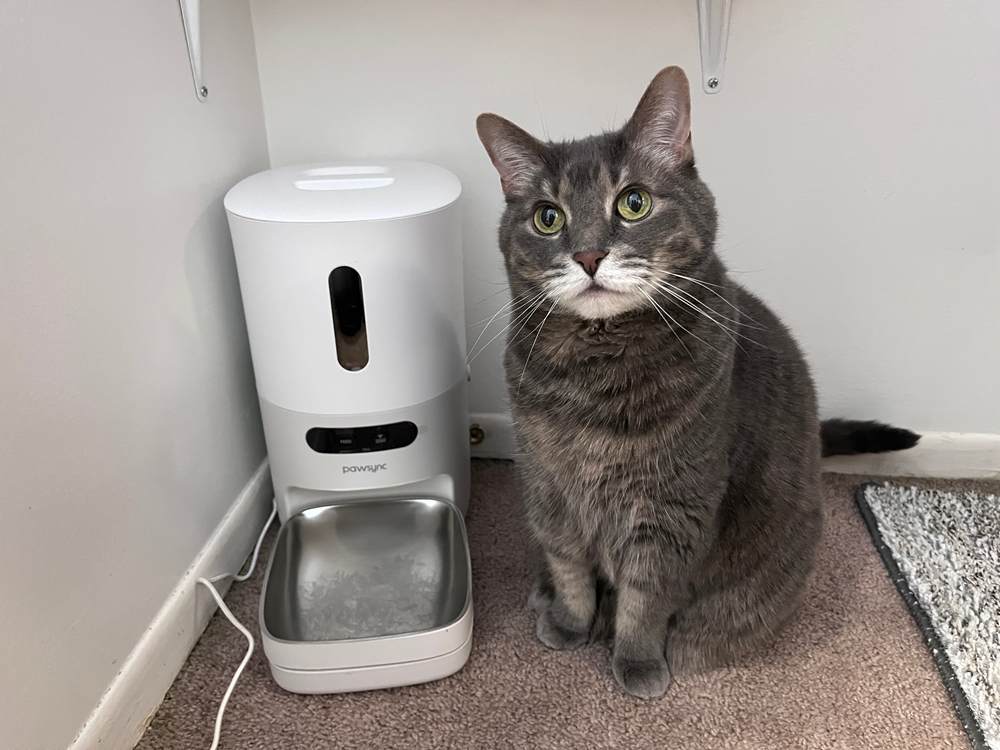
Try a timed feeder for early morning. If your cat wakes you for food, a feeder set for 5 a.m. can break the “humans deliver breakfast” association.
Days 8 to 14: stop rewarding the 3 a.m. encore
This is the hardest part, and the part that works.
- Do not respond to the meowing. No talking, no eye contact, no getting up. Even negative attention can be rewarding.
- If your cat is outside your door, avoid opening it. Opening the door teaches that persistence pays.
- Expect an extinction burst. Behavior often gets louder and more intense right before it improves. This does not mean the plan failed. It means your cat is trying the old strategy one more time.
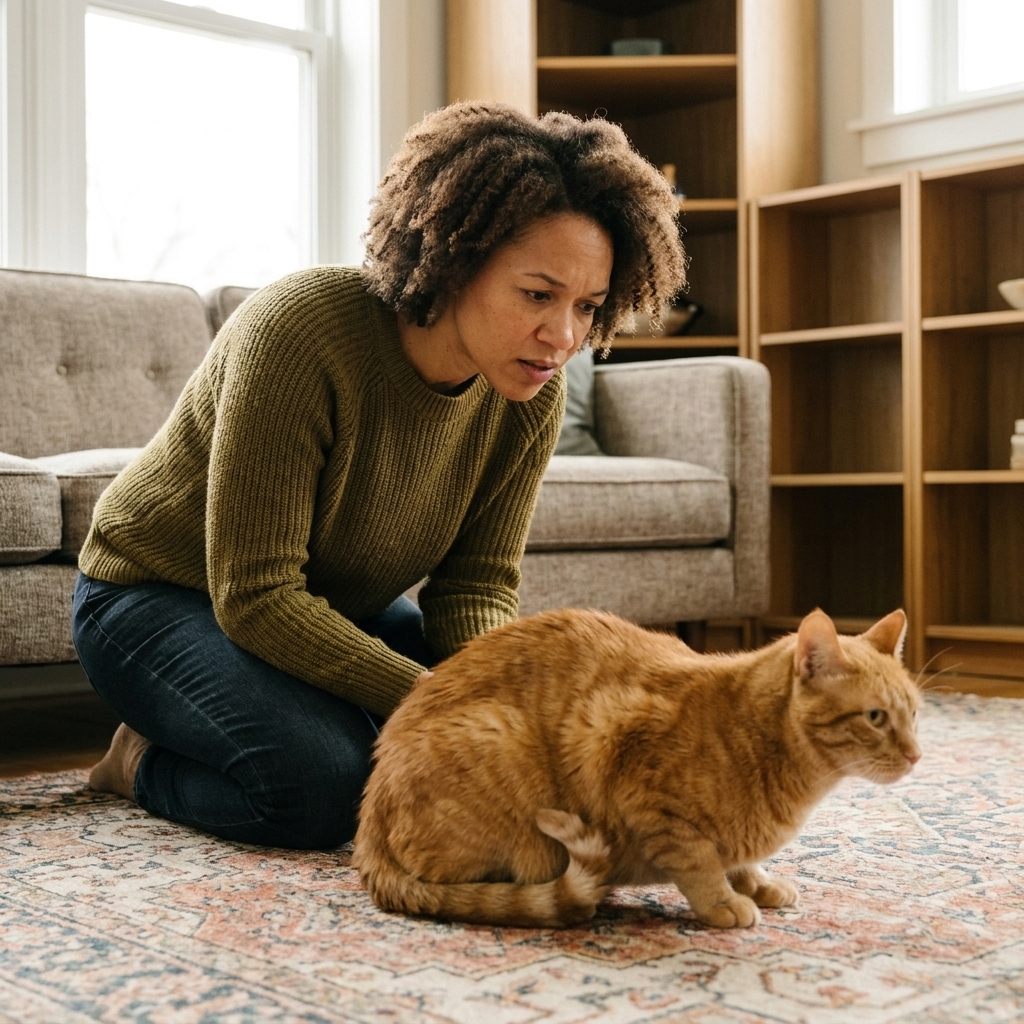
Important: if the vocalizing escalates and you notice any new symptoms (vomiting, appetite changes, litter box changes, hiding, limping, straining), pause the reset plan and call your veterinarian. Do not ignore a medical problem in the name of consistency.
If you truly cannot ignore it (neighbors, thin walls, shared living), focus on reducing triggers first: timed feeder, later meal, heavier daytime play, and adding nighttime environmental comfort like a warm bed in a preferred spot.
Helpful add-ons
- Window management: If outdoor cats are provoking your cat, close curtains at night or use privacy film on lower window sections.
- Comfort stations: Add a bed, water, and a litter box option in the area your cat tends to pace.
- Pheromone diffusers: Some cats respond well to pheromone products during transitions or stress.
- Sound masking for you: White noise can make it easier to stay consistent during the reset.
What not to do
- Do not punish or yell. It can increase anxiety and vocalizing, and it does not teach your cat what you want instead.
- Do not use spray bottles. They can damage trust and may create fear around you or certain rooms.
- Do not randomly feed to make it stop. If hunger is the issue, solve it with schedule and portion planning, not emergency 3 a.m. snacks.
- Do not lock your cat away without resources. If you confine your cat for sleep, they need a safe space with water, a litter box, and a comfortable bed.
When it needs a vet visit
I always tell pet parents: trust patterns, but also trust your gut. If the vocalizing is new, escalating, or paired with other changes, it is worth a medical check.
Call your veterinarian promptly if night crying comes with:
- Weight loss (even if appetite seems big)
- Changes in litter box habits (peeing more, straining, accidents, constipation, diarrhea)
- Increased thirst or suddenly emptying water bowls
- Vomiting or reduced appetite
- Signs of disorientation (getting stuck, staring, confusion, sudden clinginess, pacing)
- Mobility changes (stiffness, reluctance to jump, sensitivity when touched)
- Any yowl that sounds painful or is accompanied by hiding
A special note for male cats: if you see repeated trips to the litter box, straining, crying in the box, licking the genital area, or little to no urine produced, treat it like an emergency and seek care immediately. Urinary blockage can become life-threatening fast.
For senior cats especially, your vet may recommend bloodwork (to check thyroid and organ function), blood pressure measurement, a urinalysis, and a pain assessment. If cognitive dysfunction is suspected, there are diet strategies, supplements, and medications that can help, plus simple home tweaks like night lights.
FAQ
Why does my cat meow at night but not during the day?
Nighttime is when many cats are naturally more active. If your cat sleeps most of the day, feels lonely when you go to bed, or has learned that meowing gets a response, the behavior can show up almost exclusively after dark.
Should I ignore my cat when they meow at night?
If your cat has been checked by a vet recently and is otherwise acting normal, ignoring is often part of the solution because it removes the reward. Pair it with daytime play and a consistent late feeding routine so you are not ignoring a real unmet need.
Will a second cat fix nighttime meowing?
Sometimes, but it is not guaranteed. Some cats do become calmer with a compatible companion, while others get more stressed. If you are considering a second cat, make the choice for the long term, not as a quick fix.
My cat yowls and roams the house at night. Is that normal?
In young cats, it can be boredom and energy. In older cats, roaming and yowling can be linked to pain, thyroid disease, high blood pressure, kidney disease, sensory decline, or cognitive changes. If this behavior is new or your cat is a senior, it is worth a vet check.
A calm night is trainable
Most nighttime meowing is a mix of biology, routine, and reinforcement. When you meet your cat’s needs during the day and stop accidentally paying them for midnight performances, you can usually get your sleep back without guilt or harsh tactics.
If you try the two-week reset and see no improvement, or if anything feels “off” beyond attention-seeking, loop your veterinarian in. Quiet nights are wonderful, but peace of mind is even better.