
Follow this calm, cat-first protocol for scent swapping, controlled introductions, and reward-based training so your new dog and resident cat can coexist pea...
One of the fastest ways to set two cats up for long-term tension is to let them meet nose-to-nose on day one. I know it is tempting, especially when your new cat seems friendly or your resident cat has “always been good with other cats.” But cats usually do not bond through first impressions the way many dogs can. They bond through safety, predictability, and lots of tiny neutral moments that build trust.
Back when I was a vet tech, I saw the same pattern over and over: families meant well, rushed the intro, and then spent months dealing with hallway standoffs and surprise scuffles. The good news is that a slow introduction is not complicated. It is just structured.
The goal and the mindset
The goal is not instant friendship. The goal is peaceful co-existence, where both cats can eat, rest, use resources, and move around without feeling threatened. Friendship often comes later once both cats believe the home is safe again.
Think of this process as teaching two cats: “That other cat predicts good things, and I still have control over my space.”
Before you start: base camp
Your new cat needs a separate room with a solid door, ideally a bedroom or office. This is base camp for at least several days, sometimes longer.
- Food and water (placed away from the litter box)
- Litter box
- Scratching surface and a cozy bed
- Hiding spot (a covered cat bed or a carrier left open works great)
- Vertical space if possible (a cat tree or sturdy shelf)
- Interactive play items (wand toy) plus a few solo toys
Quick health note: If your new cat is a rescue or their health history is unknown, a vet visit early on is smart. Parasites, respiratory infections, pain, and stress can all change behavior, and some illnesses are contagious. Your vet can advise you on what “quarantine” should look like for your household before you start rotating spaces.
Meanwhile, keep your resident cat’s routine as normal as possible. Routine is comfort for cats.
Step 1: Separation (at least 1 to 3 days)
For the first phase, the cats do not see each other. You are letting both cats settle and preventing a scary first encounter.
What you do during this phase
- Let the new cat decompress and explore base camp at their pace.
- Give each cat daily one-on-one time (play, petting if they enjoy it, calm talking).
- Listen at the door. Curiosity is good. Growling and door charging means you need more time.
If either cat is hiding 24/7, not eating, or not using the litter box, pause the introduction steps and focus on comfort and routine first. Stress can stall everything.
Step 2: Scent swapping (daily)
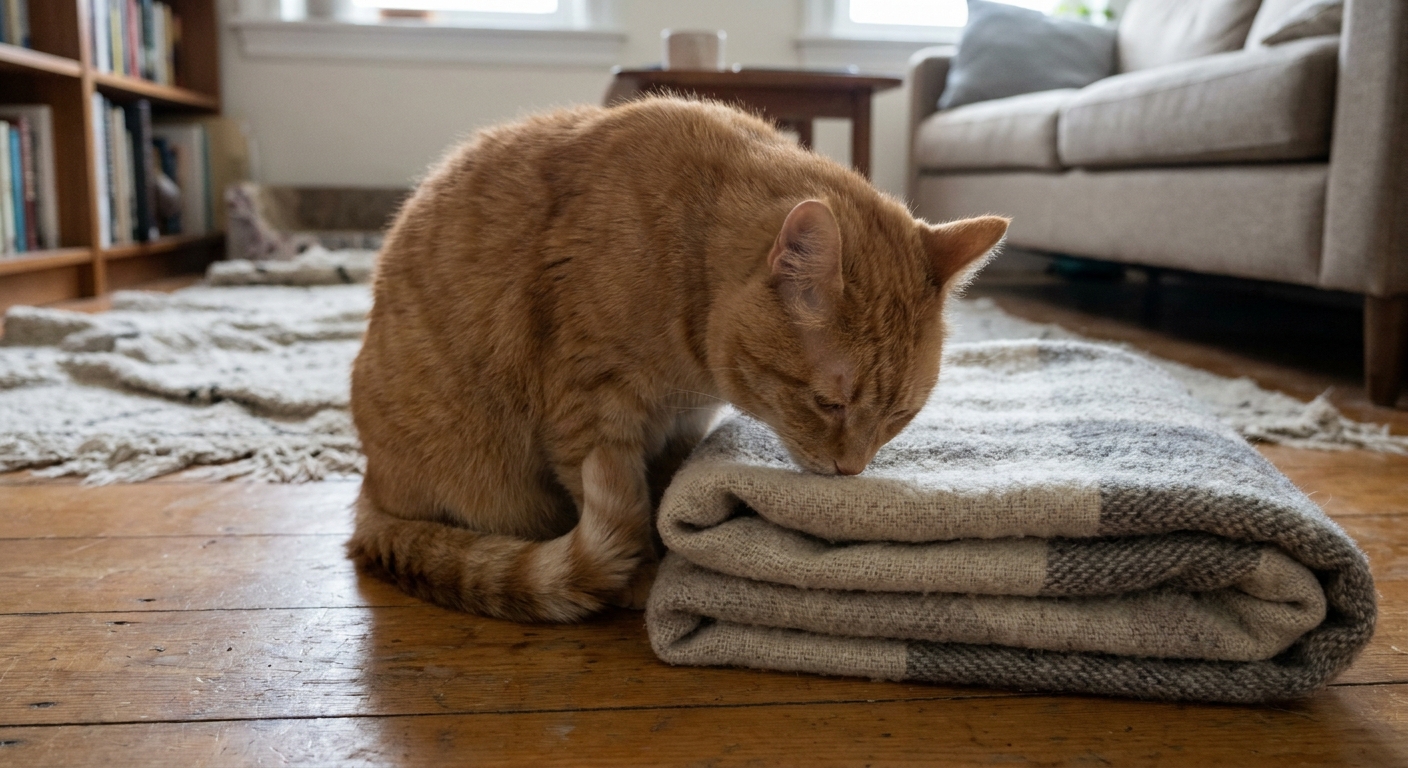
Cats “meet” through smell first. Scent swapping helps them file the other cat under “belongs here” without the pressure of face-to-face contact.
Easy scent swap options
- Swap bedding: trade blankets or beds between cats.
- Use a sock or soft cloth: gently rub one cat’s cheeks (where cats have facial scent glands), then place that cloth near the other cat’s resting area.
- Rotate spaces: once the new cat is comfortable, let the resident cat explore the new cat’s room while the new cat explores a closed-off area elsewhere. No direct contact yet. Use a closed door or a carrier so nobody door-dashes.
You are looking for neutral or mildly curious responses: sniffing, sitting nearby, walking away calmly. If a cat hisses at the scent item, that is information, not failure. Go slower and pair scent with something positive like treats.
Step 3: Feeding at the closed door
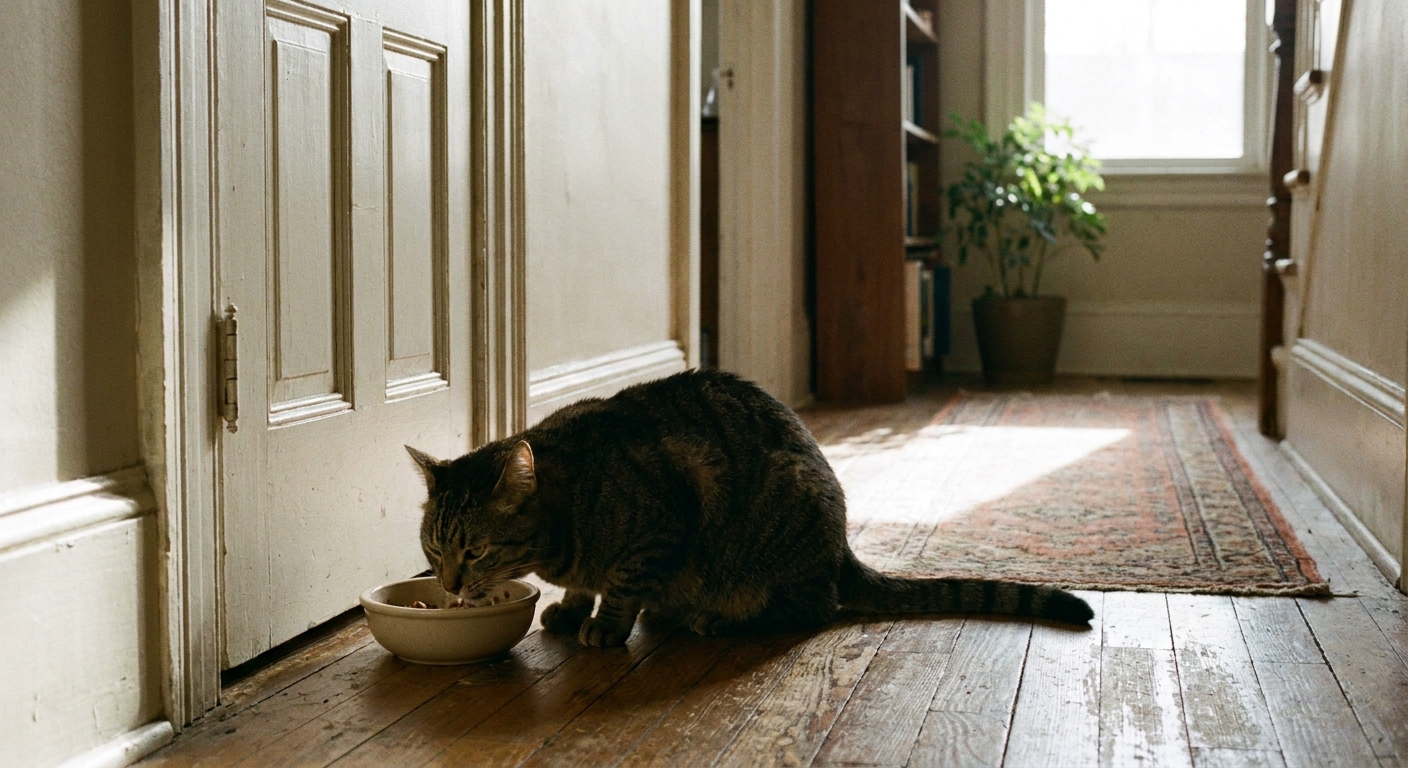
This is my favorite tool because it changes the emotional meaning of “that other cat is nearby.” We want: other cat nearby equals dinner happens.
How to do it
- Put each cat’s food bowl several feet from the closed door, one bowl on each side.
- Over multiple meals, move the bowls closer to the door as long as both cats keep eating calmly.
- If either cat stops eating, stares hard at the door, growls, or tries to swat under it, move the bowls farther away again.
Short, calm mealtimes are fine. Consistency matters more than speed.
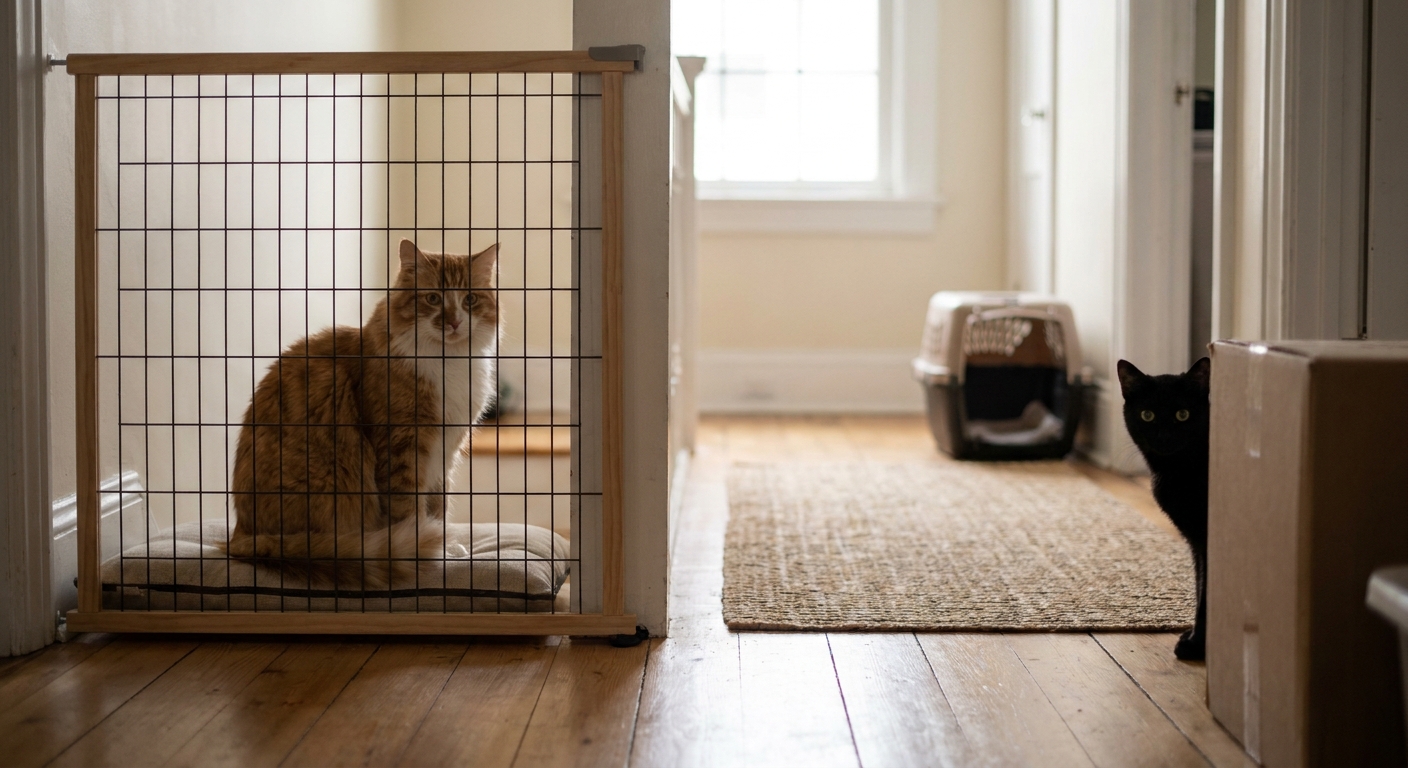
Step 4: Visual contact with a barrier
Once door feeding is going smoothly and scent swapping is boring in the best way, you can let them see each other briefly.
Barrier options
- A tall baby gate (often stacked gates work better for athletic cats)
- A screen door setup
- A cracked door secured with a door strap so it cannot swing open
Pair visual contact with something wonderful: high-value treats, wet food, or a wand toy session at a distance where both cats stay relaxed.
Keep it short
Think 30 to 120 seconds at first. End while things are still calm. Several tiny successes build confidence much faster than one long, tense stare-down.
Step 5: Supervised time together
When both cats can look at each other through a barrier without escalating, you can try supervised time in the same space.
Set the room up for success
- Choose a larger space where one cat cannot trap the other in a corner.
- Add vertical escape routes (cat tree, shelves).
- Have distractions ready: treats, wand toy, a tossed treat trail away from each other.
- Keep nails trimmed if your cats tolerate it.
Start with a few minutes. Gradually increase as long as both cats remain mostly relaxed.
Important: do not try to “force bonding” by holding cats near each other. Let them control distance. Choice is calming.
When to stop supervising
Most homes do best with supervision until the cats can share space without hard staring, stalking, or chasing for several days in a row. I also like to see that each cat can walk away and relax in the same room. Even then, keep them separated when you are out of the house at first, then increase alone time gradually.
Resources: prevent competition
A lot of cat tension is not “personality.” It is traffic jams and resource stress. Set up your home so they do not have to compete.
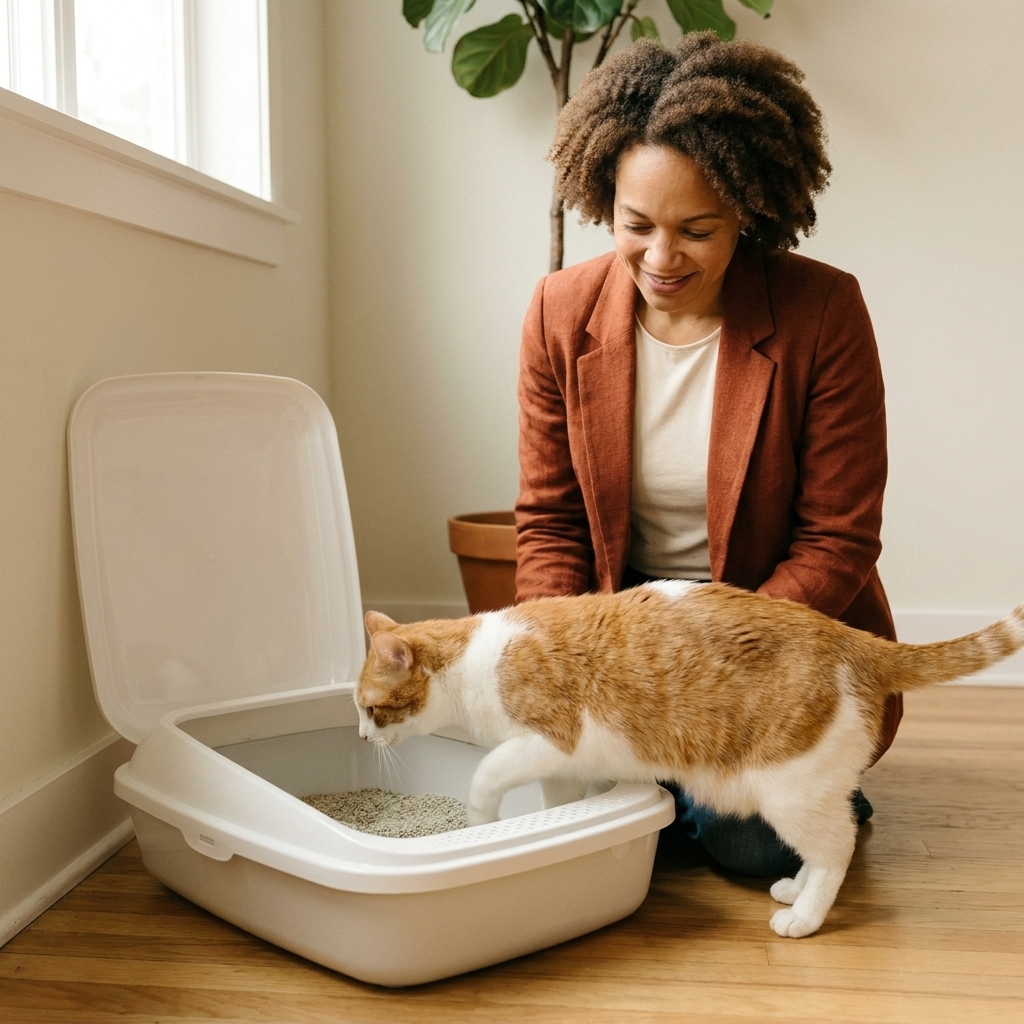
- Litter boxes: a common rule is one per cat plus one extra, in different locations.
- Food and water: multiple stations so one cat cannot guard them.
- Scratchers and resting spots: more than one, spread out.
- Paths: give them options, like a second route through a room (vertical space helps a lot).
Body language: green vs. red
Good signs (you can keep going)
- Soft bodies, normal breathing, ears mostly neutral
- Sniffing, then disengaging
- Eating, playing, grooming, or lying down in the other cat’s presence
Stress signs (slow down)
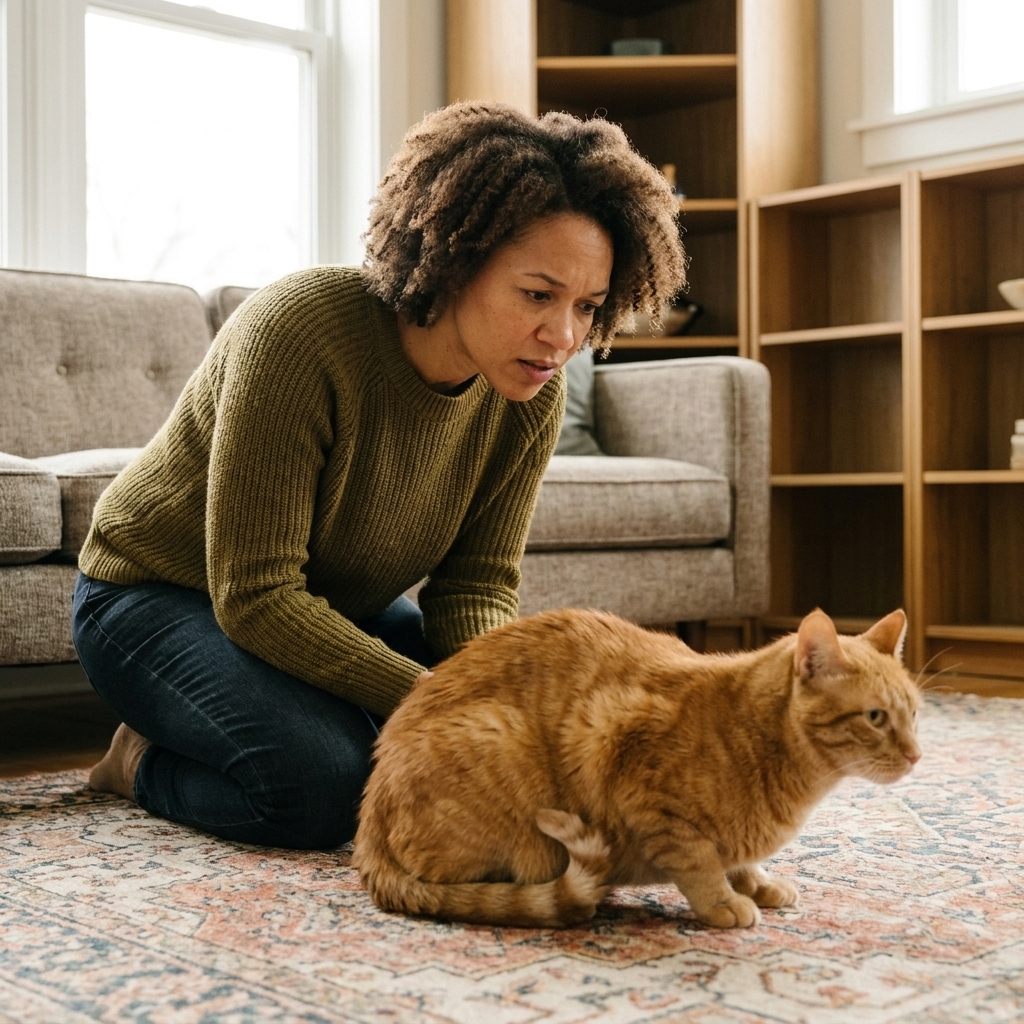
- Hard staring, stiff posture, crouching, tail twitching
- Growling, repeated hissing, swatting at the barrier
- Hiding, freezing, or refusing food when the other cat is nearby
What’s normal vs. a real fight
Some hissing is normal. Hissing is communication, not automatically aggression. Many cats hiss to say, “Too close,” then walk away. That can be part of healthy boundary-setting.
Usually normal (monitor)
- Brief hissing with no chasing
- Growl or grumble that stops when distance increases
- Stiff posture followed by disengaging or retreating
- A quick swat without contact, then separation
Not normal: stop it
- Body slam or sustained wrestling with biting
- “Ball of cats” fighting, screaming, fur flying
- Relentless chasing where one cat cannot escape or keeps hiding
- Pinned ears, hard staring, puffed tail plus stalking or cornering
- Injury risk: scratches to the face, limping, blood, or one cat urinating or defecating from fear
How to safely break it up
Never reach into a cat fight. Instead, prioritize separation over punishment.
- Interrupt with a barrier: slide a piece of cardboard between them, place a laundry basket over one cat if it is safe to do so, or gently herd one cat behind a door.
- Create space fast: if you can, close a door between them and give both cats time to calm down in separate areas.
- Use startle only if you must: a brief loud noise (clap, a shake of coins) can break focus, but it can also increase fear in some cats. Use it sparingly, avoid aiming it at a specific cat, and do not keep escalating the noise.
If you had a true fight, go back at least two steps in the process and rebuild more slowly.
How long it takes
Most introductions take two to six weeks. Some take longer, especially if one cat is fearful, highly territorial, under-socialized, or if a past fight happened early on.
I tell pet parents to look for progress in tension level, not in whether the cats are cuddling. If week by week you see less staring, fewer stress signals, and faster recovery after seeing each other, you are moving in the right direction.
Signs you’re moving too fast
- One or both cats stop eating normally
- Hiding increases instead of decreases
- Door charging, barrier climbing, or swatting escalates
- One cat blocks hallways, doorways, or resources
- Overgrooming, stress vomiting, or sudden irritability
If you see these, pause. Return to the last step where both cats were calm, then move forward in smaller increments.
Tips that help
Use play to release tension
Short wand-toy sessions help burn off nervous energy. Play with each cat separately at first, then later in parallel on opposite sides of a barrier if both cats can handle it.
Reward calm behavior
Treats are not bribery here. They are emotional re-training. Calm glance at the other cat earns a reward.
Keep your energy boring
Cats read the room. Calm voice, slow movements, and predictable routines help them feel safe.
Consider pheromones if stress is high
Some cats do well with feline pheromone diffusers or sprays used around key areas. They are not magic, but they can take the edge off for certain cats.
When to call your vet or a pro
Get help sooner rather than later if:
- Your cats have repeated fights or any injuries
- One cat is terrified and not improving after a couple of weeks
- Either cat stops eating for 24 hours, especially cats prone to stress
- You suspect pain, urinary issues, or other medical triggers for irritability
Medical problems can look like “bad behavior,” and pain can make a normally social cat reactive. A vet check is a smart reset if things stall.
FAQ
Should I let them “work it out”?
No. Cats do not typically “sort it out” through fighting the way people imagine. A bad fight often teaches both cats that the other cat is dangerous, which makes future aggression more likely.
What if my resident cat is the one acting upset?
That is extremely common. Your resident cat did not ask for a roommate. Give them extra one-on-one attention, keep their routine steady, and move at the resident cat’s comfort level. In most homes, the resident cat sets the pace.
My new cat seems confident. Can I speed up?
Confident cats can still overwhelm a cautious resident cat. A bold new cat who rushes up to “say hi” can trigger defensive behavior. Stick with the steps even if one cat looks ready.
What if they saw each other too soon?
It happens. Separate calmly, then return to scent swapping and door feeding for several days before trying visual contact again. One rough moment does not doom the relationship, but repeated rushed encounters can.