Litter box problems are solvable. Use this complete checklist to pinpoint medical, environmental, and behavioral causes and get your cat reliably back in the...
Living with multiple cats is basically a full-time job in tiny moments. Extra bowls to wash, extra fur tumbleweeds, and yes, the litter situation that somehow needs attention the minute you sit down. Automatic litter boxes can be a genuine quality-of-life upgrade in a busy cat household, but only if you pick one that can keep up with the traffic and handle odor without turning your laundry room into a “why does it smell like that?” mystery.
Below are seven top picks for automatic litter boxes that tend to work well when more than one cat is in the rotation, plus what I look for when helping families troubleshoot box issues. I will also share a few learned-the-hard-way tips, because sometimes the box is not the problem, it is the setup.
How these picks were chosen: I focused on throughput (how quickly the unit can get back to ready), odor containment, ease of cleaning, safety sensors, ongoing consumable costs, and what owners commonly run into in real homes. Timing notes below reflect typical manufacturer settings and day-to-day use. Exact results vary by litter type, settings, and your cats.
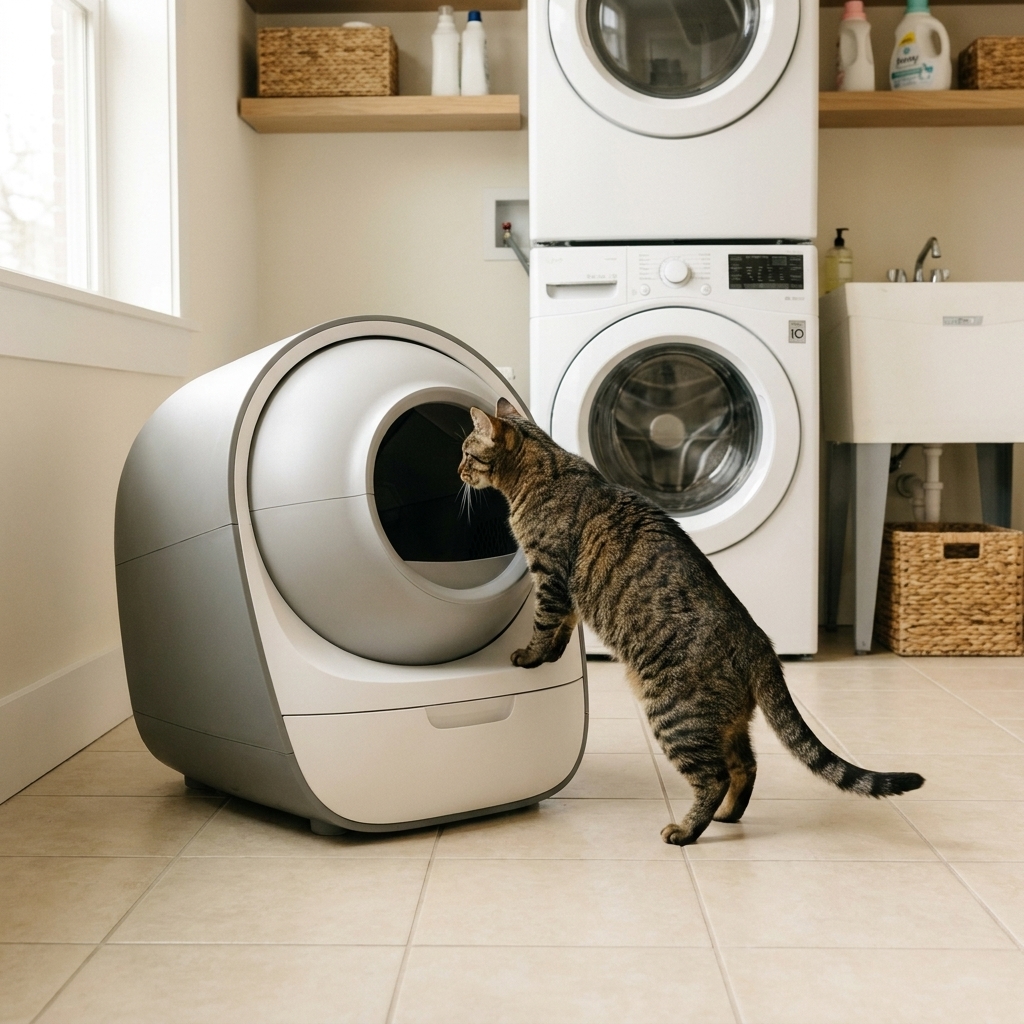
Quick picks
- Best overall for most multi-cat homes: Litter-Robot 4
- Best value if you want app features: Litter-Robot 3 Connect
- Best for odor control in small spaces: PETKIT Pura Max (confirm the exact current model name where you shop)
- Best for health insights: Litter-Robot 4 or PETKIT Pura Max (trends like weight and visit frequency plus maintenance alerts, not a medical device)
- Best midrange globe option: Casa Leo Leo’s Loo Too
- Best budget-friendly automatic option: PetSafe ScoopFree Complete Plus
- Best wash-and-flush system: CatGenie A.I.
How I chose
With more than one cat, the “best” automatic box is less about bells and whistles and more about throughput and odor containment. Here is what I prioritize:
- Reset time and traffic handling: In multi-cat homes, “how fast it cleans” matters, but so does how quickly the box is usable again after a visit. Many models let you set a cleaning delay so it does not run immediately after your cat exits. In practice, delays are often in the few minutes to around half an hour range, depending on the model and settings.
- Waste drawer capacity: Bigger is better, especially if you work long hours or travel. Real-world capacity depends on cat size, stool volume, and how often you empty it.
- Odor control design: A sealed waste compartment, decent filtration, and fewer air gaps matter more than any “deodorizing” marketing.
- Cat size and entry: Big cats need room to turn. Seniors may need a lower step-in or a step accessory.
- Litter compatibility and ongoing cost: Some models use standard clumping litter, while others require proprietary trays, liners, filters, or cartridges.
- Safety features: Reliable sensors that pause when a cat approaches or re-enters are non-negotiable. Do not disable sensors and always follow the manufacturer instructions, especially with kittens.
- Noise: A loud cycle at 2 a.m. can stress timid cats and annoy humans.
Multi-cat reality check: Even the best robot box is not a substitute for enough bathroom options. Some cats happily share one automatic unit. Others do better when you add a second box in another location. If you are fighting accidents or tension, adding an extra box can be more effective than upgrading to a pricier machine.
Two boxes vs. one robot: If you have three or more cats, or you have one timid cat and one “hall monitor,” two boxes in different locations usually beats one fancy box in one location. And even in a two-cat home, a simple backup box is smart insurance for power outages, Wi-Fi hiccups, or the day your automatic unit decides it needs a deep clean right now.
Who this is not for: If you have an extremely noise-sensitive cat, frequent power outages, no realistic place to put a large unit, or a renter situation that prevents a plumbing hookup (CatGenie), you may be happier with a great traditional box plus a solid routine.
1) Litter-Robot 4
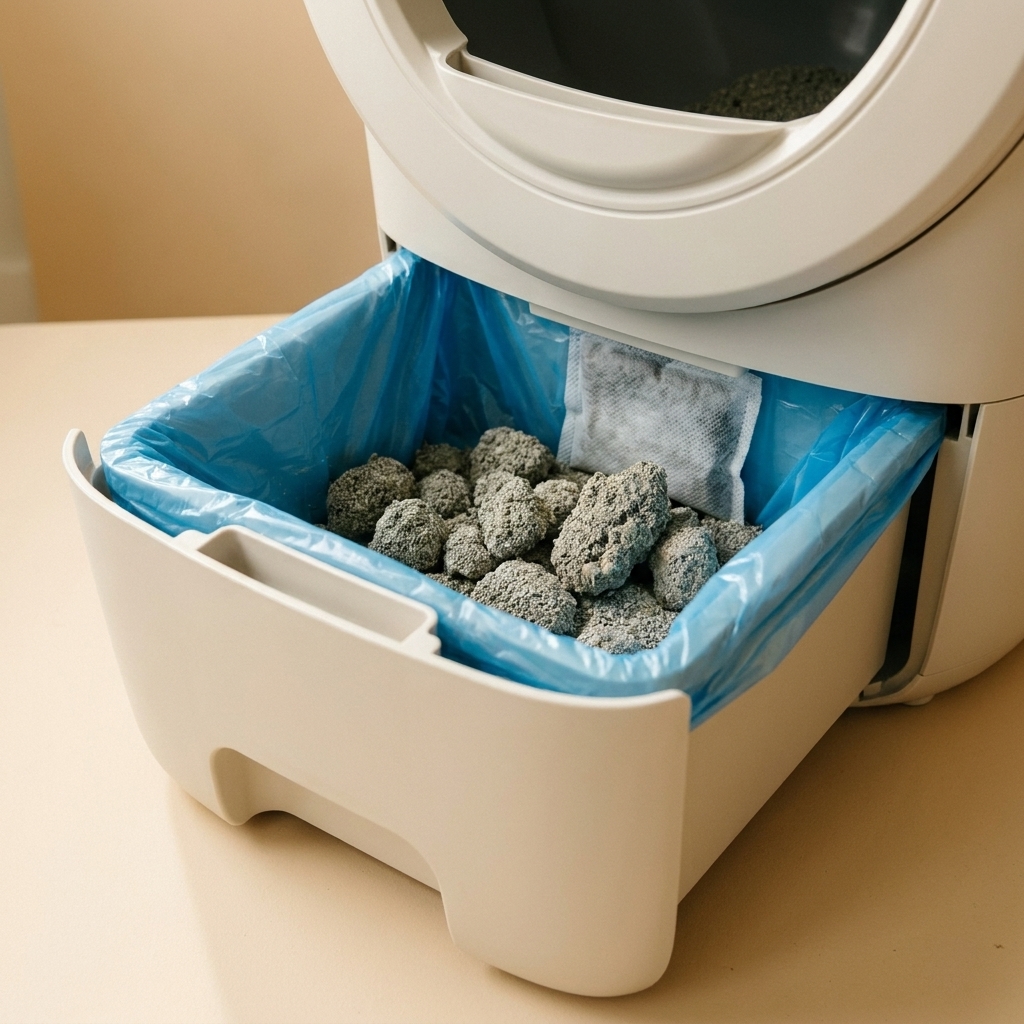
Why it is great for busy cat homes: The Litter-Robot 4 is a high-capacity option that tends to keep up well with frequent use. It is roomy, the waste drawer holds a lot, and waste is collected in an enclosed drawer that helps limit stink drift, assuming you keep up with emptying and seals. You can also fine-tune timing in the app so the unit is not cycling the second a cat hops out.
Throughput note: Strong choice for back-to-back users. It is one of the better fits when your cats run a tight schedule and do not believe in personal space.
Key specs
- Litter type: Clumping litter (very lightweight litter can track more and, in some homes, can contribute to sensor or mess issues)
- Delay and cycle: Adjustable delay options and a cleaning cycle that is typically a few minutes (check current manufacturer specs for exact options)
- Noise: Usually moderate for a rotating unit, and the delay setting helps avoid startling cats
- Health insights: App tracks trends like weight and visit frequency plus maintenance alerts. Individual-cat attribution can be imperfect, especially if cats have similar weights. App data is not a substitute for a veterinary exam.
- Cat count guidance: Often works as a primary box for 2 to 4 cats, but real capacity depends on your emptying schedule and your cats
- Minimum weight: Follow the manufacturer minimum weight for kittens and supervise first uses
What you will like
- High capacity for frequent daily use
- App features that help you spot pattern changes over time
- Odor containment design built around isolating waste in a more enclosed drawer with filtration (how well it works still depends on litter choice and emptying frequency)
- Roomy interior for many adult cats
Things to consider
- Premium price up front
- Large footprint compared with many traditional boxes
- Litter tracking still happens with enthusiastic kickers, so plan for a good mat
Best for
Homes with 2 or more cats that want a more hands-off daily routine and can dedicate floor space for it.
2) Litter-Robot 3 Connect
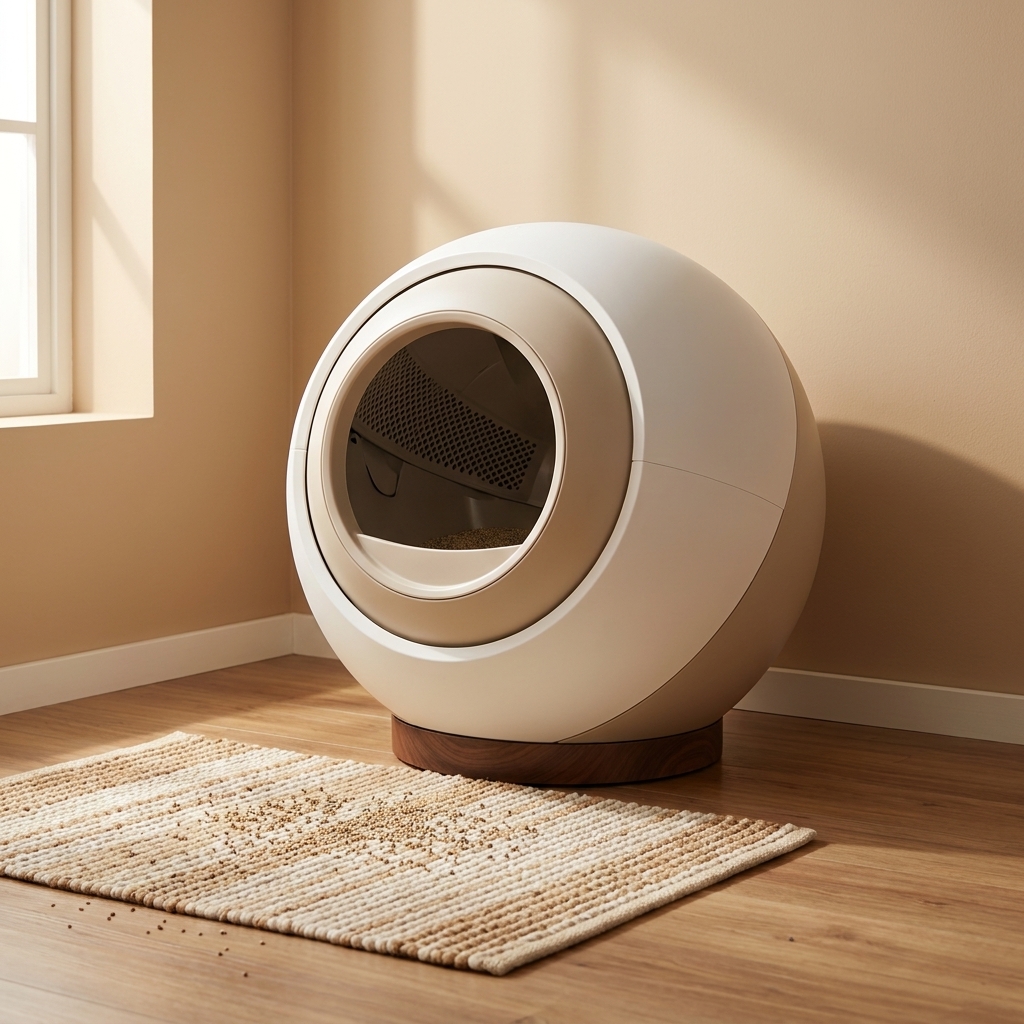
Why it is still a contender: The Litter-Robot 3 Connect remains a strong choice for households that want app functionality and proven performance, often at a lower cost than the newest model. It has a long track record in real homes and a big accessory ecosystem.
Throughput note: Also good for multi-cat traffic, but it can feel louder and a bit more “announcing itself” than newer designs, which matters in skittish-cat homes.
Key specs
- Litter type: Clumping litter
- Delay and cycle: Delay is adjustable and the globe clean cycle generally takes a few minutes (confirm the current spec sheet for exact timings)
- Noise: Moderate to loud compared with some newer designs
- Consumables: Filters and liners are commonly used but not always strictly required, depending on how you set it up
- Cat count guidance: A solid primary unit for many 2-cat homes, and can work with more cats if you empty the drawer more often
- Minimum weight: Follow the manufacturer minimum weight for kittens and supervise first use
What you will like
- Large waste drawer that handles frequent use
- App connectivity for cycle control and alerts
- Widely available accessories like steps, filters, and liners
Things to consider
- Louder cycling than some newer designs
- Odor control varies depending on litter choice, drawer liners, and emptying frequency
Best for
Multi-cat households that want a proven automatic box and are comfortable with a slightly older, but still very capable, design.
3) PETKIT Pura Max
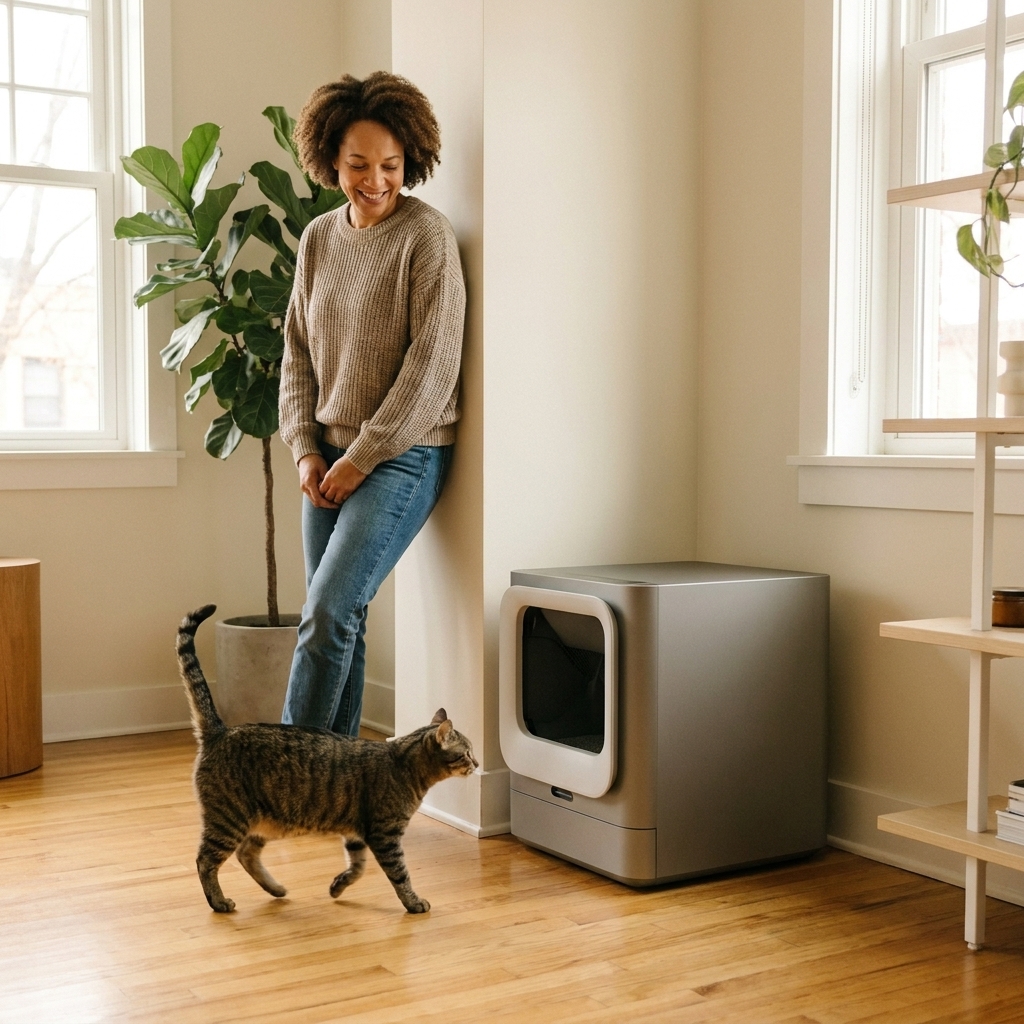
Why it works well with more than one cat: The Pura Max line is popular for a reason. The footprint is tidy, the entry is wide, and the sealed-waste approach can be a strong fit for apartments or smaller homes, as long as you keep up with liner changes and cleaning. The app metrics are useful for noticing changes, especially if you are consistent about who has access to which box.
Name check: Retail listings change fast. In some regions you may see “Pura Max,” “Pura Max 2,” or a refreshed bundle name. Match the product name to the current manufacturer listing so you get the right filters, liners, and support.
Throughput note: Generally good for two-cat traffic. For three cats, it can still work, but you will feel the pace more quickly if your cats like to go one right after another.
Key specs
- Litter type: Clumping litter (check brand guidance for best results, and avoid formulas that smear or stick in automatic units)
- Delay and cycle: Delay is adjustable and the cleaning cycle typically runs a few minutes (verify current manufacturer ranges)
- Noise: Usually moderate
- Health insights: App tracking can include weight-style metrics and activity, plus reminders and alerts. Individual cat accuracy can be inconsistent if your cats are similar in size. Not a medical device.
- Consumables: Liners, filters, and deodorizing products may be recommended or sold as add-ons depending on your setup
- Cat count guidance: Often a good primary unit for 2 cats, and may work for 3 with more frequent emptying
- Minimum weight: Follow the manufacturer minimum weight guidance for kittens and supervise first uses
What you will like
- Strong odor control design that aims to keep waste sealed off quickly (best results still require timely emptying)
- Helpful app monitoring for activity patterns and maintenance reminders
- Tidy footprint that fits many rooms more neatly than a round globe
Things to consider
- Ongoing supplies like liners or deodorizers may add cost
- Not every cat loves an automatic box, so a slow, positive introduction matters
Best for
2 or more cats in a smaller home where odor control and a tidy footprint are top priorities.
4) Casa Leo Leo’s Loo Too
Why it works for shared use: Leo’s Loo Too is a globe-style self-cleaning option that aims for a balance of capacity, odor control, and app convenience. For many owners, it sits in a comfortable middle lane: rotating-globe convenience without always landing in the very top price tier.
Throughput note: Solid for two-cat homes and many three-cat homes if you are on top of emptying. Like most globes, it can feel “busy” if you set the delay too short and your cats stack visits.
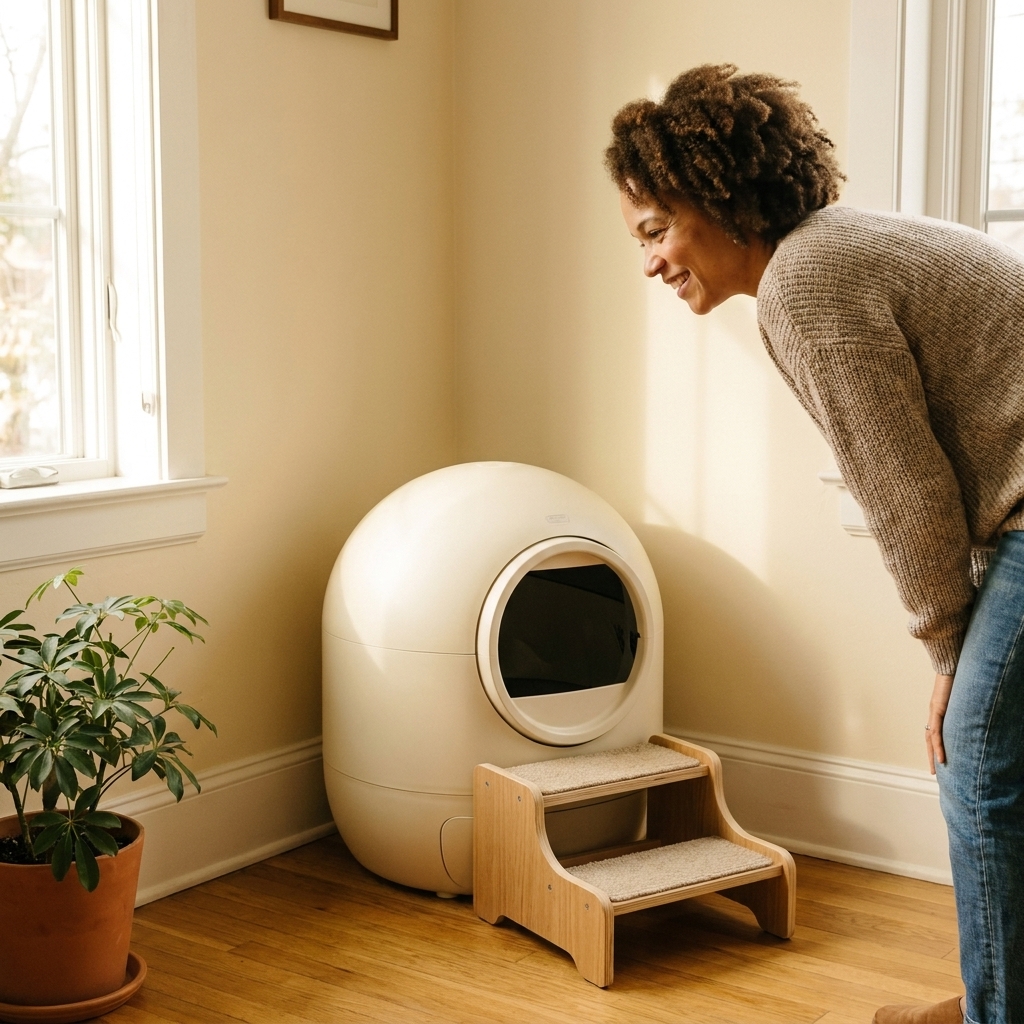
Key specs
- Litter type: Clumping litter
- Delay and cycle: Adjustable delay with a clean cycle typically lasting a few minutes (check current manufacturer specs for exact timings)
- Noise: Moderate
- Entry help: A step accessory can make entry easier for seniors or shorter cats (confirm whether it is included or sold separately)
- Consumables: Liners and filters may be used depending on your setup
- Cat count guidance: Often works well for 2 cats, and can support more with more frequent waste-bin emptying
What you will like
- Good waste capacity for frequent use
- App features for cycle scheduling and notifications
- Step compatibility that can help smaller or older cats
Things to consider
- Size and placement still matter since it is a globe design
- Some cats need time to trust a rotating unit
Best for
Homes with multiple adult cats where you want a higher-capacity automatic box with smart features while keeping an eye on budget.
5) PetSafe ScoopFree Complete Plus
Why it can make life easier: This is a rake-style automatic box that uses disposable crystal litter trays. After your cat goes, a rake moves across the tray and pulls solid waste into a covered compartment, which helps keep the surface fresher between tray changes. In homes with several cats, it often shines as a second box or a lower-traffic option, because tray changes can come up faster than the marketing suggests once you have multiple users.
Throughput note: Fine for one or two cats. In heavy multi-cat traffic, it can start to feel like you are managing trays more often than you want, which is a different kind of “maintenance.”
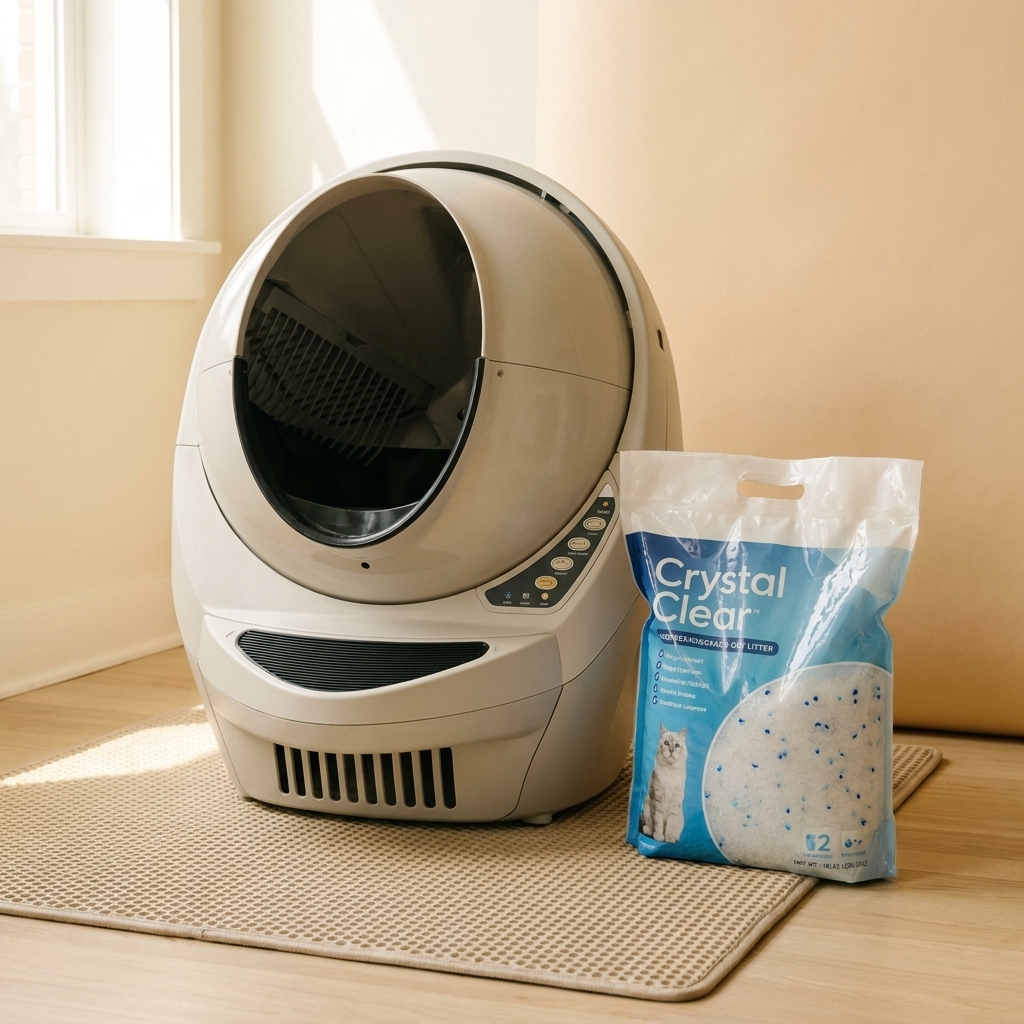
Key specs
- Litter type: Crystal litter in disposable trays
- Delay and cycle: Rake cycles after use on a set delay (check the model settings for your preferred timing)
- Noise: Often noticeable during the rake pass, especially in quiet rooms
- Consumables: Ongoing tray costs are the main factor, and they add up faster with 2 or more cats
- Cat count guidance: Great for 1 to 2 cats, or as an extra box in a larger multi-cat setup
What you will like
- Very low scooping effort with disposable trays
- Odor control can be good when trays are changed on schedule and the waste compartment stays covered
- Often more affordable up front than premium rotating units
Things to consider
- Recurring tray cost can be significant with multiple cats
- Some cats dislike the texture of crystal litter or track it outside the box
- Limited capacity per tray if you have 3+ cats using it heavily
Best for
Busy households that want easier day-to-day upkeep and do not mind recurring tray purchases.
6) Nature’s Miracle Multi-Cat Self-Cleaning Litter Box
Why it is on this list: Rake-style self-cleaning boxes are not as hands-off as rotating globe systems, but they are familiar to many cats and typically use standard clumping litter. In a multi-cat setup, this can be a practical option for a secondary area of the house, like a guest room, basement, or laundry room.
Throughput note: Best as a pressure-relief valve. It can take some load off your main box so no one is waiting in line with a grudge.
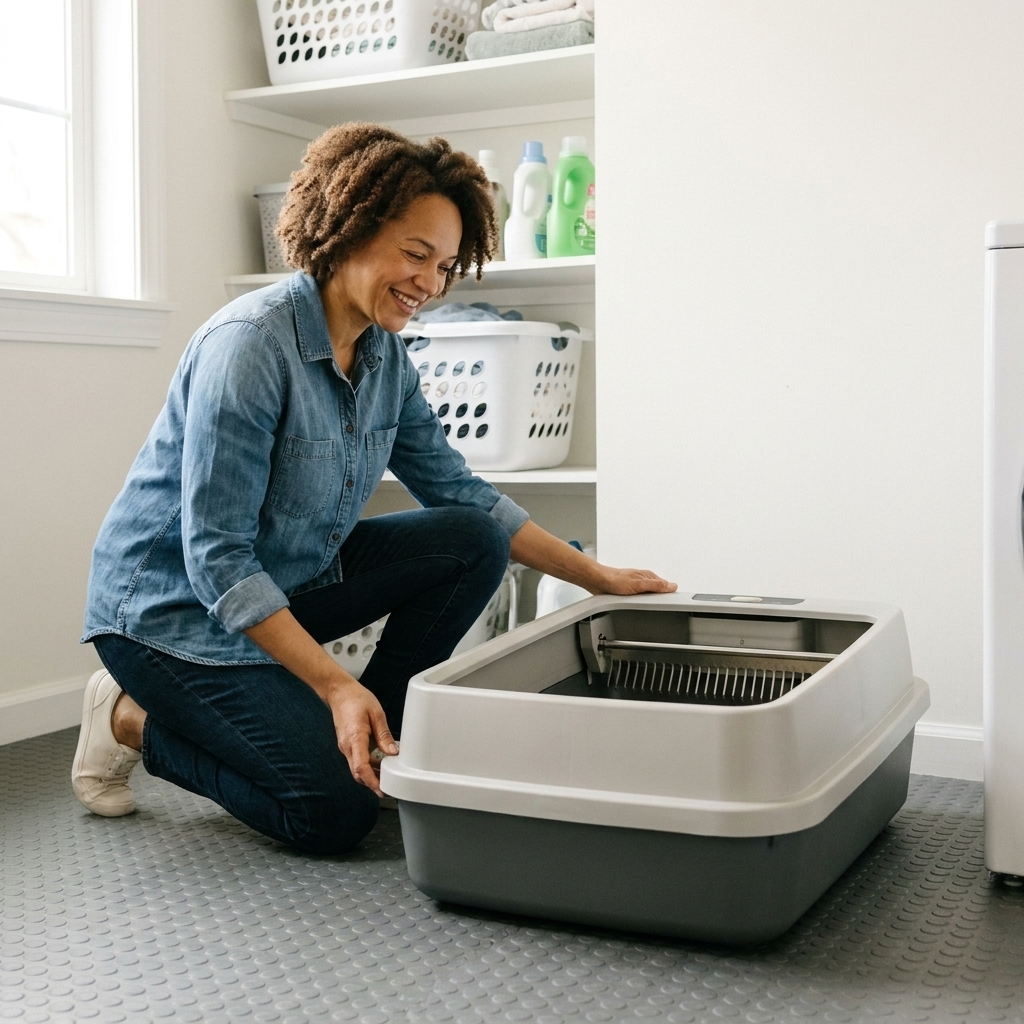
Key specs
- Litter type: Clumping litter
- Delay and cycle: Rake cycles after use on a set delay
- Noise: Often louder than globe systems in a quiet room
- Good to know: Rake mechanisms can jam with overly deep litter, sticky clumps, or gummy formulas
- Consumables: Usually uses standard litter, plus waste receptacle parts that may need replacing over time
- Cat count guidance: Often best as an extra box to reduce sharing stress
What you will like
- Uses clumping litter you may already buy
- Less intimidating for some cats than rotating globes
- Often easier to fit into tighter spots
Things to consider
- Odor control depends heavily on how well the waste compartment seals and how often you empty it
- Mechanical rakes can jam if litter is too deep or clumps stick
- Noise can bother sound-sensitive cats
Best for
Homes that want a simpler automatic option that still uses standard clumping litter, especially as a second box.
7) CatGenie A.I.
Why it is unique: The CatGenie is not a traditional litter box. It washes and dries reusable granules and sends waste to your plumbing. In the right home, it can cut down on litter hauling and trash output a lot over time, especially with multiple cats, but only if you stay consistent with maintenance.
Throughput note: The cleaning process is longer than a typical rotating cycle. This can be fine in a household where cats spread out their visits, but it is less ideal if everyone decides to go back-to-back at rush hour.
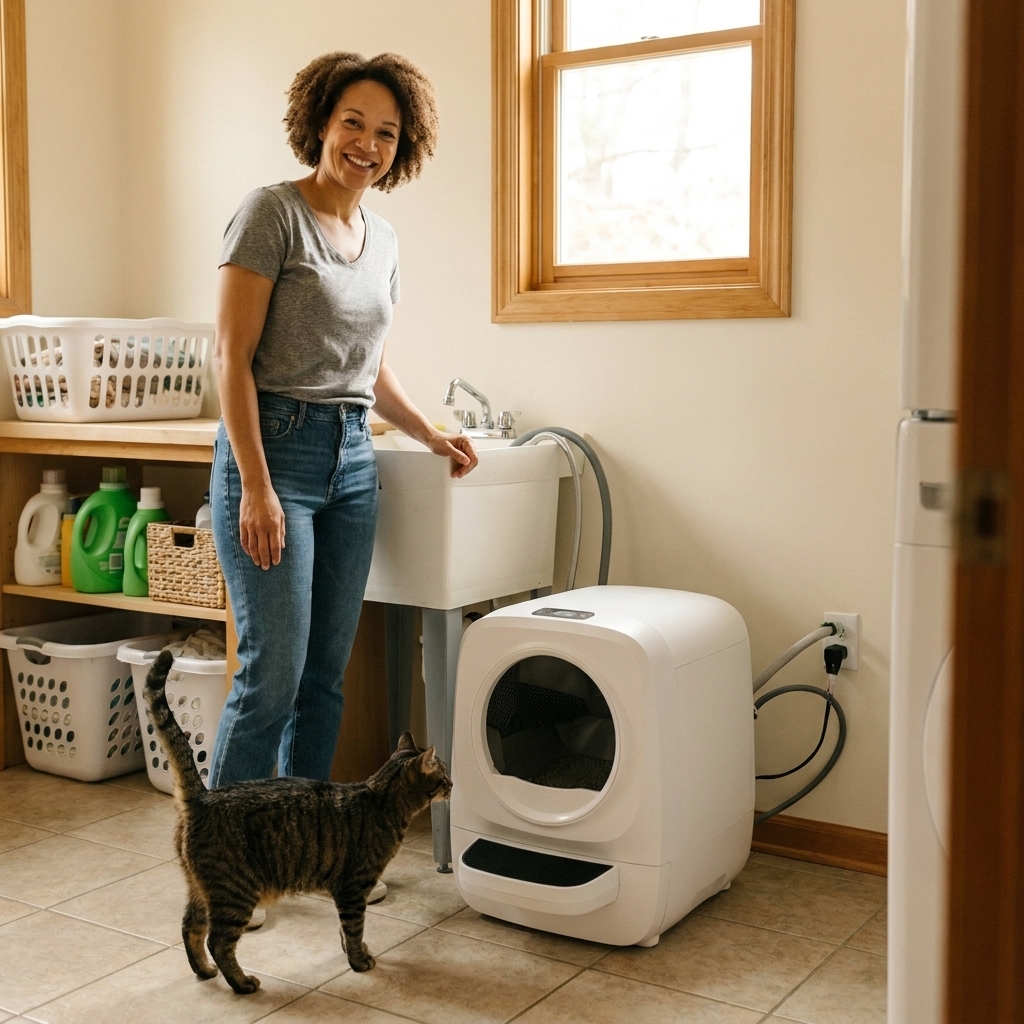
Key specs
- Litter type: Washable granules
- Install needs: Water supply and drainage access, plus a location that can handle occasional maintenance mess
- Cycle timing: A wash and dry cycle is much longer than a typical scoop or globe rotation, so plan around its run time and your household traffic
- Noise: Can be noticeable during wash and dry portions
- Consumables: Cleaning solution cartridges and periodic part cleaning
- Odor reality: Odor control can be very good when the unit is cleaned regularly and the room has decent airflow, but neglecting maintenance catches up fast
- Cat count guidance: Can work well for multiple cats because it does not rely on a waste drawer, but you will still want to keep it running on an appropriate schedule
What you will like
- No clumping litter to scoop in the usual way
- Less trash and fewer litter runs over time
- Potentially strong odor control with consistent maintenance
Things to consider
- Requires a suitable install location with water and drainage access
- Some cats dislike the feel of washable granules
- Higher complexity than most automatic boxes, including cartridges and periodic deep cleaning
Best for
Households with multiple cats that have a dedicated laundry room setup and want to minimize litter waste and frequent drawer emptying.
What to check before you buy
1) How many cats will use it
For 2 cats, one high-capacity automatic box is often workable if both cats are comfortable sharing. For 3+ cats, I strongly prefer either a very high-capacity model or two boxes to prevent bathroom lines and stress. Any “cat count” estimate is just that, an estimate. Your real-world capacity depends on cat size, diet, stool volume, and how often you empty and clean the unit.
2) Size, age, and mobility
If you have a senior cat, a cat with arthritis, or a very small cat, pay attention to entry height and consider a step or ramp. If you have a big cat, prioritize interior space. A cramped automatic box is a fast track to pee on bathmats.
3) Minimum weight and kittens
This matters more than people realize. Most automatic boxes have a minimum weight threshold for safe operation, but the exact number varies by model and is not something to guess at. Some brands land in the general “few pounds” range, others are higher. Always confirm the exact minimum in the manual, and supervise the first introductions.
4) Odor control design
Look for a sealed waste drawer or sealed internal compartment and a decent filter system. In multi-cat homes, odor issues are often about how quickly waste is isolated from air, not just how good the litter is.
5) Litter type and ongoing cost
Rotating boxes typically use clumping litter, which is familiar and cost-effective. Tray-based crystal systems reduce scooping but have recurring tray costs. Wash-and-flush systems reduce litter purchases but add installation complexity and cartridge costs. Also note that some litters clump too softly or smear, which can increase cleaning and cause mechanical issues in automatic units.
6) Placement and power
Automatic boxes need a stable, low-traffic location and a nearby outlet. Avoid putting it where a cat can get cornered. That is one of the most common reasons a timid cat stops using the box. If you rely on app features, confirm your Wi-Fi signal reaches the location. And if your area has frequent outages, keep a simple backup box available so you are not stuck doing emergency cleanup in the dark.
Maintenance schedule
Self-cleaning does not mean maintenance-free. Here is a realistic cadence that scales with cat count and odor sensitivity:
- Daily: Quick glance for clumps stuck to the interior, check the waste bin level, and make sure the entry is clear.
- Weekly: Wipe down the entry lip, interior surfaces your cat touches, and any sensors the manufacturer tells you to keep clean. Swap or refresh odor filters if your model uses them and your nose says it is time.
- Monthly: Deeper clean of the globe or basin, the waste drawer area, and seals. In a 3 to 4 cat home, you may want to do this more often, especially in summer.
Setup tips
- Keep one normal box during the transition. Let the automatic unit sit unplugged at first so it is just furniture, not a surprise robot.
- Use the litter they already like. Sudden texture changes can cause avoidance, especially with sensitive cats.
- Delay the clean cycle at first. Give your cats time to walk away before it activates, and avoid cycling while a nervous cat is hovering nearby.
- Add a high-catch mat. More cats means more tracking. A good mat reduces grit underfoot and helps keep paws cleaner.
- Deep clean on purpose. Even self-cleaning boxes need periodic wipe-downs of interior surfaces, sensors, and seals. In a multi-cat home, plan to do this more often than you think, especially if odor starts to creep in.
FAQ
How many automatic litter boxes do I need for two cats?
Many two-cat households do fine with one high-capacity automatic box, especially if both cats already share well. If either cat guards resources, if you have a timid cat, or if you are seeing accidents, plan for two boxes in different locations.
Do automatic litter boxes really help with odor?
They can, because waste is removed and contained quickly. But you still need the right litter, a good seal on the waste compartment, and regular emptying. If the drawer is “full but not technically full,” your nose will notice.
Are automatic litter boxes safe?
A quality automatic box should have sensors that pause the cycle if a cat approaches or re-enters, but performance can vary by model and setup. Follow weight minimums, keep kittens away until they meet the manufacturer threshold, never disable sensors, and supervise the first few uses.
Why is my cat afraid of the self-cleaning box?
Noise, motion, and the feeling of being enclosed can all be scary. Introduce slowly, start with it powered off, reward curiosity, and use delayed cycling so the box does not come alive while they are nearby.
What is the best litter for automatic litter boxes?
For rotating models, a low-dust clumping litter that forms firm clumps tends to work best. For rake systems, avoid overfilling and choose a clumping litter that does not turn gummy. Lightweight, dusty formulas can track more and may contribute to sensor mess in some units. Always follow the manufacturer’s recommendations to prevent jams and sensor issues.
My final take
If you want the most hands-off experience for a busy multi-cat home, a high-capacity rotating unit like the Litter-Robot 4 is a strong place to start. If you want a more affordable entry into the smart-box world, the Litter-Robot 3 Connect can still do the job well. If odor control is your biggest battle in a smaller space, the PETKIT Pura Max is worth a close look for its apartment-friendly footprint and sealed-waste approach. And if you are ready to commit to installation and maintenance in exchange for less litter hauling, the CatGenie A.I. is in a category of its own.
Whatever you choose, remember the goal is not just a cleaner box. It is a calmer bathroom routine for your cats. That is what prevents messes, keeps peace between roommates, and lets you get back to the important stuff, like convincing them the expensive new toy is not cursed.