A comprehensive, safety-first puppy socialization guide with a printable-style checklist: people, dogs, environments, handling, sounds, and confidence-buildi...
Bringing home a new dog when you already have a cat can feel like equal parts excitement and nerves. You are not being dramatic if you are worried about a chase, a swat, or weeks of tension. The good news is that many dog-cat households can succeed when you slow the process down and let your cat set the pace.
As a former vet tech, I can tell you the biggest mistake I saw was skipping the “boring” steps like scent swapping and management. Those steps are what prevent scary moments later. Below is a practical, cat-first timeline you can follow, plus exactly what to do if your dog gets a little too interested.

Before you start: set up your home for success
Think of the introduction as a temporary safety project. Management is not a failure, it is how you keep everyone feeling secure while they learn each other’s language.
Must-have setup
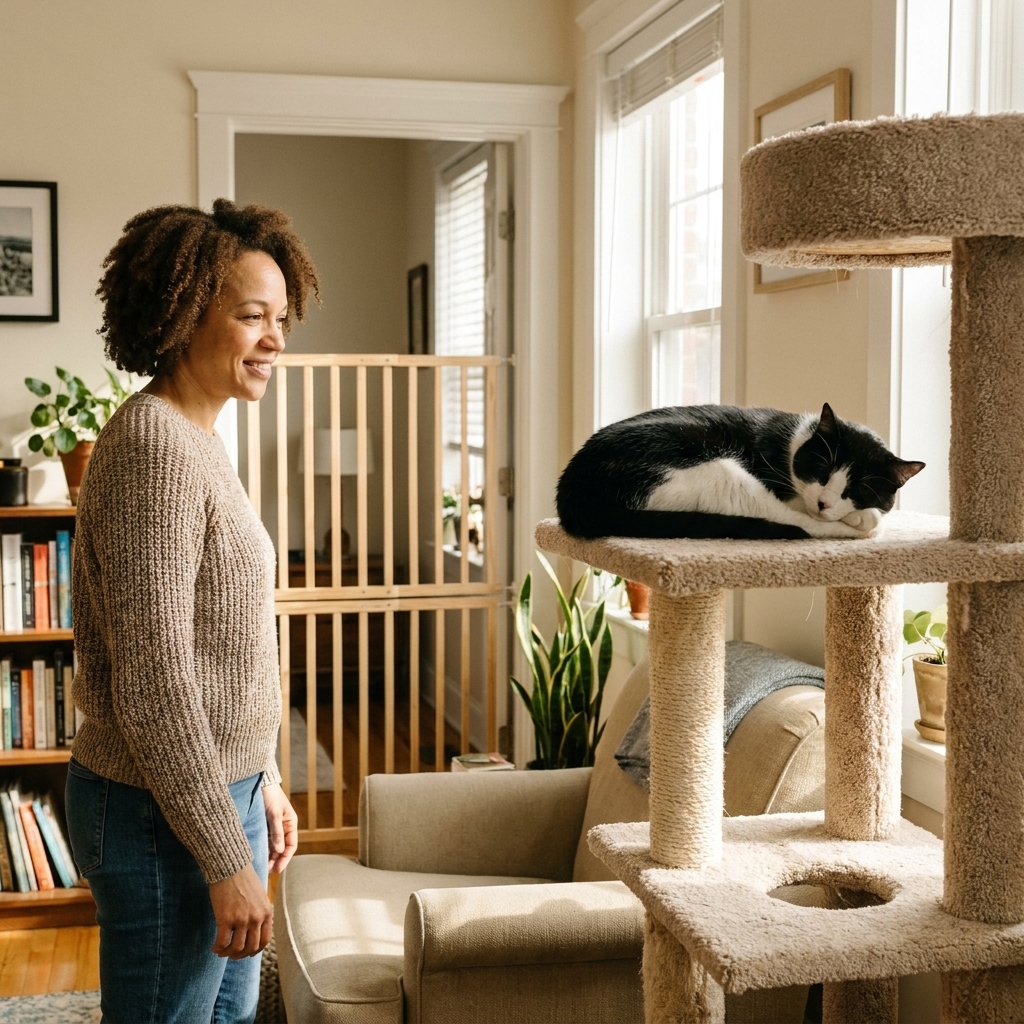
- Cat-only safe zone: A room (or a gated area) where the cat can eat, sleep, and use the litter box without the dog ever entering.
- Two layers of separation: A closed door plus a baby gate, or a tall pet gate plus a leash. This protects your cat if the dog gets pushy.
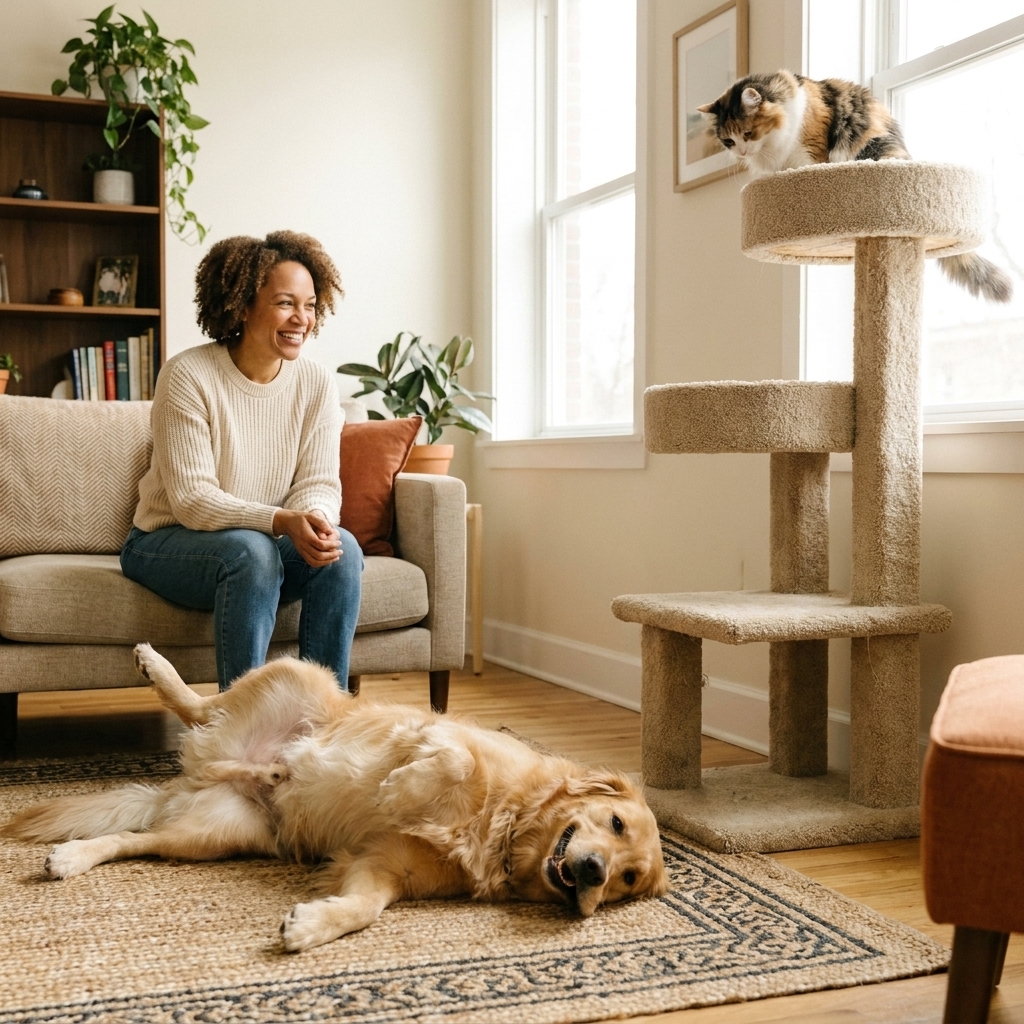
- Vertical escape routes: Cat trees, shelves, or a cleared counter so your cat can move up and away.
- Dog confinement options: Crate, exercise pen, or tether point for short, supervised training sessions.
- High-value rewards: Tiny soft dog treats, squeeze tube treats for the cat, and a favorite toy for each.
- Separate resources: Food and water bowls in different areas. Keep the litter box fully inaccessible to the dog.
Helpful extras
- Pheromone support: A feline pheromone diffuser can help some cats feel more settled, especially in the safe room.
- Low-chaos rules: Keep early sessions quiet. Limit visitors, loud play, and kid chaos near the cat’s safe zone so your cat does not feel “crowded” on top of learning a new dog.
- Safe-room enrichment: Scratching posts, puzzle feeders, and short play sessions give your cat a confidence boost.
Health and safety checks worth doing
- Nail trim: Keep your cat’s nails tidy for safety, but do not declaw. For dogs, trim nails to reduce accidental scratches during excited greetings.
- Parasite prevention: Make sure both pets are on vet-approved flea and parasite prevention.
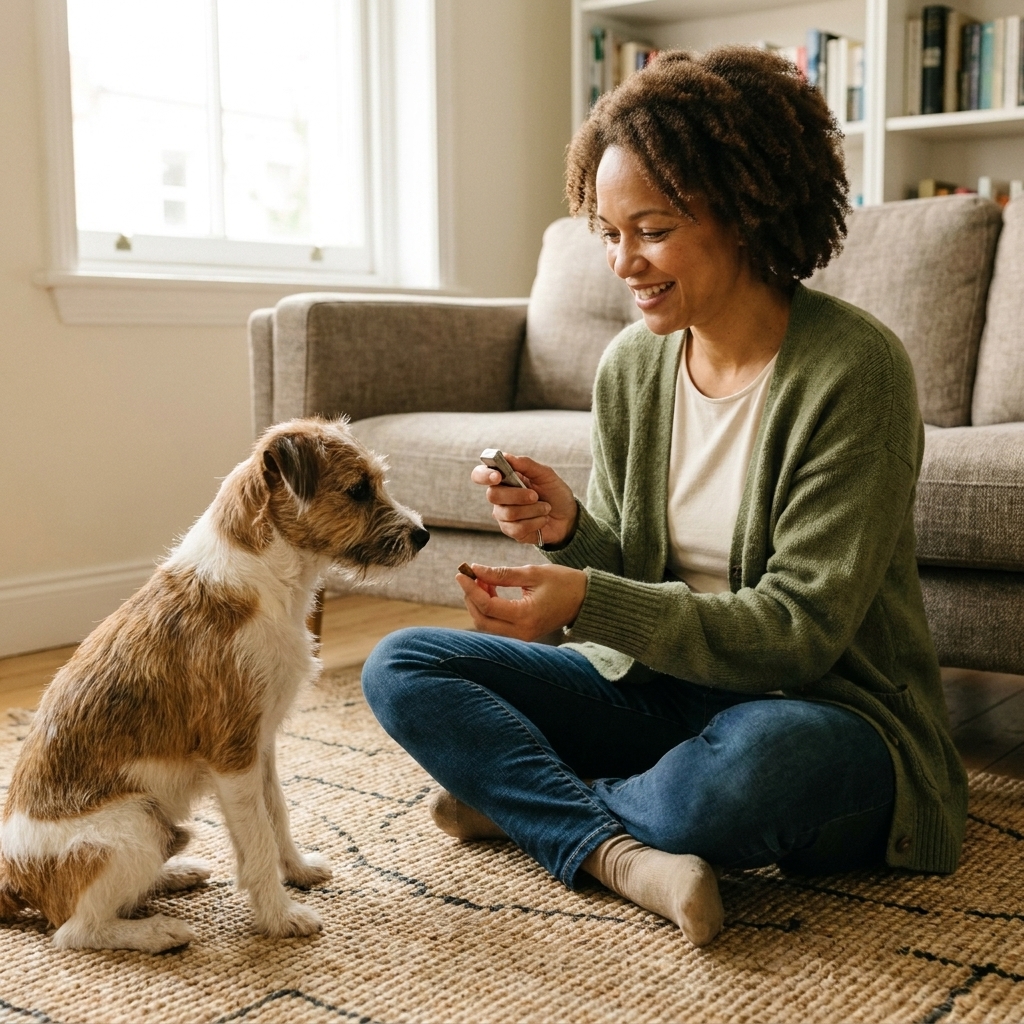
- Dog basics: If possible, start practicing “sit,” “down,” “leave it,” and a calm “look at me” cue before the first visual meeting.
If your dog has a known history of intense prey drive toward cats, or your cat has severe anxiety or aggression, loop in a certified behavior professional early. Some pairings need a customized plan, and in a few cases, cohabitation is not a safe goal without specialist help.
The timeline at a glance
Every household moves at a different speed, but this is a realistic progression for many pets:
- Days 1 to 3: Full separation, decompression (stress-down time), scent swapping.
- Days 4 to 7: Door feeding, calm sounds, short peek sessions with barriers.
- Week 2: Controlled visual introductions with leash and gate, reward calm behavior.
- Weeks 3 to 6: Supervised time in the same space, gradually increasing freedom.
- Ongoing: Management habits that keep peace long-term.
Important note: the timeline is not a test you have to pass. If either pet looks stressed, go back a step for a few days. That is not starting over, it is good training.
Step 1: Decompression and total separation (Days 1 to 3)
Your new dog is learning a brand-new environment. Your resident cat is noticing everything. For the first few days, do not force introductions.
What to do
- Keep the cat’s routine steady: Same feeding times, same litter setup, same favorite resting spots.
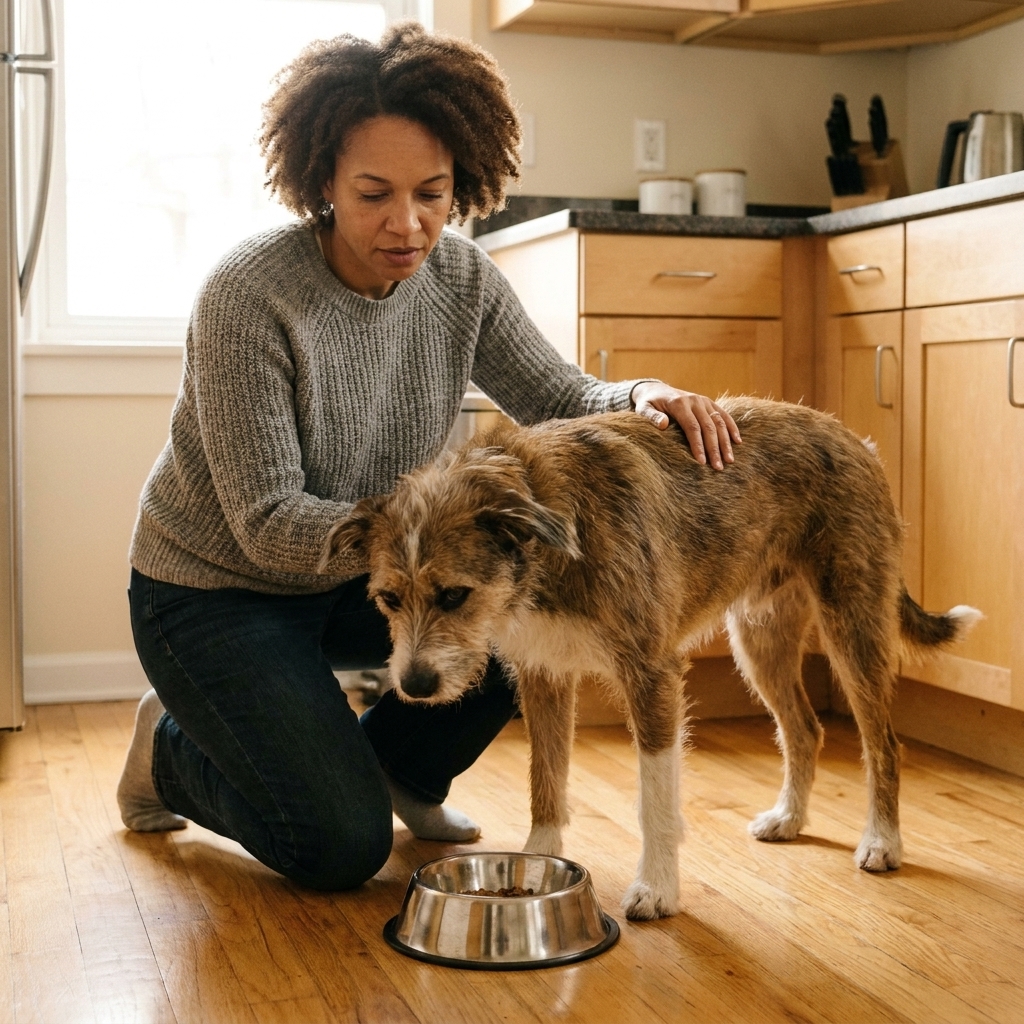
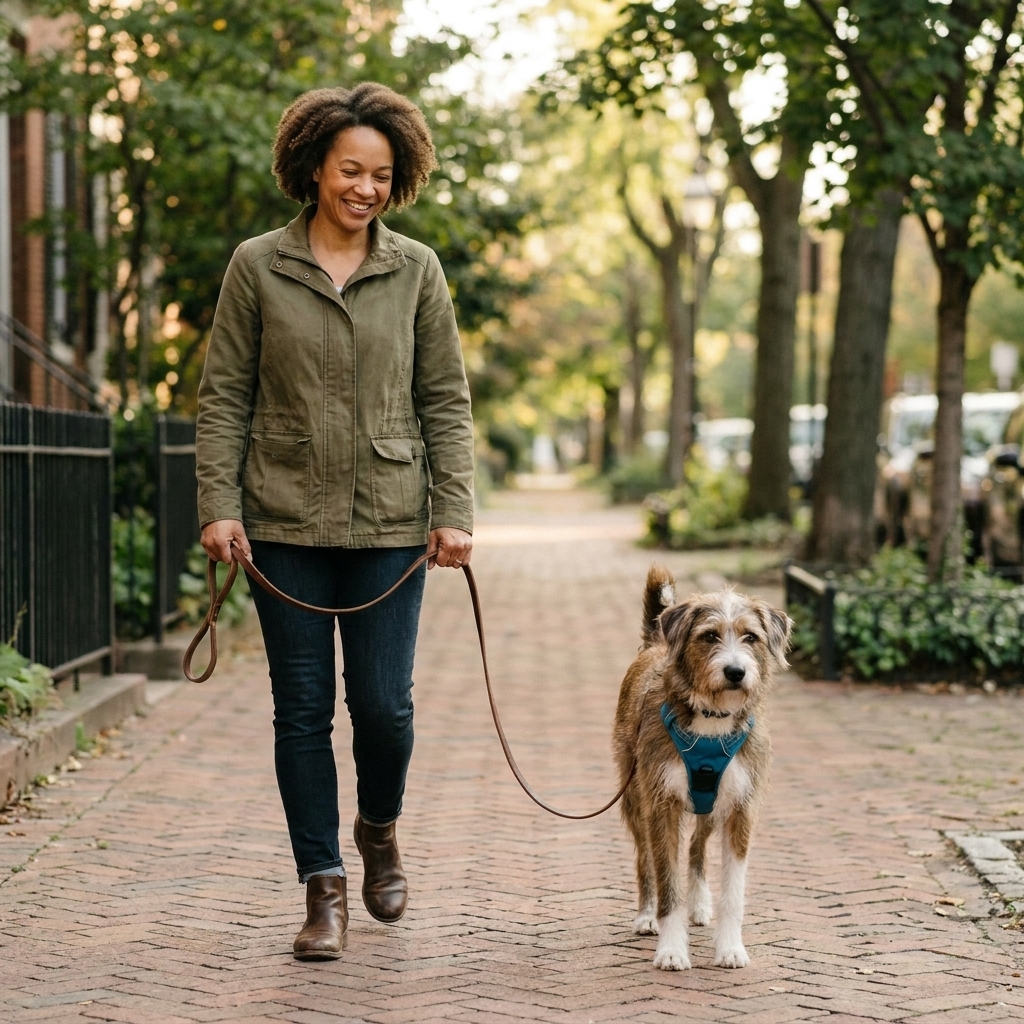
- Let the dog settle: Gentle walks, sniffy enrichment, and calm downtime help lower arousal (amped-up excitement).
- Rotate who gets the main space: Give each pet time to explore the home separately while the other is safely contained.
What “good” looks like
- Cat is eating, grooming, using the litter box normally.
- Dog can relax, nap, and respond to simple cues indoors.
Red flags
- Cat: Hiding constantly, not eating, not using the litter box, growling at the door, dilated pupils, crouched posture.
- Dog: Fixating on the cat’s door, whining, pawing, barking, pacing, or cannot disengage.
If you see red flags, extend this phase. A calm baseline makes everything else easier.
Step 2: Scent swapping (Days 1 to 7)
Pets learn an enormous amount from smell. Scent swapping lets them start building familiarity without the pressure of a face-to-face meeting.
How to do scent swaps
- Swap bedding: Exchange a small blanket or bed between pets daily.
- Use a soft cloth: Gently rub a cloth on the dog’s chest and shoulders, then place it near the cat’s eating area. Do the same with the cat’s cheeks (where cats commonly deposit friendly facial pheromones) and place it near the dog’s rest area.
- “Scent equals snacks” pairing: Offer high-value treats while the other pet’s scent is present. The goal is: smell = good things happen.
Rules that matter
- Do not chase the cat around with a cloth. Keep it low-pressure.
- Stop if either pet avoids the scent item or becomes tense. Try again later at a greater distance.
Step 3: Door feeding and calm sound exposure (Days 3 to 10)
Once both pets can handle scent swaps calmly, you can start building positive associations with proximity.
Door feeding
- Feed the dog on one side of a closed door and the cat on the other.
- Start far from the door if either pet is worried, then inch bowls closer over several meals.
- If the cat stops eating, back up. The cat is your speedometer.
Sound practice
If your dog is vocal or excitable, help your cat get used to normal dog sounds. Let the cat hear gentle dog noises at a distance while you offer treats or play. You are not trying to flood the cat. You are pairing mild exposure with good feelings.
Step 4: First visual contact with a barrier (Week 1 to 2)
This is the part everyone rushes. Resist that urge. Your goal is not a nose-to-nose greeting. Your goal is calm coexistence.
Best setup for the first look
- Dog: On leash with a harness, positioned far enough back that they can respond to you.
- Cat: Free to choose distance and escape routes. Do not carry the cat into view.
- Barrier: Baby gate with a sheet partially covering it if needed, or a cracked door with a doorstop plus an additional gate for safety.
What to do in the moment
- Start with 5 to 30 seconds of viewing time.
- Reward the dog for looking at the cat then looking back at you.
- Reward the cat for appearing calmly, even if they only peek from around a corner.
- End the session while it is still going well.
Body language cheat sheet
Green light signs
- Cat: Neutral tail, slow blinks, sitting upright, grooming, sniffing, choosing to move closer then pause.
- Dog: Loose body, soft face, sniffing the ground, able to take treats, can disengage easily.
Yellow light signs
- Cat: Tail flicking fast, ears sideways, crouching, low growl.
- Dog: Staring, leaning forward, stiff posture, whining, trembling with excitement.
Red light signs
- Cat: Hissing with a hard stare, puffed tail, swatting at the barrier, attempting to bolt past you.
- Dog: Lunging, barking, snapping at the barrier, ignoring food and cues.
Yellow light means increase distance and shorten sessions. Red light means end the session immediately and go back to scent and door work for several days.

Step 5: Controlled meetings in the same room (Weeks 2 to 4)
When barrier sessions are consistently calm, you can try the first same-room session. This should still be heavily managed.
Set the room up like a training session
- Pick a larger room with clear pathways and vertical options for the cat.
- Have treats ready, and keep the dog on leash.
- Start with the cat already in the room (by choice), then bring the dog in calmly.
What you are rewarding
- Dog: Looking away from the cat, responding to name, settling on a mat, sniffing the floor, calm breathing.
- Cat: Remaining in the room, eating treats, playing, or calmly observing.
Simple exercises that help
- Mat training: Teach the dog that lying on a mat makes treats appear. This becomes your default calm behavior around the cat.
- Pattern games: Simple, predictable mini-routines (like toss treat, pause, cue sit, treat) that lower stress and excitement.
- Leave it: Reward the dog for turning away from the cat when asked.
Keep sessions short. Think minutes, not an hour. End with success, separate, and let everyone decompress.
Step 6: Increasing freedom safely (Weeks 3 to 6)
As your dog proves they can remain calm and responsive, you can gradually loosen management. This is where many families see real progress, as long as you do not remove safety tools too quickly.
Progression that works for many homes
- Leash on, held: Dog remains close and guided.
- House line, dragging: Only if your dog is calm and you are actively supervising in a clear, snag-free room. Use a lightweight “house line” (not a heavy handle leash). Never leave a dragging line on an unattended dog.
- Off leash, supervised: Only when the dog has a reliable recall away from the cat and has shown repeated calm behavior.
Keep the cat’s boundaries intact
- Continue to protect the litter box and feeding areas.
- Maintain at least one dog-free room long-term if possible.
- Let the cat choose interaction. Some cats become buddies. Some prefer polite roommates. Both are wins.
How to prevent chasing, staring, and too much interest
Chasing is self-rewarding for many dogs, especially young dogs and herding or hunting types. The goal is to prevent the behavior from rehearsing while you teach a calmer alternative.
Management first
- Use gates, leashes, and closed doors until your dog is consistently calm.
- Do not allow your dog to test the cat by rushing them, even if you think it is playful.
- Give your dog appropriate outlets like sniff walks, food puzzles, and tug games so they are not looking for excitement from the cat.
Training that helps in real life
- Automatic check-ins: Reward your dog every time they voluntarily look at you after noticing the cat.
- Interrupt and redirect: If your dog locks on, say their name once. If they respond, reward and move away. If they do not respond, increase distance immediately rather than repeating cues.
- Find it scatter: Toss a small handful of treats on the floor away from the cat to break fixation and bring arousal down.
If your dog repeatedly cannot disengage, or you are seeing lunging, barrier-slamming, or intense fixation, talk with your veterinarian and work with a qualified trainer experienced in dog-cat introductions. Some dogs need a longer foundation phase, and some may do best with additional safety tools like a properly fitted basket muzzle under professional guidance.
If you use a muzzle, condition it separately first. Your dog should happily put their nose into it for treats before you ever involve the cat.
What not to do
- Do not force a face-to-face greeting. Nose-to-nose is high pressure for many cats.
- Do not punish growling or hissing. That is communication. Punishing it can remove warning signs and increase risk.
- Do not let the dog chase just once. One scary moment can set you back significantly.
- Do not feed pets side-by-side right away. Proximity around food can create tension.
- Do not rely on they will work it out. Cats and dogs can seriously injure each other. Supervision and management are non-negotiable early on.
Troubleshooting common scenarios
My cat is hiding and won’t come out
Increase separation and reduce noise and activity near the cat’s safe zone. Offer high-value treats, use interactive play, and make sure food, water, and litter access feel completely secure. Some cats need a full week or more before they are ready for visual contact.
My dog is friendly but obsessed
Friendly and safe are not the same thing. Obsessive staring and intense excitement can tip into chasing quickly. Go back to barrier sessions, increase distance, and focus on mat work and disengagement skills.
My cat swatted the dog through the gate
That is information, not a disaster. Increase distance from the barrier, use a visual blocker (like a sheet over part of the gate), and restart with shorter sessions plus better rewards. Make sure your cat has plenty of vertical space and escape routes.
My dog got scratched. Should I stop introductions?
Scratches can happen even in careful setups, but take them seriously. Separate the pets and reset your plan so the dog is not getting close enough to pressure the cat.
For your dog, gently rinse the area and wash with mild soap and water. Contact your veterinarian promptly if the scratch is deep, near the eyes, looks like a puncture, keeps bleeding, or if you notice swelling, redness, heat, pain, limping, or any sign of infection. If you suspect a bite (even a small puncture), call your vet. Cat bites and punctures are especially infection-prone.
When to call a professional
Reach out to your veterinarian, a board-certified veterinary behaviorist, or a certified trainer if you notice:
- Dog attempts to lunge, bite, or break barriers to reach the cat
- Cat stops eating, stops using the litter box, or shows ongoing signs of stress beyond a few days
- Repeated chasing incidents or any injury
- You feel anxious managing the home setup day to day
You deserve support. A well-structured plan can change the entire trajectory of the relationship.
FAQ
How long does it take for a dog and cat to get used to each other?
Many pairs show improvement within 2 to 6 weeks with consistent management, but true comfort can take months. The more your dog wants to chase and the more cautious your cat is, the longer you should plan to go.
Should I introduce them on the first day?
In most homes, no. A slow start prevents setbacks. Begin with separation and scent swapping, then progress to controlled visual contact when both pets are calm.
Is it better to let the cat approach the dog or the dog approach the cat?
Let the cat choose. The dog should be calmly managed on leash or behind a barrier at first. A cat who feels in control is more likely to become curious rather than defensive.
Can I ever leave them alone together?
Some households can, but only after a long stretch of calm, predictable interactions and a dog who reliably disengages from the cat. Even then, I still recommend keeping the litter box and cat-only areas dog-proof permanently.
A calm home is built one tiny win at a time
Successful introductions are not about a magical first meeting. They are about a hundred small, boring moments where your dog learns, “When I’m calm, good things happen,” and your cat learns, “I am safe here.”
Go slow, celebrate the little victories, and keep your management tools in place until you truly do not need them. Your future self, and both of your pets, will thank you.