Five cat-friendly ways to redirect scratching using scratchers, placement, gentle deterrents, stress support, and positive reinforcement.
If you have ever dangled a toy and suddenly found teeth on your hand (or ankles), you are not alone. “Play aggression” is one of the most common reasons I hear from cat parents who feel frustrated, confused, or honestly a little betrayed by their otherwise sweet kitten or cat.
The good news: most play aggression is not meanness. It is a normal hunting sequence aimed at the wrong target. With the right outlets and a few consistent boundaries, you can teach your cat how to play without leaving you looking like you wrestled a cactus.

What play aggression is
Play aggression is a cat doing “predator practice” on you, your family, or other pets. Cats are hardwired to stalk, pounce, grab, kick, and bite. In the wild, those behaviors keep them fed. In your home, they often show up as:
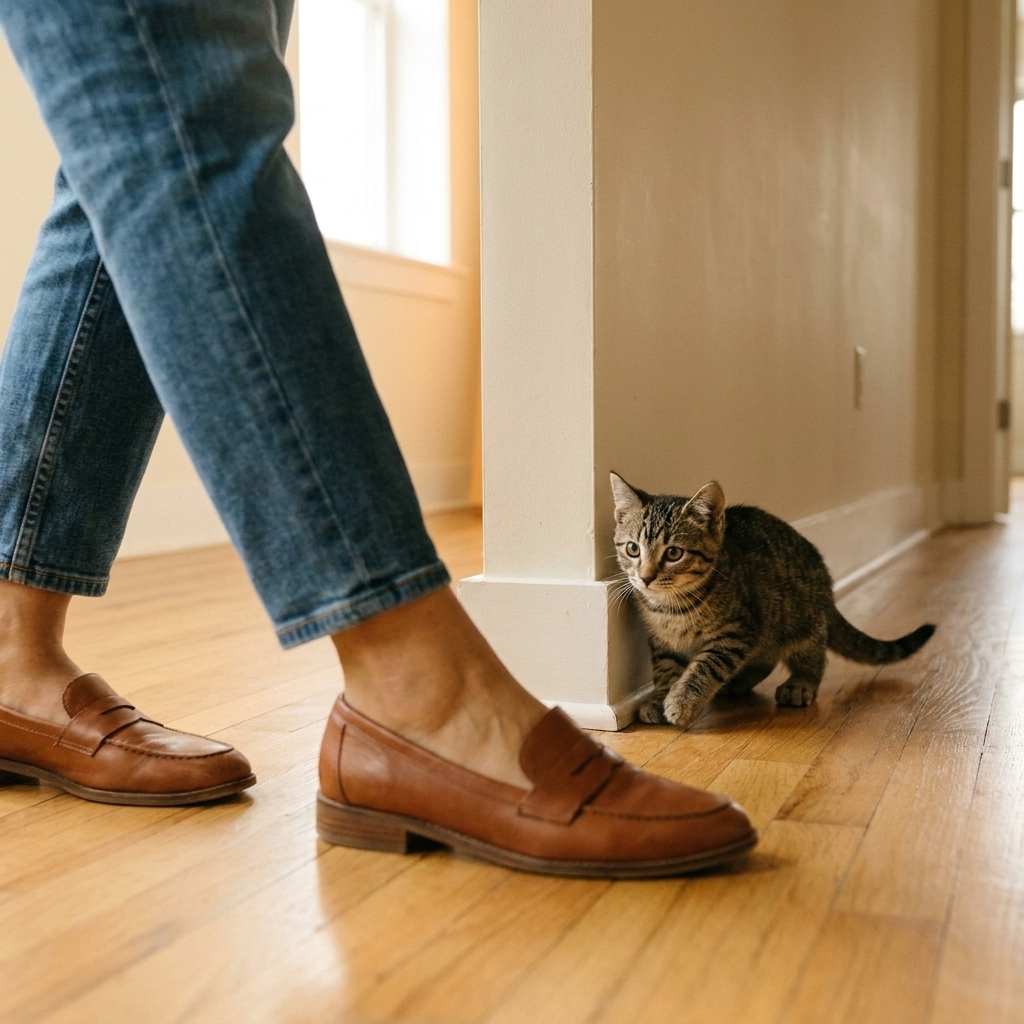
- Ambushing ankles as you walk by
- Grabbing hands during petting or play
- Bunny-kicking your arm while holding on with front paws
- Chasing and pouncing on another cat, then wrestling hard
Play aggression happens most often in kittens and adolescents, but adult cats can keep the habit if they never learned good boundaries, are under-stimulated, or are accidentally rewarded for rough play.
Play vs real aggression
A cat can look intense during play, but body language usually gives them away. Here are the most helpful distinctions I used in clinic when families worried their cat was “turning aggressive.”
Signs it is likely play
- Body is loose and bouncy, with wiggly butt or playful crouch.
- Ears are mostly forward or swiveling, not pinned flat.
- Eyes are bright and focused, pupils may be big from excitement.
- They pause and re-engage like a game of tag.
- They go for moving targets (feet under blankets, swinging hands, a ponytail).
- They can be redirected to a toy most of the time.
Signs it may be fear, pain, or true aggression
- Body is stiff or crouched tight like a spring that cannot relax.
- Ears pinned back, sideways “airplane” ears, or flattened.
- Growling, deep yowling, or prolonged hissing (a quick hiss can happen during play, but sustained vocalizing is a bigger red flag).
- Tail lashing hard or puffed up fur along the back and tail.
- They do not disengage and seem unable to calm down.
- They guard space (blocking a hallway, lunging when you approach).
- It happens during petting and escalates, especially if new or sudden.
Important: if your cat’s behavior changed suddenly, if bites are deep, if there is growling and prolonged hissing, or if your cat seems painful when touched, talk with your veterinarian first. Dental pain, arthritis, skin issues, and urinary discomfort can all lower a cat’s tolerance and make reactions look like “attitude.”
Why play gets rough
- Hand play from kittenhood: letting kittens bite fingers teaches them humans are fair game.
- Too much energy, not enough outlet: indoor cats especially need hunting-style play.
- Overstimulation: fast petting, belly rubs, or long sessions can flip a cat from relaxed to reactive.
- Movement cues: walking away quickly, wiggling toes, or pulling your hand back fast can trigger a chase-and-catch response.
- Less social learning: kittens raised without other cats may not learn bite inhibition as well, because they miss that constant feedback from a playmate.
- Stress and lack of predictability: changes in routine, new pets, or tension between cats can make play more intense.
One sneaky trigger: playing with hands or feet under blankets. It is adorable once. Then you have a cat who thinks bedding equals hunting season.
What not to do
I completely understand the instinct to yelp, push them away, or punish. Unfortunately, these responses often make things worse.
- Do not use hands as toys. Even “gentle” wrestling teaches the wrong lesson.
- Do not hit, scruff, or physically punish. It can increase fear and escalate aggression.
- Do not spray water or use loud startles. These can damage trust and create anxiety around you.
- Do not rip your hand away if they latch on. Pulling increases tearing and can intensify the chase instinct. Instead, stay as still as you safely can and use the steps below to disengage.
Fixing it step by step
1) Make the right target easy
Stock a few toy types so you can match your cat’s preferred hunting style:
- Wand toys (keeps teeth away from hands and mimics prey)
- Small kickers (for grabbing and bunny-kicking safely)
- Chase toys like balls or mice (great for hallway zoomies)
- Food puzzles or treat balls (burn mental energy, too)
2) Do short daily hunt sessions
As a starting point, many cats do best with two to three play sessions per day, even if each is only 5 to 10 minutes. High-energy kittens may need more. End with a small snack or part of a meal to complete the hunt-catch-eat cycle.
One technique tip that helps: let your cat catch the toy occasionally. If the “prey” never gets caught, some cats ramp up and start targeting the nearest moving body part.
If your cat reliably attacks at a certain time (like bedtime or when you get home), plan a play session right before the usual trouble window.
3) Use one consequence: play stops
Your goal is not to “scold.” Your goal is to teach that teeth on skin makes the fun end.
- If your cat bites or claws skin, freeze for a second.
- Calmly remove attention. Stand up, turn away, or step behind a baby gate or door for 10 to 30 seconds.
- Return and immediately offer an appropriate toy.
Consistency matters more than intensity. A dramatic reaction can be exciting. A boring time-out is information.
4) Spot the wind-up and redirect early
Many cats give tiny “pre-pounce” tells, like a fixed stare, tail tip twitching, butt wiggle, or sudden stillness. The earlier you redirect, the less likely your hands or ankles become the target.
Keep a wand toy in the rooms where your cat tends to ambush. I also like tossing a small toy away from your body to reset their focus.
5) Reward self-control
If your cat plays with a toy near your hands without biting you, quietly reinforce it:
- Soft praise
- A treat
- A few more seconds of play
You are rewarding self-control, not just “not biting.” Over time, that impulse control becomes a habit.
6) Add climbing, scratching, and stalking outlets
Rough play is more common when cats are bored. Add environmental enrichment:
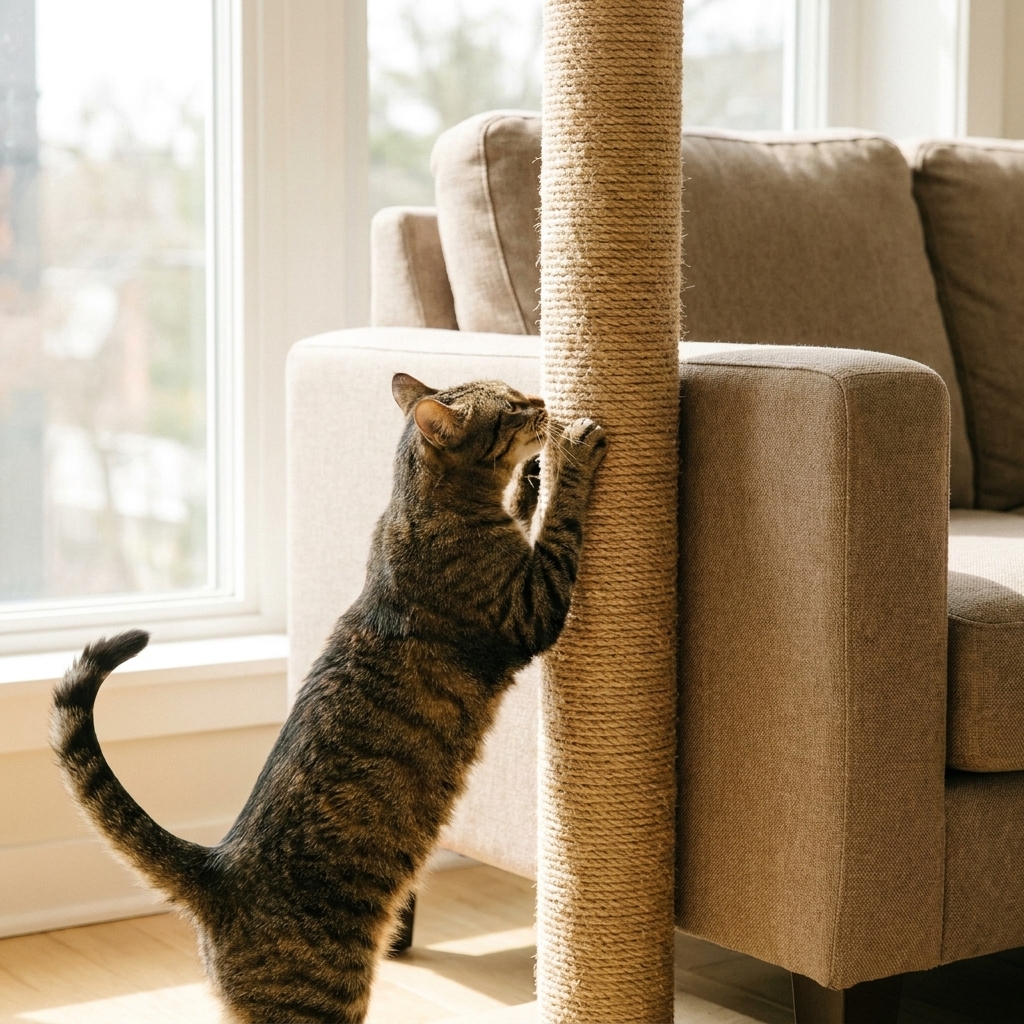
- Scratching posts (vertical and horizontal options)
- Cat trees near windows
- Bird feeder viewing from a safe perch
- Rotate toys so everything feels “new” again
7) Lasers and claws, a quick note
Laser pointers: some cats love them, but they can also create frustration because there is nothing to catch. If you use one, finish by switching to a wand or tossed toy your cat can grab, then give a small snack.
Nails: regular nail trims can reduce injury while you are training better play habits. Soft nail caps are also an option for some cats. They are not a behavior fix, but they can help protect skin in the meantime.

If they latch on
Some cats latch on with front paws, bite, and then bunny-kick with the back legs. It is classic predatory play, and it can hurt.
- Do not yank. Pulling can tear skin.
- Go still if you can, which removes the “prey” movement.
- Prioritize safety. If you can safely do so, a gentle push in (rather than pulling away) can reduce tearing pressure. If that feels risky with your cat, skip it and use a barrier instead.
- Use a barrier: a pillow, folded blanket, or thick towel between you and your cat while you disengage.
- Redirect with a kicker toy, or toss a toy away from you to pull their focus off your body.
If this is happening often, it is a sign your cat needs more appropriate predatory outlets and possibly a vet check to rule out pain or underlying stress.
If skin breaks
Even “play” bites can get infected. If you get scratched or bitten:
- Wash right away with soap and running water.
- Do not ignore puncture wounds. Cat teeth can drive bacteria deep.
- Contact a medical professional promptly for punctures, swelling, increasing redness, warmth, drainage, fever, or pain that is worsening.
Keeping kids safe
Kittens often target kids because kids move fast, squeal, and use hands a lot. It is not personal, but it can be scary.
- Teach kids: hands are for petting, toys are for playing.
- Use wand toys so little fingers stay distant.
- Encourage kids to stand still like a tree if the cat starts stalking their feet.
- Give the cat a kid-free zone like a cat tree or gated room to decompress.
Play between cats
Wrestling is normal, but bullying is not. If one cat is always chasing and the other is always hiding, hissing, or trying to escape, you likely have a mismatch.
Green flags
- They take turns chasing
- They pause and shake it off
- No one is cornered
- Body language stays loose
Red flags
- One cat blocks access to food, litter, or rooms
- Frequent yowling, growling, or fur flying
- One cat hides more, eats less, or stops using the litter box normally
For red flags, separate and reset. Provide multiple resources (litter boxes, feeding stations, water, beds) and consider a structured reintroduction plan. A cat behavior professional can be incredibly helpful if things have gotten tense.

When to get help
Reach out for help if you notice any of the following:
- The behavior is new or suddenly worse
- Bites are deep, puncturing, or frequent
- You see stiff posture, pinned ears, prolonged growling, or defensive behavior
- Your cat is overgrooming, hiding, urinating outside the box, or seems painful
- There is inter-cat conflict that is escalating
Medical issues and stress often overlap with behavior. Addressing both is the fastest path to real improvement.
FAQ
Will my kitten grow out of biting?
Some kittens mellow with age, but many keep biting habits if they are reinforced. Teaching play boundaries now is much easier than trying to undo them in adulthood.
Should I hiss at my cat when they bite?
I do not recommend it. Some cats get scared, some get more excited, and it can erode trust. A consistent “play stops” approach paired with toy redirection works better long-term.
Is it okay to let my cat bite gently?
It depends on your household, but from a training standpoint it is risky. “Gentle” can become “too hard” when your cat gets overstimulated, when a guest uses their hands differently, or when a child interacts. I prefer teaching cats that skin is never a toy.
What toys help cats who attack ankles?
Chase toys you can toss down a hallway, kicker toys, and wand toys that let you direct the pounce away from your legs tend to help most. Also try adding a daily play session right before the time they usually ambush.
A kinder mindset
When a kitten bites, they are not plotting against you. They are practicing a skill they were born to do, and you are the most interesting moving thing in the room. Your job is to translate: “I love that you want to hunt. Here is what you can hunt.”
With consistent toy-based play, calm boundaries, and enough enrichment to keep that busy brain satisfied, most cats learn surprisingly quickly. And once they do, you get the best version of cat play: goofy, athletic, and joyful, with your skin left intact.