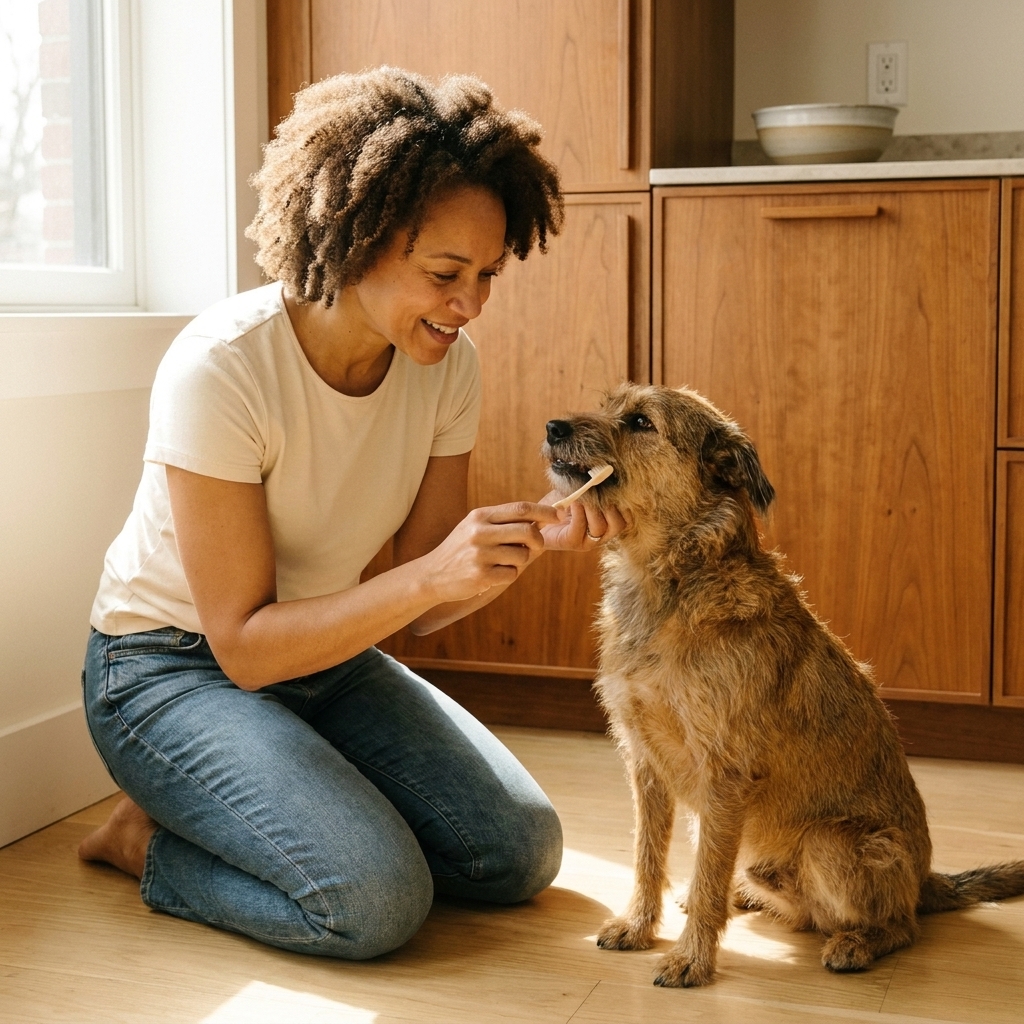
A vet tech–approved, step-by-step guide to brushing your dog’s teeth at home, plus easy alternatives and warning signs that mean it’s time for the vet.
Dog training advice can get weirdly polarized online. Clickers are “the only humane way,” voice cues are “all you’ll ever need,” and suddenly you are standing in your kitchen wondering if you have to buy new gear just to teach sit.
Here is the honest truth from years in a clinic and a whole lot of living-room training sessions with my own pets: both clicker training and voice cues can work beautifully. They are simply tools that communicate information to your dog. The “best” one depends on how your dog learns, what you are teaching, and what you can use consistently in real life.

What each method is
Clicker training (marker training)
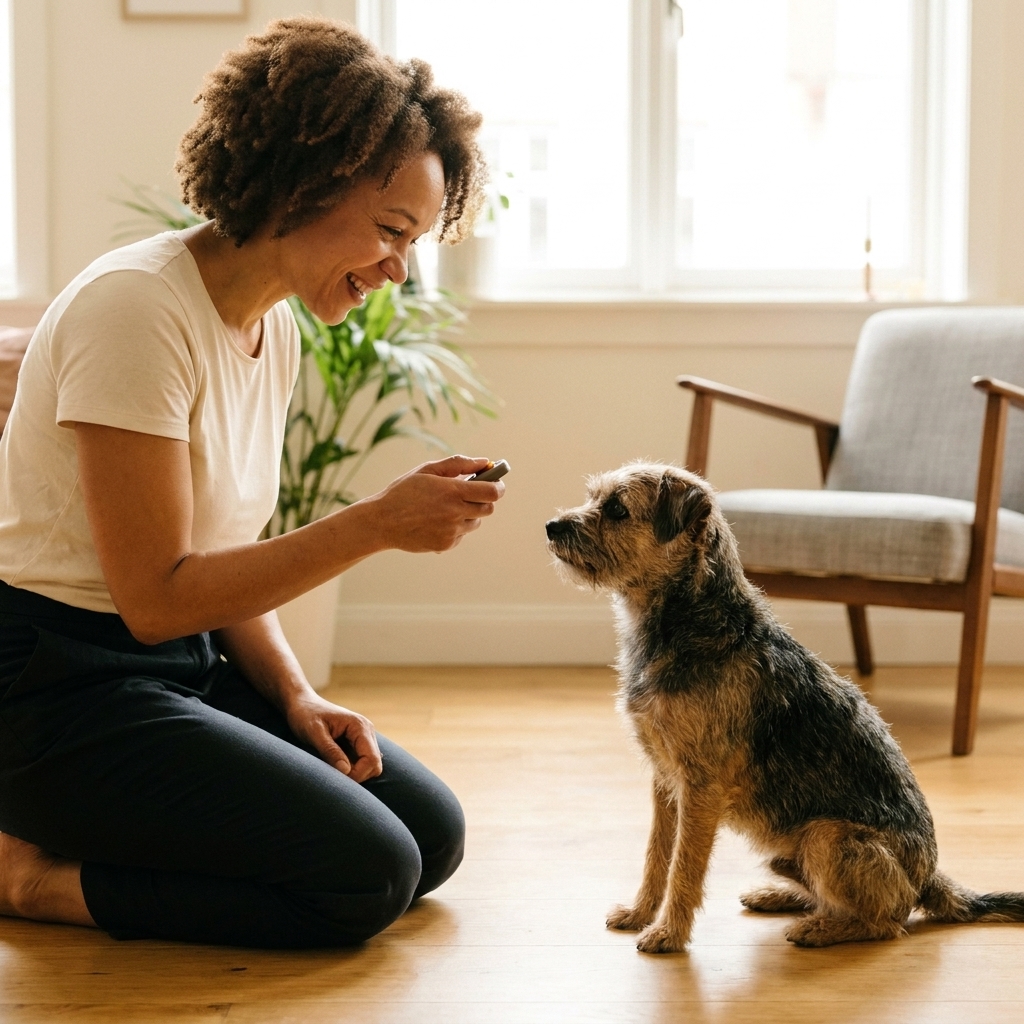
A clicker is a small device that makes a sharp, consistent sound. In training, the click means: “Yes, that exact thing you did right now will earn a reward.” The click is not the reward itself. It is a marker that pinpoints the correct behavior, and it is followed by a treat, toy, or other reinforcement.
You can also use other markers instead of a clicker, like a tongue click or the word “Yes.” The big difference is consistency. The clicker sound is the same every single time, no matter how tired, excited, or distracted you are.
Voice cues
Voice cues are the words you say to ask for a behavior: “Sit,” “Down,” “Come,” “Leave it,” and so on. The cue itself is not inherently meaningful to your dog at first. Your dog learns that the word predicts an opportunity to earn reinforcement if they perform the behavior.
Most people use both a cue and some kind of marker, even if they do not realize it. If you have ever said “Good!” right when your dog did the thing you wanted, you were marking a behavior.
How dogs learn
Whether you click or speak, the biggest driver of success is timing. Dogs learn by associating their actions with immediate outcomes. If your marker happens a second too late, your dog may think you are rewarding the wrong part of the sequence.
This is where clickers shine. The sound is quick and crisp, and it is easier for many humans to deliver at the exact right moment than a drawn-out “Gooood dog.”
Clicker training
Pros
- Excellent precision. Great for shaping tiny steps toward a behavior, like teaching a spin, a bow, or putting paws on a platform.
- Consistent signal. Everyone in the household can sound the same click, which reduces mixed messages.
- Helps with quieter training. Useful if you do not want to excite your dog with voice tone changes.
- Boosts engagement. Many dogs become enthusiastic problem-solvers when they understand the click means “you got it.”
Cons
- One more thing to carry. Real life happens. You forget the clicker, you drop it, your hands are full.
- Requires conditioning. You must “charge” the clicker first so the sound predicts a reward.
- Can be awkward at first. Coordinating click, treat delivery, and leash management takes practice.
- Not always practical at distance. Outdoors, in wind, or across a field, a click can be harder to hear than your voice.
Best use cases
- Teaching brand-new behaviors where you want crisp clarity.
- Shaping complex skills (nose work foundations, tricks, cooperative care behaviors like chin-rests).
- Dogs who get stressed by excited voices or who shut down when people sound frustrated.
Voice cues
Pros
- Always available. You cannot forget your voice at home.
- Easy for everyday life. Great for quick cues like “Wait,” “Off,” or “Let’s go.”
- Works at distance. A well-trained recall cue can carry farther than a click.
- Can be paired with real-life reinforcement. “Come” can earn treats, play, freedom to sniff, or access to the yard.
Cons
- Tone varies. Humans accidentally change meaning with emotion, volume, and speed.
- Words get repeated. Repeating “sit sit sit” often leads to slower responses and cue-dependence.
- Harder to mark exact moments. A word marker like “Yes” can work well, but many people stretch it out or say it late.
- Household inconsistency. Different people use different cues: “Down” vs. “Lay down” vs. “Off.” Dogs notice.
Best use cases
- Everyday manners and routines that happen constantly.
- Distance skills like recall, boundary training, and calling off distractions.
- When you need hands-free handling (carrying groceries, managing kids, holding a leash and poop bag).
Which works best?
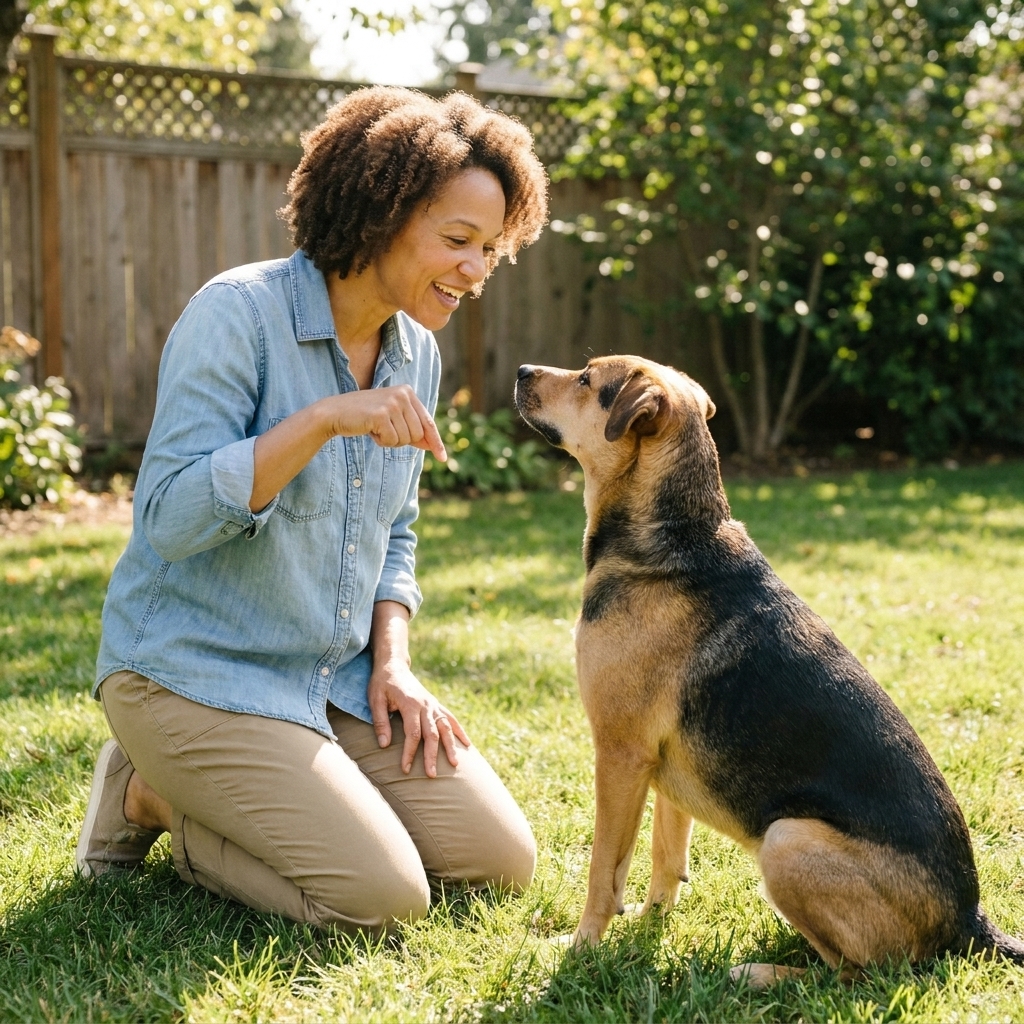
If we are picking a winner for the average pet home: the best results usually come from combining them.
- Use a clicker (or a consistent “Yes” marker) to teach and polish a behavior.
- Add a voice cue once your dog is reliably offering the behavior.
- Fade the clicker for behaviors that are strong and need to work in real life.
This approach gives you the clarity of marker training plus the practicality of voice cues.
Hand signals
Hand signals deserve an honorable mention. Many dogs learn visual cues faster than spoken words, and they can be a lifesaver for distance work, noisy environments, or senior dogs who lose hearing over time.
You can teach hand signals the same way you teach voice cues: mark the correct response (click or “Yes”), reward, and only add the formal signal once the behavior is predictable.
How to use both
1) Charge the clicker
In a quiet room, click, then immediately give a treat. Repeat 10 to 20 times. You are building the association: click predicts reward. If your dog hears the click and looks for the treat, you are ready.
2) Teach the behavior with the click
Example: teaching sit. The moment your dog’s rear hits the floor, click, then treat. Keep sessions short. Five good reps beat twenty sloppy ones.
3) Add the voice cue after the behavior is predictable
Once your dog is sitting quickly in response to your hand motion or context, say “Sit” once, pause briefly, then help them succeed. When they sit, click and treat.
4) Fade the clicker strategically
When your dog understands the cue, you do not need to click every time forever. You can switch to intermittent reinforcement. Reward sometimes with food, sometimes with play, and sometimes with life rewards like going outside or being released to sniff.
Trainer sanity tip: Keep the clicker for learning and fine-tuning. Use voice cues for the behaviors you need on a busy day.
Rewards and treat strategy
Fast learning usually comes down to two things: clear timing and a reward your dog actually cares about.
- Go small. Use tiny treats (pea-sized or smaller) so you can reward often without overfeeding.
- Match the value to the difficulty. Kibble might work in the kitchen. Outdoors, you may need something better.
- Keep the rate high at first. For puppies, new behaviors, and distraction-heavy situations, frequent reinforcement prevents frustration and guessing.
Common mistakes
Click without rewarding
If you click, you pay. Always. The click is a promise. If you click and then get distracted, your clicker loses value quickly.
Using the clicker to get attention
The click is not a “look at me” button. It marks a correct behavior. If you need attention, use your dog’s name, a kissy noise, or move away to be more interesting.
Repeating voice cues
Say the cue once. If your dog does not respond, your next move is to make it easier, reduce distractions, or go back a step in training, not to chant the cue louder.
Changing cues accidentally
Dogs are literal. “Come,” “Come here,” and “C’mon” can become three different cues. Pick one word for each behavior and keep it consistent.
Skipping reinforcement too early
If treats disappear the moment your dog “gets it,” behavior often disappears too. You can fade treats gradually, but you still need to pay your dog, especially around distractions.
Best tool for the goal
Puppies
Either works, but puppies benefit hugely from clear, consistent feedback. A clicker can speed up learning, while voice cues help with daily routines. If your hands are busy with management, a word marker like “Yes” may be easier than a clicker at first.
Shy or sensitive dogs
A clicker can be great for confidence-building because it cleanly communicates success. That said, some sensitive dogs startle at the click noise. If that happens, muffle the click in your pocket, try a softer clicker, or switch to a gentle “Yes.”
Excitable dogs
Clickers often help because they reduce big emotional voice swings. Pair the click with calm treat delivery and you can build thoughtful, less frantic behavior.
Reactive dogs
Marker training can be a powerful part of a reactivity plan, especially for “look at that” and engage-disengage exercises. The key is working under threshold and collaborating with a qualified trainer if you are seeing lunging, snapping, or intense fear.
Recall (coming when called)
Voice cue wins for the cue itself, since you need it at distance. You can still use the clicker in early recall games at close range, then transition to a verbal marker and big rewards.
Trick training and precision skills
Clicker often wins. If you are teaching a weave between your legs or a tidy pivot into heel position, timing matters a lot, and the click can be clearer than praise.
Do you need a clicker?
No. You can absolutely train with voice cues and a consistent verbal marker.
But if you are feeling stuck, or your dog seems confused even though you are trying hard, a clicker can be a helpful upgrade. It is cheap, simple, and it often improves human timing, which improves dog learning.
Safety and ethics
Whichever method you choose, the foundation is the same: teach, reinforce, and set your dog up to succeed. Training should not rely on intimidation, pain, or “proving who is boss.” In my clinical experience, I saw dogs become more fearful and avoidant when handling and training got harsh. Research on aversive training methods has also linked them with increased stress and behavior fallout in many dogs.
If you are dealing with biting, severe anxiety, or escalating reactivity, it is worth bringing in a credentialed positive reinforcement professional who can tailor a plan to your dog’s emotional needs.
Quick guide
- Choose a clicker if you want clearer timing for new behaviors, love trick training, or need more precision while teaching.
- Lean on voice cues if you want practical, everyday cues you can use anywhere, especially at a distance.
- Use both if you want the clearest teaching tool and the most convenient real-life communication.
FAQ
Can I use “Yes” instead of a clicker?
Yes. A short, consistent “Yes” can work as a marker. Keep it crisp, and always follow it with the reward during teaching phases.
Will my dog only listen if I have treats?
Not if you fade food thoughtfully and keep reinforcement varied. Treats are a paycheck while learning. Over time, you can mix in play, praise, access to sniffing, and real-life privileges while still paying with food often enough to keep the behavior strong.
Is a clicker bad for my dog’s ears?
For many dogs, the click is perfectly fine. But some dogs find it startling or uncomfortable. If your dog flinches, avoids you when the clicker comes out, or seems stressed by the sound, switch to a softer clicker, muffle it in a pocket, or use a verbal marker instead.
What if my family uses different words?
Pick one cue per behavior and make a household list. Consistency speeds learning. If multiple cues already exist, you can retrain by rewarding the chosen cue and letting the extras fade out.
What counts as a qualified trainer?
Look for someone who uses reward-based methods and has education you can verify. Common credentials include CCPDT (CPDT-KA/CPDT-KSA), IAABC, and KPA-CTP. For behavior cases involving aggression or severe fear, a board-certified veterinary behaviorist (DACVB) can be a strong option.
Bottom line
Clicker training can make teaching and refining behaviors faster and more precise for many teams because it is consistent and easy to time well. Voice cues are often the most practical way to use those behaviors in real life. If you want the best of both worlds, teach with a clicker (or a solid “Yes”), then layer in voice cues and transition to everyday reinforcement that your dog values.
If training feels stuck, consider working with a credentialed positive reinforcement trainer for a personalized plan and calmer progress.