A vet tech–approved, step-by-step guide to changing dog food gradually, with a clear transition schedule and troubleshooting tips for sensitive stomachs.
If you have ever poured a fresh bag of kibble into a bin and tossed the packaging, you are not alone. It is tidy, it is convenient, and it is also one of the easiest ways to lose the detail you need most during a recall: the lot number and best-by information.
As a former veterinary technician, I have walked pet parents through recalls more times than I can count. The families who still had the bag, even if it was crumpled in a pantry corner, could confirm the lot code in seconds. The ones who had poured everything into an unlabeled container were stuck guessing.
Here is a simple, low-stress system that keeps food fresher and keeps the batch details attached to the food they belong to. When in doubt, follow the storage directions on your specific bag. Manufacturers sometimes have product-specific guidance.
Why lot codes matter
Many dry pet food recalls are tied to a specific production run rather than an entire brand. That is why lot numbers, manufacturing codes, and best-by dates are the key to answering, “Is this my bag?”
You will typically find this information:
- On the back or bottom seam of the bag, printed in ink
- Near the barcode or above the nutrition panel
- Stamped on the gusset (the folded side panel)
Unfortunately, those ink stamps can rub off, especially when the bag is handled a lot or stored against rough surfaces. Protecting that print is part of good storage.
Best method: keep the bag
The most recall-friendly approach is also one of the best for freshness: keep kibble in the original bag and place the whole bag into a sealed container.
Why this works so well:
- The bag is made for the food. Many brands use packaging materials designed to slow moisture and oxygen exposure. Even when it is not perfect, it is still the package your food was tested and shipped in.
- Batch details stay with the food. No mix-ups with other bags, formulas, or pets.
- You avoid “mystery kibble.” Funny until you are trying to confirm a recall late at night.
How to do it cleanly
- Open the bag, then fold the top down tightly and clip it shut.
- Set the bag inside a bin that has a gasket or airtight seal.
- Position the bag so the lot code area is not rubbing against the bin wall where it can fade.
If the bag is too large for your container, keep the bag anyway. Cut off the label panel (details below) and attach it to the bin.
If you transfer food
I get it. Some bags rip. Some households need a slimmer container to fit a small pantry. If you transfer kibble out of the original bag, you can still keep recall details, but you need a plan.
Step 1: save the label panel
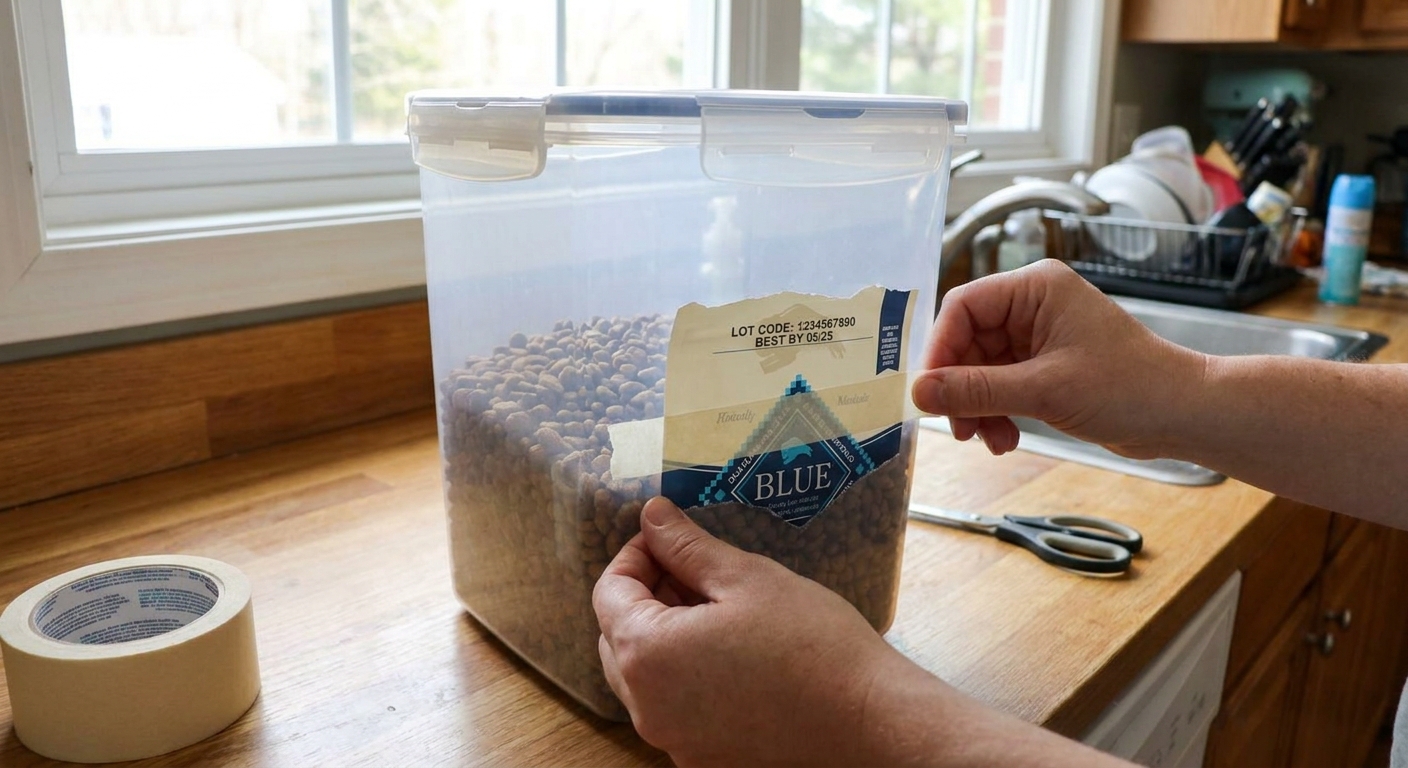
Before you dump the food, use scissors to cut out a large section of the bag that includes:
- Lot number or production code
- Best-by date (or similar date code)
- Brand name and formula name
- UPC barcode (helpful for quick identification)
Then:
- Tape it to the outside of the storage container using clear packing tape, or
- Slip it into a zip-top bag and keep it in the same cabinet as the container
Do not rely on a tiny photo in your camera roll alone. Photos are great as a backup, but you want something that stays with the food even if phones change or images get buried.
Step 2: label the bin
Use masking tape and a marker to note:
- Date opened
- Pet name (especially if you feed multiple animals)
- Formula if you rotate proteins or recipes
This helps you rotate food correctly and reduces the odds of old kibble lingering at the bottom of the bin.
Step 3: if you split a bag
If you divide one bag into two smaller containers, treat each container like its own “bag.” Put the same batch details on both containers and write the open date on both. Otherwise, the second container becomes untraceable later.
Heat, light, moisture
Dry food goes stale faster than many people expect, and in warm or humid environments it can spoil, clump, or grow mold. Storage is not just about pests. It is also about protecting fats in the food from breaking down.
Keep it cool
- Store kibble in a cool, dry indoor space. As a practical rule of thumb, many homes do well keeping it below about 80°F, but check your bag for brand-specific temperature guidance.
- Avoid garages, sheds, sunrooms, and laundry rooms if they run hot or humid.
Keep it dry
- Close the bag or bin tightly after each meal.
- Do not store next to dishwashers, washing machines, or steamy stovetops if you can help it.
- If you use a scoop, make sure it is completely dry before it goes back into the food.
Keep it out of sunlight
- Sunlight can speed up oxidation (rancid fats) and warm the food.
- A pantry or closed cabinet is usually ideal.
Clean bins every bag
This is the step that gets skipped most often, and it matters for both freshness and food safety. When you pour a new bag on top of old crumbs, you can:
- Trap stale fats and odors that make the new food less appealing
- Increase the risk of mold if any moisture got in
- Mix lot codes, which becomes a nightmare during recalls
A simple routine
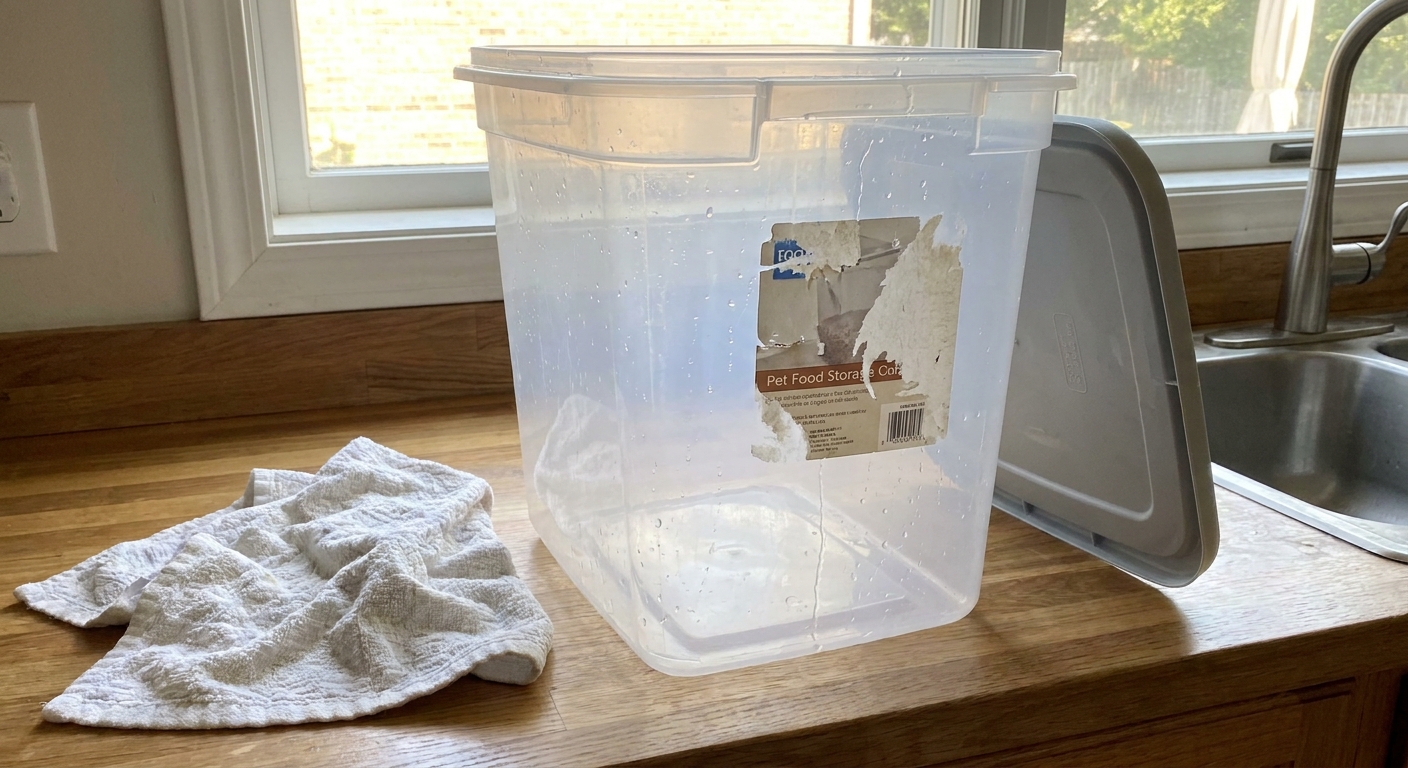
- Empty the container completely.
- Wash with hot water and dish soap
- Rinse well.
- Dry fully before refilling. Moisture left inside a bin is a big deal.
If your container has a rubber gasket, remove it if possible and clean under it. That is where grease and crumbs like to hide.
Log batch info
In clinic, the fastest recall checks happened when pet parents could say, “This is the chicken and rice formula, opened on September 3, lot code X, best by Y.” You can create that level of confidence at home with almost no effort.
Option A: phone note
- Create a note titled “Pet Food Log.”
- Add a new entry each time you open a bag: brand, formula, size, open date, best-by date, and lot code.
Option B: pantry notepad
Keep a small notepad or index card near the food. Each time you open a bag, jot down the same details. Low tech, highly effective.
Option C: photos as backup
Take two photos when you open the bag:
- The full front of the bag (brand and formula)
- A close, readable photo of the lot code and best-by area
Then favorite those photos so they are easy to find later.
Pests and traceability
Ants, pantry moths, and rodents are all attracted to pet food. A sturdy sealed container helps, but a few extra habits go a long way.
- Keep food off the floor when possible. A shelf reduces pest access.
- Do not leave scoops buried in kibble if you can avoid it. Scoops can carry oils and moisture from hands and bowls.
- Vacuum or wipe up spills promptly. Crumbs are an invitation.
If you ever see webbing, larvae, or a musty smell, stop using the food and contact the manufacturer for guidance. Also clean the entire pantry area before bringing in a new bag.
When a recall hits
If you hear about a recall, a calm checklist helps:
- Stop feeding the food until you confirm your lot code.
- Grab the bag or label panel and match the lot code and date code to the recall notice.
- Check reliable sources: the manufacturer’s website, the retailer email you purchased from, and the FDA pet food recall page.
- Watch your pet for vomiting, diarrhea, lethargy, loss of appetite, or unusual behavior. If you are worried, call your veterinarian.
- Follow the recall instructions for refunds or returns, and keep the packaging until the issue is resolved.
How long after opening?
A common freshness guideline is to use dry pet food within 4 to 6 weeks of opening, even if the best-by date is farther out. It is not a hard rule for every product, so check your bag for manufacturer guidance, especially for prescription diets or high-fat formulas.
A few tips that help:
- Buy a bag size your pet can finish in about a month when possible.
- If you must buy larger bags, prioritize excellent sealing and cool storage.
- Watch for changes in smell, texture, or your pet’s enthusiasm at mealtime.
Quick checklist
- Keep kibble in the original bag and place the bag inside an airtight bin
- Store cool and dry, away from sunlight and humidity
- Clean and fully dry the container between bags
- Write down lot code, best-by date, and open date
- Do not mix old and new bags or different formulas in the same bin
If you want the simplest rule to remember, it is this: never let the food and its batch details get separated. Future-you will be grateful.
FAQ
Can I store kibble in a plastic bin without the bag?
You can, but it is not ideal for traceability. If you do transfer the food, cut out the section of the bag with the lot code and best-by date and attach it to the bin, and keep a dated record in your phone or pantry log.
Should I freeze dry pet food?
Freezing is usually unnecessary for kibble and can introduce moisture if condensation forms when the food warms up. For most homes, cool indoor storage in a sealed container is the better approach. If you are considering freezing due to heat or pest pressure, ask your veterinarian or the manufacturer about your specific product first.
Is it okay to top off the container when it gets low?
It is better not to. Topping off mixes lot codes and makes it harder to track recalls and freshness. Finish the old food, wash and dry the container, then add the new bag.
What if the lot code ink rubs off?
As soon as you bring the bag home, take a clear photo of the lot code area and write it into your food log. If the print is already fading, you can try placing clear tape over the stamped area to reduce rubbing, but test a small corner first. Some inks can smear. A photo and written note are the most reliable backup.