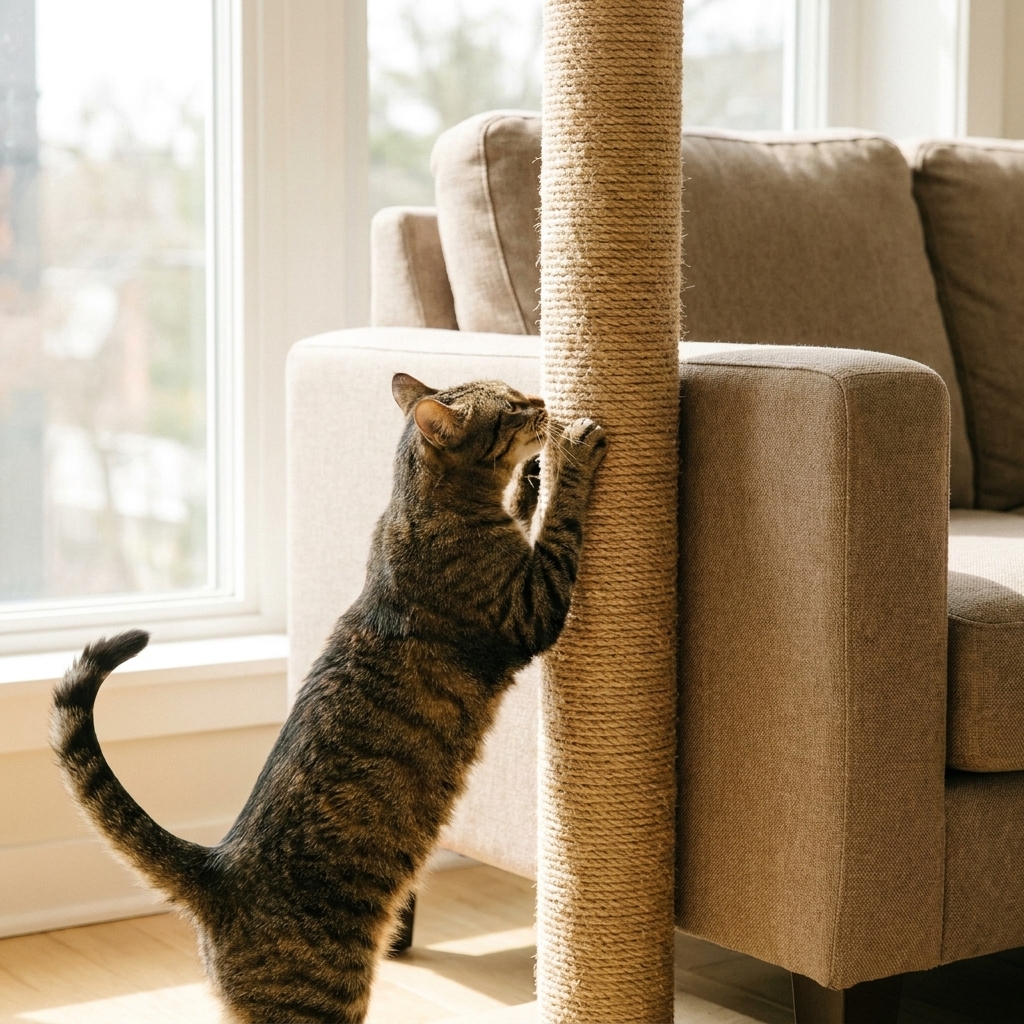
Five cat-friendly ways to redirect scratching using scratchers, placement, gentle deterrents, stress support, and positive reinforcement.
Why your cat needs a scratcher
Scratching is not “bad behavior.” It is how cats help shed old nail sheaths, stretch their shoulders and back, and leave both scent and visible marks. Cats have scent glands in their paw pads, so a good scratcher gives them a satisfying place to do what comes naturally and gives your sofa a fighting chance.
Quick picks
- Best overall: Sisal (especially a tall, stable post)
- Best budget: Cardboard scratchers (replace as needed)
- Best for specific cats: Carpet (only if you want that feel and can keep it separate from household carpets)
Sisal scratchers
Sisal is a top choice because it offers firm resistance and a grippy texture that many cats seem to find rewarding. It also holds up well compared with cardboard, especially when it is wrapped tightly around a post or fixed to a sturdy vertical panel.
Pros
- Durable and long-lasting for most cats
- Great texture for vertical scratching and full-body stretches
- Usually creates less debris than cardboard
Cons
- Can be louder than cardboard when scratched
- Some cats prefer softer or more shreddable surfaces
- Quality varies, and a loose wrap can unravel quickly
Best for
Cats that like to scratch upright and pull hard. If your cat stands tall and really leans into scratching, sisal is often the easiest win.

Cardboard scratchers
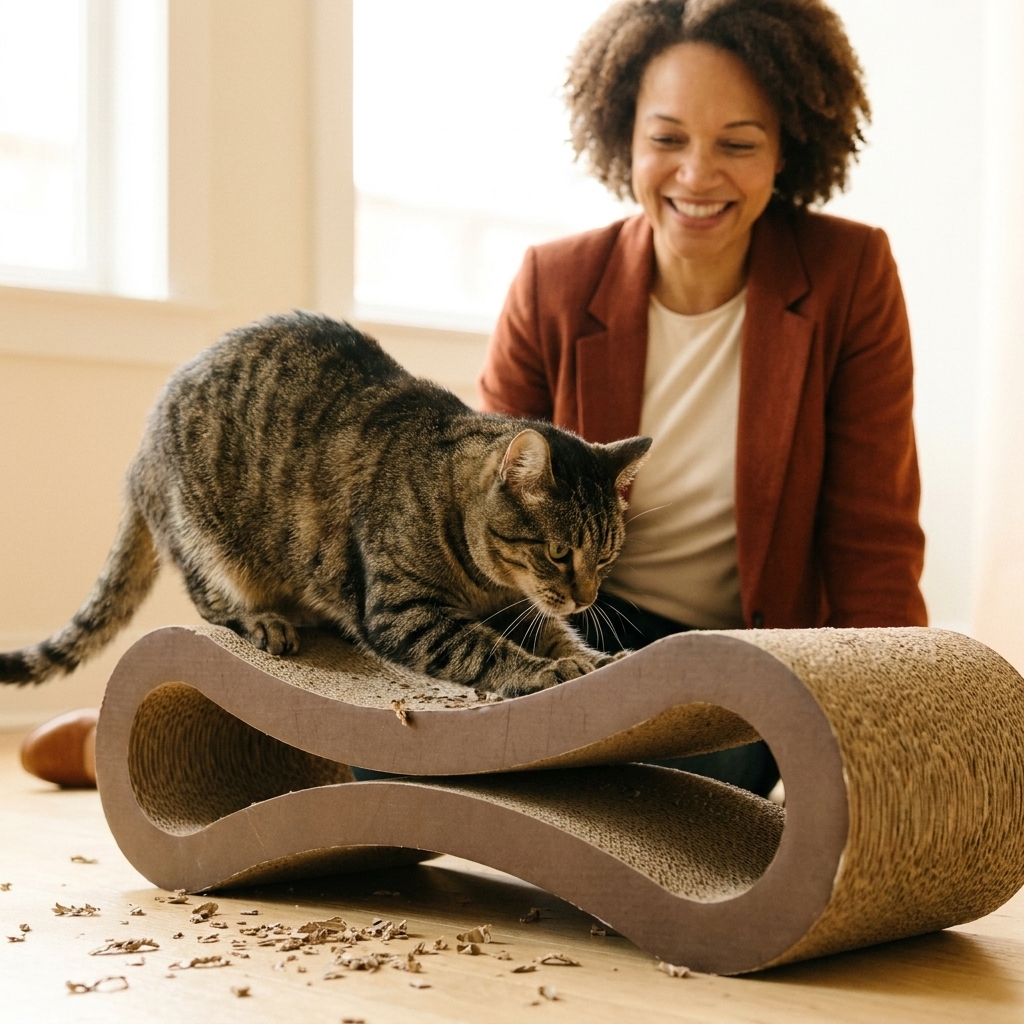
Cardboard scratchers are popular because they are cheap, light, and extremely satisfying for cats that love to shred. Many are reversible or come as lounges, which can encourage both scratching and napping in the same spot.
Pros
- Affordable and easy to replace
- Highly appealing to cats that enjoy ripping and digging
- Available in flat, angled, and lounge styles for different scratching preferences
Cons
- Creates cardboard debris and needs frequent cleanup
- Wears out faster than sisal
- Lightweight models can slide unless you add grip or weight
Best for
Cats that scratch horizontally or like to shred. Also a solid choice if you want to test preferences before investing in heavier furniture.
Carpet scratchers
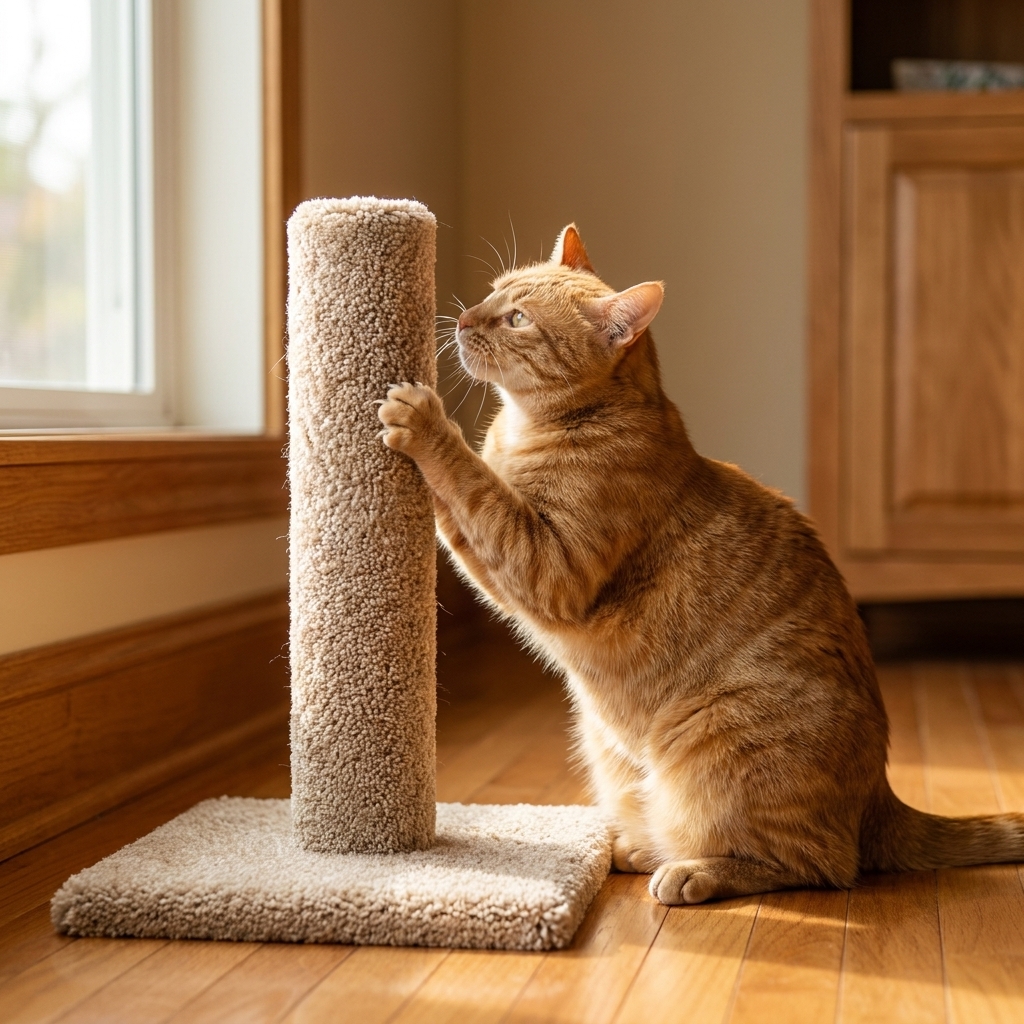
Carpet scratchers can work, but they come with a real tradeoff. If your cat already loves carpet, using a carpeted scratcher may make it harder to teach that household rugs and stairs are off-limits. If you choose carpet, keep it in a clearly defined spot and be consistent about redirecting your cat to it.
Pros
- Familiar feel for cats already attracted to carpeted areas
- Can be soft on paws and easy to grip
- Often inexpensive or DIY-friendly
Cons
- Can reinforce scratching on rugs and stairs if boundaries are unclear
- May snag and look worn quickly
- Harder to keep clean than cardboard or sisal
Best for
Cats that consistently choose carpet over other scratchers, especially if you are trying to redirect a habit. Use it strategically, not by accident.
How to choose the best scratcher
Match your cat’s style
- Vertical scratchers: Look for tall, sturdy sisal posts or vertical sisal panels.
- Horizontal scratchers: Flat or angled cardboard is often a hit.
- Both: Offer one vertical and one horizontal surface to start.
Get the size right
Height matters. Many adult cats do best with a post around 28 to 32 inches (70 to 80 cm) or taller, so they can fully extend without hunching. Bigger cats often prefer taller. If you are choosing a horizontal scratcher, go longer than your cat’s body so they can really dig in.
Stability first
If the scratcher wobbles, a lot of cats lose interest. For posts, choose a wide, heavy base and a thick post. If your cat can tip it during a hard pull, it is not stable enough.
Placement counts
Put scratchers where your cat already scratches or where your cat wakes up. Cats often scratch after naps, so a scratcher near a favorite sleeping spot can get used quickly.
Other options worth considering
If none of the big three materials click, try changing the format. Some cats love wall-mounted scratchers, angled ramps, or scratch pads that attach to furniture corners. Wood-based scratchers and mixed-material posts (like sisal plus plush) can also work, especially for picky cats.
How to get your cat to use it
- Do not punish scratching: It can create stress and does not teach what you want. Redirect instead.
- Make it the easiest option: Place the scratcher right next to the “problem” furniture at first.
- Add attraction: A small pinch of catnip on cardboard or a catnip spray on sisal can help, if your cat responds to it.
- Reward the right choice: Calm praise and a treat right after scratching builds the habit.
- Protect the wrong choice: Double-sided tape or a furniture cover can reduce the appeal while the new habit forms.
Care and safety
- Replace when worn: Retire scratchers that are unstable, have sharp staples exposed, or are shedding long loose strands.
- Watch for string hazards: If sisal is unraveling into long strings, trim them and consider replacing the post to reduce the risk of chewing and swallowing fibers.
- Pair with nail trims: Regular nail trims can reduce accidental snags and sharpness, but they do not replace the need to scratch.
Bottom line
If you want one safe bet, choose a tall, stable sisal post and place it where your cat already spends time. Add a cardboard scratcher for variety if your cat likes to shred. Use carpet only when you have a specific reason, and be ready to keep the “carpet is for scratching” message limited to that one spot.