A practical, judgment-free comparison of clicker training and voice cues, including benefits, downsides, and when to use each for better behavior and faster ...
Resource guarding can look scary, but it is also one of the most workable behavior challenges I see in family dogs. At its core, guarding is a dog’s attempt to keep something valuable like food, a bone, a toy, or even a favorite person. The goal is not to “win” the item back or prove a point. The goal is safety first, then teaching your dog that humans approaching their treasures predicts good things, not loss.
This guide will help you recognize early signs, prevent bites with smart management, and use a step-by-step desensitization plan that builds trust.
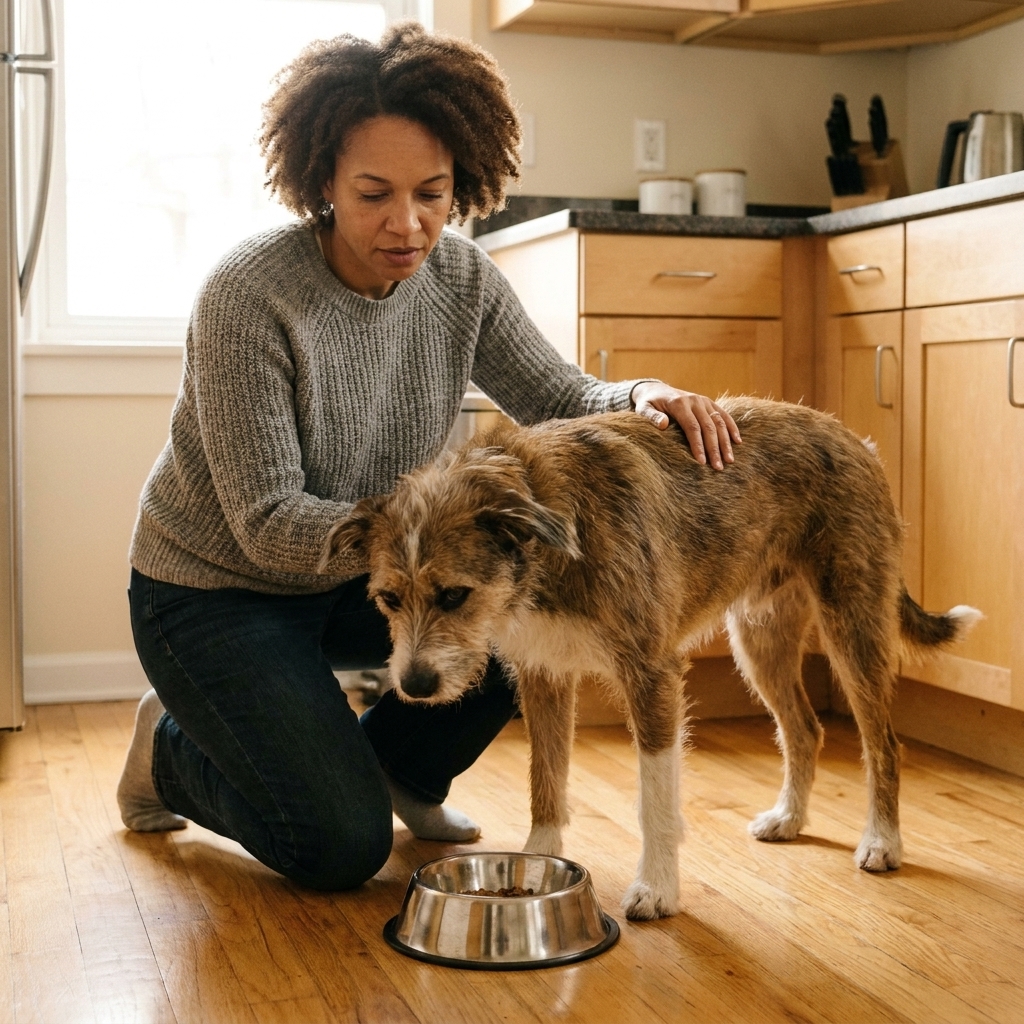
What resource guarding looks like
Many dogs do not go from calm to biting with no warning. They often give subtle signals first, and those signals can be easy to miss or misread as “stubbornness.”
Common early signs
- Freezing or stillness when you walk near the item
- Eating faster or gulping when someone approaches
- Hovering over the object, lowering the head, or turning the body sideways to block access
- Whale eye (showing the whites of the eyes)
- Hard stare toward the approaching person or pet
- Lip lift, wrinkled muzzle, or a low rumbling growl
- Snapping or air biting if the approach continues
Growling is information. It is a dog’s way of saying, “I’m not comfortable.” Punishing a growl can suppress the warning signal without changing the underlying fear, which can make bites more likely and less predictable.
Items dogs often guard
- Food bowls, lick mats, stuffed Kongs, chew bones, bully sticks
- Toys, especially squeaky toys or new high-value items
- Stolen objects like socks, tissues, kids’ toys, remote controls
- Resting spots like the couch or bed
- People, especially in multi-dog homes (this is sometimes called “possessive aggression”)
Why dogs guard resources
Resource guarding is usually about emotion, not dominance. Most guarding is driven by one or more of these factors:
- Genetics and personality: some dogs are naturally more worried about losing valuables.
- Past experiences: dogs who had to compete for food, lived in a shelter, or were frequently chased to take objects away can learn that humans approaching means loss.
- Unintentional practice: if a dog growls and the person backs off, the dog learns that growling “works,” which reinforces the behavior.
- Pain or discomfort: dental pain, arthritis, or GI issues can make a dog more sensitive and protective.
- Developmental stage: adolescence can bring new big feelings, including guarding.
If guarding shows up suddenly in an adult dog, or escalates quickly, it is worth discussing with your veterinarian to rule out pain or medical contributors.
Safety first: what to do in the moment
If your dog is guarding something right now, your job is to lower the temperature of the situation. Think: calm, slow, no confrontation.
Do
- Pause, then create distance without leaning over or looming.
- Call your dog away in a friendly voice if it is safe, then reward with tossed treats.
- Toss treats away from the guarded item to create space, then close a door or use a baby gate.
- Use barriers like gates, crates, or closed rooms during meals and chew time.
- Keep kids out of any guarding scenario. Children move quickly and are easy for a dog to misunderstand.
Do not
- Do not grab the item from your dog’s mouth.
- Do not reach into the bowl or “test” your dog.
- Do not pin or corner your dog or use intimidation-based methods. This increases fear and bite risk.
- Do not punish growling. You want warnings, not surprises.
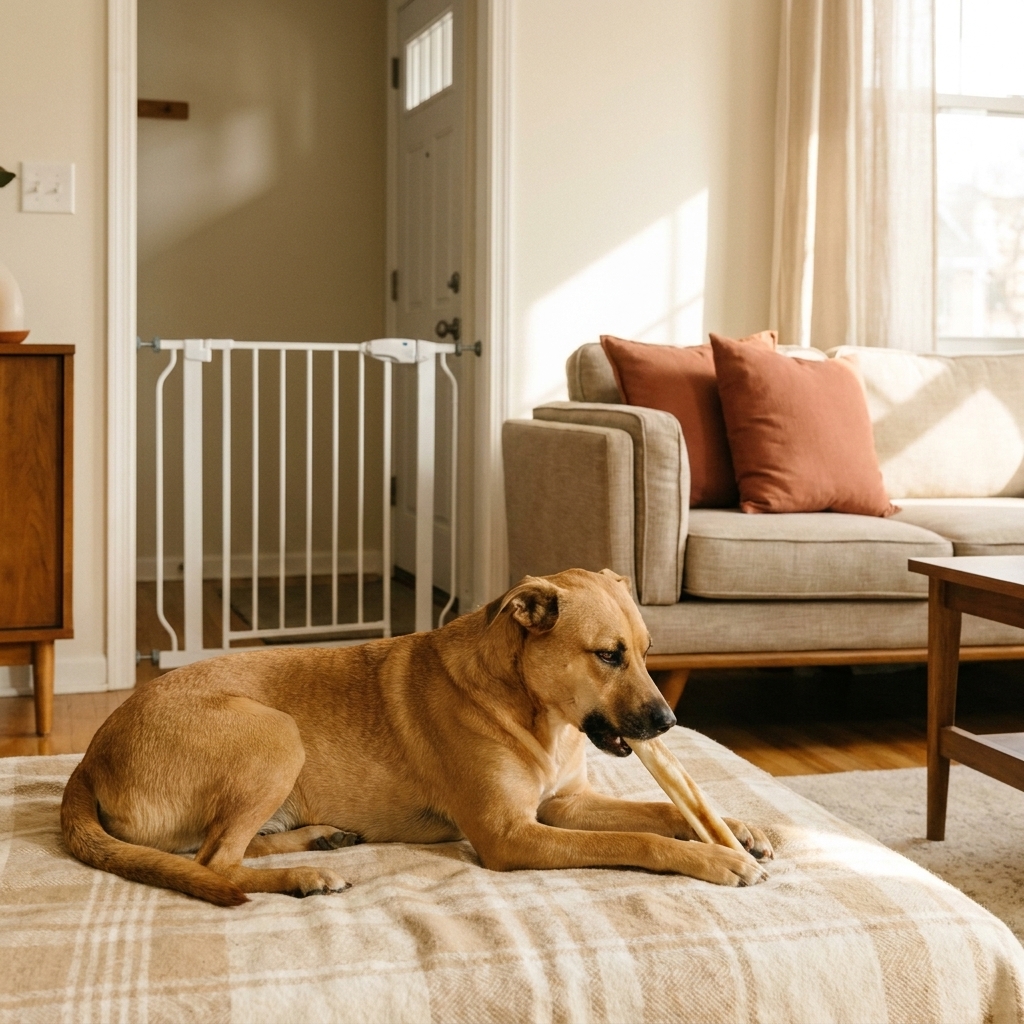
Management that prevents bites and protects training
Training works best when your dog is not repeatedly put in situations that scare them. Management is not “giving in.” It is how you keep everyone safe while you teach new skills.
Set up safe zones
- Feed your dog in a separate room, crate, or behind a baby gate.
- Give chews only when your dog can enjoy them undisturbed.
- Pick up high-value items when guests or kids are over, or use them only in controlled training sessions.
Reduce opportunities for conflict
- In multi-dog homes, separate dogs for meals, chews, and new toys.
- Provide multiple resting spots so one location is not the only “prime real estate.”
- Keep tempting “stealable” items off the floor: laundry baskets, kids’ toys, tissues.
Teach an emergency trade routine
Before you need it, practice a happy pattern: you say a cue like “trade,” toss a few treats, and then you calmly pick up the item after your dog moves away. The cue should feel like good news, not a threat.
What “high-value” means: use rewards that are better than what your dog currently has. If they are guarding kibble, that might be chicken. If they are guarding a bully stick, it might be meat or canned food.
Step-by-step for bowl guarding
This is the core skill: your dog learns that a person approaching their food makes the food situation better, not worse. Go at your dog’s pace. If you see tension, you are too close or moving too fast.
When to stop and get help first: if your dog has bitten or made contact, guards around children, guards at a distance (hard staring, growling when you are not close), or you cannot safely use gates or distance, work with a credentialed professional before trying these steps.
Multi-dog note: do this work with dogs separated. Do not run bowl-guarding exercises with another dog in the room.
Green lights and red flags
- Green lights: loose body, soft eyes, normal eating pace, able to disengage and return to eating.
- Red flags: stiffening, hovering over the bowl, whale eye, stopping eating to stare, growling, lip lift. If you see these, increase distance and drop back a level.
What you need
- Your dog on the other side of a baby gate or on leash if needed for safety
- Regular meal portion in the bowl
- High-value “bonus” treats (tiny pieces of chicken, cheese, or freeze-dried meat)
Level 1: Approach and toss
From a distance where your dog stays relaxed, walk toward the bowl, toss a treat into the bowl, and walk away. Repeat 5 to 10 times. The goal is: human near bowl equals bonus food.
Level 2: Get closer over sessions
Over multiple meals, take one small step closer. If your dog stiffens, covers the bowl, or stops eating to stare, go back to the previous distance. If you hit a bump, spend several meals at the easier level before trying again.
Level 3: Brief pause near the bowl
When your dog is loose and relaxed with your approach, pause for one second, toss a treat in, then leave. Gradually increase the pause to two seconds, then three.
Level 4: Hand to bowl without touching
Reach your hand toward the bowl, drop a treat in, and remove your hand. The hand should predict something better.
Level 5: Light touch and bonus
Lightly touch the bowl, immediately drop a treat in, and walk away. Eventually you can work up to lifting the bowl for one second, adding a bonus treat, and placing it back down.
How often: keep it short. One to two mini-sessions per meal is plenty, and you can stop while your dog is still feeling good about it.
Important: The end goal is not that you can bother your dog while they eat. The end goal is that you can safely manage real life moments, like stepping near the bowl, without your dog feeling threatened.
Step-by-step for toy or chew guarding
Toys and chews are often higher value than kibble, so go slowly. If your dog guards long-lasting chews, start with a lower value chew first.
Safety note: if your dog has a bite history, is guarding around kids, or you cannot practice with space and barriers, work with a professional and consider additional safety tools like a properly introduced basket muzzle.
Multi-dog note: train with one dog at a time. Keep other dogs out of the room so no one feels pressure.
Step 1: Build a treat toss approach
When your dog has the item, approach from a safe distance, toss 3 to 5 treats near their paws, then walk away. Do not reach for the item.
Step 2: Add a cheerful cue
Say “bonus!” or “treats!” right before you toss the treats. Over time, your dog will look up happily when they hear the cue.
Step 3: Trade, then give it back
Offer a high-value treat right at your dog’s nose. When they drop the item to eat the treat, pick the item up, then immediately give it back. Returning the item is powerful because it teaches your dog that letting go does not equal losing it forever.
Step 4: Add a reliable drop it
Once trades are smooth and relaxed, begin saying “drop it” right before you present the treat. Over many reps, your dog learns that “drop it” predicts a reward.
Timeframe: some dogs improve quickly, while others need weeks or longer depending on severity, history, and household setup. Aim for relaxed body language, not speed.
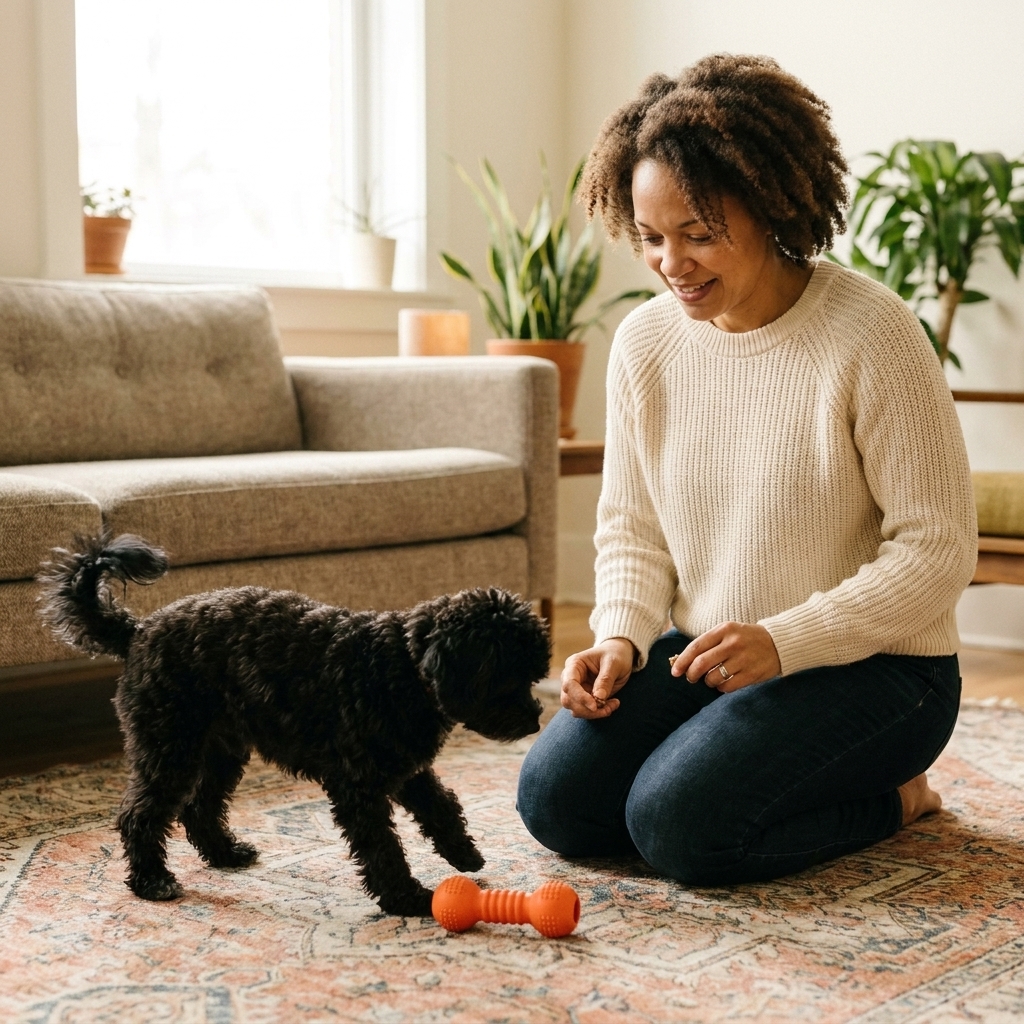
What if my dog stole something dangerous?
This is where panic makes things worse, so plan ahead.
- Do not chase. Chasing turns it into a game and can increase guarding.
- Use a trade with the best reward you have: plain meat, canned dog food, spray cheese, or plain meat baby food with no onion or garlic.
- Scatter a handful of treats on the floor to buy a few seconds. Many dogs will drop the item to forage.
- Use barriers only if you can do so without cornering your dog or blocking their escape route.
Avoid sugar-free foods during trades. Many sugar-free products contain xylitol, which is extremely toxic to dogs. Also keep in mind that rich foods can cause stomach upset in some dogs, so use the smallest amount that gets the job done.
If your dog has something truly hazardous like medication, sharp objects, or toxic food, call your veterinarian or a pet poison helpline immediately while you attempt a trade. Safety and speed matter more than perfect training in that moment.
Mistakes that can make guarding worse
- “Proving” you can take the bowl by sticking hands in food or removing the bowl mid-meal
- Forced takeaways without a trade
- Punishment-based methods that add fear to the situation
- Letting kids handle food or chews, even if the dog is “usually fine”
- Moving too fast in desensitization, which can trigger setbacks
When to get professional help
Resource guarding is common, but it can also be dangerous. Please bring in a credentialed professional if any of the following are true:
- Your dog has snapped, made contact, or bitten
- The guarding involves children or frequent visitors
- Your dog guards multiple items or spaces and the behavior is escalating
- You feel nervous working the plan, even with management in place
Look for a trainer who uses reward-based methods and has experience with aggression cases. Credentials that can be helpful include IAABC (behavior consultant), KPA-CTP, or CPDT-KA. In more serious cases, your veterinarian may recommend a board-certified veterinary behaviorist (DACVB) for a combined training and medication plan.
FAQ
Is resource guarding normal?
It is common and rooted in normal canine survival instincts, but it is not something to ignore. Early, gentle training plus smart management can make a huge difference.
Will my dog grow out of it?
Some mild cases improve with consistent routines, but many dogs get worse if the behavior is practiced repeatedly. The earlier you start, the easier it tends to be.
Should I take my dog’s food away to show I’m the boss?
No. This often increases anxiety and guarding. Instead, teach your dog that your approach predicts extra good stuff.
Can I still give my dog bones or chews?
Often yes, but only with management. Give chews in a separate area, avoid taking them away abruptly, and use structured trade practice. If chews trigger intense guarding, pause them and work with a professional.
The gentle goal: trust, not tug-of-war
Resource guarding is your dog communicating, not being “bad.” When we respond with calm management and a predictable training plan, many dogs make real progress, sometimes quickly and sometimes more gradually. If you want a simple starting point, do this for the next week: approach from a safe distance during meals, toss a high-value treat into the bowl, and walk away. Small moments of trust add up.