A practical, judgment-free comparison of clicker training and voice cues, including benefits, downsides, and when to use each for better behavior and faster ...
If your dog turns every walk into a strength competition, you are not alone. Leash pulling is one of the most common frustrations I saw in practice, and with the right plan it is often very fixable. The goal is not a perfect “robot heel.” The goal is a relaxed, safe walk where the leash stays loose most of the time, your dog can sniff and explore, and you can keep your shoulders where they belong.
Below is my step-by-step, positive reinforcement approach. It is practical, kind, and designed for real life, not just a quiet living room.
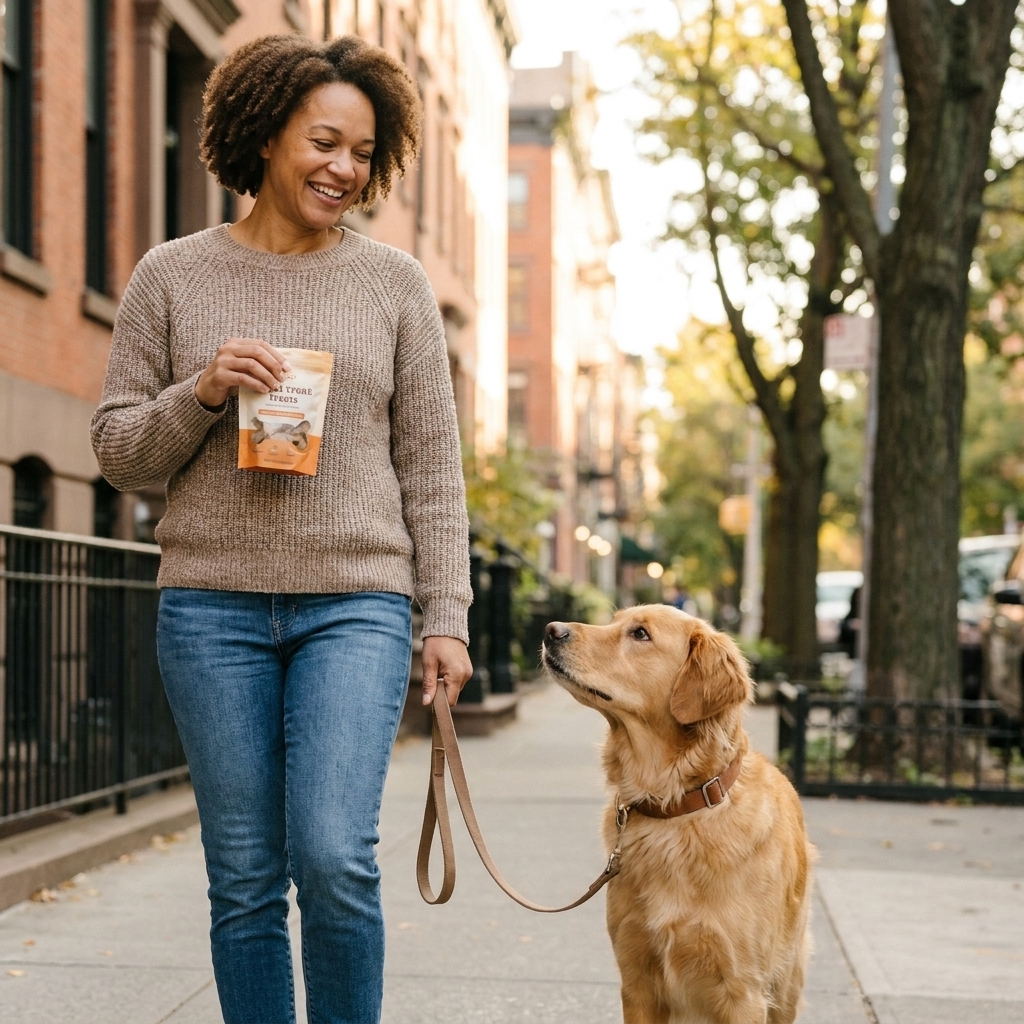
Why dogs pull
Pulling is normal dog behavior. Most dogs walk faster than we do, and the outside world is basically a moving buffet of smells. When a dog pulls and successfully reaches what they want, the pulling gets reinforced.
- They get to the good stuff faster (a smell, a squirrel, another dog, the car).
- They have lots of energy and walks are the main outlet.
- They are anxious or overexcited and movement helps them cope.
- They have learned that tension is the cue to move forward.
- Pain or discomfort can make a dog rush, brace, or react. If pulling is new or sudden, consider a vet check.
The good news: you can teach that a loose leash makes forward progress happen, and a tight leash pauses the party.
Set up for success
Pick dog-friendly gear
Skip tools designed to hurt or intimidate. Pain and fear can suppress behavior briefly, but they can also increase anxiety, reactivity, and distrust, especially in sensitive dogs. Instead, aim for comfort, safety, and clear communication.
- Front-clip harness: Helps reduce pulling leverage and turns the dog slightly toward you when they surge forward.
- Back-clip harness: Fine for already-loose walkers, but it can encourage harder pulling for enthusiastic pullers.
- Flat collar: Great for ID tags, not ideal as your main walking tool for a puller.
- Leash: A standard 4 to 6 foot leash is best for training. Avoid retractable leashes during training because they can make constant tension more likely and make timing harder.
If your dog coughs, gags, or seems uncomfortable on walks, switch to a harness and check with your vet.
Safety note: Make sure the harness fits well and does not rub behind the elbows or restrict shoulder movement. If your dog is new to a harness, spend a few days pairing it with treats at home so it becomes a good thing.
Use rewards your dog values
For many dogs, kibble is not compelling enough outside. Bring rewards that make your dog think, “Oh wow, walking with you is the best idea I have had all day.”
- Soft treats that are easy to chew quickly (tiny pieces)
- Cheese or hot dog bits for high-distraction areas
- A favorite squeaky toy for toy-motivated dogs
- Sniffing and exploring as a reward (yes, sniff time counts)
Practice treat delivery
Where the treat appears matters. Aim to deliver the treat right by your leg so your dog is reinforced for being near you. I usually feed at about knee level, right where I want the dog to be.
Handle the leash safely
- Hold the leash with your hand through the loop, then close your fist. If you need more control, add a second hand lower on the leash.
- Do not wrap the leash around your wrist or hand. If your dog lunges, you can get injured.
- Try to keep a soft “J” shape in the leash by managing distance, not by pulling back.
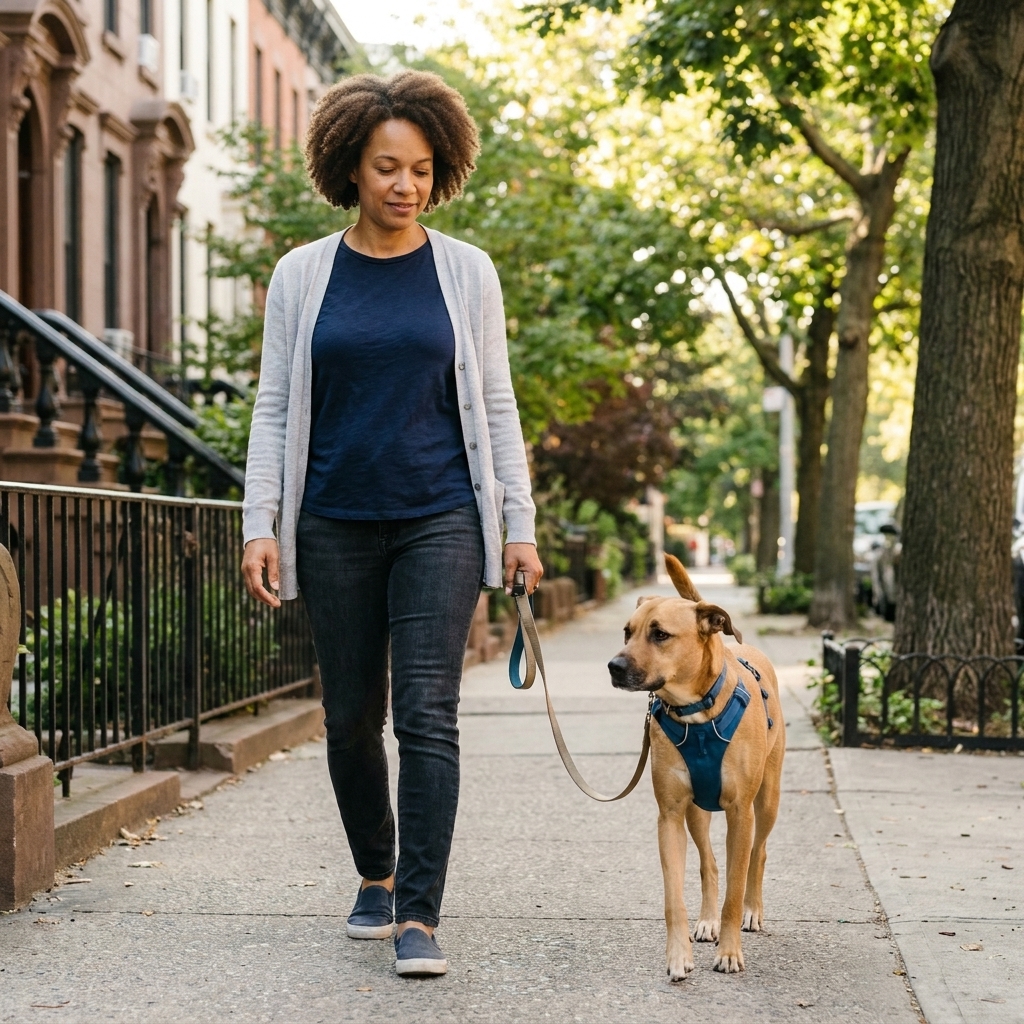
Loose-leash plan
Step 1: Teach leash pressure indoors
Before you hit the sidewalk, teach your dog that leash tension is information, not something to plow through.
- Put on your dog’s harness and leash inside.
- Apply the tiniest bit of gentle pressure to the side (not a yank).
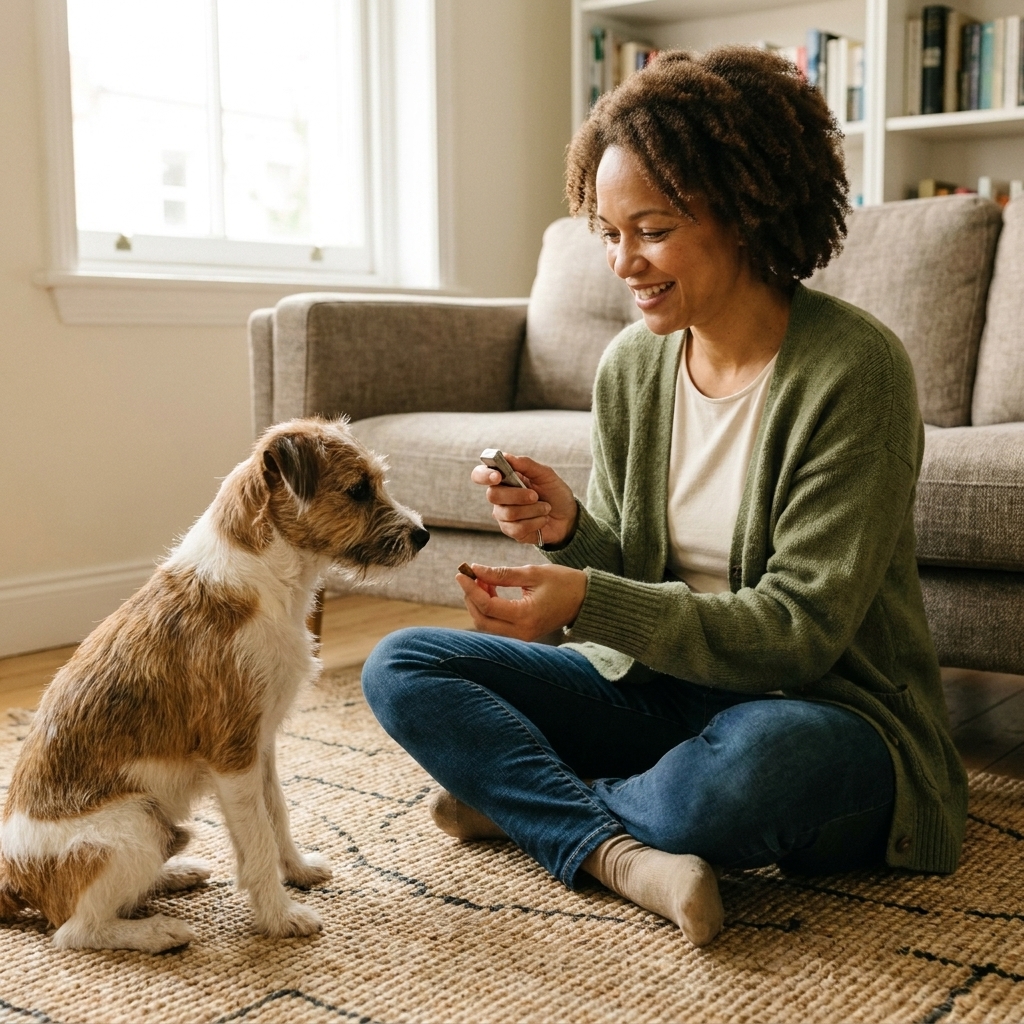
- The moment your dog shifts weight toward you or takes one step to reduce tension, mark (say “Yes!” or use a clicker) and treat.
- Repeat for 1 to 2 minutes, then take a break.
A “mark” is a precise signal that tells your dog, “That right there is what earns the reward.” Timing matters. Aim to mark within about 1 second of the behavior you want.
This game builds the habit of yielding to pressure instead of leaning into it.
Step 2: Build a check-in habit
I love a simple, powerful behavior: your dog glances at you voluntarily.
- Stand still with your dog on leash.
- Wait quietly.
- The moment your dog looks at you, mark and treat near your leg.
- Repeat until your dog starts offering quick looks more often.
Those micro check-ins are the foundation of polite walking in distracting places.
Step 3: Start easy
Begin where your dog can succeed: your living room, hallway, fenced yard, or a quiet driveway. The environment is part of the difficulty level.
Step 4: Reward position, not perfection
Take 1 to 3 steps. If the leash stays loose, mark and treat. Keep treats frequent at first. You are paying your dog to learn a brand-new skill.
If your dog is staying near you, sprinkle in praise and keep moving. If your dog forges ahead, do not scold. Just treat it as training feedback.
Step 5: Use the tree reset
This is the simplest rule your dog can learn: pulling does not work.
- The moment the leash tightens, stop moving. Plant your feet and become a boring tree.
- Wait for any slack. That might be a step back, a head turn, or even shifting weight.
- As soon as the leash loosens, mark, treat by your leg, and continue forward.
Consistency matters more than intensity. No jerks, no lectures. Just: tight leash means pause, loose leash means we continue.
Step 6: Add a let's go cue
Once your dog understands that staying near you pays well, you can add a cue like “Let’s go” right before you start walking. Say the cue, take a step, then reward for a loose leash. Over time, “Let’s go” becomes your smooth reset between sniffing, waiting at crossings, and moving again.
Step 7: Practice turns and U-turns
When distractions appear, your best option is often to create distance, not “power through.” Practice this skill when nothing is happening.
- Say your cue (“This way!”).
- Turn 180 degrees calmly.
- When your dog follows and the leash is loose, mark and reward.
This becomes your polite exit strategy when another dog is too close, a stroller surprises your pup, or your dog is getting overstimulated.
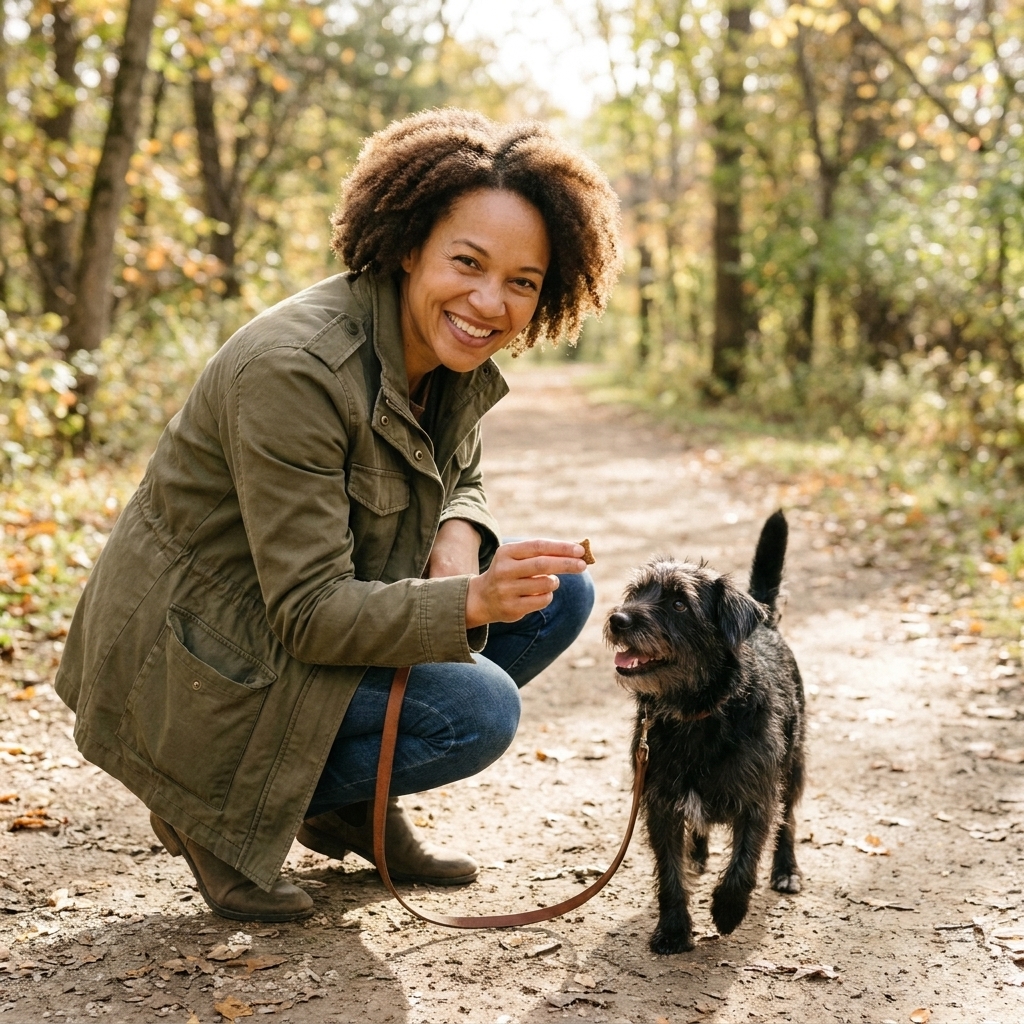
Practice schedule
Loose-leash walking improves fastest with short, successful sessions. Think skill-building, not marathon walks.
- Days 1 to 3: 3 to 5 minutes indoors or in the yard, 2 times a day. Focus on check-ins and rewarding slack.
- Days 4 to 7: Add a quiet outdoor spot. Do “walks” that are mostly training: 5 to 10 minutes.
- Week 2: Practice on the same route and slowly increase distractions. Keep rewards frequent.
- Week 3 and beyond: Fade treats gradually, but keep surprise bonuses and use sniff time as reinforcement.
If you need your dog to get exercise while you train, add enrichment at home (food puzzles, sniff games) or do a decompression walk on a long line in a safe area where pulling is less of an issue. Training walks and decompression walks can both exist. They just have different rules.
Safety note: Follow local leash laws. If you use a long line for decompression, avoid roads and busy shared paths, and keep a wide buffer around other people and dogs.
Use sniffing
Sniffing is not a distraction. Sniffing is a biological need and a fantastic reinforcer. You can use it strategically.
Try go sniff
- Ask for 2 to 5 steps on a loose leash.
- Say “Go sniff!” and move toward a sniff spot as the reward.
- Let your dog investigate for 10 to 20 seconds.
- Then say “Let’s go” and resume your loose-leash practice.
This turns the environment into your training partner instead of your competition.
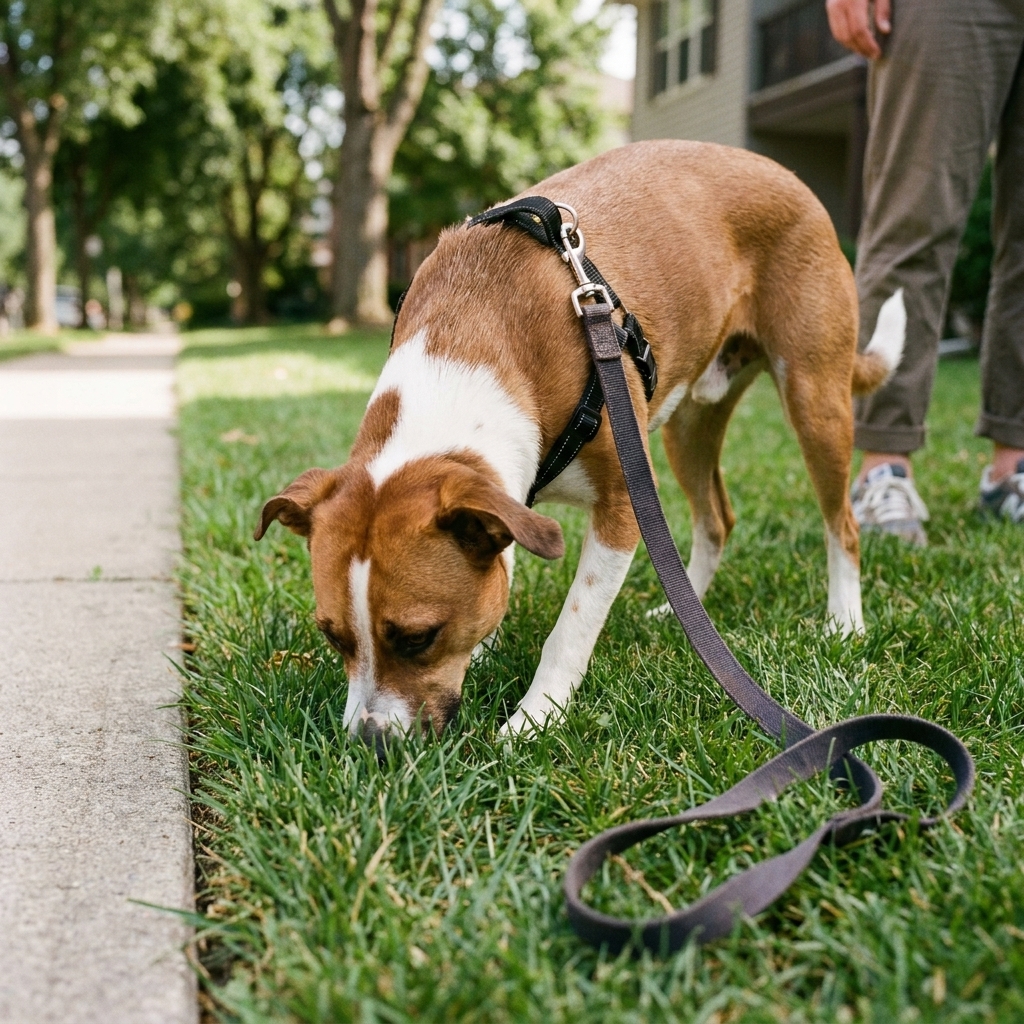
Common mistakes
- Continuing forward while the leash is tight: Even one step teaches “pulling works sometimes.”
- Waiting too long to reward: Pay early and often at the beginning. Your dog needs a clear connection between slack leash and good things.
- Starting in a hard environment: Busy parks are like putting a brand-new driver on the freeway.
- Using a retractable leash during training: It can create frequent tension and makes timing harder.
- Only walking when your dog is bursting with energy: Add short play or sniff games before training if your dog is extra revved up.
Troubleshooting
Pulling starts outside
Go back a step. Practice right at the doorway, then in the yard, then on the sidewalk in front of your home. You can also do a 1 to 2 minute treat scatter in the yard before a walk to take the edge off excitement.
Dog is too strong
Safety first. Use a well-fitted front-clip harness. Consider a second point of connection (a backup clip to a collar) for safety, not control. Choose low-traffic training areas and keep sessions short. If you feel physically at risk of being pulled over, enlist a certified positive reinforcement trainer for hands-on support.
Pulling at other dogs
That is often excitement or frustration, sometimes fear. Create distance early using your practiced U-turn. Reward your dog for noticing the other dog and then checking back in with you. If your dog is lunging, barking, or unable to eat treats, that is a sign you are too close. Distance is your best friend.
Treats stop working
Upgrade the reward and lower the difficulty. Try higher-value treats, feed more frequently, and practice in a quieter location. Also make sure your dog is not overly hungry or overly full. Many dogs learn best when they are slightly hungry, such as training before a meal, not when they are deprived. If your dog has diabetes, GI disease, or any medical condition that affects feeding, follow your vet’s guidance.
Pulling to poop
Totally normal. Give your dog a little grace in high-urgency moments. You can still reinforce a loose leash when possible, but it is okay to prioritize getting to an appropriate potty spot without turning it into a battle.
When to get help
If leash pulling is paired with intense reactivity, fear, or aggression, you do not have to DIY it. Look for a trainer who uses positive reinforcement and has credentials such as CPDT-KA, KPA-CTP, or IAABC. If your dog has sudden behavior changes, pain signs, or exercise intolerance, start with your veterinarian.
Red flags: trainers who guarantee results in a fixed time, recommend choke or shock tools as a first step, or talk about “dominance” as the explanation for pulling.
FAQ
How long does it take?
Many families notice some improvement within 1 to 2 weeks with consistent practice, especially in low-distraction areas. Reliability around big distractions often takes weeks to months. Age, breed tendencies, and the environment all matter.
Stop walks until pulling stops?
You do not have to. But you may want to separate training walks (short, structured) from decompression time (sniffing on a long line in a safe area). That way your dog still gets enrichment while you build skills.
Is a no-pull harness enough?
A harness can help manage pulling, but it does not teach loose-leash walking by itself. Training is what changes the habit long-term.
Can my dog walk in front?
Yes. Loose-leash walking is about leash slack, not strict position. It is fine for your dog to be a little ahead as long as they are not dragging you and can respond to your cues.
Final note
Leash skills are not about controlling your dog. They are about communication, safety, and making walks enjoyable for both of you. Celebrate small wins: one fewer lunge, one extra check-in, one calm block. Those add up fast.