A step-by-step guide to assembling a DIY pet first aid kit, including what to pack for dogs, cats, and small animals, plus safety tips, common scenarios, and...
I used to joke at the clinic that nail trims were the appointment most likely to make everyone sweat: dogs, humans, and sometimes the brand-new vet tech holding the paw. The truth is, trimming your dog’s nails at home can be calm and predictable once you know what you’re looking at and you have a plan. You do not need to be fearless. You just need to be prepared and patient.
Why nail length matters
Long nails are not just a cosmetic issue. When nails touch the floor, they can change how your dog stands and walks. Over time, that can contribute to sore feet, strained joints, and cracks or breaks that hurt and bleed.
A simple “floor test” helps: if you can hear your dog’s nails clicking on hard floors during a normal walk, they are usually due for a trim.
How often most dogs need a trim
Most dogs do well with nail care every 2 to 4 weeks. That range depends on:
- Activity level and surfaces: Dogs who run on pavement may naturally wear nails down more than dogs who mostly walk on grass.
- Nail growth rate: Some dogs’ nails grow fast, especially dewclaws that rarely touch the ground.
- How short the quick is: If your dog’s nails have been long for a while, the quick may have grown out too, which means you will need a gradual approach.
If you are trying to shorten long nails, aim for a mini-trim every 5 to 7 days (just a tiny amount). Frequent, small trims encourage the quick to recede over time.
Tools that make home trims easier
Clippers
- Scissor-style clippers are often best for medium and large dogs because they offer leverage.
- Guillotine-style clippers can work well for small dogs, but some pet parents find them harder to position precisely.
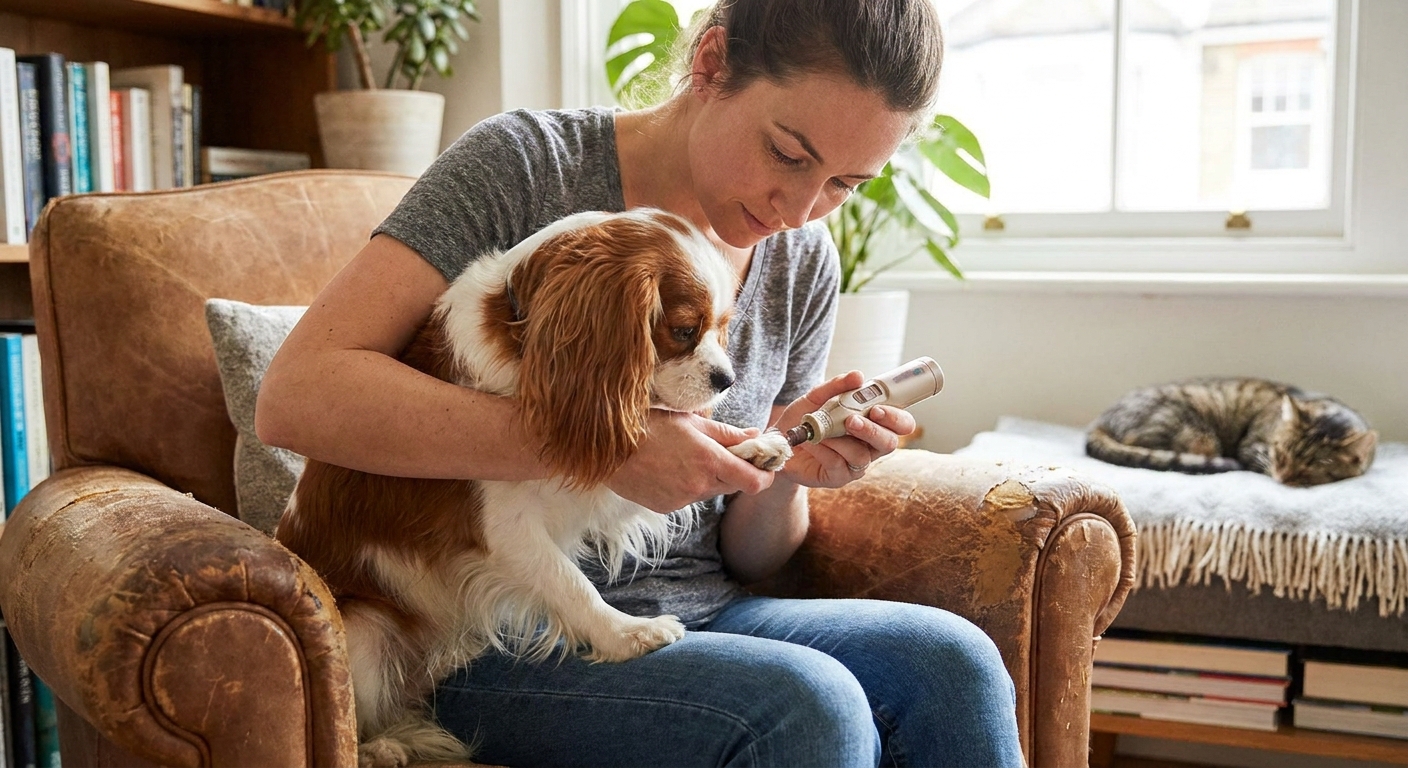
Grinder (rotary nail file)
A grinder slowly sands the nail instead of cutting it. It can be a game-changer for dogs with dark nails, thick nails, or for anyone nervous about clipping too short.
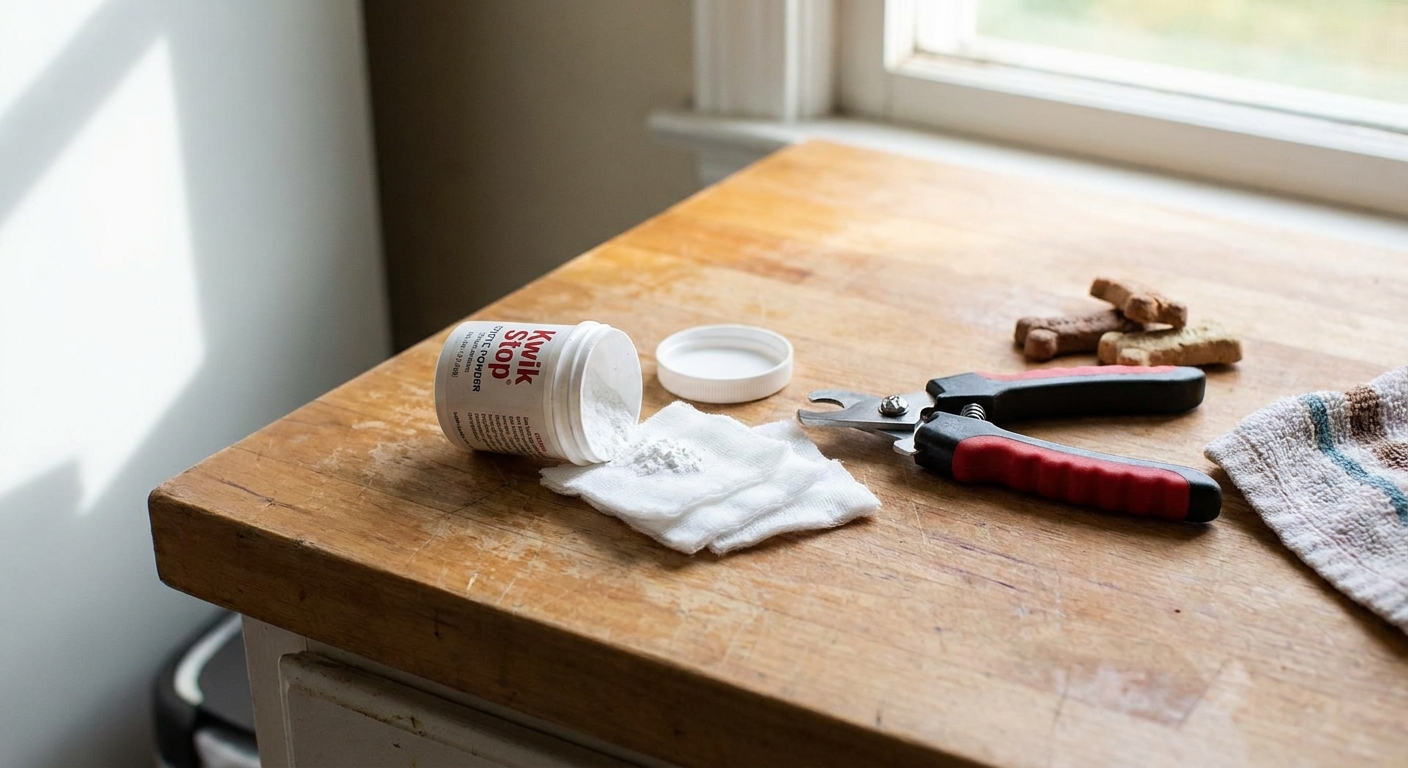
Styptic and basics
Have these within reach before you start:
- Styptic powder or a styptic pencil (best option for stopping small bleeds)
- Cotton balls or gauze
- Treats that your dog genuinely loves
- A flashlight (helpful for locating the quick)
Set up for success before you touch a nail
The biggest mistake I saw, even with very loving pet parents, was trying to “get it over with” quickly. Most dogs do better with short, upbeat sessions.
Pick the right moment
- Choose a time when your dog is naturally calmer, like after a walk or play session.
- Avoid starting when your dog is already amped up or startled by household chaos.
Create a stable, non-slip spot
Use a towel or yoga mat on the floor, or a sturdy table for small dogs if your dog is comfortable being handled there.
Do a quick paw warm-up
Spend 30 to 60 seconds touching the legs and paws and then immediately rewarding. This tells your dog, “Handling is safe.” If your dog is tense, pause here for a few days before attempting a full trim.
How to hold the paw safely
You want a hold that is secure but not restrictive. A death-grip tends to make dogs pull away harder.
For front paws
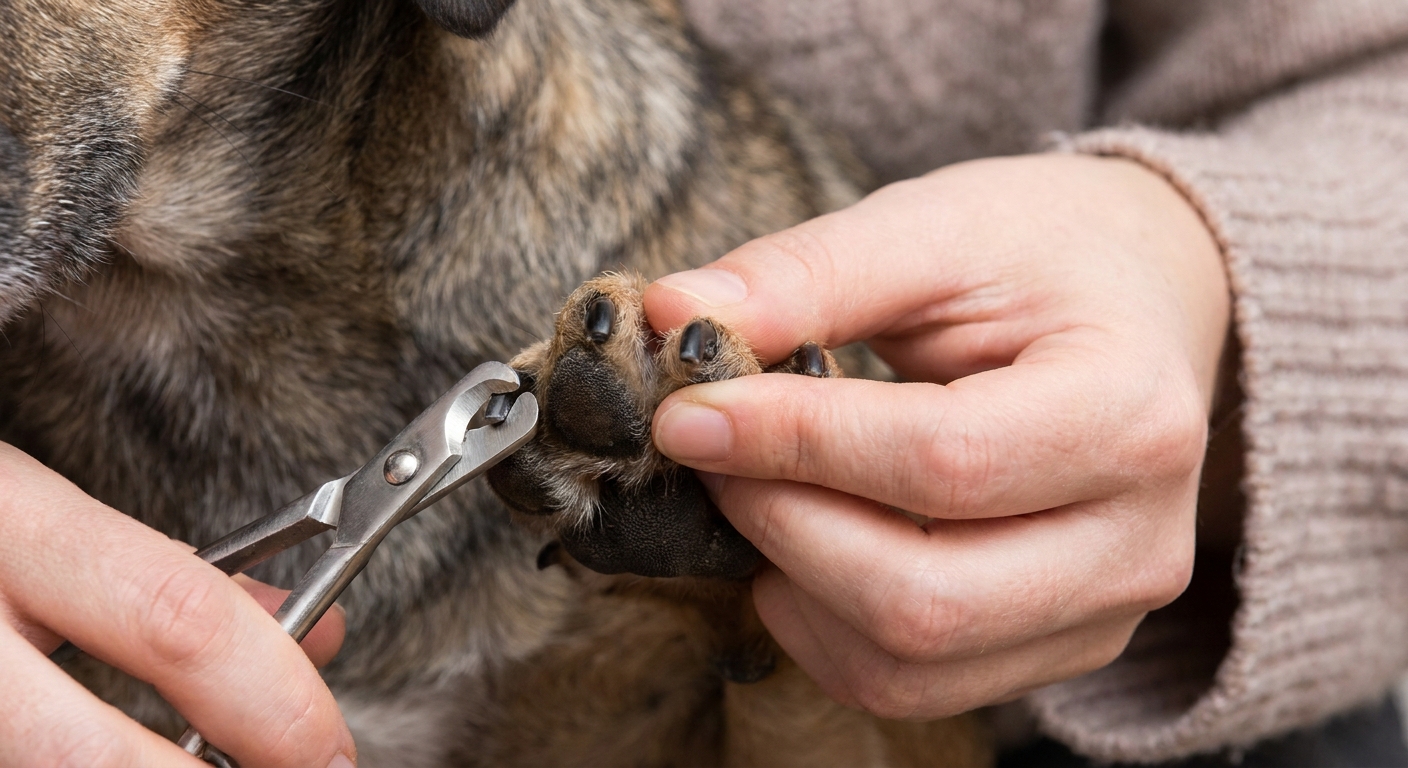
- Gently cup the paw in your non-dominant hand.
- Use your thumb to press lightly on the pad and your index finger to support the top of the toe. This naturally extends the nail.
- Keep the wrist in a neutral position, not bent backward.
For back paws
- Support the leg just above the paw.
- Bring the paw slightly forward into a comfortable position rather than pulling it straight back.
- If your dog is wobbly, keep the foot lower to the ground for balance.
If your dog strongly resists paw handling, seems painful, or has had past nail-trim trauma, it is worth working with a fear-free trainer or your veterinary team. Forcing the issue can make the problem snowball.
Finding the quick (light nails vs. dark nails)
The quick is the living part inside the nail that contains blood vessels and nerves. Avoiding it is the whole game.
Light or clear nails
With pale nails, you can usually see the quick as a pinkish area inside the nail. The safer trimming zone is the curved, translucent tip beyond the pink.
- Hold the paw gently.
- Look at the nail from the side and from underneath if possible.
- Trim only the sharp tip at first.
Dark nails
With black or very dark nails, you cannot reliably see the quick. Use a slower method:
- Take very small slices off the end, one at a time.
- After each cut, look at the freshly cut surface of the nail.
- As you get close to the quick, you may see a dark, moist-looking center or a small dot in the middle of the cut surface. That is your signal to stop.
A bright flashlight can sometimes help you see shapes inside the nail, but do not rely on it completely with very dark nails. When in doubt, stop early and trim again in a week.
How short to cut
A safe goal for most dogs is to trim until the nail is close to, but not touching, the floor when your dog is standing normally. Another practical goal is removing the sharp “hook” so the nail tip is blunt instead of needle-like.
The safest rule
Cut less than you think you need to. You can always take off more. You cannot un-cut a nail.
Angle matters
Trim at a slight angle that follows the natural shape of the nail, rather than cutting straight across into the thicker part. If you are unsure, tiny incremental cuts are safer than trying to match a perfect angle in one snip.
Do not forget dewclaws
Dewclaws are the “thumb” nails on the inner side of the front legs (and occasionally on the back legs, depending on the dog). Because they often do not wear down naturally, they can overgrow and even curl toward the skin if ignored.
Step-by-step: trimming with clippers
- Set out everything first. Clippers, treats, and styptic should be within arm’s reach.
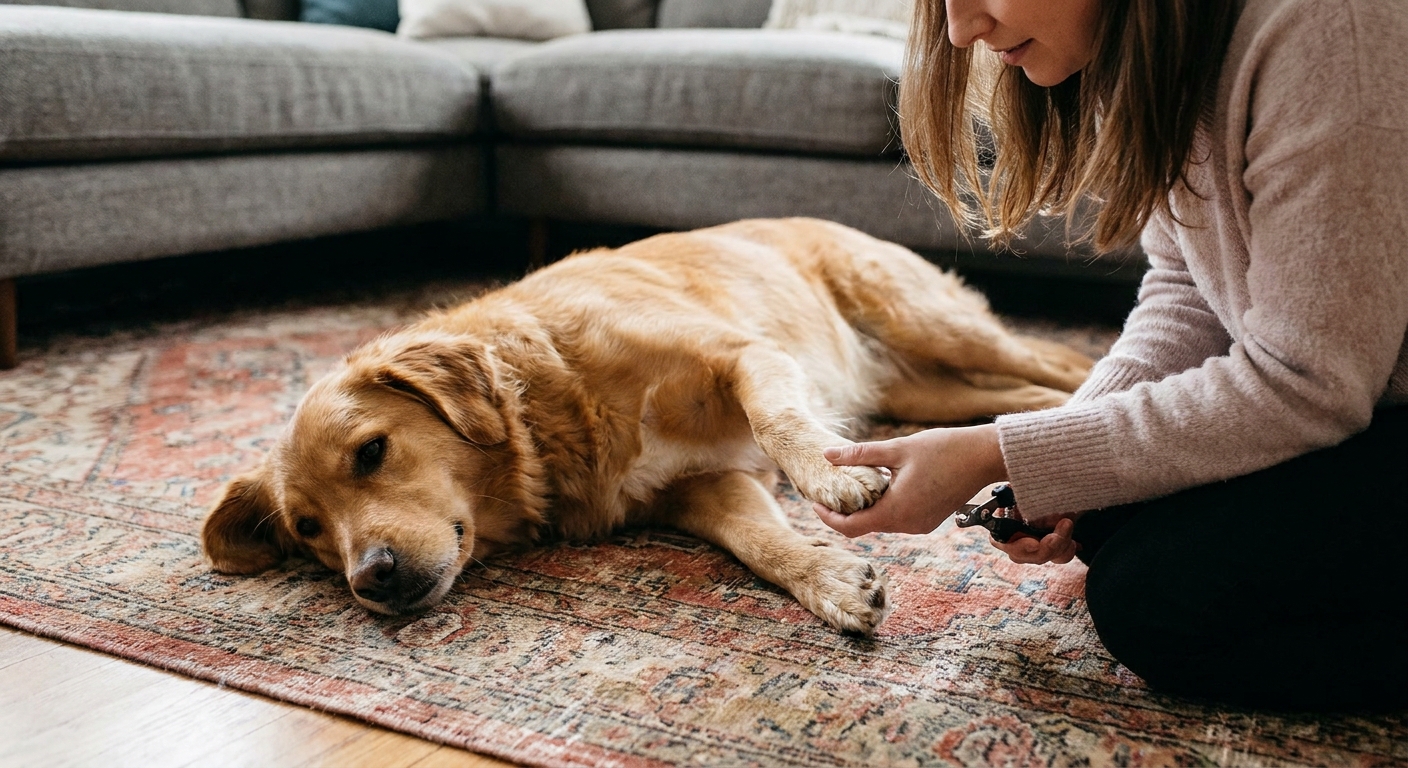
- Get your dog comfortable. A sit or a relaxed side-lying position works well for many dogs.
- Pick one paw. Start with an easier foot if your dog has a preference.
- Hold one toe and extend the nail. Gentle pressure on the pad helps.
- Make the first cut tiny. Especially for dark nails, remove just the tip.
- Check the cut surface. If you see signs you are nearing the quick, stop.
- Treat and praise. Pay after each nail at first, not just at the end.
- Keep sessions short. If your dog is getting stressed, stop after a couple of nails and continue later.
If you can only do two nails today, that still counts. Consistency matters more than speed.
When a grinder works better than clippers
I often recommend a grinder when:
- Your dog has very dark nails and you want more control.
- The nails are thick or brittle and tend to splinter with clippers.
- Your dog tolerates the sensation of grinding better than the pressure of clipping.
- You want a smoother finish so nails are less likely to scratch skin or snag fabric.
Grinder basics
- Introduce the tool gradually. Let your dog see it, sniff it, and hear it from a distance while earning treats.
- Use short touches, about 1 to 2 seconds per nail, to prevent heat buildup.
- Focus on rounding the tip rather than trying to grind a lot off at once.
If your dog is frightened by the sound, clippers may be the better choice, or you may need a slower desensitization plan.
If you nick the quick
First, take a breath. This happens to professionals, too.
What you will see
A quick nick usually causes a sudden spot of blood and your dog may jerk the paw back. It looks dramatic, but most small nicks are manageable at home.
What to do
- Apply styptic powder to the nail tip. Use a pinch and press it gently onto the bleeding area.
- Hold pressure with gauze for 30 to 60 seconds.
- Keep your dog calm and avoid letting them run around while it clots.
When to call your vet
- The bleeding does not stop after about 10 minutes of steady pressure and styptic.
- The nail is cracked or broken higher up.
- Your dog is in significant pain or will not bear weight.
After a quick nick, it is okay to stop for the day. Ending on a calmer note helps prevent nail trims from becoming a scary event next time.
Troubleshooting common challenges
My dog pulls the paw away
- Try trimming when your dog is sleepy.
- Switch to “one nail, treat” pacing.
- Support the leg closer to the body and avoid lifting the paw too high.
My dog hates the sound of clippers
- Practice “clipper = treat” with the clippers near the paw but not touching.
- Try a grinder if the sound is easier for your dog to handle, or try quieter scissor-style clippers.
The nails are overgrown and I cannot cut much
That is very common. If you cut too short trying to “fix it” in one day, you will hit the quick. Instead, do frequent mini-trims or gentle grinding sessions. Over weeks, the quick often recedes, letting you gradually reach a healthier nail length.
My dog’s nails seem to split
Splitting can happen with dull clippers, brittle nails, or thick nails. Make sure your clippers are sharp, trim smaller amounts, or consider switching to a grinder for smoother edges.
Quick safety checklist
- Use sharp tools designed for pets.
- Trim in good lighting and go slowly.
- Take tiny cuts, especially with dark nails.
- Keep styptic nearby every time.
- Stop if your dog is getting stressed and try again later.
FAQ
Should dog nails touch the floor?
Ideally, no. In a relaxed standing position, nails should be short enough that they do not constantly contact the ground. Occasional light contact is not an emergency, but consistent clicking is a sign they are likely too long.
Can I use human nail clippers?
I do not recommend it. Human clippers can crush the nail rather than slice it cleanly, which increases splitting and discomfort. Pet nail clippers or a grinder are safer and easier to control.
What if my dog has black nails and I am too nervous?
That is completely understandable. A grinder often feels safer for black nails because you remove length gradually. You can also ask your vet clinic or groomer to show you where they stop on your dog’s nails, then maintain that length at home with small weekly touch-ups.
Is it okay if I only do a few nails at a time?
Yes. For many dogs, “two nails a day” builds trust faster than wrestling through all four feet. Consistency and calm handling beat speed every time.
A gentle final note
If nail trims have become a full-body struggle in your home, it is not a character flaw on your part or your dog’s. It is just a skill set that needs a slower approach. Start with tiny trims, generous rewards, and short sessions. Your future self will thank you every time your dog trots across the floor without that click-click-click soundtrack.