Hay, water, movement, and quick action matter. Here’s how to support your rabbit’s digestion and spot early GI stasis red flags.
Litter training a rabbit is one of those small wins that makes daily life so much easier, and it is absolutely doable with patience and the right setup. Most bunnies naturally choose one or two bathroom corners. Our job is to gently convince them that the litter box is the best place for that habit to live.
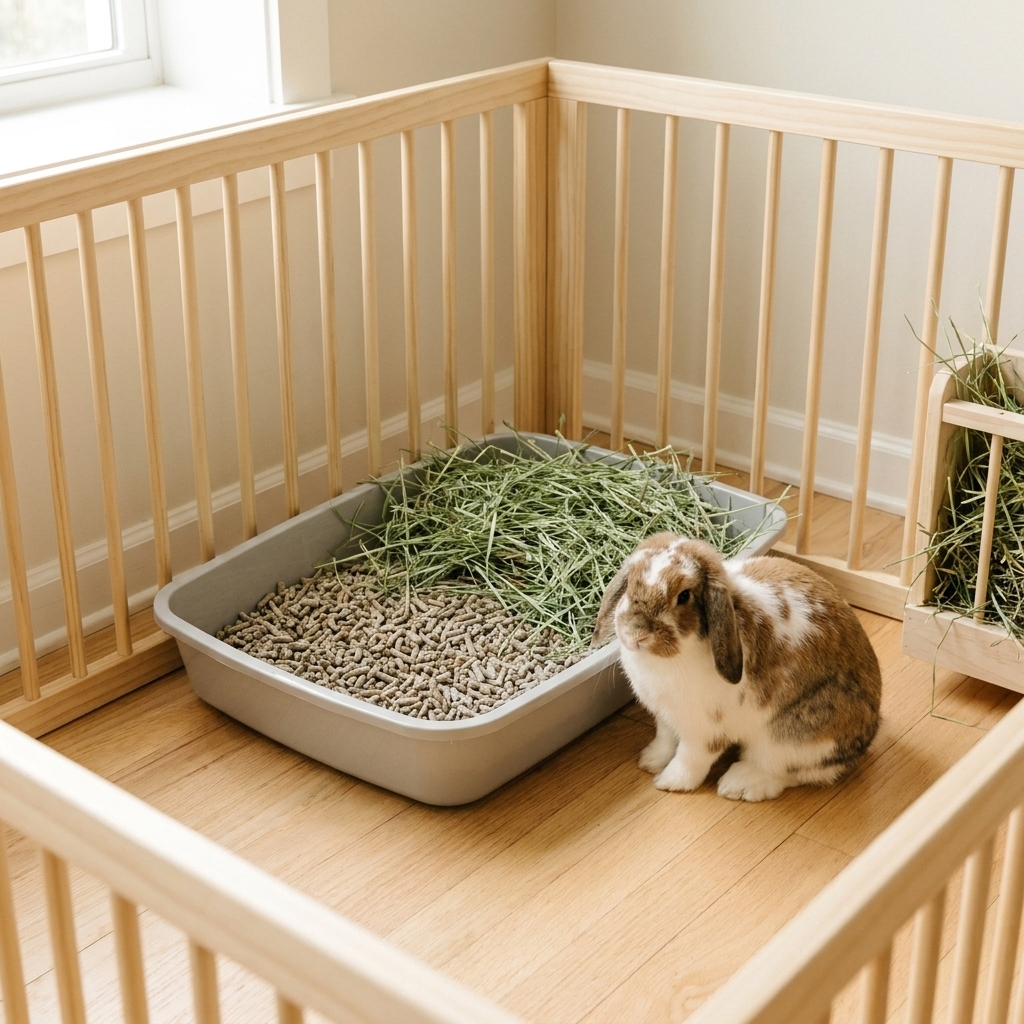
Below are five simple steps that I have seen work again and again, in conversations with rabbit owners and with friends bringing home their first house rabbit.
One quick note before you begin: rabbits vary. Age, whether your bunny came from a rescue, and what they were used to before coming home can all affect how quickly this clicks. That is normal.
Before you start: Supplies
You can absolutely start with what you have, but a few rabbit-specific choices make litter training faster and safer.
What you need
- A rabbit-sized litter box: A cat litter pan often works great, but choose a low-entry option for smaller buns, seniors, or rabbits with mobility issues.
- Rabbit-safe litter: Use paper-based pellets or aspen wood pellets. These control odor and are generally well tolerated.
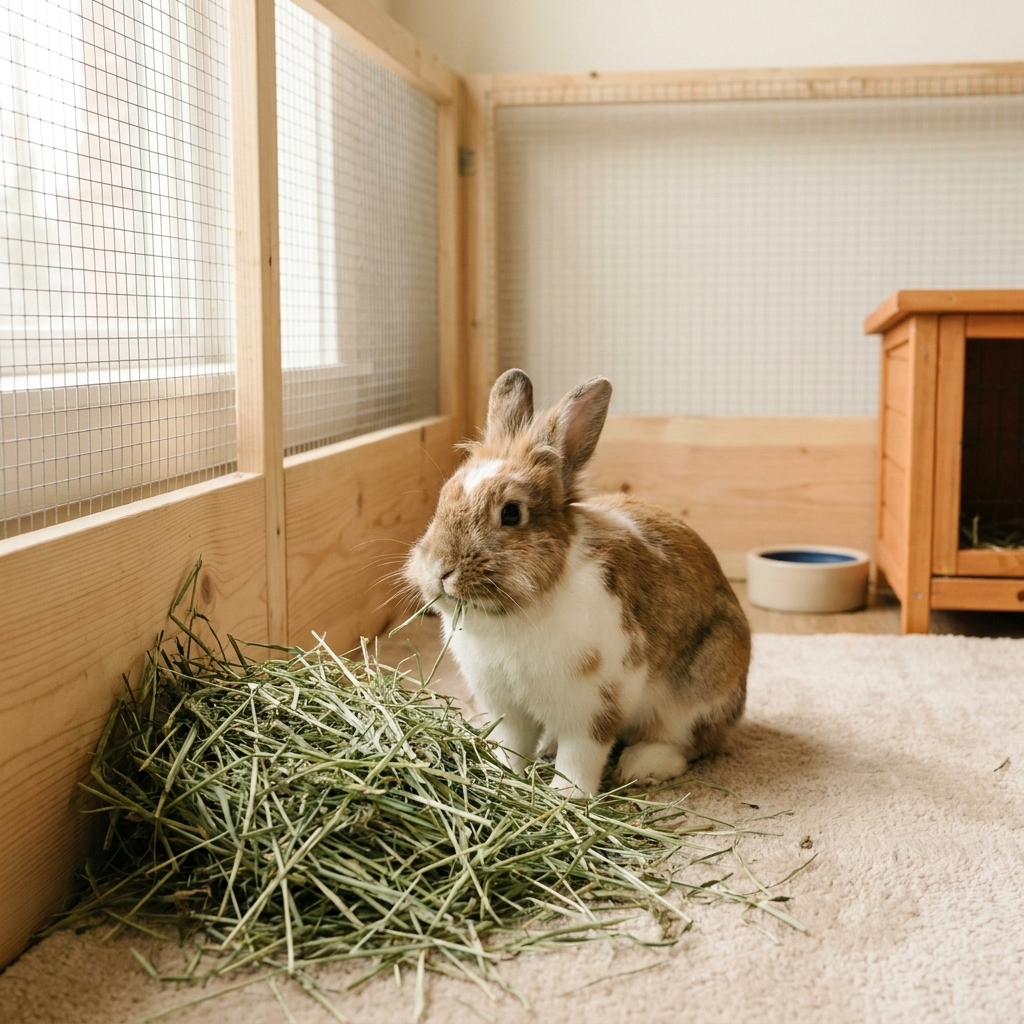
- Hay: Fresh hay is the secret weapon. Many rabbits love to munch while they potty. Keep hay available outside the box too, so your bunny always has unlimited access.
- Enzymatic cleaner: For accidents outside the box. Regular cleaners can leave scent behind that tells your bunny, “Bathroom here!” Choose a pet-safe enzymatic cleaner, and let the area fully dry (and rinse if the product directs you to).
- Treats: Tiny, rabbit-safe rewards. Think a small herb sprig or a pea-sized piece of a favorite pellet.
Litters to avoid
- Clumping or scoopable cat litter: Dusty and risky if swallowed.
- Crystal or silica litter: Not appropriate for rabbits and can be irritating if ingested or inhaled.
- Cedar and many pine shavings: Aromatic softwoods, especially non kiln-dried products, can irritate the respiratory system. If you are considering any wood shavings, check with a rabbit-savvy veterinarian first.
- Corn cob litter: Mold risk and not ideal if ingested.
- Scented litters: Fragrances can be irritating and may discourage some rabbits from using the box.
If you are ever unsure, ask your rabbit-savvy veterinarian what they recommend for your bunny’s specific health needs.
Step 1: Pick the box and placement
Rabbits are creatures of habit. Instead of forcing your bunny to use a box in a corner you picked, start with the corner your rabbit already chose.
- Watch where your rabbit urinates most often. That spot is your best first location.
- If your rabbit has multiple favorite corners, start with one main box and add a second box if needed.
- In large free-roam spaces, a box in each “zone” helps at first. You can reduce boxes later once habits are solid.
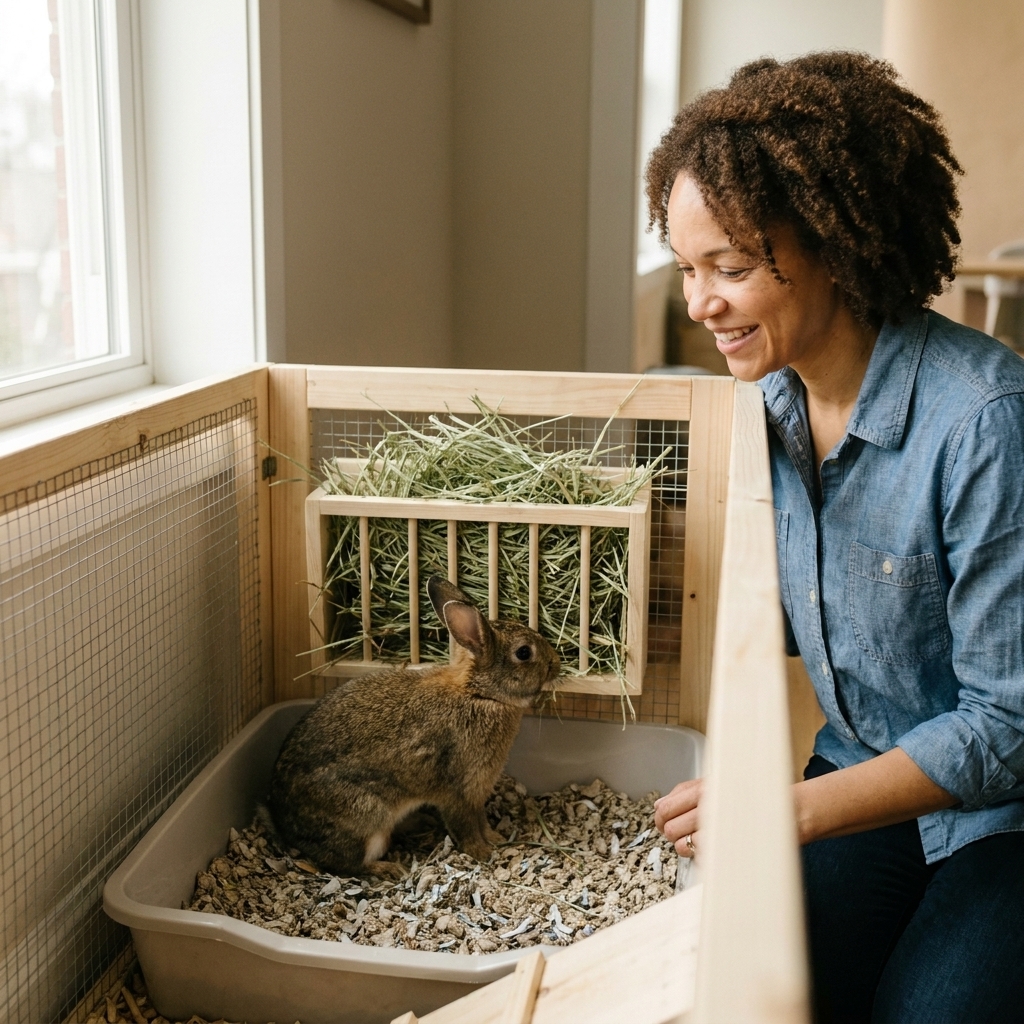
Step 2: Make the box appealing
Here is the setup I recommend for most pet rabbits:
- Add about 1 to 2 inches of paper-based or pellet litter. A thinner layer can be fine too, as long as the box stays comfortable and absorbent.
- Place a generous handful of fresh hay in one end of the box, or hang a hay rack so hay falls into the box.
- If your rabbit likes to dig, add a layer of hay over the litter to make it feel more natural.
Pro tip: Keep the litter box in a calm, easy-to-reach spot. If your bunny has to cross a slippery floor or squeeze past something scary, accidents happen. If flooring is slick, add a washable rug or traction mat to create a steady path to the box.
Step 3: Scent-transfer training
This step is simple conditioning: you are teaching your rabbit that their scent belongs in the box. It is not glamorous, but it works.
- When you find stray poop, place it in the litter box.
- If your rabbit pees outside the box, blot it with a paper towel and put the towel in the box (then clean the area with a pet-safe enzymatic cleaner).
- For repeated accidents in one spot, temporarily place a second litter box there, or block access until the habit shifts.
Rabbit poop is often dry and easy to collect. The urine is what establishes a strong “bathroom zone,” so getting that scent into the box is especially helpful.
Step 4: Reward the right behavior
Positive reinforcement is your best friend here. Rabbits do not respond well to punishment, and scolding can make them anxious or sneaky.
How to reward effectively
- When you see your rabbit use the box, calmly say a cue like “good” and offer a tiny treat.
- Be quick. Reward immediately, within a couple seconds, so your bunny connects the dots.
- Keep treats small and healthy. You are going for repetition, not a sugar rush.
If you miss the moment, that is okay. Just keep the environment consistent and reward when you catch it.
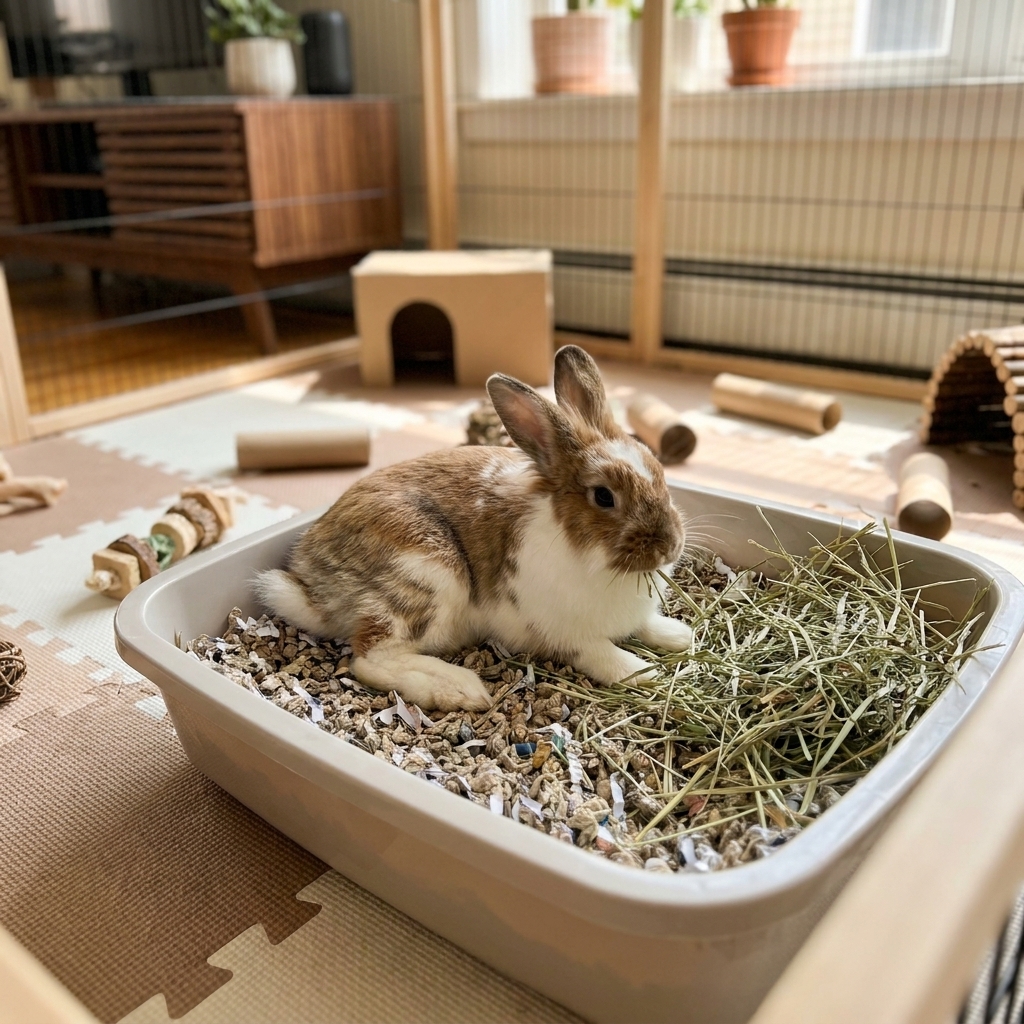
Step 5: Expand space slowly
The fastest way to derail litter training is giving too much freedom too soon. Think of it like potty training a puppy. Small area first, success builds confidence, then you expand.
A simple expansion plan
- Start with a smaller pen or bunny-proofed area.
- Once your rabbit is using the box reliably for several days, expand access by one “section” at a time.
- If accidents spike, reduce space again for a few days and re-expand more slowly.
Common reasons accidents happen
- The box is too far away: Add another box temporarily.
- The box is hard to get into: Switch to a lower entry pan.
- The box is too small: Size up so your rabbit can comfortably turn around and sit fully inside.
- The box is too dirty: Many rabbits refuse a messy box. Scoop daily, refresh litter regularly, and fully wash the box as needed.
- Hormones: Unspayed and unneutered rabbits may mark territory with urine and poop.
- Stress or changes: New pets, moving furniture, loud guests, travel, or a new routine can cause setbacks.
- Possible medical issues: If you notice frequent urination, straining, sludgy or gritty urine, blood-tinged urine, appetite changes, fewer droppings, or lethargy, contact a veterinarian promptly.
Progress with rabbits is rarely perfectly linear. A couple of messy days does not mean you failed. It usually means your bunny is telling you something about the setup, their space, or their stress level.
How long does it take?
Many rabbits show noticeable improvement within 1 to 2 weeks, especially with a good hay-in-the-box setup and consistent cleanup. Truly reliable habits can take several weeks, and some rabbits will always leave a few stray poops outside the box. That part is normal.
One important expectation check: rabbits produce a lot of poop, and some “scatter” is common even in well-trained bunnies. The big win is getting urine consistently in the box, since that is what creates odor and staining.
Spay or neuter?
Spaying or neutering is not just about preventing babies. It often makes litter training dramatically easier because it reduces territorial marking.
- Males: Neutering can reduce spraying and improve consistency.
- Females: Spaying reduces hormonal behaviors and also significantly lowers the risk of uterine cancer, which is reported at high rates in older unspayed does.
Talk with a rabbit-experienced vet about timing. Many rabbits can begin learning the basics before surgery, but you may see a big leap in reliability after hormones settle down.
Cleaning routine
A clean box helps your bunny choose it again and again.
- Daily: Remove wet spots and soiled hay. Top off fresh hay.
- Every few days: Replace litter fully (frequency depends on box size and how many rabbits share it).
- As needed: Wash the box with warm water and mild soap, then rinse well. Avoid strongly scented cleaners. If urine scale builds up, a vinegar and water rinse can help, then rinse thoroughly and dry.
Keep in mind that a faint familiar scent can be reassuring. You do not need to sterilize the box to the point it smells “brand new.” You just want it clean and comfortable.
Quick FAQ
Why is my rabbit peeing right next to the litter box?
This usually means the box entry is awkward, the box is too small, or the spot next to the box still smells like a bathroom. Try a larger, lower-entry pan and clean the surrounding area with a pet-safe enzymatic cleaner.
Can I use puppy pads in the litter box?
They can work short-term under supervision, but many rabbits chew them. If your bunny is a chewer, skip pads and use paper-based litter or pellets instead.
My rabbit poops everywhere. Is that normal?
A little, yes. Focus on urine consistency first. Stray poops often decrease as your rabbit settles into the routine, especially after spay or neuter.
What if my rabbit suddenly stops using the litter box?
Sudden changes can be stress, a dirty box, a change in litter type, or a medical issue. If you notice straining, fewer droppings, blood-tinged urine, appetite changes, or lethargy, contact a veterinarian promptly.
The goal: Progress
Litter training is less about “training” and more about setting your rabbit up so the easiest choice is the right one. With a well-placed box, plenty of hay, consistent cleanup, and tiny rewards, most bunnies catch on surprisingly fast.
If you hit a snag, take a breath, scale back the space, and return to the basics. Your rabbit is not being stubborn. They are communicating in the only way they know how.