
GI stasis is one of the scariest phrases a rabbit parent can hear. It sounds technical, but what it really means is this: your bunny’s digestive tract has slowed down or stopped moving normally. Because rabbits are built to have food moving through almost constantly, even a short slowdown can spiral quickly into dehydration, painful gas, appetite loss, and a true medical emergency.
The good news is that most day-to-day prevention comes down to a few basics you can do consistently: a hay-first diet, reliable hydration, plenty of movement, and quick attention to anything that looks “off.” Let’s walk through what actually helps, what to skip, and when to call your rabbit-savvy vet right away.
What GI stasis looks like (and why it happens)
In a healthy rabbit, the gut keeps moving as they graze throughout the day. When that motion slows, food and hair can sit longer than they should, water gets pulled out of the intestinal contents, and everything becomes drier and harder to pass. Gas can build up, which hurts. Pain leads to less eating. Less eating leads to even less gut movement. That cycle is why GI stasis needs to be taken seriously.
Common triggers
- Too little hay or fiber, often from a pellet-heavy diet
- Dehydration or not drinking enough water
- Stress (loud changes, travel, a new pet, housing changes)
- Pain from dental disease, arthritis, injury, or other illness
- Inadequate exercise, which can slow gut motility
- Sudden diet changes, especially new veggies or treats introduced too fast
- Heavy shedding and grooming, especially during seasonal molts
Important note: GI stasis is often a symptom, not a root cause. If your rabbit has repeated episodes, it is worth investigating dental health, chronic pain, urinary issues, and diet quality with an experienced exotics veterinarian.
The hay-first diet that keeps the gut moving
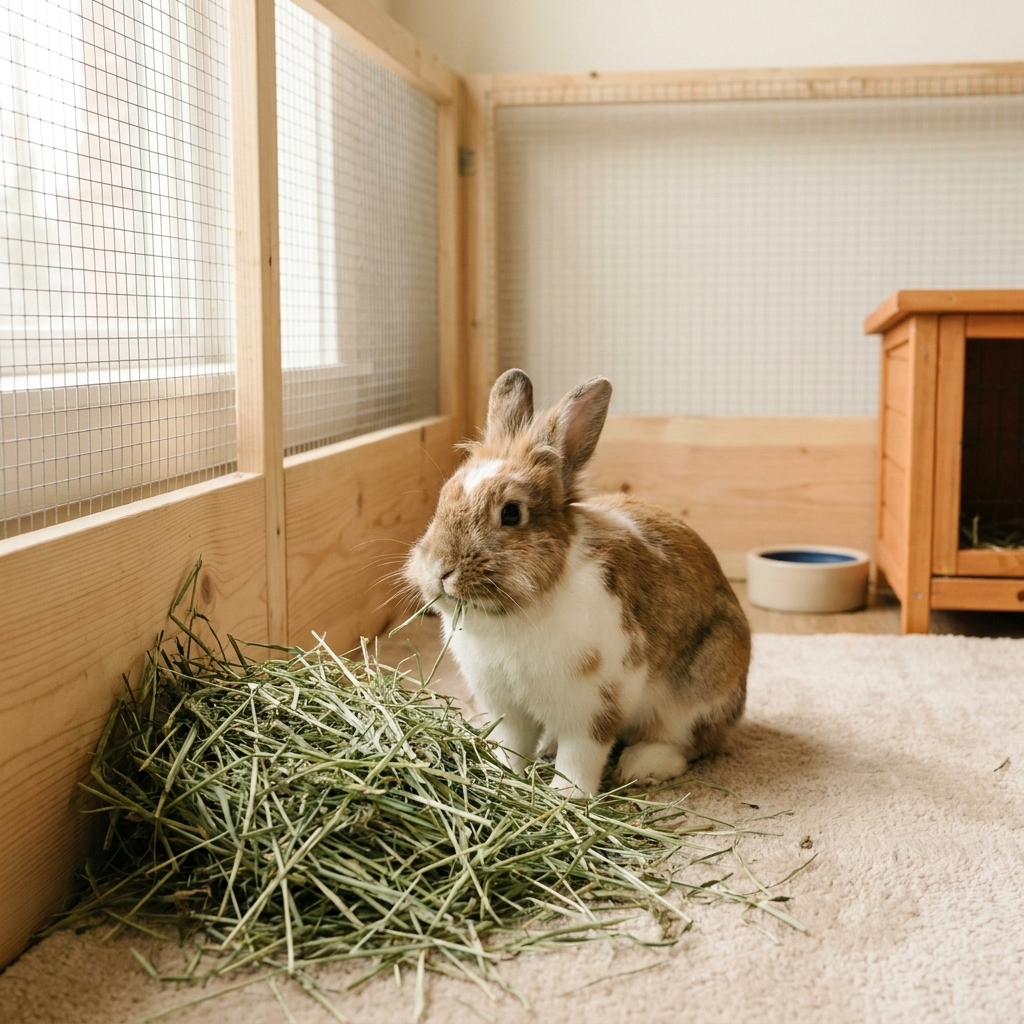
If I could put one sentence on every rabbit enclosure, it would be: Hay is the main course. Rabbits are designed for constant, high-fiber intake. That long-stem fiber is what keeps normal gut contractions happening and helps prevent the slowdowns that set the stage for stasis.
How much hay should a rabbit eat?
Unlimited, all day, every day. Instead of aiming for a specific “amount,” aim for this: your rabbit always has clean, fresh hay available and is grazing throughout the day. Hay should make up the bulk of what they eat.
Best hay types by life stage
- Adult rabbits (most pets): Timothy, orchard grass, meadow hay, oat hay (often mixed)
- Young rabbits (under about 6 months) and pregnant or nursing does: Alfalfa can be appropriate because it is higher in calories and calcium
If you are not sure which life stage diet your rabbit needs, ask your vet. Too much alfalfa for many adult rabbits can contribute to weight gain and urinary sludge risk, which can lead to pain and reduced appetite.
Make hay irresistible
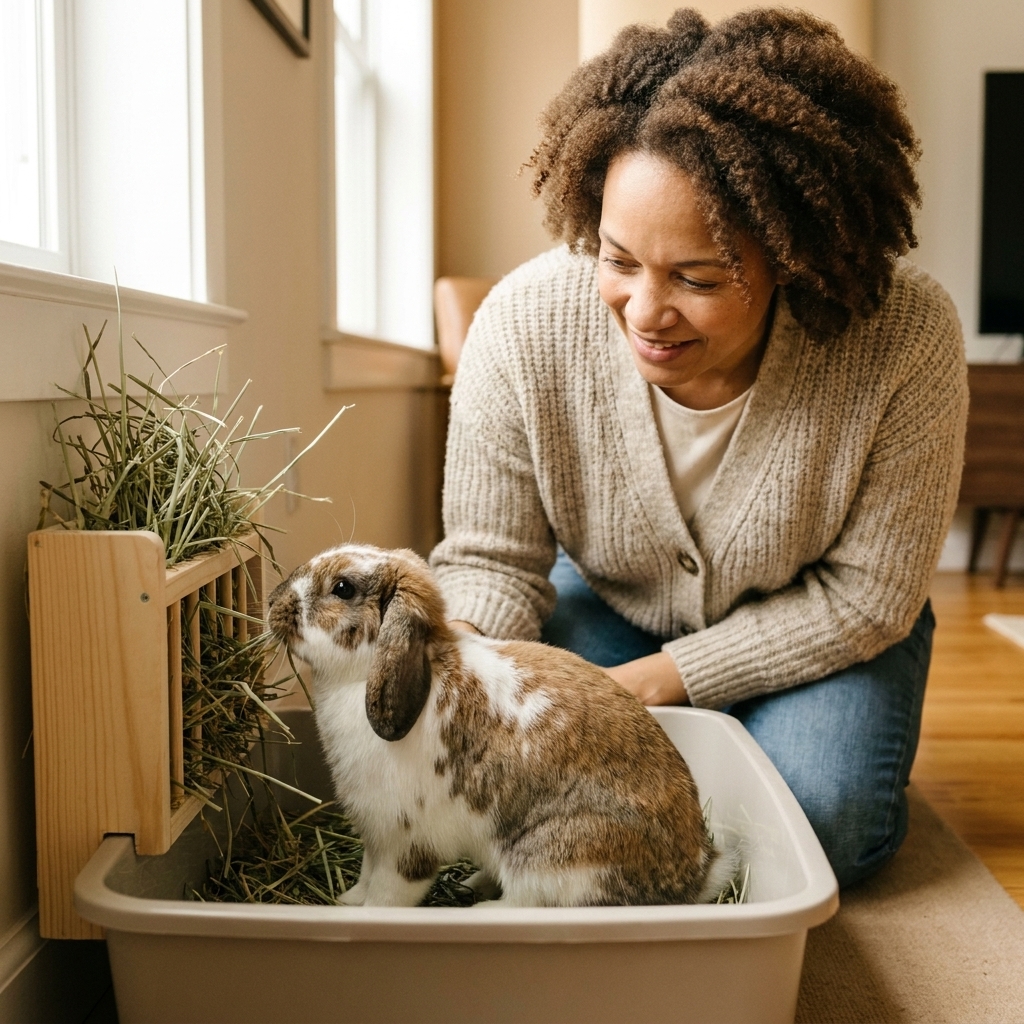
- Offer multiple stations: one in the litter area and one near a favorite lounging spot
- Refresh often: many rabbits prefer “new” hay and will snub the older, crushed stuff
- Try a variety: orchard grass is softer, timothy is classic, meadow can be aromatic
- Use hay toys: stuff hay into paper bags, willow balls, or hay racks designed for safe pulling
Pellets and greens: supportive, not the foundation
Pellets and leafy greens are important for many rabbits, but they should support a hay-based diet, not replace it.
Pellets: keep them measured
Pellets are concentrated calories. When rabbits fill up on pellets, they often eat less hay, and that is where trouble starts.
- Choose: a plain, timothy-based pellet for adult rabbits (avoid colorful mixes with seeds, dried fruit, or “bits”)
- Portion: many healthy adults do well with a small measured amount daily, but the right amount depends on weight, activity level, and body condition
If you want a tailored pellet amount, a rabbit-savvy veterinarian can recommend a range based on your bunny’s ideal weight and body condition score.
Leafy greens: introduce slowly and rotate
Greens add moisture, enrichment, and nutrients. They can also cause soft stool or gas if introduced too quickly or fed in a way that does not agree with your individual rabbit.
- Start small with one type at a time
- Watch poop: smaller, drier, fewer, or misshapen droppings can mean trouble
- Rotate safe options: romaine, cilantro, parsley, basil, dill, arugula are common favorites
If you buy a “spring mix,” check the ingredients. Mixes vary, and it is best to introduce new items one at a time so you can tell what agrees with your rabbit.
Fruits and starchy treats should stay truly occasional. Excess sugar can disrupt the gut microbiome and may increase the risk of digestive upset for some rabbits.
Hydration: the overlooked GI stasis prevention tool
Hydration keeps intestinal contents softer and easier to move. Even mild dehydration can make a rabbit’s GI tract more likely to slow down.
Water bowl vs bottle
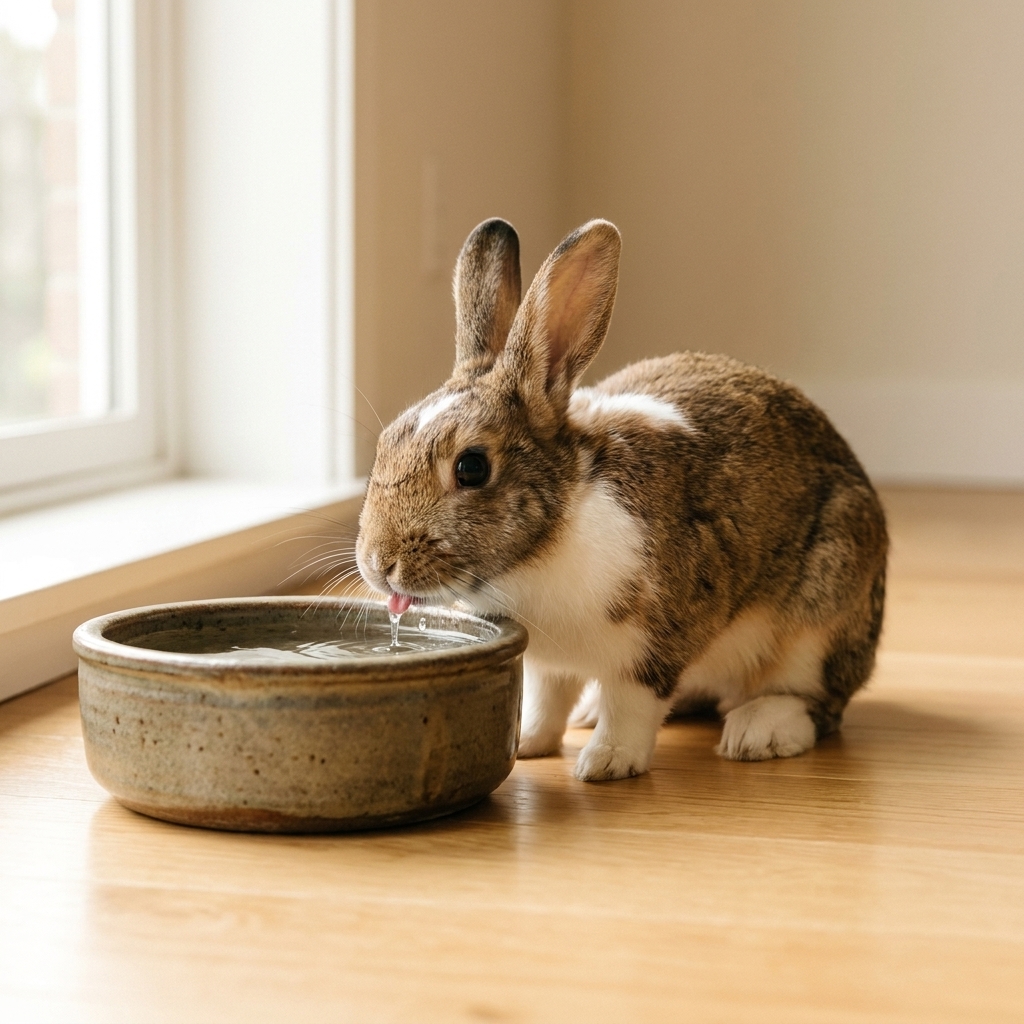
Many rabbits drink more from a heavy ceramic bowl than from a bottle. Bottles can work, but they sometimes reduce intake because they take more effort and can clog or leak.
- Offer a bowl, and if your rabbit is used to a bottle, you can offer both during the transition
- Clean daily to prevent biofilm buildup
- Refill with fresh water at least once per day, more often in warm weather
Easy ways to increase water intake
- Wet leafy greens: rinse and serve with water still clinging to the leaves
- Add another bowl in a second location
- Talk to your vet before flavoring water: it is rarely needed, and sugary liquids (including juice) are not a routine solution. In specific situations, your veterinarian may suggest a short-term approach for a reluctant drinker.
Daily movement: digestion’s best friend
Exercise supports gut motility, muscle tone, and stress relief. A rabbit who spends most of the day confined without room to hop, explore, and stretch is more likely to have sluggish digestion.
What “enough exercise” looks like
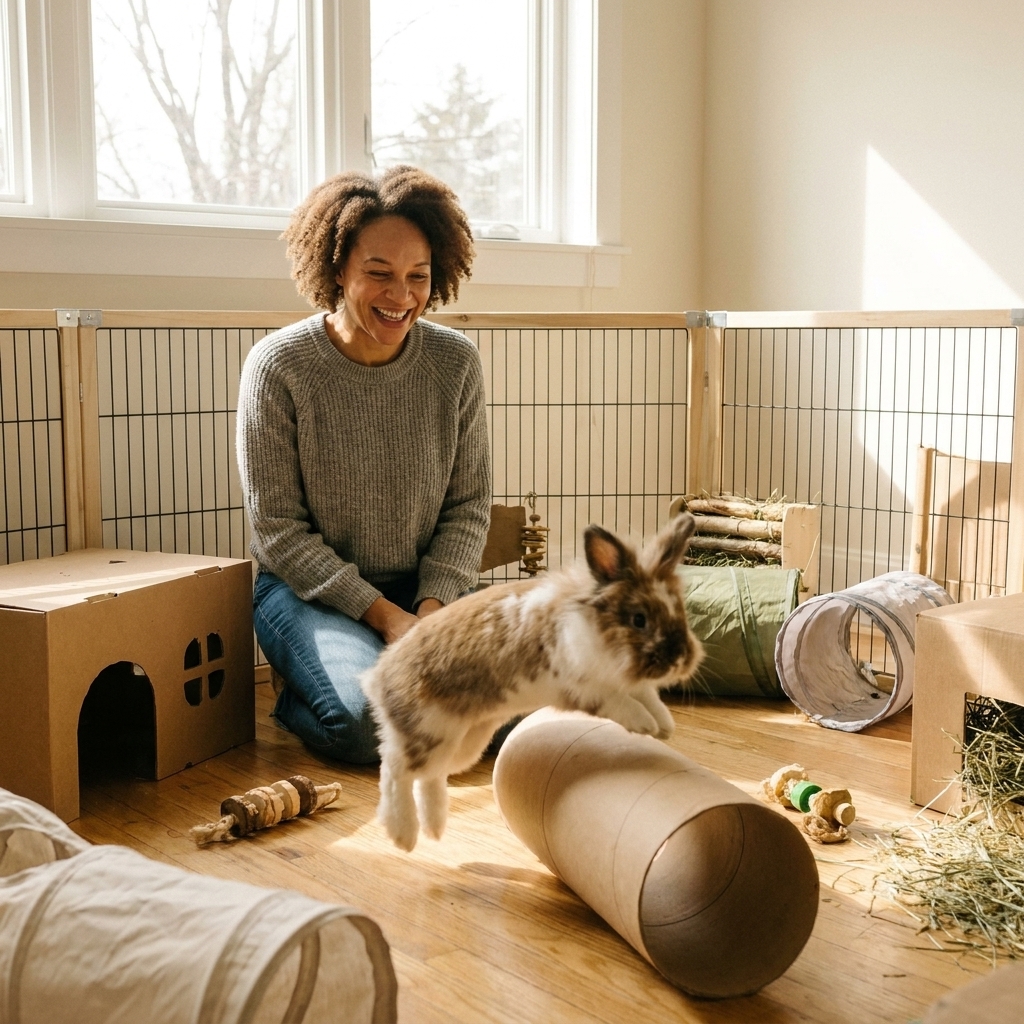
- Several hours of active time daily in a safe, bunny-proofed area
- Room for 3 to 4 consecutive hops and full-body stretches
- Enrichment that encourages movement, like tunnels, boxes, and treat-free foraging toys
Low-stress enrichment ideas
- Cardboard boxes with two doors cut out (so no one feels trapped)
- Paper bags stuffed with hay
- Willow chew toys and untreated apple sticks
- Scatter-feeding measured pellets in a snuffle mat designed for small pets
Bonus: movement also helps reduce boredom chewing and supports a healthier weight, both of which indirectly protect the gut.
Dental health and pain control: the hidden link
One of the most common underlying causes rabbit vets look for behind GI slowdown is dental disease. Rabbits’ teeth grow continuously. If the teeth do not wear evenly, sharp points and painful mouth lesions can develop. A rabbit with mouth pain eats less, especially less hay, and the gut slows down.
Clues your rabbit may be in pain
- Eating less hay or taking longer to finish meals
- Dropping food, chewing strangely, or preferring soft foods
- Wet chin or drooling
- Hiding more, tooth grinding, or acting unusually still
- Smaller or fewer droppings
Schedule routine wellness exams with a rabbit-savvy veterinarian, and ask specifically about a thorough oral exam. Many dental issues are easiest to manage when caught early.
Grooming and shedding: reducing hair-related slowdowns
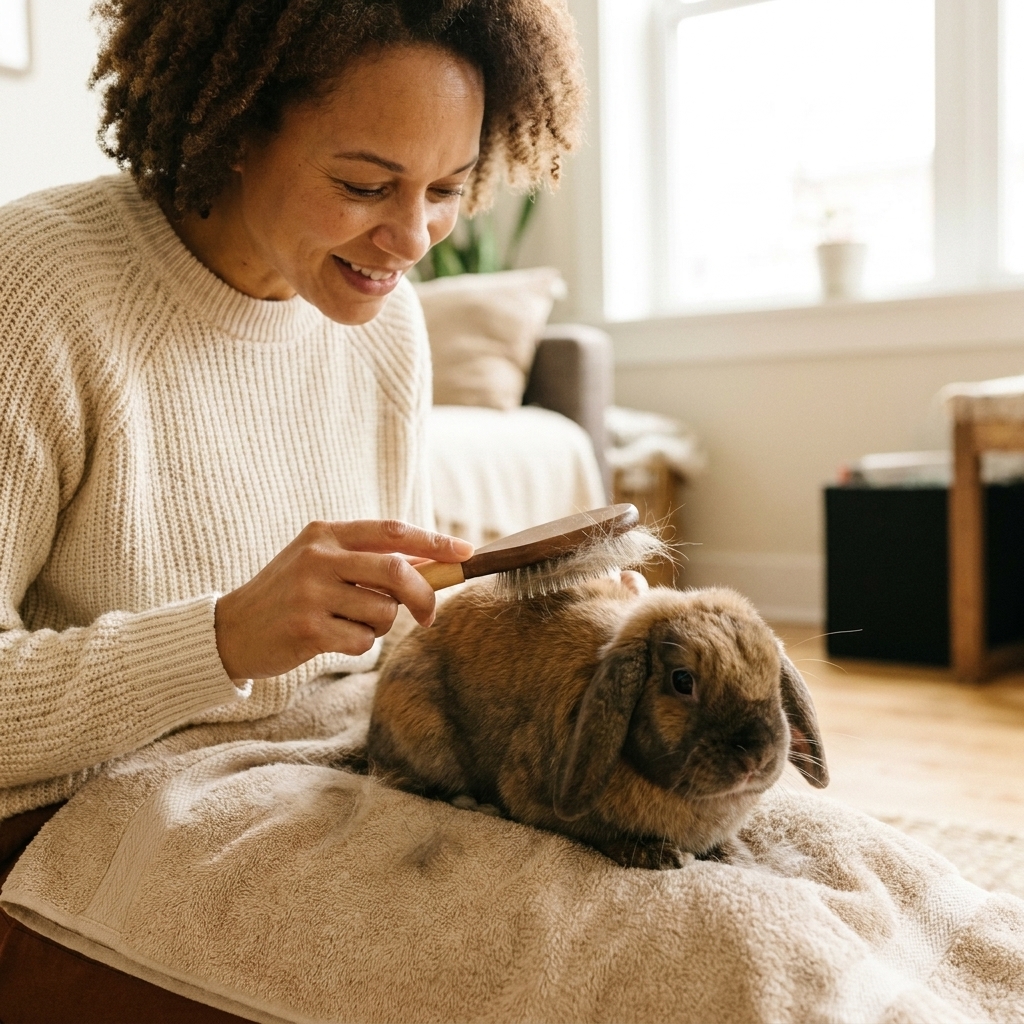
Rabbits groom themselves constantly, and they cannot vomit up hair like cats. During heavy molts, they can ingest a lot of fur. Hair alone usually is not the sole cause of GI stasis, but it can worsen a slowdown when hydration or fiber intake is already not ideal.
What helps during shedding season
- Brush daily during peak molts, especially long-haired breeds
- Prioritize hay because fiber helps move everything along
- Keep water intake up with bowls and wet greens
- Skip “hairball remedies” marketed for cats unless your rabbit vet specifically recommends something for your situation
Poop checks: your easiest early warning system
I know, not glamorous. But your rabbit’s droppings are one of the fastest ways to catch trouble early, often before your bunny looks obviously ill.
Healthy poop basics
- Fecal pellets: plentiful, round, and fairly uniform
- Cecotropes: soft clustered droppings usually eaten directly; you may not see many
Red flags
- Fewer pellets than normal
- Very small, dry pellets
- No pellets for several hours, especially if your rabbit is also not eating normally
- Diarrhea or puddles of stool
- Lots of uneaten cecotropes suddenly
Any major change in poop output paired with reduced appetite is a reason to take action fast.
Early signs (when to call the vet)
Rabbits are masters at hiding illness, so subtle changes matter. If your rabbit is acting “a little off,” trust that instinct.
Call urgently if you notice
- Not eating or refusing favorite foods
- No poop or dramatically reduced poop output
- Lethargy, sitting hunched, or reluctance to move
- Belly discomfort, tooth grinding, or pressing the belly to the floor
- Bloated abdomen or signs of severe pain
- Low body temperature (ears and body feel unusually cold)
GI stasis is not a “wait and see” situation. If your rabbit stops eating or pooping normally, or you see pain or lethargy, call your veterinarian right away. Early treatment can be the difference between a straightforward recovery and a critical emergency.
Important: Do not give human pain relievers, laxatives, or leftover medications. Avoid force-feeding, force-watering, tummy massage, or giving over-the-counter gas drops unless a rabbit-experienced veterinarian has told you to. A rabbit who is not eating may have an obstruction, and the wrong at-home approach can make things worse.
What you can do at home while you arrange care
If your rabbit is slowing down, your priority is getting professional help quickly. While you are calling your vet or heading to an emergency exotics clinic, these steps can be helpful only if your rabbit is stable enough to handle them and you are not delaying medical care.
- Keep them warm and calm: a quiet room, soft blanket, and gentle monitoring
- Offer fresh hay and water: even small nibbles matter
- Encourage light movement: slow, calm hopping can help some rabbits, but do not force exercise
- Note key details: last time they ate, last poop, any recent diet changes, and whether they had access to anything unsafe
If your rabbit seems painful, bloated, unusually cold, or completely shut down, skip the “home fixes” and go in. Pain control and fluid support are often needed early.
Prevention checklist
- Unlimited grass hay available 24/7
- Fresh water in a bowl (cleaned daily)
- Measured pellets appropriate for age and body condition
- Leafy greens introduced slowly and rotated as tolerated
- Hours of daily movement and enrichment
- Grooming support during shedding
- Regular vet checkups, including dental assessments
- Daily poop and appetite check so you catch changes fast
Rabbits thrive on consistency. When you keep the basics steady, you are not just preventing GI stasis. You are building a life where your bunny feels safe, curious, and comfortable in their body, which is the real goal.
FAQ
Can stress cause GI stasis in rabbits?
Yes. Stress can reduce appetite and change gut motility. Common stressors include travel, barking dogs, construction noise, a new pet, or sudden housing changes. If something has to change, keep food and routine as stable as possible and monitor eating and poop closely for the next 24 to 48 hours.
Is GI stasis the same as an obstruction?
No. An obstruction is a blockage that prevents contents from moving through, and it is an emergency. GI stasis is slowed motility and can be triggered by pain, dehydration, stress, or illness. The symptoms can look similar at home, which is why a rabbit-savvy veterinarian should evaluate any rabbit that stops eating or pooping.
Should I syringe-feed at home if my rabbit stops eating?
Syringe-feeding can be appropriate in some cases, but it should ideally be done under veterinary direction, especially if an obstruction is possible. If your rabbit is not eating, call your vet first. If they instruct you to assist-feed, use a rabbit recovery formula and correct technique to reduce aspiration risk.
Do probiotics prevent GI stasis?
The evidence for routine probiotic use in rabbits is mixed, and not all products are appropriate. The most reliable prevention is still hay, hydration, and fast attention to underlying pain or dental disease. Ask your exotics veterinarian before adding supplements.