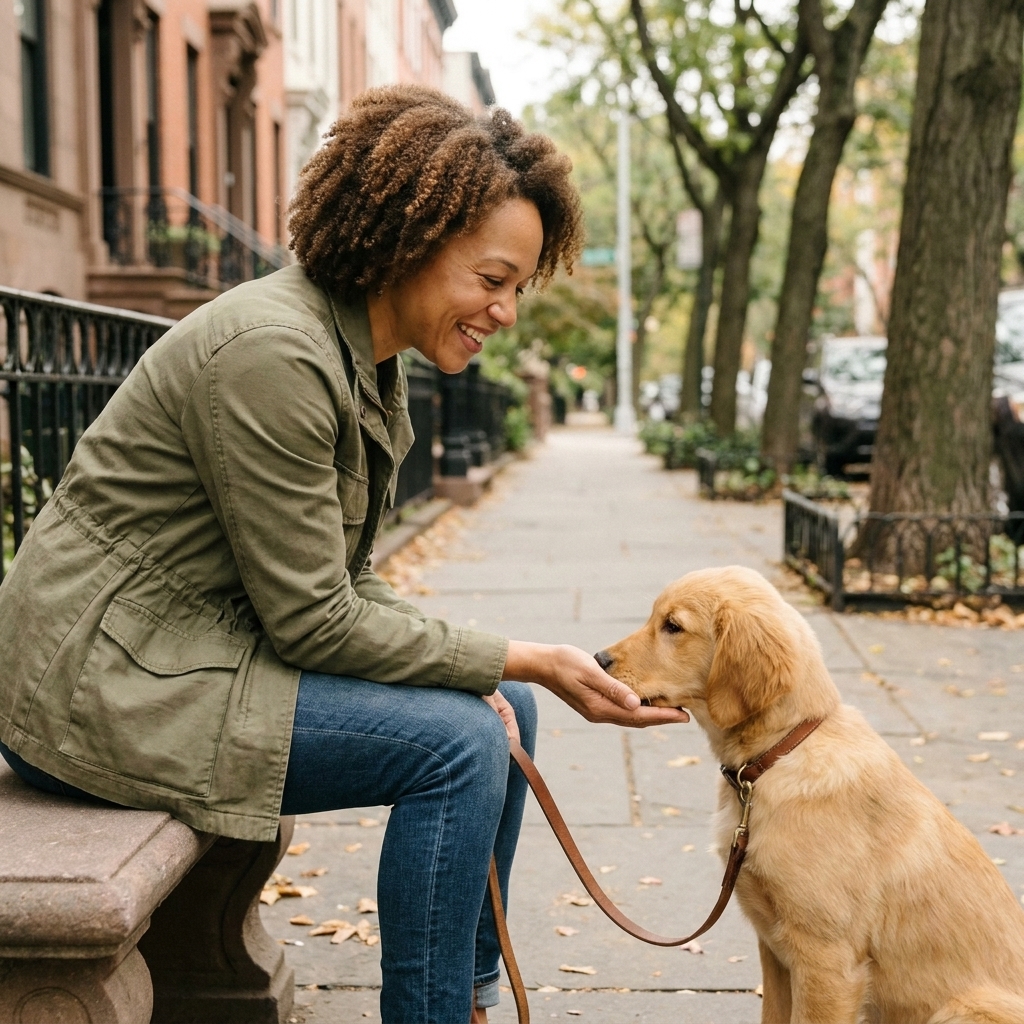
A comprehensive, safety-first puppy socialization guide with a printable-style checklist: people, dogs, environments, handling, sounds, and confidence-buildi...
The first week with a new puppy can feel like living by two clocks: the one on your wall and the one in your puppy’s bladder. I still remember bringing home my own goofy, leggy puppy years ago and thinking, I’ve got this. Then he squatted on my rug while I was literally holding the cleaner I bought “just in case.”
Here’s the good news: house training is mostly consistency, timing, and preventing “oops” moments from becoming habits. Below is a day-by-day schedule you can actually follow, plus the real-life troubleshooting I used as a veterinary technician when families hit the inevitable rough patches.
What house training is
House training has two goals:
- Teach your puppy where to go (outside, or on a designated potty spot if you use a balcony or porch setup).
- Prevent practice accidents indoors long enough that the outdoor habit sticks.
Puppies do not generalize well at first, so “We went outside once” does not translate to “I should always go outside.” Repetition is what builds the rule in their brain.
Before you start
Pick a potty spot and a cue
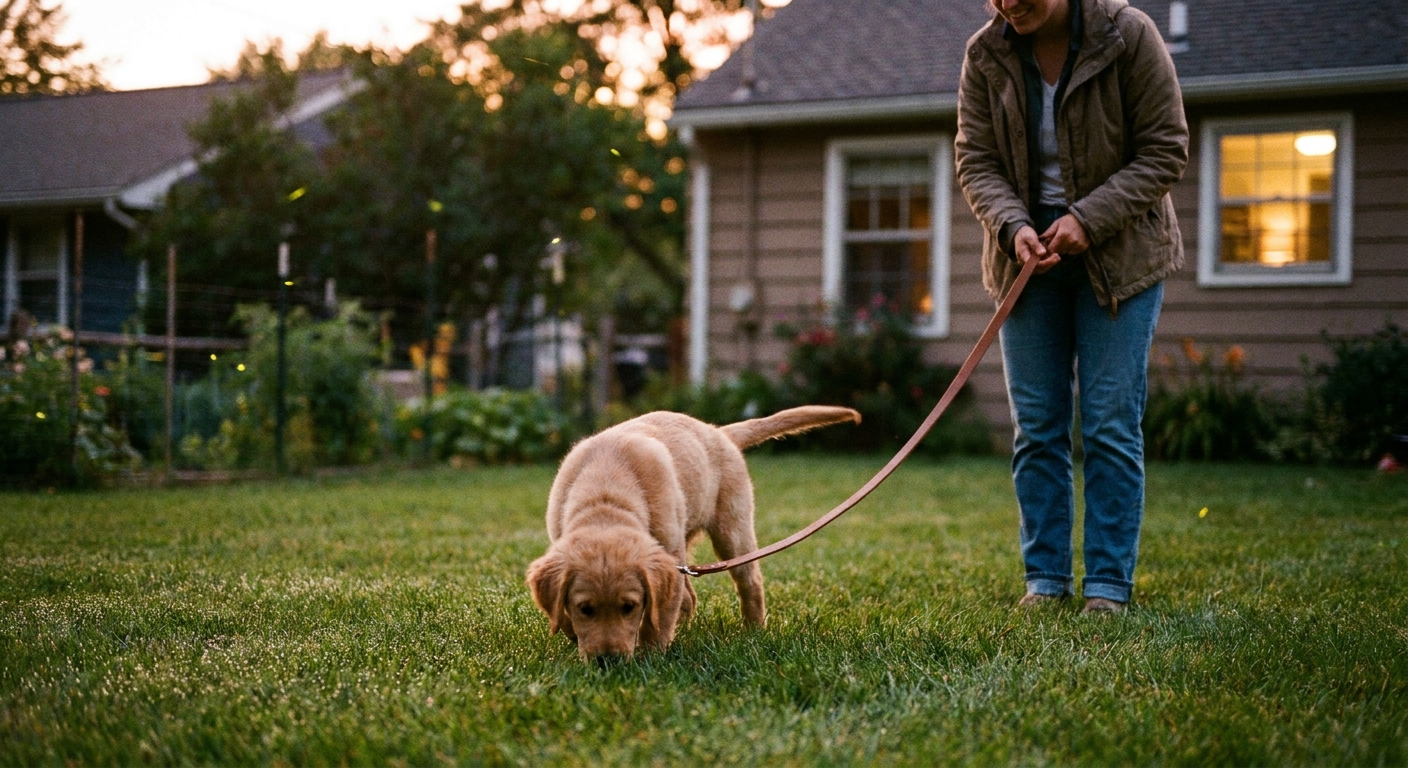
Pick one outdoor area and use the same path to get there. Then pair it with a simple cue like “Go potty.” Say it once, calmly, as your puppy begins sniffing. If they get distracted, you can repeat it one more time, but try not to turn it into background noise.
Praise right after they finish, then reward immediately (think: within a few seconds). The clearer you are, the faster the lesson sticks.
Choose crate, pen, or tether
Your puppy should be in one of three states when indoors:
- Actively supervised (eyes on puppy, within arm’s reach)
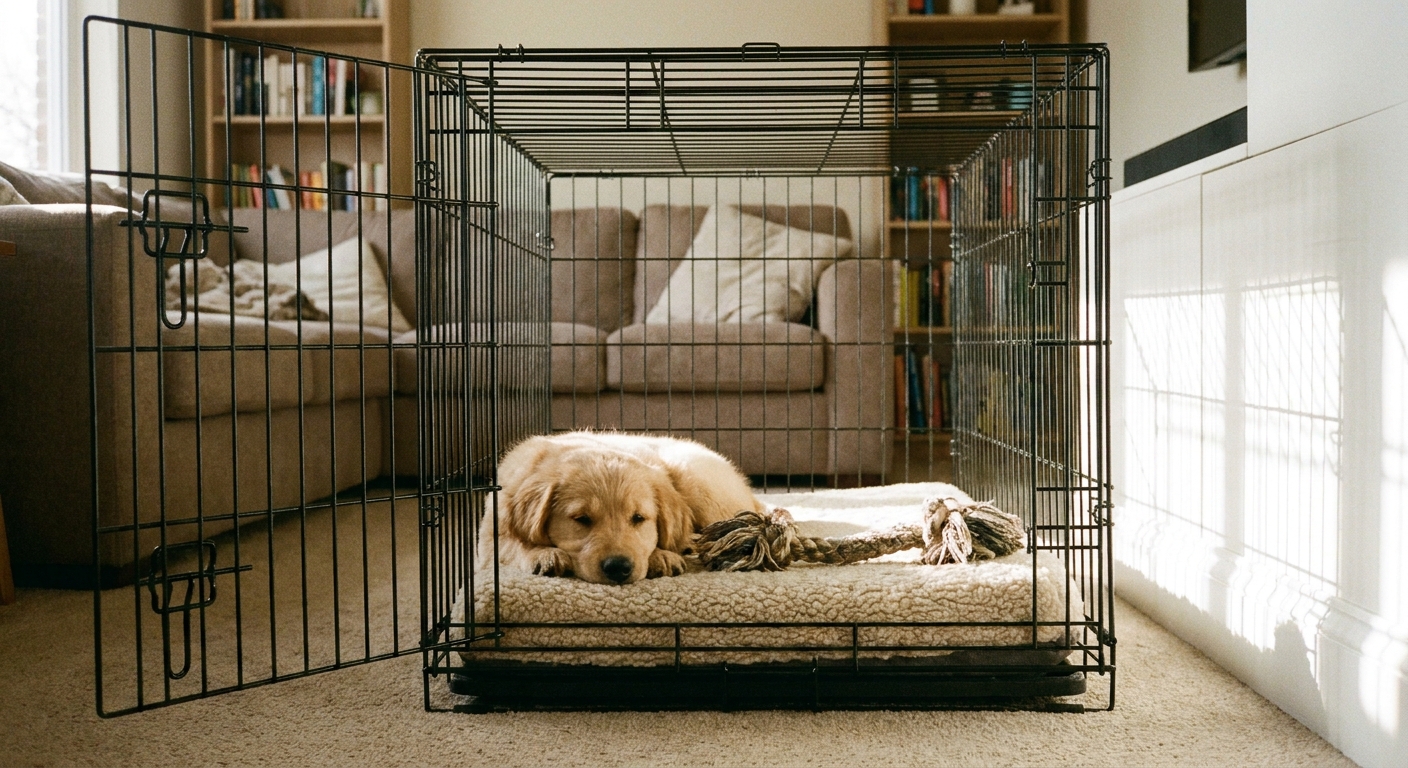
- Safely confined (crate or exercise pen)
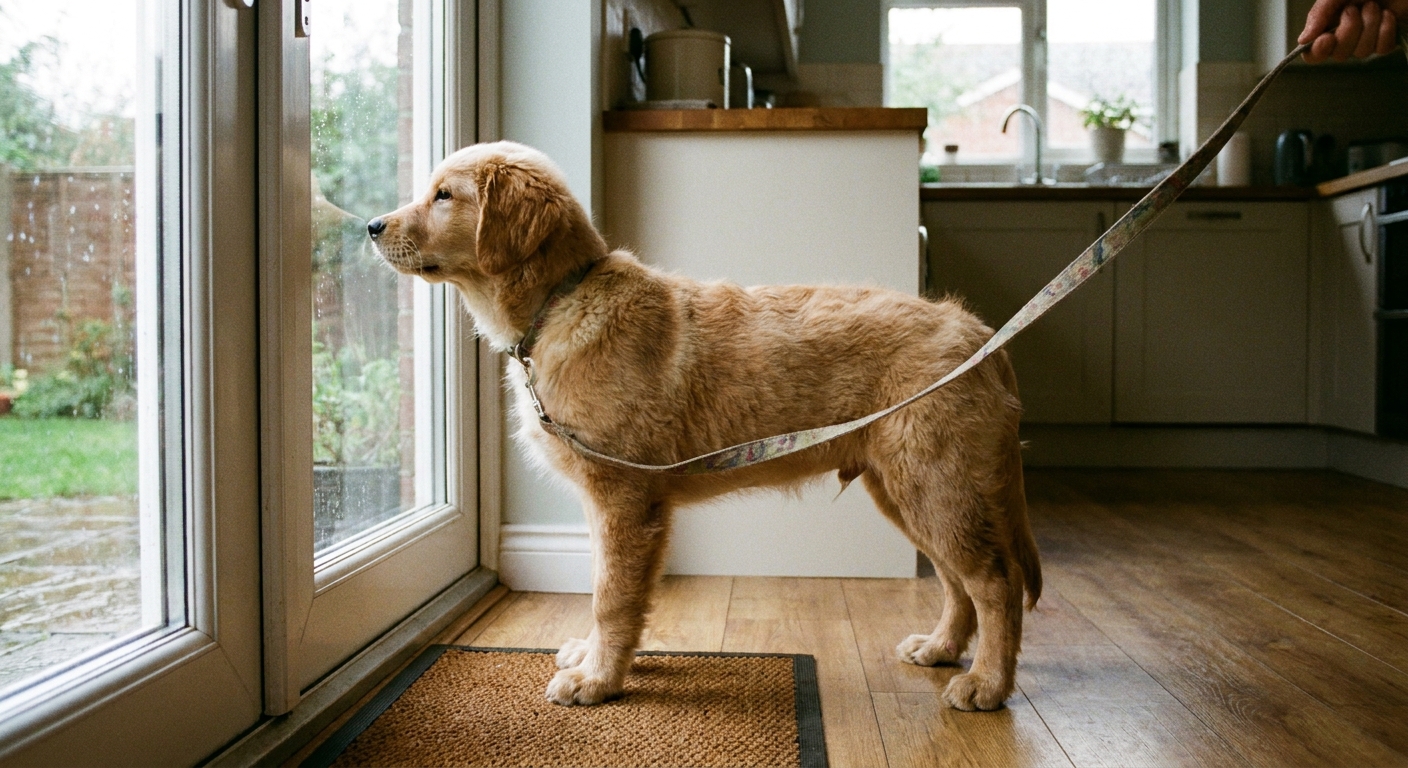
- Tethered to you with a leash so wandering off to potty behind the couch is harder
Confinement is not punishment. It is simply accident prevention. If your puppy struggles with being alone or panics when confined, tackle that separately so potty training does not become stressful. If you are dealing with isolation distress, start with short, comfort-focused sessions and build up gradually.
One important crate rule: do not crate longer than your puppy can realistically hold it, and do not use the crate as a time-out for potty accidents. The crate should stay a safe, calm place.
Cleaning supplies
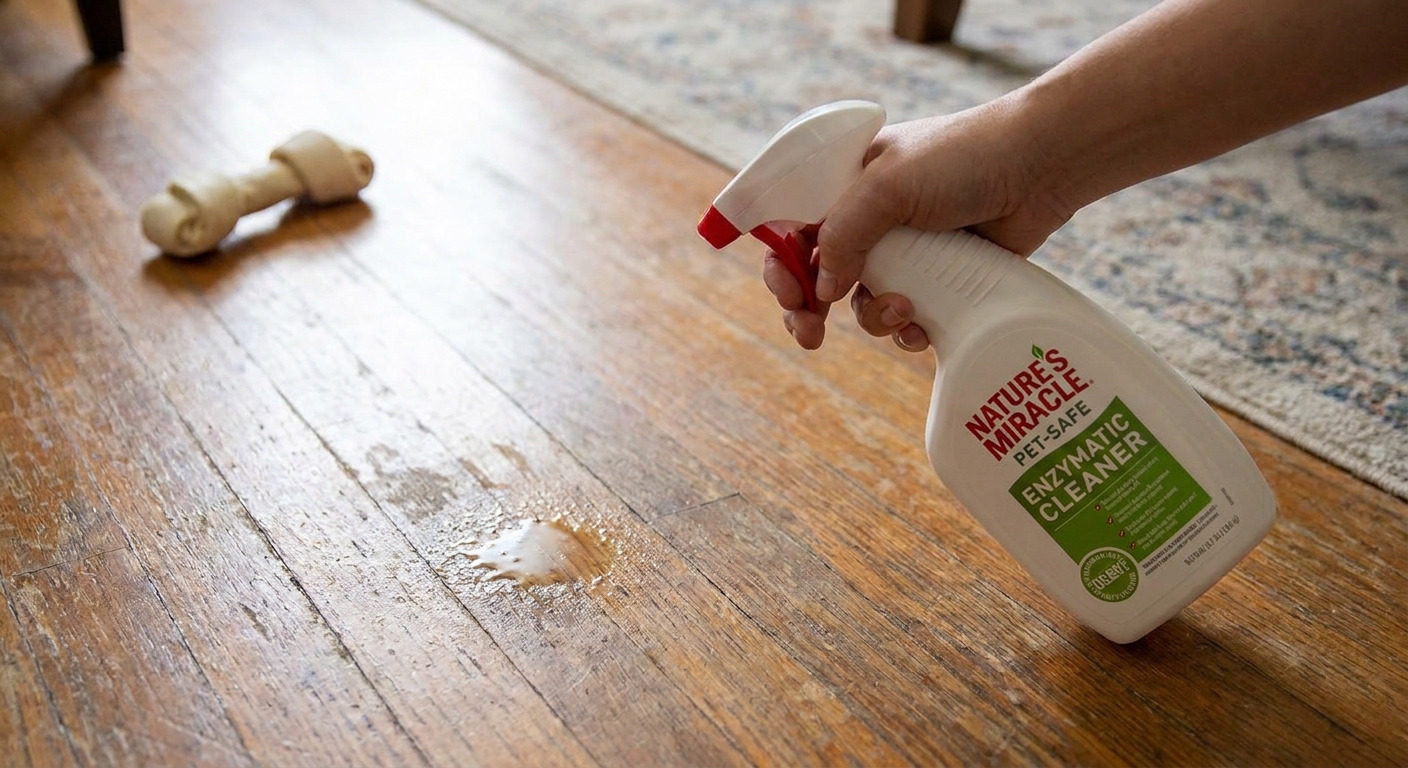
Use an enzymatic cleaner made for pet urine. Regular soap or vinegar can remove the smell for humans but often leave scent behind that your puppy can still detect, which increases repeat accidents.
Potty signals
Most puppies whisper before they shout. Common “I need to go” signals include:
- Sudden sniffing of the floor in a tight circle
- Wandering away from play or leaving the room
- Stopping mid-play and looking slightly distracted
- Heading toward doorways or corners
- Squatting or bracing their stance
If you see any of these, do not ask “Do you need to go?” Just calmly scoop them up or leash them and head to the potty spot.
The daily schedule
Until your puppy is reliably trained, use this rhythm every single day:
- First thing in the morning: outside immediately
- After every meal: outside soon after, often within 5 to 30 minutes
- After drinking a lot: outside shortly after (especially after active play)
- After playtime: outside right after play ends
- After naps: outside immediately when they wake up
- Before and after confinement: outside before crating or penning and again as soon as they come out
- Last thing at night: outside
You will hear the rule of thumb that a puppy can hold it about one hour per month of age (sometimes plus a little extra) when resting. Treat that as a rough guideline, not a promise. It varies by puppy, and most puppies need to go more often when awake and active, so rely on the schedule and transitions rather than testing their limits.
Day-by-day: first 14 days
Think of the first two weeks as training camp. Your job is to create lots of successful outdoor potty reps and very few indoor mistakes.
Day 1: set the routine
- Go outside every 30 to 45 minutes when your puppy is awake.
- Feed on a schedule, not free-choice, so potty timing becomes predictable.
- Start a simple log: time, pee or poop, where it happened.
If your puppy has an accident on Day 1, that is not a failure. It is information. Adjust timing and supervision.
Day 2: tighten supervision
- Continue frequent trips outside.
- When indoors, keep puppy tethered to you or in a puppy-safe area.
- Reward outdoor potty like it is the best thing your puppy has ever done. For many puppies, that looks like 2 to 3 small high-value treats plus happy praise.
Day 3: spot patterns
By now, many puppies show predictable potty times, such as shortly after breakfast or right after a big play burst. Use your log to anticipate those moments and beat your puppy to the punch.
Days 4 to 7: repeatable days
This is where consistency pays off. Aim for the same wake time, meal times, and bedtime. Here is a sample day for a puppy under 16 weeks. Use it as an example of the real rule, which is potty after every transition (sleep, play, eating, training, confinement), not as a strict set of timestamps.
Sample daily schedule
- 6:30 a.m. Outside immediately (pee)
- 6:45 a.m. Breakfast, water access
- 7:00 a.m. Outside (poop likely)
- 7:15 a.m. Short play or training, then outside
- 8:00 a.m. Nap in crate or pen
- 9:00 a.m. Outside immediately after waking
- 9:15 a.m. Supervised play, then outside
- 11:30 a.m. Lunch
- 11:45 a.m. Outside
- Afternoon Cycle: play, outside, nap, outside (about every 45 to 60 minutes while awake)
- 5:30 p.m. Dinner
- 5:45 p.m. Outside
- Evening Outside after play, after naps, and at least every 60 minutes while awake
- 9:30 to 10:30 p.m. Last outside trip, then bedtime
Overnight: many young puppies need a potty break overnight. Anywhere from 0 to 2 overnight breaks is common, depending on age and size. If you set an alarm, keep it boring (leash, potty, quiet praise, back to bed) and avoid play so they do not learn that 2:00 a.m. is party time.
Week 2: stretch time slowly
If your puppy had very few accidents in Week 1, you can start to widen the window.
- Move from every 45 minutes to every 60 minutes while awake.
- If accidents happen, go back to the previous interval for 3 days before trying again.
- Keep the “always go out after sleep, play, meals” rule unchanged.
In my clinic experience, the fastest-training puppies were not the ones who could hold it longer. They were the ones whose families prevented sneaky accidents during the learning phase.
Accidents
If you catch them mid-accident
- Interrupt gently: a calm “Oops” is enough.
- Immediately take them to the potty spot.
- If they finish there, praise and reward.
Avoid scolding. Puppies usually do not connect punishment with the location. They connect it with you being scary when they potty, which can create hiding and sneaking.
If you find it later
- Do not punish. Just clean thoroughly with enzymatic cleaner.
- Ask: Where was I and what was my puppy doing for the last 5 minutes? The fix is supervision or timing, not discipline.
Clean it right
- Blot fresh urine with paper towels. Do not rub.
- Saturate the area with enzymatic cleaner per label directions.
- Let it sit for the required contact time.
- Air dry fully.
If accidents keep happening in the same spot, block access temporarily with a pen or furniture and increase outdoor trips.
Supervision and confinement
When a puppy is loose and unsupervised, accidents are not “if,” they are “when.” My favorite rule for new puppy homes is:
If you cannot watch them, you contain them.
That containment can be:
- Crate (great for short naps and overnight)
- Exercise pen (good for safe play when you are nearby but busy)
- Baby-gated small room (only if it is easy to clean and puppy-proofed)
Always take your puppy out right before and right after confinement. It prevents accidents and teaches the habit of pottying outdoors as soon as they get the chance.
Water and bedtime
New puppy owners ask about water all the time. In general, do not restrict water excessively, especially during the day. Puppies need hydration.
For some puppies, it helps to offer the last big drink earlier in the evening and then pick up the water bowl about 1 to 2 hours before bedtime, after a normal chance to drink. If your puppy seems very thirsty, is on a medication, has diarrhea, or you are unsure, ask your veterinarian what is appropriate for your pup.
Vaccination safety
If your puppy is not fully vaccinated yet, you can still house train, but choose your potty spot carefully. Ask your veterinarian about parvo risk in your area. In many homes, a good compromise is a low-traffic private area (your own yard or a spot no unknown dogs use), carrying your puppy to and from the potty spot, and avoiding pet store floors, dog parks, and shared potty areas until your vet says it is safe.
When progress stalls
Most stalls come from one of these very fixable issues:
Too much freedom
If accidents increase, reduce space immediately. Go back to tethering, a smaller puppy-safe area, and more frequent outdoor trips for a full week.
Inconsistent timing
Weekend sleep-ins, late meals, or long play sessions without breaks can undo progress. For a couple of weeks, treat the schedule like medication: same times, every day.
Rewards are late or weak
Timing matters. Reward right after they finish outside. If you wait until you are back inside, your puppy may think they are being rewarded for coming in the door.
Signals are subtle
Some puppies give very little warning. In that case, rely on timing: out after every transition (sleep, play, training, eating, confinement).
Medical or digestive issues
Check with your veterinarian if you notice any of the following:
- Very frequent urination, straining, or discomfort
- Blood in urine
- Sudden regression after doing well
- Diarrhea or urgent stools that are hard to predict
Urinary tract infections, parasites, and food intolerance can sabotage even the best training plan.
Common questions
Should I use puppy pads?
Pads can be useful for very specific situations (high-rise apartments, medical reasons, extreme weather), but they can also teach “it’s fine to potty inside.” If your goal is outdoor-only potty, skip pads when possible and focus on frequent outdoor trips.
My puppy pees right after coming inside
Usually one of these:
- They were distracted outside and did not fully empty.
- You came inside too soon. Quietly give them 3 to 5 minutes in the potty area.
- They are learning that outside is for play and inside is where they finally relax enough to pee.
Try a calm, boring potty trip first, then come inside for fun.
When is my puppy “reliably trained”?
I consider a puppy reliably house trained when they have at least 3 to 4 weeks with no indoor accidents, they are consistently pottying quickly in the right outdoor spot, and they show some kind of predictable signal (hovering by the door, pacing, coming to find you) before they need to go.
Even then, trust is earned in layers:
- Start with one room supervised.
- Then two rooms with baby gates.
- Then short periods of freedom, right after they pottied outside.
If accidents return, reduce freedom again. That is not failure. It is normal training.
My puppy bites during leashing for potty breaks
That is a common puppy behavior issue, but it is separate from potty training. Keep potty trips boring and brief, and work on mouthing and bite inhibition outside of potty time.
Quick recap
- Feed on a schedule.
- Take your puppy out after sleep, after play, after meals, after big drinks, before and after confinement, and at least every 45 to 60 minutes while awake at first.
- Reward outdoor potty immediately after they finish.
- Supervise, tether, or contain. No unsupervised roaming.
- Clean accidents with enzymatic cleaner thoroughly.
- If progress stalls, reduce freedom and increase trips for one full week.
If you want one gentle mindset shift: house training is not about catching mistakes. It is about setting your puppy up to be right, over and over, until it becomes their default.