A vet-tech-backed breakdown of small pet bedding: absorbency, odor, dust and respiratory safety, cost, and which option fits rabbits and common rodents, plus...
Buying a cage should feel like an exciting “welcome home” moment, not a math problem. But as a former vet tech who has seen plenty of cramped setups (and the stress behaviors that come with them), I can tell you this: cage size and layout are health decisions, not just decor choices.
The good news is you do not need perfection. You need enough unbroken floor space (a single continuous base level, not split into tiny platforms), the right bar spacing, and a layout that matches how your pet actually lives. Hamsters want to run and burrow. Guinea pigs want to cruise, graze, and hide with friends.

Start with floor space
If you only remember one thing, make it this: floor space is the priority for both hamsters and guinea pigs.
- Guinea pigs are ground-dwellers. They do not benefit from tall cages the way climbing animals do, and ramps can become slip hazards, especially for seniors.
- Hamsters do enjoy some vertical enrichment, but they still need a wide footprint because they can travel surprisingly long distances each night. Tall, skinny cages tend to create stress and limit natural behaviors.
When cage shopping, look at the listed dimensions and calculate the square inches (length × width). That number tells you far more than a marketing label like “large” or “deluxe.”
Hamster cage size
Hamsters are tiny, but their space needs are not. In clinic, I saw more bar chewing, pacing, and “wall climbing” in hamsters housed too small than almost anything else. Bigger really does translate to calmer behavior for most individuals.
Recommended minimum floor space
Note: Published minimums vary by country and organization. The numbers below reflect many modern, welfare-forward standards, and for most hamsters, more space is still better.
- Syrian hamsters: aim for at least 800 square inches of uninterrupted floor space. Many Syrians do best with 1,000+ square inches.
- Dwarf hamsters (Campbell’s, Winter White, Roborovski, Chinese): aim for at least 600 square inches, with 800+ square inches being a great quality-of-life upgrade.
Practical examples: A habitat around 48 in × 20 in is 960 square inches and works well for many hamsters. A common “starter” cage around 24 in × 12 in is only 288 square inches, which is why so many hamsters seem restless in them.
Wheel and bedding clearance
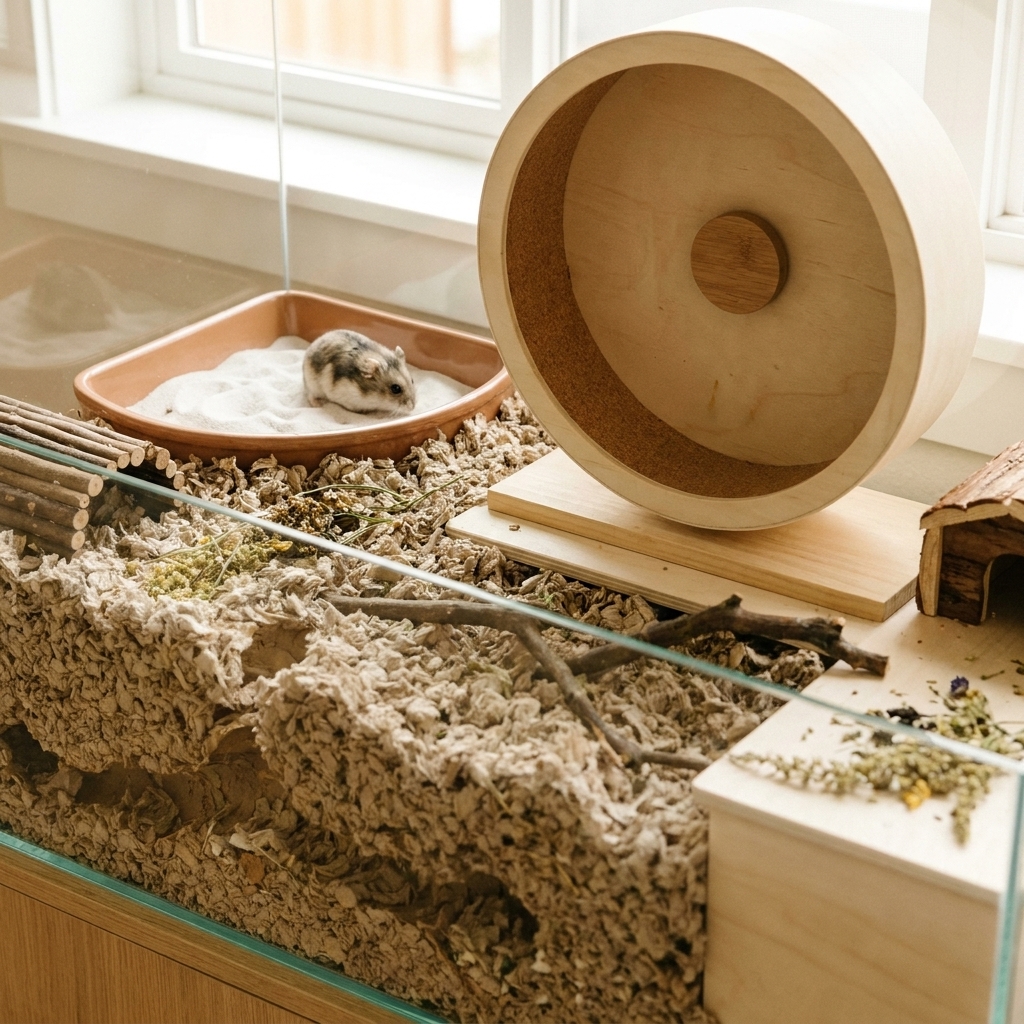
Hamsters need a wheel that fits their body and bedding deep enough to burrow, which affects how tall the cage should be.
- Wheel size guideline: most Syrians need a 10 to 12 inch upright wheel; most dwarfs do well with 8 to 10 inch. When they run, their back should stay relatively flat, not arched.
- Bedding depth: plan for 8 to 10 inches (more is better) in at least part of the enclosure.
If a cage is too shallow for bedding, you will be forced to choose between burrowing and keeping bedding from flying out. Your hamster should not have to lose a natural behavior because the walls are too short.
Quick social note: Most hamsters are solitary as adults and are typically housed alone. Guinea pigs are different and usually need a compatible companion.

Guinea pig cage size
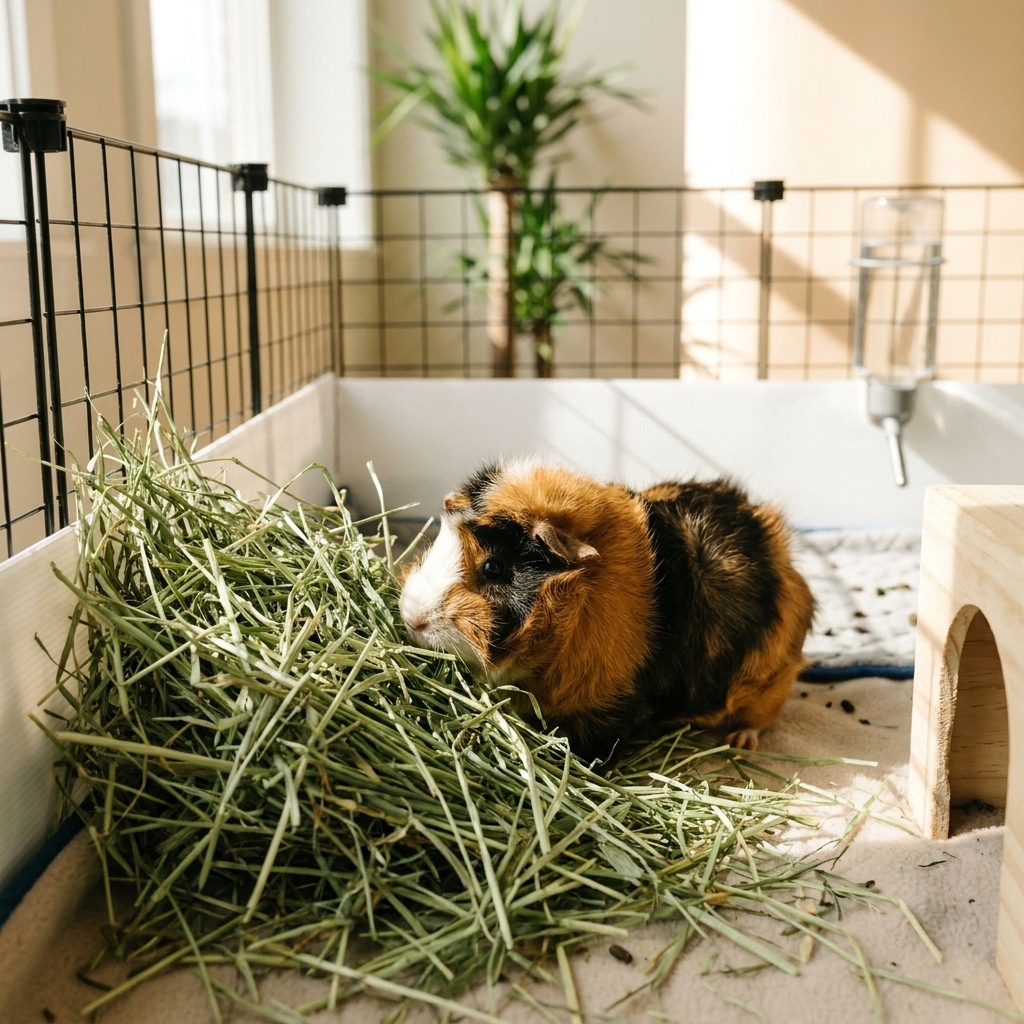
Guinea pigs thrive on room to roam, especially because most live in pairs or groups. When space is too tight, you can see more squabbling, less exercise, and messier day-to-day living.
Recommended minimum floor space
Note: Minimums vary by rescue and organization, and many recommend going larger. Boar pairs, in particular, often do better with extra room.
- 1 guinea pig: at least 7.5 square feet (better: 10.5 sq ft)
- 2 guinea pigs: at least 10.5 square feet (better: 13+ sq ft)
- 3 guinea pigs: at least 13 square feet
- 4 guinea pigs: at least 16 square feet
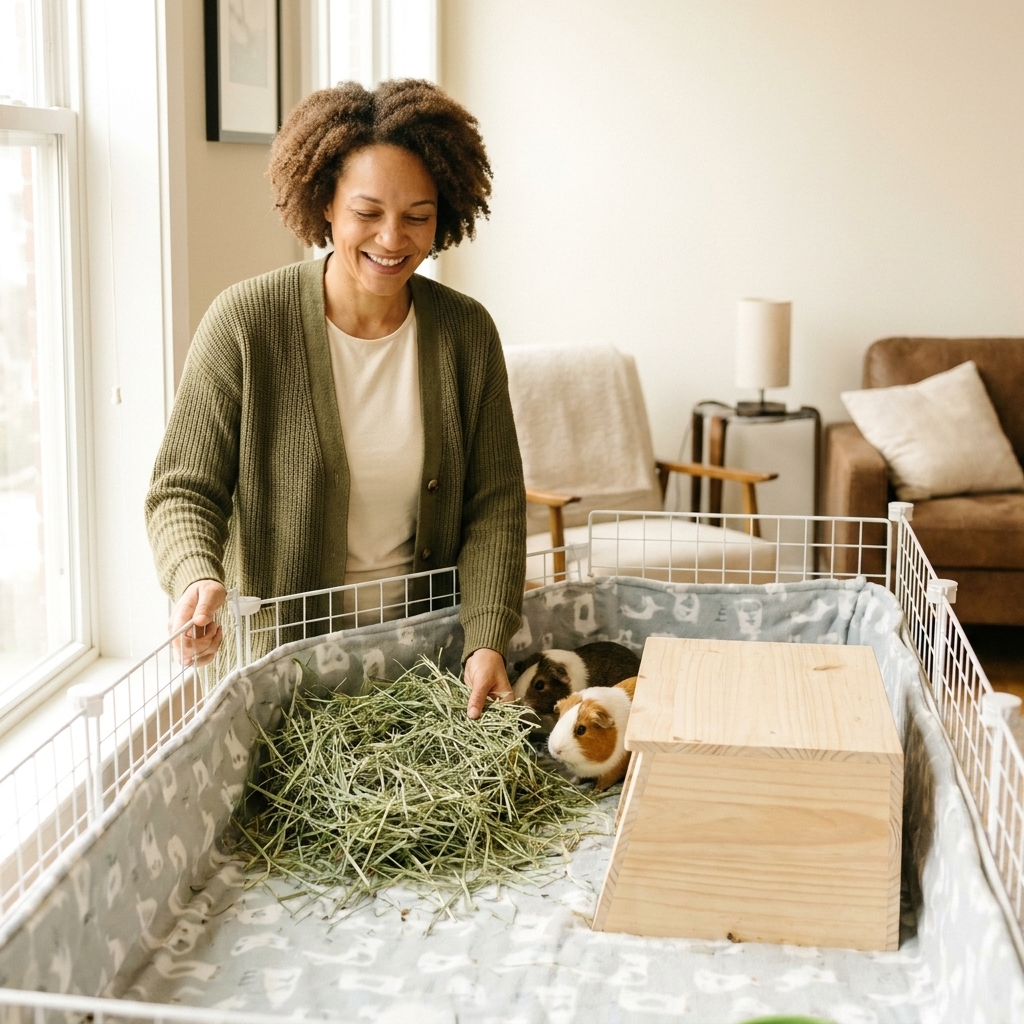
Quick conversion: 10.5 sq ft is 1,512 square inches. A popular single-level size for two pigs is around 30 in × 60 in (1,800 square inches), which gives you space for hides, hay, and a kitchen area without turning the whole cage into one big litter zone.
Multi-level is a bonus
Lofts can be fun for an extra hide or a “kitchen” area, but for guinea pigs, they should be considered a bonus, not a replacement for floor space. If the main level is undersized, adding a second story does not solve the traffic-jam feeling that makes pigs edgy.
Side height basics
Most guinea pigs are not jumpers, but low sides plus a loft or hide placed near the edge can invite a hop out. If you are using an open-top setup, keep the perimeter clear and use side walls tall enough to prevent easy jump-outs.
Bar spacing
Bar spacing is one of those details that is boring until it is not. A head stuck between bars is an emergency I would happily never see again.
Hamster-safe bar spacing
- Syrian hamsters: bar spacing should be 1/2 inch (about 1.3 cm) or less.
- Dwarf hamsters: aim for 1/4 to 3/8 inch (about 0.6 to 1.0 cm), depending on species and size. Smaller is safer, especially for young dwarfs and especially determined escape artists.
If you are adopting a dwarf hamster, assume they can fit through shockingly small gaps. When in doubt, choose a solid-sided enclosure with a secure lid, or a bar setup specifically rated for dwarfs.
Guinea pig-safe bar spacing
Guinea pigs are not typically escape artists like hamsters, but safe spacing still matters.
- Look for narrow, consistent spacing designed for guinea pigs or rabbits.
- Avoid wide-bar cages marketed for ferrets or larger animals unless the manufacturer explicitly states they are guinea pig-safe.
Heads-up: Young guinea pigs can sometimes squeeze through wider gaps more easily than adults. If you are bringing home babies, err on the tighter side.
Layout essentials
Once you hit the right footprint and safe bar spacing, the next question is whether the layout supports natural behavior. A properly sized cage can still feel stressful if it is set up like an empty studio apartment.
Hamster layout essentials
- Deep bedding zone: at least 8 to 10 inches in one large area for tunneling.
- Large solid wheel: no wire rungs. Running surfaces should be solid to protect feet.
- Multiple hides: at least two, plus a covered tunnel if possible.
- Chews and forage: scatter feeding and safe chew items help prevent boredom.
- Stable heavy items: place ceramics, sand baths, and houses on platforms or firm bases so tunnels do not collapse.
Guinea pig layout essentials
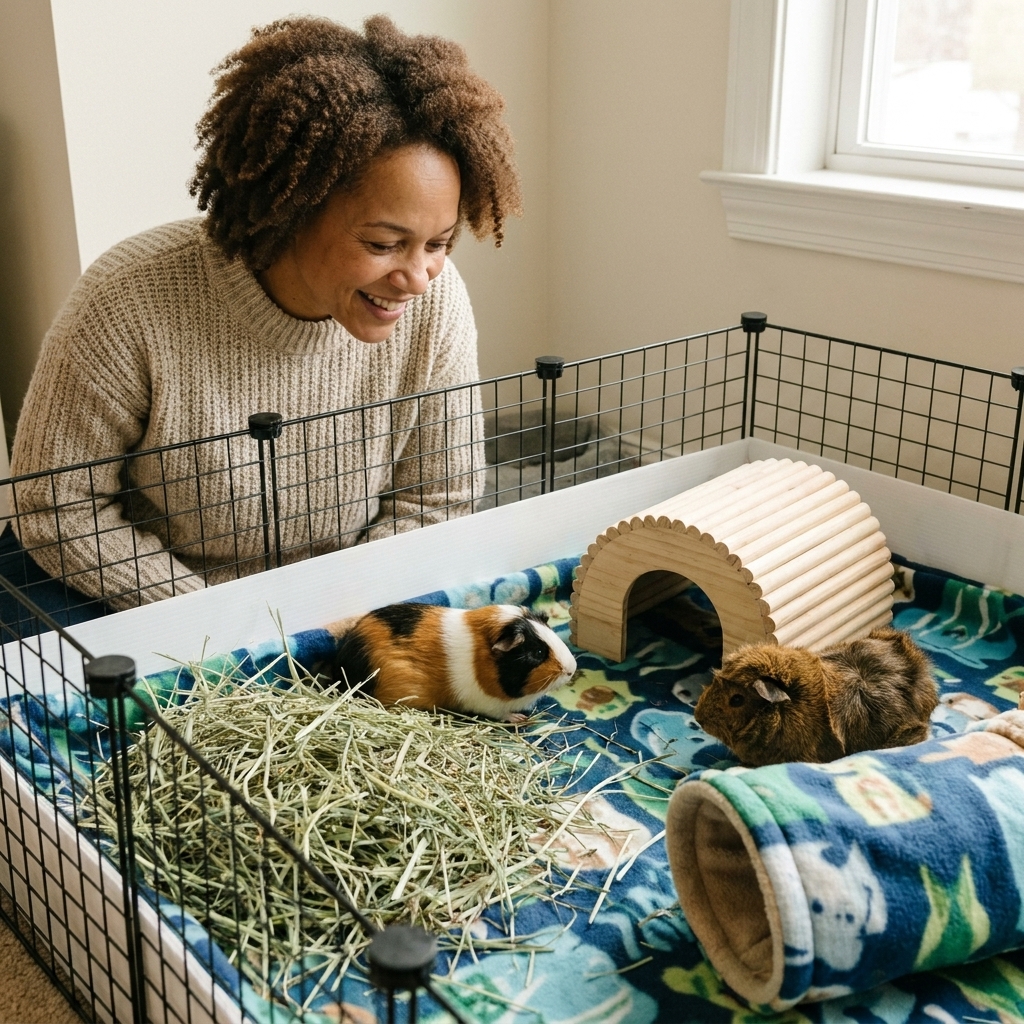
- Two of everything (for pairs): two hides, two food stations if guarding happens, and ample hay access.
- Hideouts with two exits: reduces squabbles because no one gets cornered.
- Long straightaways: pigs love zoomies. Leave an open runway.
- Kitchen zone: hay and water together in one section makes cleaning easier and encourages good hay intake.
Cage types
The “best” cage is the one that meets space needs, stays secure, and makes regular cleaning realistic for you. Here is how the common styles stack up.
For hamsters
- Solid-sided enclosures (plastic bin-style or purpose-built habitats): great for deep bedding and reducing drafts. Just make sure ventilation is excellent and the lid is escape-proof.
- Wire cages: can work if the bar spacing is correct, but they often struggle with bedding depth unless you add guards.
- Glass tanks: can hold deep bedding nicely, but require a full mesh top for airflow and enough floor space to meet your minimum target.
For guinea pigs
- Modular panel cages (often called C&C style): excellent for providing generous floor space and customizing layouts. Make sure the grids are guinea pig-safe and the base is waterproof.
- Store-bought “guinea pig cages”: many are unfortunately undersized. Check square footage before you buy.
- Glass tanks: usually impractical for guinea pigs because adequate ventilation and sufficient floor space are hard to achieve. Large, very well-ventilated open-top setups are the exception, not the rule.
Safety basics
A cage can be the right size and still be the wrong choice if the materials or placement are risky.
- Watch for sharp edges: check wire ends, welds, and cut grid panels so nothing can snag skin.
- Avoid problematic materials: skip aromatic softwood bedding like cedar, and be cautious with strongly scented products.
- Ventilation and placement: keep cages out of direct sun, away from drafts, and away from kitchen fumes or smoke.
Fast sizing checklist
- Step 1: Calculate floor space (length × width). Ignore marketing labels.
- Step 2: Meet or exceed minimums (keeping in mind standards vary and larger is often better):
- Syrian hamster: 800+ sq in
- Dwarf hamster: 600+ sq in
- 2 guinea pigs: 10.5+ sq ft (single level)
- Step 3: Confirm safe bar spacing:
- Syrian: 1/2 inch or less
- Dwarf: 1/4 to 3/8 inch (smaller is safer)
- Step 4: Make sure the layout will fit the essentials (wheel and bedding for hamsters, multiple hides and open runway for guinea pigs).
- Step 5: Choose a setup you can clean consistently. The best cage is the one you can maintain without burning out.
Common mistakes
“The pet store said this cage is fine.”
Many starter cages are designed to sell, not to meet behavioral needs. Use the floor-space numbers above as your anchor, even if the box says “perfect for hamsters.”
“I bought tall because I thought they wanted to climb.”
Height is not a substitute for footprint. For hamsters, height is helpful only when it supports deep bedding and safe enrichment. For guinea pigs, prioritize one large level.
“My hamster keeps escaping, so I guess they are just sneaky.”
They are sneaky, yes, but escapes are usually a bar spacing or lid security problem. Dwarf hamsters in particular can slip through gaps that look impossible.
“I upgraded the cage, but my guinea pigs still argue.”
Sometimes it is not just square footage, it is traffic flow. Add second exits to hides, duplicate resources, and create a clearer open runway.
FAQ
Is a 20-gallon tank okay for a hamster?
Most 20-gallon tanks do not provide enough floor space for modern hamster housing standards. If you want a tank-style setup, look for a footprint that gets you to 600 to 800+ square inches depending on species, with a secure mesh lid for ventilation.
Can I keep a hamster in a guinea pig cage?
Sometimes, but bar spacing is the dealbreaker. Many guinea pig cages have bars that are too wide for hamsters, especially dwarfs. If the spacing is not tight enough, it is not safe.
Do guinea pigs need a lid?
Not always. If you have other pets (cats, dogs, ferrets) or small children in the home, a secure lid or a pet-proof room setup becomes much more important for safety.
Does more space mean my small pet will be harder to tame?
No. In my experience, pets housed appropriately often become easier to handle because they are less stressed. You can still build trust with calm daily interaction, consistent routines, and high-value treats.
Bottom line
If you are deciding between two sizes, choose the bigger footprint. Your hamster will use every inch for running and burrowing. Your guinea pigs will use it for roaming, zoomies, and coexisting more peacefully. Space, safe spacing, and smart layout are the trio that turns a cage into a home.
Before you buy, measure the interior length and width, do the quick math, and double-check that your must-haves actually fit. A properly sized cage is one of the few upgrades that improves behavior, health, and day-to-day care all at once.