
Guinea pigs are tiny herbivores with big nutritional needs. The good news is you do not need anything fancy to feed a great daily salad. You just need the right veggies, the right portions, and a simple rotation so your piggies get variety without tummy trouble.
As a former vet tech and longtime guinea pig roommate, I am a huge fan of keeping salads consistent and boring in the best way. A dependable base plus a couple rotating add-ons is usually the sweet spot for steady poops, steady appetites, and fewer picky-eater dramas.
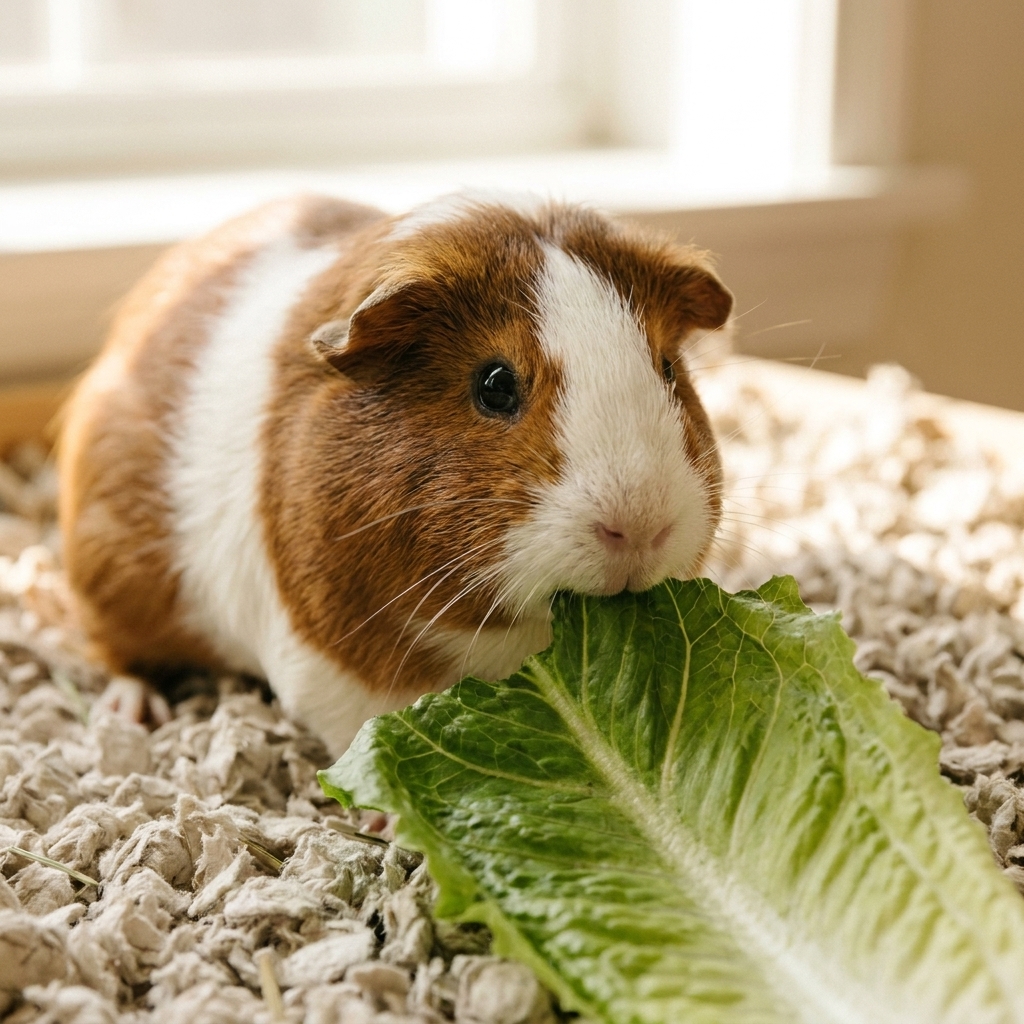
Quick daily salad guidelines
Most adult guinea pigs do well with about 1 cup of mixed fresh vegetables per pig per day, split into one or two servings. Individual needs vary, so use your piggy’s body condition, hay intake, poop quality, and weekly weights as your feedback loop.
- Foundation first: Unlimited grass hay at all times. Think of veggies as daily enrichment and nutrients, not the whole diet.
- Fresh water: Always have clean, fresh water available (a bottle or a heavy bowl). Watery veggies are not a substitute for water.
- Pellets (small but useful): For most adults, offer a plain, timothy-based guinea pig pellet in a measured amount. A common starting point is around 1/8 cup per pig per day, but pellet formulas and pig sizes vary. Follow the bag directions and adjust with your exotic vet, especially if your pig is overweight or has urinary issues. Choose a pellet with stabilized vitamin C and no colorful bits or seeds.
- Vitamin C matters: Guinea pigs cannot make their own vitamin C. For healthy adults, requirements are often cited around 10 to 30 mg per day, depending on the source and the individual pig. Needs can be higher with illness, pregnancy, nursing, or stress, so ask an experienced exotic vet before adding supplements.
- Rotate smartly: Offer 3 to 5 vegetables per day, with at least one leafy green as the base.
- Go slow with new foods: Introduce one new veggie at a time for 3 to 5 days. If stools soften, pause and retry later in smaller amounts.
Babies and pregnant pigs
This guide is written for most healthy adult guinea pigs. Babies (often under about 6 months), pregnant pigs, and nursing moms may need different calcium and calorie support than adults.
- Hay: Adults usually do best on timothy or other grass hays. Many young or pregnant pigs are fed alfalfa for extra calcium and calories.
- Greens: High-calcium items (like parsley, kale, and spinach) are usually rotated for adults, but a vet may be more comfortable with extra calcium for growing or nursing pigs.
- When in doubt: If you are unsure which life-stage category your pig is in or your pig has urinary issues, check in with an exotic vet and adjust slowly.
15 safe vegetables for regular rotation
Below are vegetable options that are generally safe for guinea pigs when fed in appropriate portions. Not all of these are ideal as a daily staple for every pig, so each item is labeled:
- Daily staple: Usually fine for most pigs every day in reasonable amounts.
- Several times per week: Great options, just not always an everyday choice.
- Occasional: Fine in small portions, mainly for variety.
I’m also including preparation notes because tiny details like moisture, strings, and calcium content can make a big difference over time.
1) Romaine lettuce
Frequency: Daily staple
Why it is great: A reliable hydrating base green with fiber and a mild flavor most pigs love.
- Portion: 1 to 2 medium leaves per pig daily as part of the mix.
- Prep tips: Rinse well, shake off excess water, and tear into bite-size pieces to reduce waste.
- Notes: Iceberg lettuce is not toxic, but it is low in nutrients and very watery. For some pigs, it may contribute to softer stools, so it is usually best skipped or kept very limited.
2) Green leaf lettuce
Frequency: Daily staple
Why it is great: Gentle, easy-to-digest leafy green for daily salads.
- Portion: 1 to 2 leaves per pig daily.
- Prep tips: Remove any slimy or wilted edges. Crisp leaves tend to be better accepted.
3) Red leaf lettuce
Frequency: Daily staple
Why it is great: Adds variety and plant compounds without being overly rich.
- Portion: 1 to 2 leaves per pig daily.
- Prep tips: Same as green leaf. Rotate with other lettuces to keep things interesting.
4) Cilantro (coriander leaves)
Frequency: Several times per week
Why it is great: Aromatic herb that can encourage picky eaters and adds variety.
- Portion: A small handful of sprigs per pig (about 5 to 10 stems) a few times per week, or a smaller amount more often.
- Prep tips: Offer leaves and tender stems. Skip slimy stems.
5) Parsley (flat-leaf or curly)
Frequency: Several times per week
Why it is great: Nutrient dense and often a favorite.
- Portion: 2 to 4 sprigs per pig, 2 to 4 times per week.
- Prep tips: Rinse thoroughly. Parsley can be a bit rich, so keep portions modest.
- Notes: Parsley is higher in calcium than many greens. It is best used as a rotation item rather than the main base every day, especially for pigs with a history of bladder sludge or stones.
6) Endive
Frequency: Daily staple
Why it is great: Crunchy, fiber-friendly leafy green that works well as a base.
- Portion: 1 to 2 leaves per pig daily.
- Prep tips: Trim the very tough bottom. The pale ribs are fine to feed.
7) Escarole
Frequency: Daily staple
Why it is great: Similar to endive, with satisfying crunch and good fiber.
- Portion: 1 to 2 leaves per pig daily.
- Prep tips: Rinse between leaves where grit can hide.
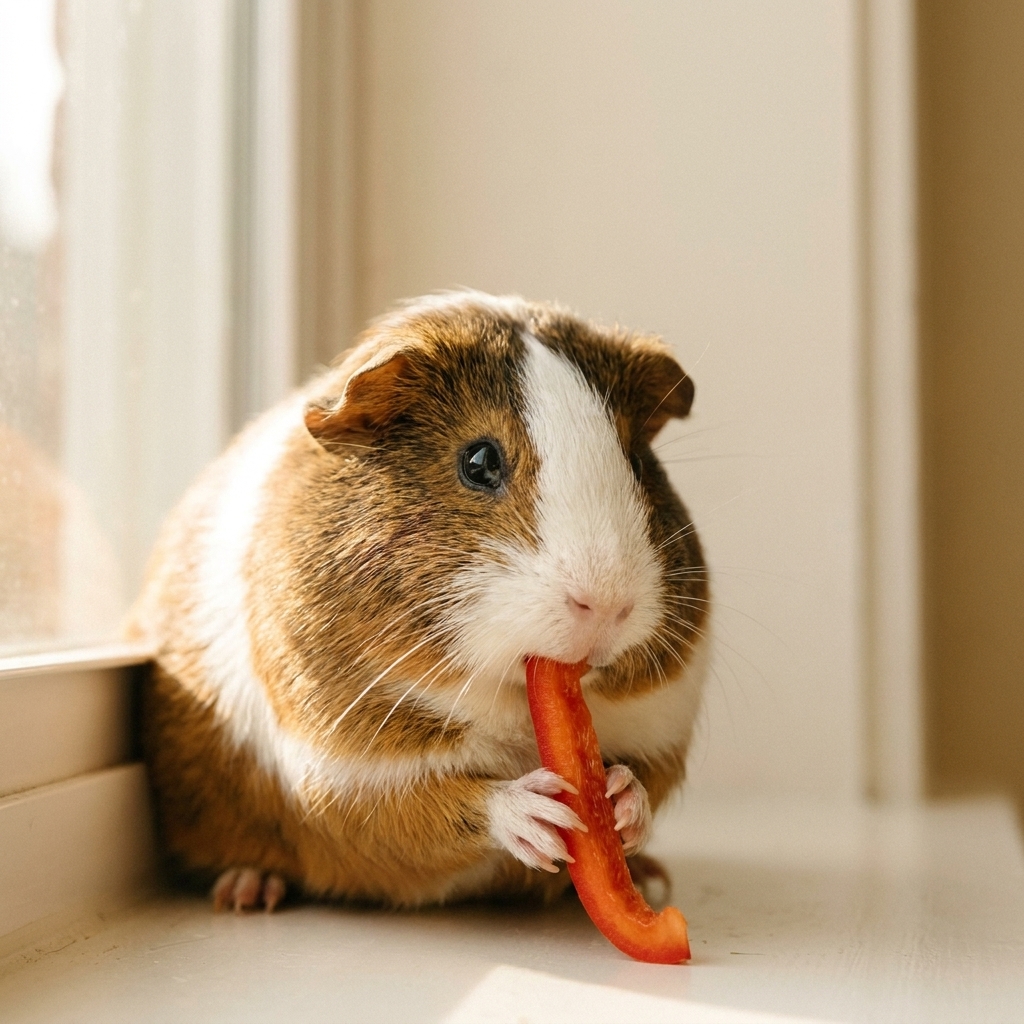
8) Bell pepper (any color)
Frequency: Daily staple
Why it is great: One of the best veggie sources of vitamin C for guinea pigs.
- Portion: A common daily amount is about 1/8 to 1/4 of a pepper per pig (depending on pepper size and what else is in the salad), or roughly 2 to 4 tablespoons chopped.
- Prep tips: Remove seeds and slice into thin strips.
- Notes: Green, red, yellow, and orange are all fine. Red is typically sweeter, so it can be a great “gateway veggie” for hesitant eaters. If pepper is your main vitamin C veggie, keep it consistent, and check with your vet if you are considering supplements.
9) Cucumber
Frequency: Several times per week
Why it is great: Hydrating and refreshing, especially in warmer months.
- Portion: 1 to 2 thin slices per pig a few times per week.
- Prep tips: Leave the peel on if it is unwaxed and well washed. Slice thin to prevent selective eating of only watery foods.
- Notes: Because it is very watery, too much can soften stools. Use as a supporting veggie, not the whole salad.
10) Zucchini
Frequency: Daily staple
Why it is great: Mild, easy on most stomachs, and a nice crunchy change-up.
- Portion: 1 to 2 tablespoons per pig daily as part of the mix.
- Prep tips: Slice into half-moons or thin sticks. Raw is best.
11) Celery (small amounts)
Frequency: Several times per week
Why it is great: Crunchy texture for enrichment and chewing.
- Portion: A 1 to 2 inch piece per pig, a few times per week.
- Prep tips: De-string it. Peel off tough strings with a vegetable peeler and cut into small pieces to reduce the risk of strings getting stuck in the mouth.
12) Carrot (treat-sized)
Frequency: Occasional
Why it is great: Crunchy and popular, with beta carotene.
- Portion: 1 to 2 thin slices per pig, 2 to 4 times per week.
- Prep tips: Slice thin. Baby carrots are fine, but still treat-sized.
- Notes: Carrots are higher in sugar than leafy greens, so think “salad topper,” not “salad base.”
13) Tomato (ripe flesh only)
Frequency: Occasional
Why it is great: A little bit can add variety and hydration.
- Portion: 1 small wedge or 1 to 2 cherry tomato halves per pig, a few times per week.
- Prep tips: Feed only ripe red tomato flesh. Remove stems and leaves.
- Notes: Avoid unripe or green tomato, and do not feed any plant parts (stems, leaves) because they can be harmful.
14) Green beans
Frequency: Several times per week
Why it is great: Crunchy, fibrous, and usually well tolerated.
- Portion: 1 to 2 green beans per pig a few times per week, or half a bean as part of a larger mix.
- Prep tips: Raw is fine. Trim sharp ends. Cut into small pieces for easy handling.
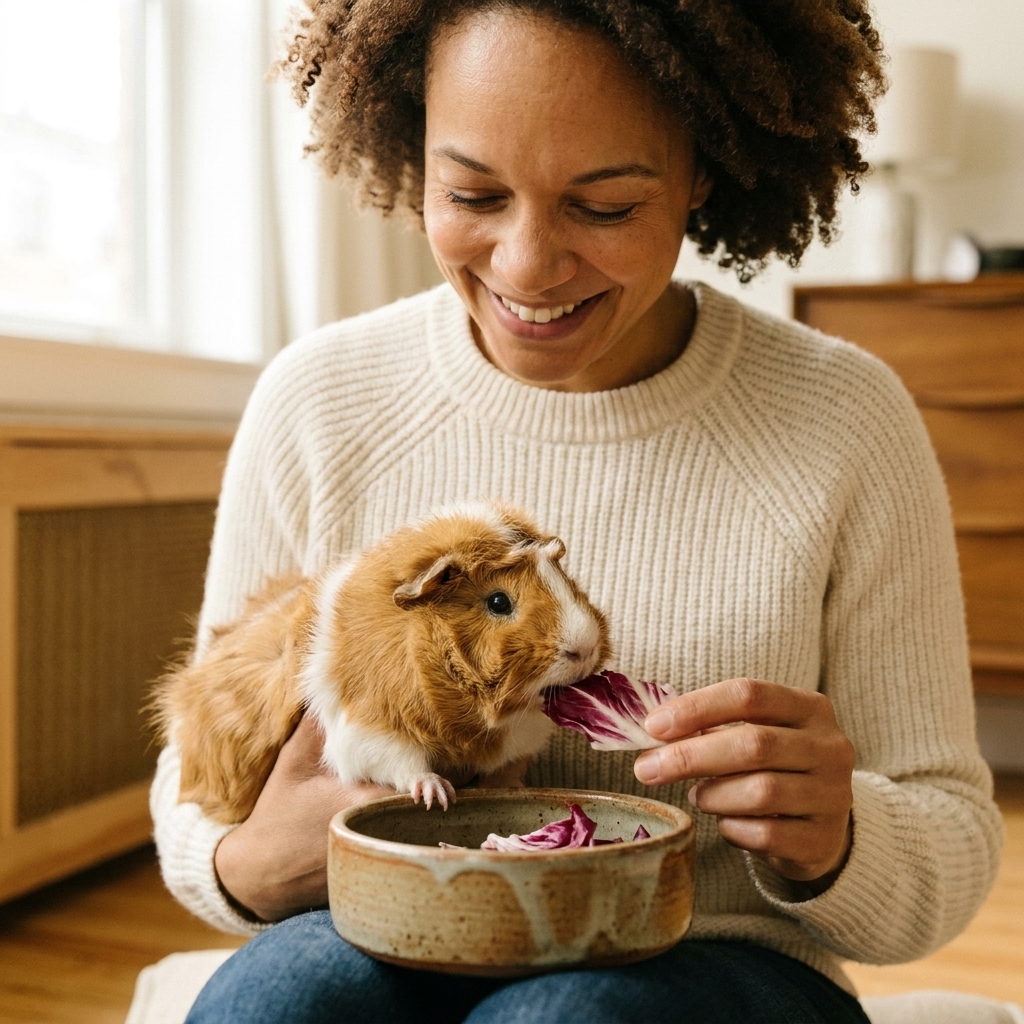
15) Radicchio
Frequency: Several times per week
Why it is great: Adds color and variety. Some pigs love the slightly bitter taste once they get used to it.
- Portion: A small leaf or a few torn pieces per pig a few times per week.
- Prep tips: Start with a small amount mixed into familiar greens.
Sample 1-cup salad
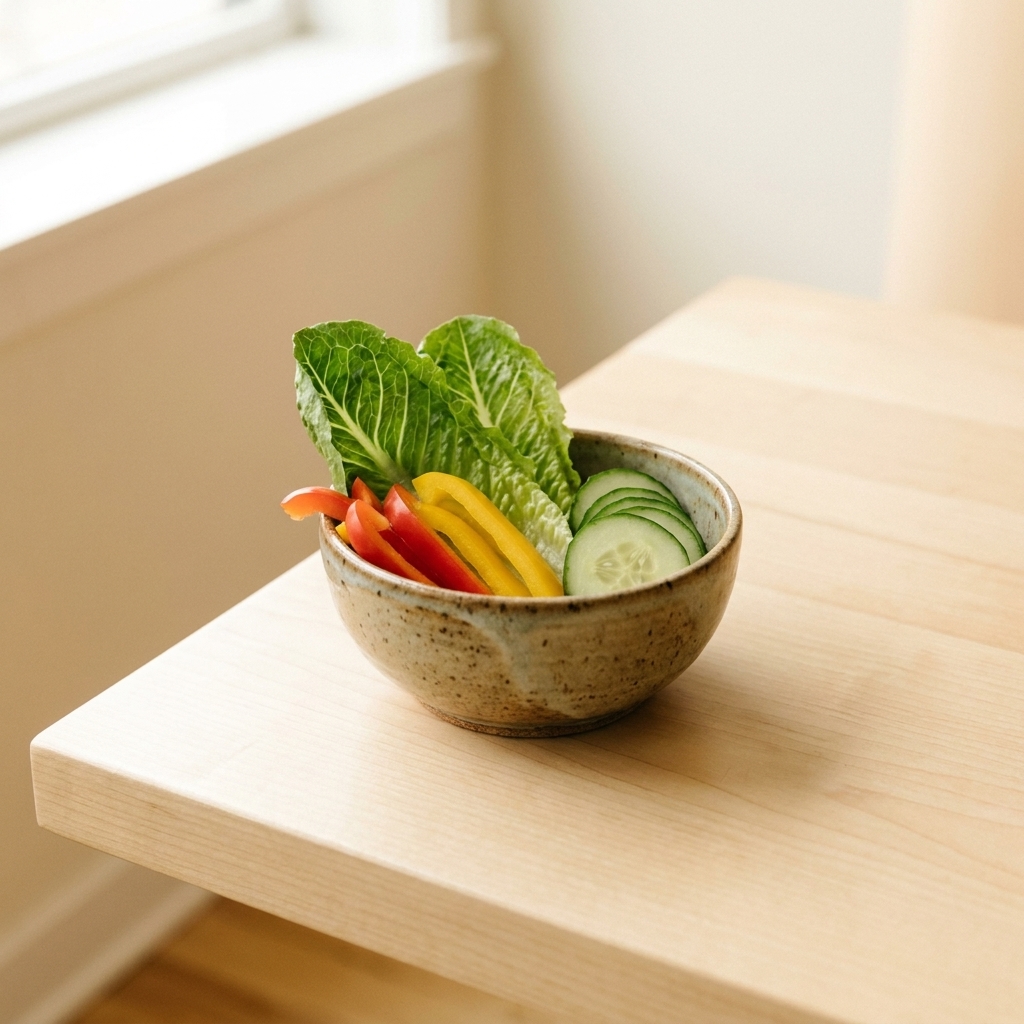
If you want a concrete example that lands near the usual 1 cup per pig per day guideline, try this for one adult pig. This is meant to be about 1 cup total of chopped and mixed produce, not 1 cup of greens plus extras:
- About 3/4 cup mixed leafy greens (romaine plus a bit of endive)
- 1/8 to 1/4 bell pepper, sliced
- 1 tablespoon zucchini
- Optional: a small pinch of cilantro a few times per week
That’s a solid starting point. If stools soften, reduce the watery add-ons first and keep the base steady.
Simple salad combos
If you want an easy routine, pick one base green, one vitamin C veggie, and one add-on.
- Combo A: Romaine + bell pepper + zucchini
- Combo B: Green leaf lettuce + bell pepper + a little cilantro
- Combo C: Endive + bell pepper + a few green bean pieces
- Combo D: Escarole + bell pepper + a thin cucumber slice (a few times per week)
If your pig has a sensitive stomach, keep the rotation smaller for a couple of weeks and do not stack lots of watery options in one meal.
Prep and safety tips
- Wash everything: Even pre-washed greens can carry residue or grit. Rinse and shake dry.
- Do not serve ice-cold: Many pigs are not fans of very cold produce. Let it sit for a few minutes after rinsing so it is more appealing.
- Cut long, stringy foods: Celery strings are the big one. Thin slices are safer and easier to manage.
- Remove spoiled pieces: If it smells off or feels slimy, toss it. Guinea pigs have sensitive digestive systems.
- Clean bowls daily: Wet veggies left out too long can get funky fast.
- Weigh weekly: A quick weekly weigh-in (same day, same time) is one of the easiest ways to catch problems early, even before appetite changes are obvious.
Vegetables to limit or avoid
Not all vegetables are guinea pig friendly, and some are fine only in small amounts.
- Avoid: Onion, garlic, chives, leeks, potatoes, rhubarb, avocado, and any tomato leaves or stems.
- Limit: Iceberg lettuce (low nutrient value and can be too watery for some pigs).
- Use caution with: Cruciferous veggies like broccoli, cauliflower, and cabbage. They can cause gas and bloating in some pigs. If you offer them, keep portions tiny and infrequent.
- Go easy on high-calcium greens: Spinach, kale, and parsley can be nutritious but are better rotated rather than fed as the main base daily, especially for pigs prone to urinary issues.
If your guinea pig has a history of bladder stones or recurring sludge, it is worth discussing a tailored veggie list with an experienced exotic vet.
FAQ
Can guinea pigs eat vegetables every day?
Yes. For most adult guinea pigs, daily vegetables are part of a healthy diet, alongside unlimited hay, fresh water, and an appropriate guinea pig pellet. The key is consistent portions and a balanced mix, not an ever-expanding buffet.
How do I know if I am feeding too many veggies?
Common signs include soft stools, messy bottoms, decreased hay intake, and picky behavior where your pig refuses hay and waits for the “good stuff.” If that happens, reduce watery veggies first and make sure hay is always available and fresh.
Do guinea pigs need fruit if they get vegetables?
Not usually. Fruit is higher in sugar and is best as an occasional treat. Many guinea pigs do great with vegetables as their daily fresh food and fruit only once in a while, if at all.
When should I call an exotic vet?
Do not try to fix everything with salad tweaks. Call an exotic vet if you see weight loss, refusal to eat, fewer poops, diarrhea, blood in urine, signs of pain, or drooling and trouble chewing (dental problems can show up fast in guinea pigs).
Bottom line
A healthy guinea pig salad is less about perfection and more about repeatable habits: a leafy base, a daily vitamin C veggie (hello, bell pepper), and a small rotation of add-ons. Start simple, watch your pig’s digestion, and adjust slowly. Your piggies will tell you what works.