From allergies and infection to a thorn between the toes, here’s why paw licking happens, what you can safely check at home, and which signs need a vet visit.
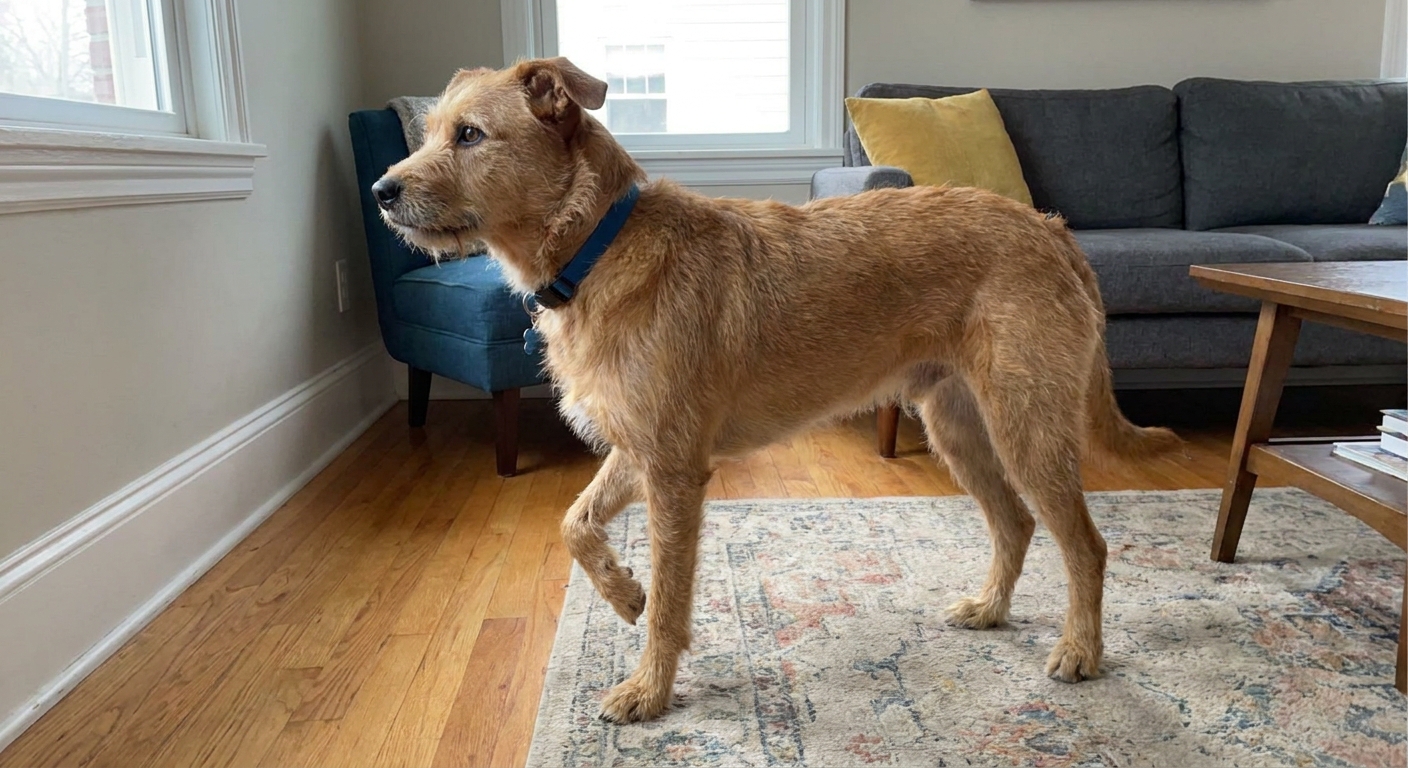
The first time my Golden mix, Buster, came in from the yard and started “three-legging” it (holding one leg up) across the kitchen, my stomach dropped. He was acting normal, but the limp looked dramatic and came out of nowhere. That is the part that makes pet parents panic, and I get it. The good news is that sudden limping can come down to something small and fixable, like a cracked nail or a thorn in the paw. The not-so-good news is that some causes, like a torn knee ligament or a fracture after a fall, should not wait.
Here is how I approach a sudden limp from a veterinary technician lens: keep your dog calm, do a quick at-home check that does not make things worse, and then decide if you can book a regular appointment or if this needs same-day care.
Why dogs limp suddenly
A limp is a symptom, not a diagnosis. It is your dog’s way of protecting something that hurts. Sudden limps commonly come from the paw and nail area, soft tissue strains, or an acute injury inside a joint. In day-to-day clinic life, paw and nail injuries were some of the most common “it started out of nowhere” reasons for limping, but severity and weight-bearing matter a lot.
Cracked, torn, or broken nail
This is one of the most common “out of nowhere” limps I saw in clinic. A nail can split, snag, or break short and expose sensitive tissue. Some dogs will lick intensely, and some will not let you touch the foot at all. You might see:
- Bleeding around the nail
- A nail that looks split, lifted, or crooked
- Sudden yelp when stepping on hard floors
Cut pad or burn
Paw pads can be cut on glass, sharp rocks, or rough terrain. They can also be burned by hot pavement or irritated by ice melt. Even a small pad injury can cause a big limp because every step puts pressure on it. Look for:
- A flap of pad tissue
- Redness, blisters, or raw areas
- Blood spots where your dog walked
Thorn, grass awn, or foreign object
Thorns and plant awns can wedge between toes or puncture the skin and cause sudden pain. Grass awns are often called “foxtails” in the U.S., and they are especially concerning because they can track under the skin and set up a nasty infection. Clues include:
- Sudden limping during or after a walk
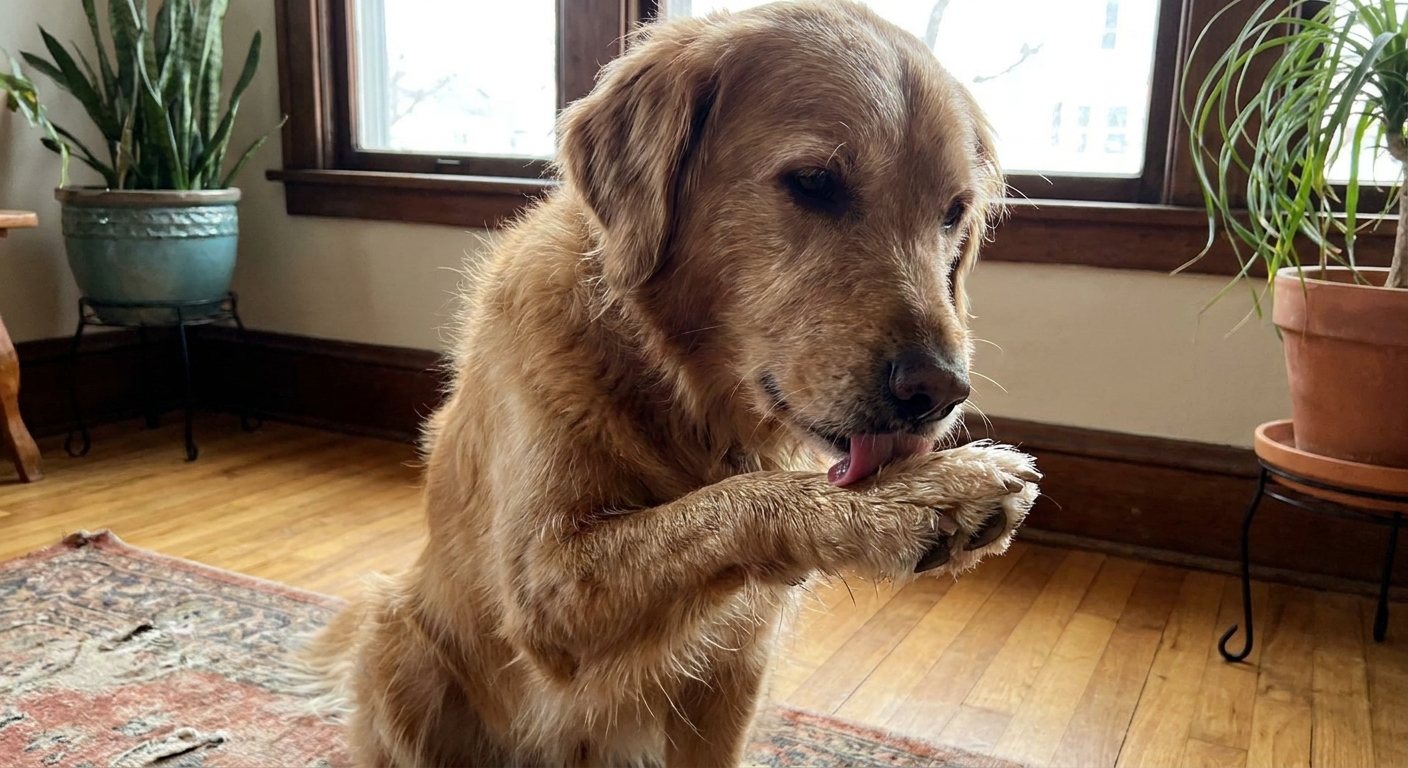
- Persistent licking between toes
- Swelling or a small draining spot between toes days later
Muscle strain or sprain
Zoomies, slippery floors, rough play, and leaping off furniture can all lead to a soft tissue strain. You may notice your dog looks stiff after rest and then loosens up after a few steps. Do not treat that as a green light to resume normal activity. If it “warms up” but comes back later or after exercise, you still want strict rest and a vet visit.
Torn knee ligament (CCL tear)
The cranial cruciate ligament (CCL) in dogs is similar to the ACL in people. A partial or complete tear can happen during a twist or sudden stop, and it often looks like your dog refuses to bear weight on a back leg. Signs that make me especially suspicious:
- Sudden hind-leg lameness with toe-touching only
- Difficulty rising or jumping into the car
- Swelling around the knee
Even if your dog seems “fine later,” a cruciate injury should be evaluated promptly because continued activity can worsen damage in the knee.
Other causes that can surprise people
Not every limp starts in the foot or knee. I also think about:
- Back or neck pain that can mimic a limb problem, especially if your dog is reluctant to jump, seems sore when picked up, or walks stiffly
- Skin and toe inflammation (pododermatitis or interdigital cysts) that causes toe licking, redness, and swelling
- Infection or tick-borne illness when limping comes with fever, lethargy, or shifting leg lameness
Keep it calm and safe
Your job in the first few minutes is to prevent a small problem from turning into a bigger one.
- Stop the activity. Bring your dog inside, leash them, and discourage running.
- Choose a well-lit area. A flashlight helps, especially between toes.
- Use gentle restraint. Some dogs will snap when painful, even if they are normally sweet. If your dog is growling or stiffening, stop and call your vet.
- Avoid “testing” the leg. Do not force range-of-motion, do not stretch the limb, and do not try to “pop” anything back in.
If your dog is very distressed, trembling, panting, hiding, guarding the leg, or cannot settle, that alone is a reason to contact a veterinarian quickly.
At-home paw and leg check
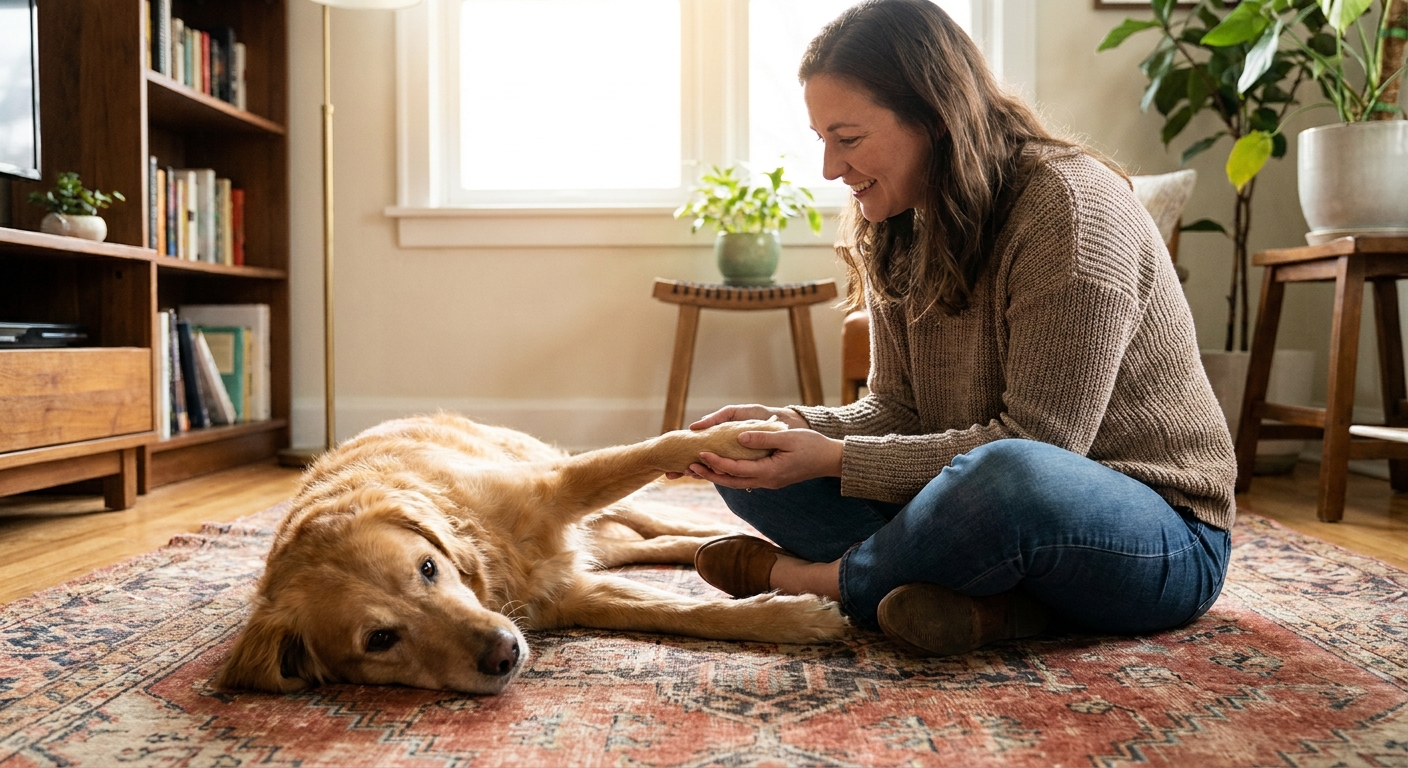
I like to start at the toes and work upward. Go slowly, and compare the sore leg to the other side so you know what is normal for your dog.
Step 1: Watch a few steps
On a leash, let your dog take 5 to 10 slow steps on a non-slip surface.
- Front-leg limp often looks like a head bob. The head rises when the painful front leg bears weight.
- Back-leg limp often looks like a hip hike or toe-touching.
This is not to “make them walk on it,” just to confirm which leg is affected.
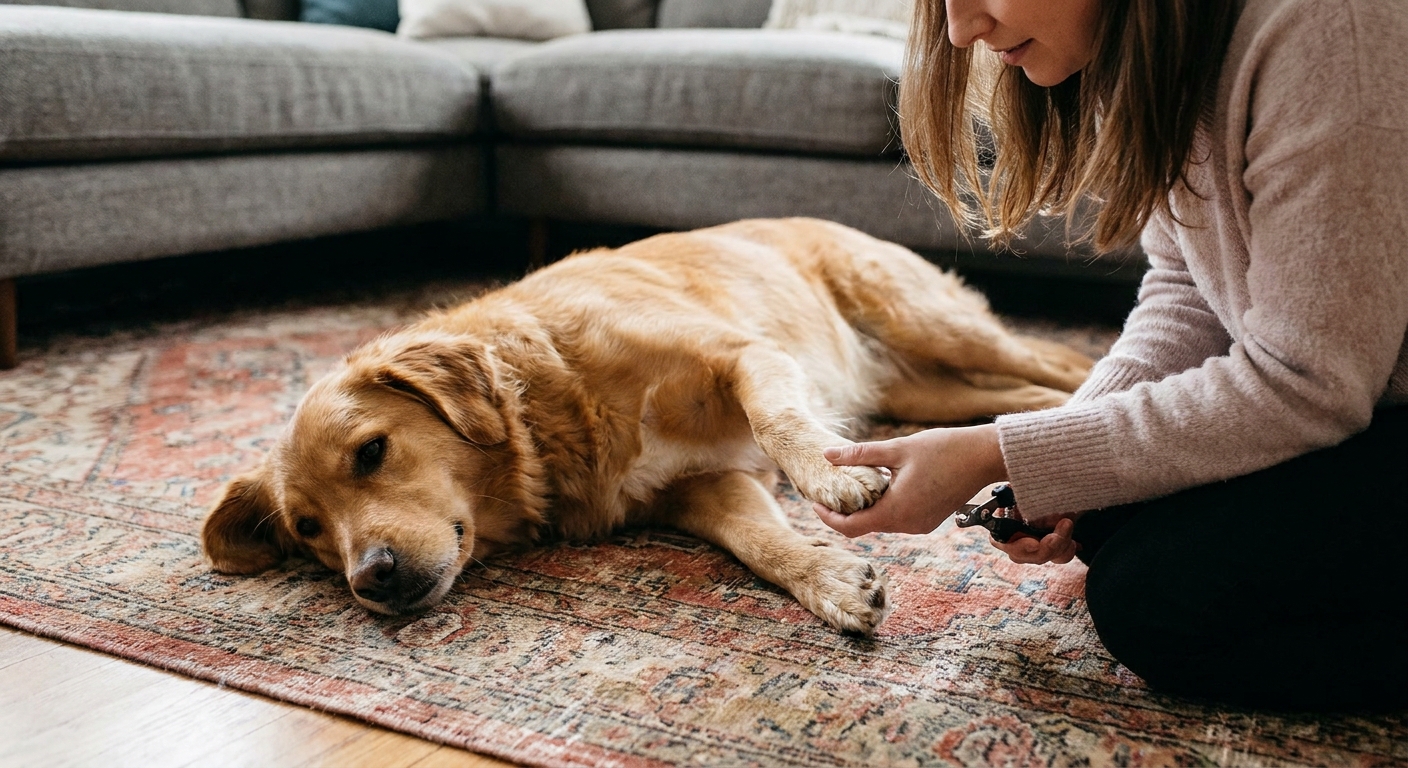
Step 2: Check the nails
- Look for blood, a split, or a nail that looks shorter than the others.
- Gently touch each nail. A painful reaction at one nail is a big clue.
If there is a dangling nail piece, do not pull it off. That can tear living tissue and worsen bleeding.
Step 3: Inspect the paw pads
- Look for cuts, missing pad tissue, or embedded debris.
- Check between the pads for a pebble, thorn, or stuck material.
If you see a small superficial splinter that is easily removed without digging, you can carefully remove it with clean tweezers. If it is deep, if you are unsure, or if your dog will not allow handling, leave it and call your vet.
Step 4: Check between the toes
Gently spread the toes and look for:
- Redness and swelling
- A puncture mark
- Wetness from licking
- A tiny seed head or thorn
Grass awns can be very small and still cause big problems. If you suspect one but cannot clearly see and remove it, that is a same-day call.
Step 5: Feel up the limb
Using light pressure, run your hands up the leg and compare sides:
- Heat can suggest inflammation or infection.
- Swelling that is new or increasing is concerning.
- Sharp pain with gentle touch can indicate more than a minor strain.
Stop immediately if your dog pulls away hard, cries out, or tries to bite.
Step 6: Look for obvious joint problems
You can look, not push. Compare left to right for:
- Enlargement around the wrist, elbow, knee, or hock
- A leg held in an unusual angle
- A dangling limb
If anything looks visibly “off,” skip the rest and seek urgent care.
What you can do at home
While you are deciding next steps or waiting for your vet to call back, these are generally safe measures for many mild limps:
- Strict rest. Leash walks only for bathroom breaks. No running, jumping, stairs, or rough play.
- Prevent licking. Licking can turn a tiny issue into a bigger wound fast. Use an e-collar if needed.
- Cold compress for new swelling. If there is mild swelling and your dog tolerates it, apply a cold pack wrapped in a towel for 10 minutes, up to a few times in the first 24 hours. Stop if your dog seems more painful.
Do not give human pain meds like ibuprofen, naproxen, aspirin, or acetaminophen unless your veterinarian specifically instructs you to. These can be dangerous to dogs, even at “small” doses.
Do not bandage or wrap the paw tightly unless your vet tells you to and shows you how. Tight wraps can swell the toes and cut off circulation surprisingly fast, and even “snug” wraps can cause pressure sores.
When it can wait for a vet visit
If your dog is bright, eating and drinking, and you do not see major red flags, you may be able to schedule a standard appointment in the next day or two. I still recommend calling your vet for guidance, but these situations are often appropriate to monitor briefly with rest:
- Mild limp but still weight-bearing and improving with rest over several hours
- A small superficial paw cut that is not gaping, not heavily bleeding, and your dog allows gentle inspection
- A minor muscle strain suspicion after a known slip or awkward landing, with no swelling and normal attitude
- A broken nail with minimal bleeding where your dog is comfortable enough to settle, and the nail is not dangling
Even in these cases, I get more serious if the limp is still clearly present after 24 hours of rest, is getting worse, or keeps returning. Recurring “sudden” limps can mean something unstable is happening inside a joint.
When it cannot wait
In clinic, these were the lameness scenarios we wanted seen quickly because they can involve fractures, dislocations, severe soft tissue tears, internal bleeding, or rapidly progressing infection.
Go in today if you see any of these
- Not bearing weight at all, especially if the limp is sudden and severe
- Dangling leg or a limb that looks unstable or oddly angled
- Significant swelling of a limb or joint, especially after a fall or collision
- Limp after trauma such as being hit by a car, falling from height, or a hard tumble down stairs
- Persistent crying, panic, or inability to get comfortable
- Open wound, deep puncture, or heavy bleeding from the paw or leg
- Hot, rapidly swelling paw, especially between toes (possible infection or foreign body)
- Fever, lethargy, or refusal to eat along with limping
- Suspected grass awn you cannot remove or swelling that starts after running through dry grass
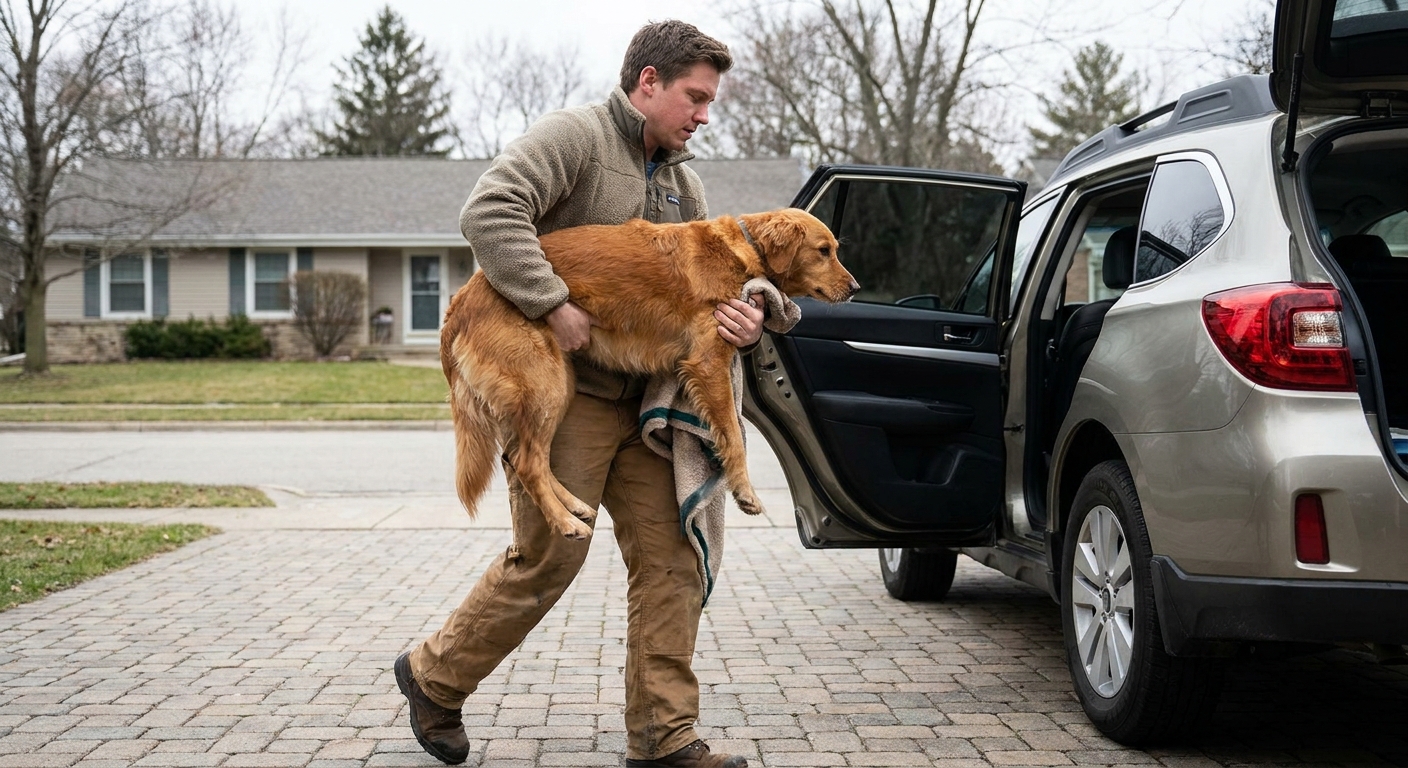
If your dog cannot walk
- If they can take a few steps, use a leash for controlled, minimal movement.
- For small dogs, carry them with the injured limb supported against your body.
- For medium to large dogs, use a blanket as a stretcher if needed, or support with a towel sling under the belly for hind-leg issues.
- Do not splint at home unless a veterinarian has instructed you. Improper splints can cause pressure injuries quickly.
What the vet may do
When you bring in a limping dog, the exam usually focuses on locating pain safely and ruling out urgent problems.
- History: When it started, any fall or rough play, whether it is front or back, whether your dog will bear weight, and whether it changes during the day.
- Paw and nail exam: Looking for cracks, pad cuts, foreign material, and toe pain.
- Orthopedic exam: Checking joints and soft tissues. For suspected CCL tears, vets may perform specific stability tests.
- Imaging: X-rays may be recommended to rule out fractures, dislocations, or bone changes. Sometimes sedation is needed to get good images without pain.
If your dog seems “better” by the time you arrive, still go. Adrenaline can temporarily mask pain, and intermittent limps can still reflect real injury.
Quick FAQ
Should I make my dog walk on it to “see if they can”?
No. A few slow steps for observation is fine, but do not push a limping dog to keep walking. Rest is protective, and forcing activity can worsen strains and ligament injuries.
My dog is limping but acting normal. Is it serious?
Sometimes, yes. Dogs can be surprisingly stoic, especially high-drive dogs. A nail injury might look dramatic but be minor, while a cruciate tear can also present with a dog who still wants to play. The deciding factors are weight-bearing, swelling, trauma history, pain signals (trembling, guarding, panting, hiding), and whether it improves with strict rest.
What if I cannot tell which leg is hurt?
That is common. If you cannot confidently identify the limb, your dog resists handling, or the limp is significant, it is safer to call your vet or go in for an exam rather than repeatedly manipulating different legs at home.
How long is it okay to wait and watch?
For a mild limp with normal behavior and no red flags, I am generally comfortable monitoring with strict rest for up to 24 hours while arranging a regular appointment. If it is not improving, is worsening, or your dog will not bear weight, seek same-day care.
The bottom line
A sudden limp is your dog waving a little red flag. Many causes are simple, like a cracked nail or something stuck between the toes, and a calm paw-to-leg check can give you quick answers. But if your dog will not bear weight, has swelling after a fall, holds a leg dangling, or seems truly distressed, trust your gut and treat it like an urgent problem. I would always rather see a limping dog “just in case” than have a pet parent wait through the night with an injury that needed help hours ago.